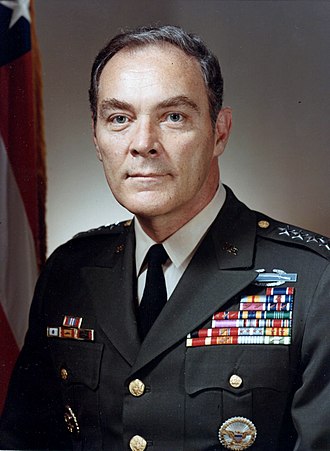
Haig, Alexander M., Jr.
Alexander M. Haig, Jr. began his service in the Nixon administration as a military assistant to National Security Advisor Henry Kissinger from January 1969 to June 1970, before being promoted to Deputy Assistant to the President for National Security Affairs. He held this deputy role for the majority of the White House taping period, from June 1970 until January 1973, when he transitioned to the Pentagon to become Vice Chief of Staff of the U.S. Army. As the Watergate scandal forced the resignation of H.R. Haldeman, Nixon recalled Haig to serve as White House Chief of Staff from May 1973 until the president's resignation in August 1974.
President Nixon and Alexander M. Haig, Jr. conferred briefly regarding the ongoing Vietnam negotiations. The discussion focused specifically on the scheduling requirements for Henry A. Kissinger's upcoming diplomatic engagements. Haig committed to providing the President with necessary updates as the situation progressed.
President Nixon consulted with H. R. Haldeman and Alexander Haig regarding critical foreign and domestic policy matters, most notably the status of Vietnam peace negotiations. Nixon instructed Haig to ensure Henry Kissinger avoided traveling to Hanoi unless a final agreement was secured, while expressing concerns about North Vietnamese military maneuvers near Saigon. Additionally, the President and his staff discussed managing the optics of his 1972 re-election campaign, specifically defending the strategy of remaining in the White House to focus on official duties rather than traditional public campaigning.
President Nixon and Alexander Haig discuss updates from Henry Kissinger regarding the ongoing Vietnam peace negotiations, specifically focusing on the status of proposed language and the logistics of a potential Hanoi trip. The President explicitly directs that there will be no bombing halt, and they review current military maneuvers involving increased air power around Saigon. Additionally, they discuss political developments in South Vietnam, noting the South Vietnamese assembly's move to unify in support of President Nguyen Van Thieu.
President Nixon and Alexander Haig engage in a brief, disjointed exchange that appears to involve monitoring weather conditions and field playability during a sports event, likely related to the 1972 World Series. The conversation focuses on the impact of rain on stadium conditions and the coordination of field maintenance preparations. The exchange concludes with a general discussion regarding the logistical challenges of transitioning the field between football and baseball games.
President Nixon met with H. R. Haldeman, Alexander Haig, and Stephen Bull to discuss the status of ongoing Vietnam peace negotiations, specifically the unresolved issues regarding prisoners of war and military equipment for South Vietnam. Beyond foreign policy, the group coordinated the President's administrative response to a recently vetoed water bill, strategizing to frame a potential clean water tax as a fiscal necessity. Finally, the President established protocols for upcoming public events, including a U.S.-Soviet trade pact signing and a SALT II announcement, opting to limit his direct involvement in formal photo opportunities to maintain presidential distance.
President Nixon and Alexander Haig discuss the ongoing Vietnam peace negotiations led by Henry Kissinger, specifically emphasizing the need to maintain strong military pressure on North Vietnamese forces before a potential ceasefire. Nixon explicitly vetoes a proposed diplomatic trip to Vientiane, fearing the political optics, and stresses the importance of South Vietnamese military performance. They conclude that if a favorable agreement cannot be reached before the upcoming U.S. presidential election, the administration will be in a stronger, less-constrained position to act afterward.
President Nixon met with Japanese Foreign Minister Masayoshi Ohira and other officials to discuss the shifting landscape of Asian diplomacy, specifically regarding Japan's recent normalization of relations with the People's Republic of China. The participants addressed the implications of this new relationship for the U.S.-Japan Mutual Security Treaty, the stability of the Korean Peninsula following South Korea's declaration of martial law, and the ongoing Vietnam peace negotiations. Nixon emphasized that the U.S. remained committed to negotiating peace with honor in Vietnam and cautioned that the administration would not be pressured by the upcoming presidential election to accept a forced coalition government in South Vietnam.
President Nixon and Alexander Haig met to assess the status of ongoing Vietnam peace negotiations and coordinate strategy regarding South Vietnamese President Nguyen Van Thieu's resistance to a potential ceasefire. They discussed the necessity of securing Thieu's cooperation to resolve remaining deadlock issues, while maintaining a firm public stance that the U.S. would resume military action if North Vietnam violated agreements. Additionally, the President instructed Haig to coordinate with William P. Rogers to ensure a positive, high-profile presentation of the forthcoming U.S.-Soviet trade agreement during an upcoming White House visit by Soviet officials.
President Nixon met with H. R. Haldeman and other staff members to finalize his pre-election campaign schedule, including plans for radio addresses, a Veterans Day event, and a trip to Appalachia. The discussion focused on projecting a presidential image while avoiding political pitfalls like unscripted press conferences, where the President feared questions would be dominated by the Watergate controversy. The participants also evaluated potential Senate leadership changes and debated media strategy, with the President directing his staff to shun hostile press members and prioritize more favorable outlets.
President Nixon met with Alexander M. Haig, Jr. in the Old Executive Office Building to facilitate a brief administrative exchange. The discussion was primarily focused on logistical matters regarding the meeting's setting. No significant policy decisions or strategic developments were recorded during this short interval.
President Nixon and Alexander Haig met to discuss the status of ongoing Vietnam peace negotiations, specifically focusing on the reservations held by South Vietnamese President Nguyen Van Thieu. They addressed concerns regarding the ceasefire terms, specifically the risk of North Vietnamese infiltration and potential post-ceasefire mass killings of South Vietnamese personnel. The two reviewed the coordination between Henry Kissinger, Ellsworth Bunker, and General Creighton Abrams in managing these negotiations and determined that continued military pressure on the ground remained necessary to maintain a favorable position.
General Alexander M. Haig, Jr. contacted President Nixon to notify him that he had received an additional report from National Security Advisor Henry Kissinger. Nixon directed Haig to deliver the intelligence in person at the Oval Office. The brief exchange served primarily to facilitate the immediate briefing of the President on ongoing foreign policy matters.
President Richard M. Nixon met briefly with Alexander M. Haig, Jr. in the Oval Office to discuss internal administrative or policy matters. Given the extremely brief duration of the encounter, the exchange likely served as a quick check-in or a directive delivery rather than a substantive policy debate. This engagement highlights the direct line of communication between the President and his top military aide during a pivotal period in the Nixon administration.
President Nixon and Alexander Haig discussed the status of ongoing Vietnam peace negotiations and the necessity of maintaining South Vietnamese President Nguyen Van Thieu’s support for the proposed settlement. They focused on strategies to reassure Thieu regarding long-term U.S. military and economic aid while clarifying that a coalition government was not part of the agreement. Additionally, Nixon outlined a public communication plan for announcing the settlement, emphasizing a brief, decisive message that would deter North Vietnamese violations and avoid internal leaks.
President Nixon and Alexander M. Haig, Jr. met briefly in the Executive Office Building to coordinate scheduling. The discussion focused on logistical arrangements for an upcoming meeting. No substantive policy matters were recorded during this brief administrative exchange.
President Nixon and Alexander Haig met to discuss the status of ongoing Vietnam peace negotiations and the critical need to secure an agreement before the 1972 election. They reviewed the schedule for Henry Kissinger’s upcoming trip to Hanoi, the timing of a proposed cease-fire, and the delivery of the draft agreement to North Vietnamese officials in Paris. The conversation also addressed concerns regarding South Vietnamese President Nguyen Van Thieu's cooperation, the potential political fallout of a coalition government, and the necessity of maintaining a unified public relations front.
President Nixon met with Alexander Haig and General William Westmoreland to evaluate the status of ongoing peace negotiations regarding the Vietnam War. The discussion centered on managing the concerns of South Vietnamese President Nguyen Van Thieu, specifically regarding North Vietnamese military presence, cease-fire enforcement mechanisms, and the long-term sovereignty of South Vietnam. The participants also reviewed military support requirements, including the provision of additional aircraft, and addressed the broader geopolitical implications of the conflict in relation to the upcoming 1972 presidential election.
In this meeting, President Nixon and H.R. Haldeman discuss the ongoing Watergate investigation, specifically focusing on potential leaks from FBI official Mark Felt and the motivations behind media coverage of the scandal. The conversation includes a review of security and public relations logistics for an upcoming White House Halloween event and the scheduling of a revenue sharing ceremony in Philadelphia. Nixon and Haldeman strategize on how to manage the political fallout and investigate the origins of the FBI leaks.
President Nixon and Alexander Haig met to discuss the status of ongoing Vietnam peace negotiations and the delicate diplomatic pressure being exerted on South Vietnamese President Nguyen Van Thieu. They debated the potential political risks of finalizing an agreement before the 1972 presidential election, specifically regarding whether a premature deal might be perceived as politically motivated or disadvantageous to South Vietnam's long-term security. Nixon instructed Haig to emphasize to Henry Kissinger that any settlement must ensure the prevention of a Communist takeover and be accepted by Thieu as a willing partner rather than as a coerced participant.
President Nixon and Alexander Haig discuss the critical need for South Vietnamese President Nguyen Van Thieu to accept the latest North Vietnamese peace proposals prior to an upcoming meeting with Henry Kissinger. They express concern that if Thieu rejects the deal, the North Vietnamese may go public with the terms, creating significant political pressure in the U.S. to pursue a unilateral, bilateral agreement and abandon South Vietnam. Nixon instructs Haig to convey a message to Kissinger emphasizing that while the deal is imperfect, the risks of rejection are severe and that Thieu faces a potential loss of American support if he fails to cooperate.
President Nixon and Alexander Haig coordinate a strategy for handling sensitive diplomatic proposals developed by Henry Kissinger regarding peace negotiations. The discussion focuses on managing potential confrontations and applying diplomatic pressure while carefully weighing the risks of early disclosure versus delaying public announcements until after the 1972 election. Nixon emphasizes the need for a personal message to be conveyed to maintain assurance that the potential deal will be honored.
President Nixon and Alexander Haig discussed the status of Vietnam peace negotiations following Hanoi's public disclosure of sensitive information, which the President viewed as a breach of trust. Haig reported that he had confronted Soviet Ambassador Anatoliy Dobrynin regarding the leaks and their potential to derail the progress made by Henry Kissinger. The pair emphasized the need to strictly control press access, specifically warning Secretary of State William P. Rogers to prevent further leaks to outlets like the Washington Post. They also affirmed that they would explicitly avoid using the term "coalition government" in any public characterization of the ongoing political settlement.
President Nixon and Alexander Haig held a brief, late-night meeting at Camp David to discuss ongoing negotiations and the potential risks of appearing to withdraw or concede. The two men coordinated their stance on avoiding entanglement in current developments that could negatively impact the administration's political standing. Nixon emphasized that their primary concern regarding the situation was the potential for domestic repercussions rather than immediate external threats.
President Nixon and Alexander Haig coordinate their strategy regarding ongoing Vietnam peace negotiations and the potential for a direct meeting between the President and Soviet Ambassador Anatoliy Dobrynin. Nixon expresses concern over a recent Soviet leak that alienated South Vietnamese President Nguyen Van Thieu and stresses that Henry Kissinger must avoid traveling to Hanoi before the 1972 election to prevent the appearance of a political surrender. The two decide to meet later that day at the Executive Office Building to finalize their approach for stabilizing US-Soviet relations and maintaining pressure on Hanoi to reach a military settlement.
President Nixon and Alexander Haig meet at Camp David to strategize on ongoing diplomatic negotiations regarding the Vietnam War. Nixon expresses strong reservations about finalizing an agreement before the upcoming presidential election, fearing it will be perceived as a surrender. The two men discuss maintaining a firm stance with their counterparts, emphasizing that the U.S. will continue to negotiate while refusing to be pressured into a premature settlement that could undermine their political or military position.
President Nixon and Alexander M. Haig, Jr. met to coordinate their upcoming schedules and ensure alignment on executive priorities. The conversation focused on the logistical planning for their subsequent meetings. This brief interaction served to establish Haig's availability and facilitate direct communication regarding the President's immediate agenda.
President Nixon and Alexander Haig met to strategize on ongoing Vietnam peace negotiations and the complexities of managing South Vietnamese President Nguyễn Văn Thiệu's resistance to a potential ceasefire. They discussed the tactical use of bombing halts and the necessity of maintaining a firm U.S. position to ensure North Vietnamese cooperation regardless of the upcoming 1972 election. The primary objective was to coordinate a cohesive message for Hanoi that reaffirmed U.S. commitment to the draft agreement while signaling that the administration remained fully focused on achieving a negotiated settlement.
President Nixon and Alexander Haig coordinate the diplomatic response to the stalling Vietnam peace negotiations, specifically focusing on managing the fallout from recent North Vietnamese leaks and South Vietnamese President Nguyen Van Thieu's resistance. Nixon instructs Haig to inform Soviet Ambassador Anatoliy Dobrynin that North Vietnam must cease public disclosures to avoid a total breakdown of talks before the upcoming election. Furthermore, the President orders a discreet, unannounced halt to the bombing north of the 20th parallel and adjusts Henry Kissinger’s travel schedule to ensure their meeting occurs after Nixon returns from campaigning in New York.
President Nixon and Alexander Haig discuss the status of Vietnam peace negotiations, emphasizing the importance of remaining resolute against North Vietnamese pressure tactics and avoiding rushed concessions. The President instructs Haig to coordinate a response through Charles Colson to counter George McGovern's public allegations regarding the administration's negotiation motives. They also address the logistical complications in communicating with Soviet Ambassador Anatoliy Dobrynin and reinforce the need to prevent leaks from the State Department, confirming that Secretary of State William Rogers is aligned with the President's strategy.
President Nixon and Alexander Haig met to discuss the status of ongoing Vietnam peace negotiations and strategies for managing South Vietnamese President Nguyen Van Thieu's resistance to a potential settlement. The conversation emphasized the necessity of securing a peace agreement without appearing to abandon South Vietnam, while acknowledging the political importance of finalizing a deal or maintaining steady progress leading up to the 1972 election. Nixon expressed a firm desire to bring the conflict to a close and directed Haig to ensure that State Department bureaucracy or leaks would not undermine the administration's delicate diplomatic efforts.
President Nixon and Alexander Haig met to discuss the status of Vietnam peace negotiations and the strategic timing of an announcement regarding a potential ceasefire. They assessed the volatile behavior of South Vietnamese President Nguyen Van Thieu and determined that the administration should publicly emphasize the progress made in negotiations without finalizing a settlement before the 1972 election to avoid political complications. The President also reviewed positive feedback regarding his recent trip to New York and reaffirmed the necessity of maintaining pressure on North Vietnam to secure a favorable agreement.
President Nixon met with Henry Kissinger and Alexander Haig to review the status of Vietnam peace negotiations following Kissinger's recent trip. The discussion focused on the favorable terms achieved in the draft agreement, contrasted with the erratic and obstructionist behavior of South Vietnamese President Nguyen Van Thieu, who feared the implications of the settlement. Nixon and his advisors decided to maintain a tactical delay in concluding the deal until after the upcoming presidential election, while agreeing to pressure Thieu into compliance and using military options as necessary leverage.
President Nixon directs Alexander Haig to prevent Henry Kissinger from traveling to Hanoi, fearing that such a trip before the 1972 election would be politically devastating and project a sign of weakness. Nixon mandates a hardline stance in Vietnam peace negotiations, explicitly rejecting a coalition government and instructing Clark MacGregor to publicize this firm position. The President expresses his firm resolve to block the Hanoi visit, emphasizing that any further diplomatic activity must occur only after the election.
President Nixon and Alexander Haig coordinate the scheduling of a press briefing to be conducted by Henry Kissinger, following a recommendation from John Scali. Nixon instructs Haig to ensure Kissinger meets with him immediately after the briefing is completed. This exchange highlights the administration's tight control over the communication of diplomatic updates to the media.
President Nixon met briefly with Alexander M. Haig, Jr. to verify the attendance of staff members present at the Executive Office Building that day. The discussion functioned as an administrative check to ensure the President had an accurate accounting of the individuals involved in the day's proceedings. No further policy or substantive strategic decisions were recorded during this brief encounter.
President Nixon consulted with Alexander M. Haig, Jr. regarding the messaging strategy for Henry Kissinger’s upcoming briefings on Vietnam. Nixon emphasized the importance of distinguishing his administration's pursuit of a lasting, generational peace from the flawed 1962 Laos settlement that failed to end conflict. He directed Haig to ensure Kissinger explicitly frames the administration's goals as securing long-term stability rather than short-term political gains for the 1972 election.
President Nixon and Alexander Haig coordinate messaging regarding ongoing Vietnam peace negotiations to ensure public rhetoric emphasizes long-term stability over short-term political gain. Nixon instructs Haig to distance the current administration's goals from the failed 1952 Laos settlement, framing their objective as securing "peace for the next generation." This effort is intended to provide talking points for Henry Kissinger and clarify the administration's stance ahead of the upcoming election.
President Nixon and H. R. Haldeman met to coordinate public relations strategy regarding ongoing Vietnam peace negotiations as the 1972 presidential election approached. They discussed the administration's messaging, specifically how to leverage the cease-fire talks to their political advantage while managing press expectations through Henry Kissinger. The President decided to pursue an informal, low-profile Q&A session with a select press pool during an upcoming trip to California to control the narrative without formalizing his comments on the record.
President Nixon instructed Alexander Haig to relay a message to Henry Kissinger regarding the ongoing Vietnam peace negotiations. Nixon emphasized the importance of demonstrating to the North Vietnamese negotiators that the upcoming 1972 U.S. presidential election would not influence the administration's stance on a settlement. Haig was directed to ensure Kissinger effectively communicated this commitment, using Nixon’s handwritten note as leverage to secure a favorable agreement.
President Nixon consulted with Alexander Haig regarding Henry Kissinger's whereabouts and potential availability to discuss ongoing developments. The conversation focused on coordinating the President's schedule and evaluating the latest updates from the Vietnam negotiations. Nixon ultimately requested that Haig meet with him personally to deliberate on these sensitive matters.
President Nixon met with Alexander Haig to outline the administration's strategic messaging regarding the ongoing Vietnam War negotiations and the impending 1972 election. They contrasted Nixon's "peace with honor" approach, which prioritized South Vietnamese self-determination and military sustainability, against George McGovern's plan, which they characterized as a surrender that would trigger a communist bloodbath. The discussion also addressed the need to manage President Thieu’s suspicions regarding Henry Kissinger and considered the potential dispatch of alternative representatives to secure a final agreement.
President Nixon and Alexander Haig met to refine the diplomatic messaging regarding ongoing Vietnam peace negotiations. The discussion focused on drafting a letter to South Vietnamese President Nguyen Van Thieu to explicitly clarify that the proposed agreement would not constitute a coalition government. This effort sought to manage Thieu's concerns and ensure the integrity of the U.S. negotiating position as the peace process progressed.
President Nixon met with Henry Kissinger and Alexander Haig to deliberate on the timing and public announcement of upcoming peace negotiations with North Vietnam. The discussion focused on managing the logistics of these talks while coordinating a strategic message to South Vietnamese President Nguyen Van Thieu, whom Nixon insisted must not test his authority. The participants emphasized that the administration remained in a position of strength following the 1972 election and resolved to utilize the available time to ensure the peace settlement met their terms.
President Nixon met with Henry Kissinger, Nguyen Phu Duc, and Tran Kim Phuong to discuss the final stages of the Vietnam peace negotiations and coordinate strategy for the upcoming agreement. Nixon emphasized the necessity of finalizing terms by December 1972 to secure Congressional support for military and economic aid, warning that failure to settle would likely lead to a legislative cutoff of funds. Nixon underscored his commitment to enforcing the agreement through resumed bombing if North Vietnam violated the ceasefire and urged the South Vietnamese leadership to present a unified, confident front to the American public and Congress.
President Nixon and Alexander Haig coordinated an upcoming meeting involving General Robert E. Cushman, Jr. and the Joint Chiefs of Staff. The pair discussed the ongoing, difficult Vietnam peace negotiations, emphasizing the necessity of maintaining a firm stance against South Vietnamese resistance to ensure progress before the January 3 deadline. Nixon instructed Haig to monitor Henry Kissinger’s efforts during their forthcoming mission to Paris to ensure the negotiations remained on track.
President Nixon met with his senior military and national security leadership, including Henry Kissinger, Melvin Laird, and the Joint Chiefs of Staff, to align the administration on the status and defense of pending Vietnam peace negotiations. The discussion focused on the current terms of the settlement agreement, the importance of maintaining public and congressional support, and the necessity of contingency planning should North Vietnam violate the terms. Nixon emphasized that the agreement was the best obtainable outcome and instructed his team to present a unified, positive front while preparing for potential retaliatory actions if the cease-fire collapsed.
President Nixon met with Henry Kissinger, Alexander Haig, and South Vietnamese representatives Nguyen Phu Duc and Tran Kim Phuong to finalize the U.S. position on Vietnam peace negotiations. Nixon emphasized that the U.S. would not continue military or economic aid if the South Vietnamese government rejected the current settlement framework, stressing that congressional opposition made further support unsustainable. The President proposed a meeting with President Nguyen Van Thieu at Midway to provide personal assurances of U.S. retaliation against potential North Vietnamese ceasefire violations, while instructing his team to continue pressuring Saigon to accept the agreement terms.
President Nixon and H. R. Haldeman met to discuss personnel changes for the second term, administrative reorganization, and strategies for managing the press and Congress. They reviewed the status of Vietnam peace negotiations, specifically focusing on the President's firm stance against North Vietnamese compromises regarding the Demilitarized Zone. The conversation also touched on the ongoing Watergate fallout and the need to maintain a strong, confident public posture while finalizing key staff appointments.
President Richard Nixon met with Alexander Haig to receive updates regarding ongoing Vietnam peace negotiations, specifically focusing on the status of Henry Kissinger's efforts. The discussion centered on a critical remaining point of contention regarding the Demilitarized Zone and the potential for a compromise involving the withdrawal of North Vietnamese troops from South Vietnam. Nixon expressed concerns about the negotiation process while assessing the current diplomatic position.
President Nixon met with Alexander P. Butterfield and Alexander M. Haig, Jr. to coordinate administrative logistics for upcoming White House holiday events and to conduct a critical strategic review of Vietnam peace negotiations. The President expressed frustration with the progress of talks and explored the potential for resuming intensive bombing campaigns if North Vietnam continued to delay or reject a final settlement. Nixon and Haig also discussed the administration's tense relationship with South Vietnamese President Nguyen Van Thieu and considered a possible diplomatic mission to Saigon to secure his cooperation.
President Nixon met with Charles Colson, H.R. Haldeman, Alexander Haig, and Julie Nixon Eisenhower to discuss political strategy and administrative appointments for the second term. The participants analyzed the perception of the Republican Party, debated the potential for a political coalition involving John Connally, and reviewed candidate selections for key positions, specifically within the Department of Labor. Nixon emphasized the importance of ensuring high-level appointees were strategically aligned with the administration’s policy goals and internal machinery.
President Nixon and Alexander Haig discussed Henry Kissinger's report of North Vietnamese intransigence during ongoing peace negotiations in Paris. Nixon expressed concern over Kissinger's tactical threat to depart prematurely, instructing Haig to ensure that negotiations continue rather than breaking off, provided there is any possibility of a settlement. They agreed that shifting talks to normal diplomatic channels would be a mistake and decided that a resumption of bombing operations against the North would be necessary if the North Vietnamese maintained their obstructive stance.
President Nixon and Alexander Haig discuss the emotional instability of Henry Kissinger during the ongoing, high-stakes Vietnam peace negotiations in Paris. Nixon directs Haig to join Kissinger to provide stability and act as a firm counterbalance to the North Vietnamese negotiators' tactical manipulation of Kissinger's mood. They decide to abandon a potential mission for Vice President Spiro Agnew and agree that if the talks remain stalled, Kissinger should request a recess without issuing threats before returning home.
President Nixon and Alexander Haig discuss the frustration and difficulties associated with ongoing administrative negotiations and message management. Nixon expresses a desire to move away from the current, tortuous process of dealing with outside parties who are failing to conform to established frameworks. The President indicates he will take a short recess to regroup and prepare for a more decisive approach to these challenges.
President Nixon and Alexander Haig discussed the stalled Vietnam peace negotiations and the potential for a diplomatic breakdown with North Vietnam. The two reviewed the possibility of taking the stalled talks public, though Nixon expressed skepticism about such an approach. Nixon emphasized the need for a firm military response to North Vietnamese intransigence, suggesting an escalation of the bombing campaign should a negotiated settlement remain out of reach.
President Nixon and Alexander Haig met to discuss escalating military pressure on North Vietnam, specifically focusing on the urgent need to reseed mines and intensify the frequency of B-52 bombing raids. Nixon expressed frustration with the progress of ongoing negotiations and emphasized his desire for a more aggressive tactical approach to gain leverage. The two concluded that the administration should prioritize consistent, nightly military strikes to force a breakthrough in the stalled peace process.
President Nixon and Alexander Haig evaluated the status of Vietnam peace negotiations following a critical speech by South Vietnamese President Nguyen Van Thieu, which rejected key provisions of the proposed settlement. The President expressed frustration with North Vietnamese intransigence and emphasized that the U.S. must remain firm in its resolve to secure an agreement, even if it requires pressuring Thieu to accept terms. The pair discussed potential tactical responses to a stalemate, including a possible recess in talks, the potential for a diplomatic mission by Vice President Agnew, and the eventual resumption of intensified military pressure, such as mining and bombing, should the North Vietnamese continue to withhold cooperation.
President Nixon met with Hobart D. Lewis, John H. Kauffmann, and Michael J. O'Neill to discuss their recent experiences and observations from a trip to the Soviet Union. The participants exchanged views on the stark differences between Soviet and American systems, the challenges of managing U.S.-Soviet trade and information programs, and the necessity of maintaining a realistic, self-interested foreign policy. Nixon also explored potential future professional opportunities for his son-in-law, David Eisenhower, and evaluated leadership options for the U.S. Information Agency and the Bicentennial Commission.
President Nixon met with Alexander M. Haig, Jr. to discuss the status of stalled Vietnam peace negotiations and potential military escalations. They analyzed North Vietnamese tactics, including the recent breakdown in talks and the perceived influence of Soviet and Chinese pressure on Hanoi. The President and Haig reviewed target lists for renewed bombing operations, specifically emphasizing the necessity of using B-52s and precision munitions to compel North Vietnam to reach a settlement.
President Nixon met with Alexander Haig to formulate firm instructions for Henry Kissinger regarding the stalled Vietnam peace negotiations in Paris. Disturbed by North Vietnam's reneging on prior positions and the resulting delays, Nixon directed Haig to inform Kissinger that all previous understandings were void and that no further U.S. concessions would be offered. Nixon emphasized his readiness to pursue military options if a favorable settlement could not be reached, asserting that he prioritized securing the "right kind of peace" over any specific timeline.
President Nixon met with H.R. Haldeman and Gordon Strachan to discuss personnel strategies for his second term, emphasizing the need to purge disloyal bureaucrats and replace them with loyal, courageous appointees. The conversation then shifted to a meeting with Frank Shakespeare and James Keogh, where they evaluated the loyalty of State Department and USIA officials, discussed potential appointments, and lamented the perceived cultural elitism within the media and government bureaucracy. Later, Alexander Haig joined the President to review the status of Vietnam peace negotiations, with Nixon firmly insisting that options for resuming intensive bombing must remain open despite ongoing diplomatic consultations.
President Nixon and Alexander Haig discussed the status of Vietnam peace negotiations following an update from Henry Kissinger, focusing on the administration's frustration with Hanoi's delays and the need to pressure South Vietnamese President Nguyen Van Thieu. Nixon directed Haig to initiate a subtle, low-key communication with Soviet Ambassador Anatoliy Dobrynin to cancel the upcoming visit of Tricia Nixon Cox to the Soviet Union. This action was intended as a calculated diplomatic signal to the Soviets that the U.S. was preparing to resume significant military activity in Vietnam.
President Nixon and Alexander Haig met to discuss the status of ongoing Vietnam peace negotiations. The conversation focused on evaluating potential compromises regarding the peace process, specifically touching upon the role and efforts of Henry Kissinger. This discussion highlights the administration's strategic deliberations aimed at resolving the conflict as the negotiations reached a critical juncture.
President Nixon and Alexander Haig met to discuss the status of stalled Vietnam peace negotiations and strategies for dealing with South Vietnamese President Nguyen Van Thieu's resistance to a potential bilateral US-North Vietnam settlement. The conversation focused on the tactical necessity of exerting maximum pressure on Thieu to sign an agreement, including the possibility of the US moving forward with a deal independently if South Vietnam refused. Nixon expressed significant frustration with Henry Kissinger’s public relations management and his reliance on "smiling" press appearances, while also dismissing the current limited bombing campaign as ineffective and inadequate.
President Nixon met with H. R. Haldeman, Alexander Haig, and Ronald Ziegler to discuss the status of Vietnam peace negotiations, the reorganization of the White House staff for the second term, and various public relations strategies. A significant portion of the discussion focused on Henry Kissinger’s conduct and emotional state regarding the negotiations, with the President expressing frustration over Kissinger’s perceived lack of objectivity and his tendency to act outside of established policy. Additionally, they coordinated the roles of First Lady Pat Nixon's staff, including Julie Nixon Eisenhower, and reviewed plans for upcoming executive appointments and holiday receptions.
President Nixon and Alexander Haig discuss the status of Vietnam peace negotiations following Haig's recent communication with Henry Kissinger. They address Kissinger’s exhausted state and sensitive mood upon his return, agreeing to postpone a meeting until he has rested. Haig commits to sending Kissinger a message that conveys the President's strategic input regarding future planning and Vice President Agnew's upcoming trip in a manner that avoids unnecessary friction.
President Nixon met with Alexander M. Haig, Jr. to facilitate the transfer of briefing materials and prepare for an upcoming appointment. The brief exchange focused on the delivery of specific documents for the President's review. The meeting concluded with Haig leaving the necessary paperwork for Nixon's attention.
President Nixon met with Alexander Haig to assess the stalled Vietnam peace negotiations and the deteriorating mental state of National Security Advisor Henry Kissinger. Nixon expressed frustration over recent setbacks, including failed diplomatic maneuvers and Kissinger’s emotional volatility, while emphasizing the need to isolate Kissinger from the influence of Secretary of State William Rogers and Secretary of Defense Melvin Laird. The two discussed potential military contingencies—specifically renewed bombing of North Vietnam and the reseeding of mines—as tools to pressure Hanoi and support South Vietnamese President Nguyen Van Thieu, ultimately deciding to move forward with a firm, objective strategy.
President Nixon and Alexander Haig discuss the deteriorating status of Vietnam peace negotiations and the necessity of resuming military action to break the current diplomatic impasse. They determine that Henry Kissinger’s suggestion to continue talks in Paris into January is unacceptable, as it would expose the administration to charges of deceit. Instead, they decide to move forward with aggressive military measures, including mining and bombing, while framing the escalation as a necessary response to North Vietnam’s failure to return American prisoners of war. To ensure internal unity, they plan a small, private National Security Council meeting to align key advisors like Secretary of State William Rogers and Secretary of Defense Melvin Laird on this strategy.
President Nixon met with his key advisors, including Henry Kissinger, Alexander Haig, and H.R. Haldeman, to discuss the deteriorating state of Vietnam peace negotiations following North Vietnamese intransigence and bad faith. Kissinger detailed the tactics used by the North Vietnamese, including reneging on previously agreed-upon points and introducing new, unacceptable demands, which led to an impasse. The group resolved to maintain a firm posture, agreeing to intensify military pressure through bombing campaigns while carefully managing public relations to ensure the responsibility for the stalled peace process remained with the North Vietnamese. Nixon decided against a televised address at that moment, opting for a low-key briefing to frame the situation as a failure of communist cooperation rather than a total breakdown of talks.
President Nixon met with Henry Kissinger and Alexander Haig to discuss the current stalemate in Vietnam negotiations, specifically addressing North Vietnamese intransigence and bad-faith tactics regarding a potential cease-fire and the status of U.S. prisoners of war. Facing a breakdown in talks and an imminent congressional session that threatened to cut off war funding, Nixon decided to resume U.S. bombing and mining of North Vietnamese infrastructure. The President and his advisors concluded that this military pressure was necessary to force a settlement, maintain U.S. credibility, and ensure that South Vietnamese President Nguyen Van Thieu understood the necessity of a finalized agreement.
President Nixon met with Henry Kissinger and Alexander Haig to assess the stalled Vietnam peace negotiations and contemplate the strategic use of increased bombing campaigns, specifically targeting Hanoi and Haiphong, to compel North Vietnamese concessions. The discussion focused on maintaining U.S. leverage while navigating concerns regarding South Vietnamese President Nguyen Van Thieu's cooperation, domestic political pressures, and the potential impact on relations with the Soviet Union ahead of a planned 1973 summit with Leonid Brezhnev. Amidst these diplomatic maneuvers, Nixon also briefly paused the meeting to place a personal birthday call to J. Paul Getty.
President Nixon and Alexander Haig met to discuss the status of Vietnam peace negotiations and to review the messaging for an upcoming briefing on the stalemate. The President expressed frustration with the stalled talks, emphasizing the need for a swift conclusion to secure the release of POWs and prevent a North Vietnamese military buildup. They agreed that the administration must maintain a balanced approach that holds both North and South Vietnam accountable while remaining firm against potential Congressional efforts to cut off war funding.
President Nixon met with Henry Kissinger, Alexander Haig, and Ronald Ziegler to evaluate the stalemated Vietnam peace negotiations and consider military options to break the impasse. The participants discussed the frustrations of dealing with North Vietnamese duplicity and the political challenges posed by South Vietnamese President Nguyen Van Thieu's resistance to a potential settlement. Nixon emphasized the need for a decisive military response, including sustained bombing, to force a breakthrough, while also strategizing how to manage domestic public opinion and pressure from Congressional critics.
President Nixon and Alexander Haig coordinated the finalization of a letter addressed to South Vietnamese President Nguyen Van Thieu. The discussion focused on the clerical progress of the draft and the scheduling of a follow-up meeting between Haig and Thieu. Manolo Sanchez was tasked with facilitating these administrative arrangements to ensure the correspondence was completed promptly.
President Nixon and Alexander Haig met to finalize the strategy for Haig's upcoming trip to Saigon, specifically focusing on the delivery of a letter to South Vietnamese President Nguyen Van Thieu. The conversation centered on the delicate negotiations with North Vietnam and the necessity of managing South Vietnamese cooperation while addressing Thieu's concerns regarding a potential bilateral settlement. They also reviewed operational details regarding U.S. bombing campaigns and emphasized the urgency of securing Thieu's agreement to avoid a total cutoff of U.S. funding by Congress.
President Nixon hosted a ceremony in the Oval Office to honor General Alexander M. Haig, Jr. with the Defense Distinguished Service Medal. The event, attended by Haig’s family and high-ranking administration officials, served as a formal recognition of Haig’s significant contributions to national security and his diplomatic efforts, including his work supporting Henry Kissinger. The gathering concluded with photo opportunities and brief discussions regarding Haig's transition out of his White House role.
President Nixon and Alexander Haig discuss the status of ongoing Vietnam peace negotiations and the psychological state of Henry Kissinger amid intense congressional and media criticism. Nixon justifies the recent bombing campaign as a necessary strategic leverage, and both men express cautious optimism that North Vietnam will seek a settlement by the end of the month. The conversation concludes with a directive for Haig to prepare for a potential mission to South Vietnam to present an ultimatum to President Nguyen Van Thieu regarding the final settlement terms.
President Nixon and Alexander Haig discuss the ongoing Paris Peace negotiations and the need to bolster Henry Kissinger's resolve amidst external pressures from Congress and the media. Nixon expresses concern that Kissinger is becoming overly susceptible to these influences, emphasizing the necessity of maintaining a firm bargaining position regarding Vietnam. Ultimately, Nixon insists that if a diplomatic settlement cannot be reached, the administration must be prepared to pursue a decisive military course of action.
President Nixon met with Alexander Haig and H. R. Haldeman to coordinate the final stages of the Vietnam peace settlement and address internal administration concerns. The discussion focused on managing the logistics of the agreement, specifically timing the public announcement and Haig’s mission to secure South Vietnamese President Nguyen Van Thieu's cooperation regarding the ceasefire. Additionally, the group reviewed second-term staff appointments and debated the political impact of federal quota policies, with Nixon emphasizing a desire to revise executive orders to better align with his administration's public stance against mandatory hiring quotas.
President Nixon and Alexander Haig met to coordinate the messaging and diplomatic strategy surrounding the nearing Vietnam peace settlement. They discussed the importance of managing Congressional relations and the timing of public announcements to ensure political support, specifically addressing the sensitivities of South Vietnamese President Nguyen Van Thieu. The conversation focused on maintaining a low-key approach to the negotiations and preparing for briefings with Congressional leaders to present the agreement as the best achievable outcome.
President Nixon and Alexander Haig discuss the status of the Vietnam peace agreement following Haig's recent trip to Southeast Asia. They assess South Vietnamese President Nguyen Van Thieu's reluctance to publicly support the deal, noting that while Thieu is privately complying for survival, he remains concerned about his political standing. The two men coordinate their press strategy through Press Secretary Ron Ziegler and discuss plans for a future meeting with Thieu in San Clemente to solidify the agreement.
President Nixon and Alexander Haig discussed the drafting of the President's upcoming public announcement regarding the Vietnam peace settlement. The two men focused on streamlining the length of the statement and ensuring it provided necessary reassurances to South Vietnam while projecting strength against domestic political opponents. Nixon tasked Haig with reviewing the final draft later that day and coordinating with Henry Kissinger to manage potential scheduling adjustments for the treaty process.
President Nixon and Alexander M. Haig, Jr. confer regarding sensitive administrative preparations and the management of high-level political communications. The President emphasizes a cautious approach to ongoing negotiations, explicitly instructing Haig to avoid committing to formal treaties or definitive agreements that could compromise their leverage. This discussion centers on maintaining strategic ambiguity to ensure favorable resolutions while minimizing potential political fallout.
President Nixon met with key advisors and staff, including Raymond Price, H.R. Haldeman, and Alexander Haig, to finalize the messaging and strategy for his upcoming televised address regarding the Vietnam settlement. The discussion focused heavily on managing congressional relations, securing bipartisan support, and refining the speech’s tone to project strength while addressing potential sensitivities. Throughout the afternoon, the group also monitored news of former President Lyndon B. Johnson's declining health, which prompted deliberations on the impact of his condition on the President's schedule and the potential need for a public statement.
President Nixon and Alexander Haig discuss the implications of Lyndon B. Johnson’s death on the timing of the impending Vietnam settlement announcement. Nixon expresses concerns about announcing the agreement during a national mourning period and suggests that Henry Kissinger could utilize the news of Johnson’s passing as a strategic delay to accommodate South Vietnamese concerns. Furthermore, Nixon decides against delivering the announcement from the Capitol, opting instead for a more somber address from the White House, and instructs Haig to coordinate the speech draft with Raymond Price.
President Nixon met with Alexander Haig and Raymond Price to review and refine a draft statement or speech regarding the ongoing negotiations in Vietnam. The discussion focused on editing specific paragraphs and determining the appropriate tone for addressing the progress of the peace efforts and the role of the South Vietnamese government. Nixon provided direction on which sections to retain or omit to ensure the document effectively communicated the administration's position.
President Nixon met with H. R. Haldeman, Alexander Haig, Ronald Ziegler, and others to strategize for the upcoming announcement of the Vietnam peace settlement and the state funeral for former President Lyndon B. Johnson. The discussion focused on coordinating the public relations strategy, balancing the tone of the announcement with a period of national mourning, and managing Congressional relations. Nixon emphasized his desire for a succinct, impactful speech regarding the peace agreement and expressed frustration with internal staff leaks and the potential for political fallout from his domestic opponents.
President Nixon consults with Alexander M. Haig, Jr. regarding the completion of a drafted message. Following this, the President instructs Haig and Raymond K. Price, Jr. to convene with him at the White House for a follow-up meeting. This brief exchange serves to coordinate the scheduling and review of the finished document.
President Nixon and Alexander Haig met to discuss strategic matters following the conclusion of the Vietnam War negotiations. The conversation focused on the implications of the imminent peace agreement and the necessary administrative adjustments required in the wake of this development. No specific operational mandates were finalized, as the discussion served primarily to align the President and his aide on the shifting political landscape.
President Nixon, H.R. Haldeman, and Alexander Haig coordinated the scheduling of a series of high-level meetings regarding the upcoming Vietnam peace settlement announcement. The group finalized plans for an 8:30 p.m. Cabinet meeting followed by a session with Congressional leadership. Additionally, the President initiated a request for a follow-up telephone call with William E. Timmons to address these administrative preparations.
President Nixon met with his senior advisors, including Alexander Haig, H. R. Haldeman, and Raymond Price, to finalize the wording and delivery strategy for his upcoming speech announcing the Vietnam peace settlement. The President emphasized his desire to highlight his personal role in the negotiations while coordinating support from bipartisan Congressional leaders to ensure the agreement's success. Additionally, the group discussed scheduling concerns related to the upcoming funeral ceremonies for Lyndon B. Johnson and the President's personal exhaustion, with Nixon expressing the need for a brief recuperative trip to California or Florida following the announcement.
President Nixon met with Alexander Haig and Raymond Price to finalize the content and tone of his upcoming speech regarding the Vietnam peace settlement. The discussion focused on articulating the strategic necessity of the war and the U.S. commitment to international stability compared to historical precedents. Nixon provided direct instructions to Price regarding the drafting process and cautioned his advisors against idealistic misinterpretations of political opposition and media criticism.
President Nixon met with Alexander M. Haig, Jr. and briefly with Ronald L. Ziegler to discuss the post-Vietnam War landscape, focusing on the treatment of returning prisoners of war (POWs) and the efficacy of the recent bombing campaigns. Nixon expressed deep dissatisfaction with the quality of strategic advice from the State Department and Policy Planning Board, instructing Haig to cultivate a new, deeper cadre of creative military thinkers outside of the traditional bureaucratic structure. The conversation underscored Nixon's desire to maintain a strong, unconventional foreign policy stance while minimizing the influence of press and public criticism on his decision-making process.
President Nixon and Alexander Haig coordinated a brief meeting to discuss administrative matters and review pending paperwork. The two agreed to convene at 11:00 am in the Executive Office Building to facilitate their discussion. This short interaction served primarily as a logistical arrangement for their upcoming working session.
President Nixon and Alexander M. Haig, Jr. coordinated a brief meeting to take place later that morning at 11:00. The participants briefly touched upon the status of their current agenda and the involvement of staff members, including someone identified as Bobby. The primary objective of the interaction was to finalize scheduling for their subsequent substantive discussion.
President Nixon and Alexander Haig met to discuss the volatile situation in Vietnam, specifically focusing on North Vietnamese cease-fire violations and infiltration activities. They evaluated the potential for renewed US airstrikes, weighing the risks to POW releases and public opinion against the necessity of maintaining American credibility and enforcing the settlement. The conversation also touched upon tensions regarding the performance of the CIA and intelligence agencies, as well as friction between Henry Kissinger and other officials regarding policy implementation and press management.
President Nixon and Alexander Haig discuss ongoing North Vietnamese violations of the peace agreement, specifically noting that North Vietnamese claims of transporting medical supplies are false. They express skepticism regarding the effectiveness of the International Commission of Control and Supervision (ICCS) in policing these violations and debate the strategic significance of North Vietnamese military movements. The two agree to delay any policy decisions until the following week while continuing to monitor troop movements and the progress of the final prisoner of war releases.
President Nixon and Alexander Haig discussed whether to take military action in response to North Vietnamese cease-fire violations. While Henry Kissinger advocated for a strong response to maintain credibility, both Nixon and Haig expressed skepticism, noting that current intelligence suggested the threat had tapered off and that public support for such action would be difficult to justify once U.S. troops and prisoners of war were fully withdrawn. The two agreed to delay any decision for 24 hours to further monitor the situation, with Nixon emphasizing that any military response required more concrete evidence than currently existed.
President Nixon and Alexander Haig discuss the administration's strategic response to potential North Vietnamese ceasefire violations following the withdrawal of U.S. troops and prisoners. Nixon expresses skepticism regarding the necessity of immediate military action, noting that the absence of American personnel makes it politically difficult to justify intervention without congressional support. They evaluate whether current ceasefire breaches, specifically equipment infiltration, warrant a response or if such actions are primarily performative.