Haig, Alexander M., Jr.
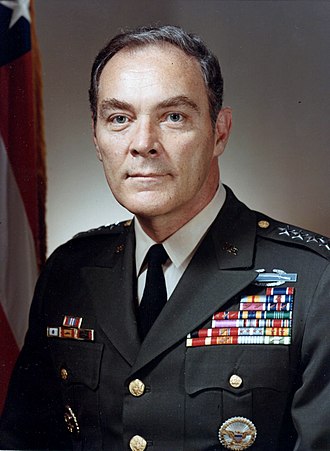
Alexander M. Haig, Jr. began his service in the Nixon administration as a military assistant to National Security Advisor Henry Kissinger from January 1969 to June 1970, before being promoted to Deputy Assistant to the President for National Security Affairs. He held this deputy role for the majority of the White House taping period, from June 1970 until January 1973, when he transitioned to the Pentagon to become Vice Chief of Staff of the U.S. Army. As the Watergate scandal forced the resignation of H.R. Haldeman, Nixon recalled Haig to serve as White House Chief of Staff from May 1973 until the president's resignation in August 1974.
What Haig talks about on the tapes
Vietnam War 179Watergate 172Foreign Policy 125Henry Kissinger 112Public relations 81Executive privilege 58Congressional relations 54National Security 53Military Strategy 50Nguyen Van Thieu 46Watergate scandal 39Peace negotiations 37
Conversations (700)
— Page 5 of 7President Nixon and Alexander Haig discuss whether to escalate military action against North Vietnam in response to ongoing cease-fire violations and the slow progress of POW releases. After reviewing the political risks, the lack of significant military gains, and the potential for a negative public backlash, Nixon decides to defer further action for now. They conclude that the President's recent warning has achieved a level of caution from Hanoi and agree to continue monitoring the situation while maintaining the legal justification for military involvement in Cambodia based on the original cease-fire agreements.
President Nixon and Alexander Haig meet to coordinate administration messaging and policy regarding ongoing conflicts in Southeast Asia, specifically referencing the withdrawal of forces from Laos. The two discuss the political implications of recent presidential statements and the necessity of maintaining credible warnings to foreign actors despite domestic media scrutiny. The conversation serves as a strategic check-in on foreign policy posture and the management of public perceptions concerning Vietnam-era defense commitments.
President Nixon and Alexander Haig discussed a proposal from Henry Kissinger regarding potential U.S. military strikes against North Vietnam in response to ceasefire violations. Both men expressed skepticism toward the proposal, agreeing that the military impact of such strikes would be negligible and that the timing could provide North Vietnam with a propaganda pretext to stall the release of American POWs. Ultimately, Nixon decided against authorizing the strikes, concluding that the action lacked the necessary strategic justification or 'gut' conviction that had characterized previous successful military decisions.
President Nixon and Alexander Haig consulted on the deteriorating military situation in Southeast Asia and the frequent violations of the Paris Peace Accords by North Vietnam. Concerned by intelligence reports of a potential April communist offensive and instability in Cambodia, they discussed the necessity of maintaining leverage without succumbing to a "crisis mentality" that might antagonize Congress. Nixon suggested that Haig conduct a regional assessment visit to Cambodia and South Vietnam, while both agreed that the administration should frame future military actions—such as renewed bombing—as a justified response to North Vietnamese treaty breaches rather than an escalation.
President Nixon and Alexander Haig discuss the escalating military situation in Cambodia and the need to justify continued U.S. air operations to a skeptical Congress. They emphasize that air strikes are necessary because enemy forces have violated established peace agreements. To better assess the crisis, the President instructs Haig to personally visit Cambodia and evaluate the situation on the ground.
President Nixon met with his senior advisors and staff to manage the escalating Watergate crisis and coordinate a response to the looming threat of grand jury indictments. The participants debated potential strategies for compelling John Mitchell to testify, considered whether key White House staff should resign or remain in their positions, and assessed the risks of congressional investigations. Nixon emphasized the necessity of seizing the initiative and establishing a narrative of presidential transparency and cooperation to protect the integrity of his administration.
Following his nationally televised address regarding the Watergate scandal, President Nixon received a supportive call from Alexander M. Haig, Jr. Haig expressed personal pride in the President’s handling of the crisis and his efforts to clear the air despite the difficult circumstances. The two also briefly discussed Henry Kissinger, with Haig noting Kissinger's guarded reaction to the speech and reaffirming their mutual reliance on his capabilities.
President Nixon and Alexander Haig discuss the public reception and internal morale following the President's televised address regarding the Watergate scandal on the previous evening. Haig expresses strong approval of the President's actions, characterizing the speech as a necessary move to clear the air and refocus the administration on its official duties. The conversation concludes with a mutual agreement to maintain high morale and return to standard government business.
President Nixon and Alexander Haig held a brief check-in to gauge the public and internal reaction to Nixon’s televised address regarding the Watergate scandal delivered the previous night. Haig confirmed that the reaction was positive, reassuring the President that the decision to give the speech remained sound despite the political pressure. The exchange concluded with Nixon emphasizing the need for his staff to maintain morale and focus on official business.
In this discussion, President Nixon and H. R. Haldeman deliberate on the appointment of Alexander M. Haig, Jr. as an interim White House Chief of Staff to provide firm leadership amidst the unfolding Watergate crisis. The President stresses the need for a strong figure capable of controlling White House staff members like Leonard Garment and George Shultz, while also managing Henry Kissinger. They agree that Haig should be brought in immediately on a temporary basis to command operations, with the potential for a permanent arrangement to be decided later.
President Nixon met with Henry Kissinger and Alexander Haig to discuss the fallout from the Watergate scandal, specifically comparing the current crisis to the Sherman Adams controversy during the Eisenhower administration. Following Kissinger's departure, Nixon and Haig deliberated on Haig taking over staff management duties to replace H.R. Haldeman. They ultimately decided that Haig would transition into an interim role as Chief of Staff, with Haig tasked to handle the logistics of the appointment while keeping his military rank.
President Nixon and Alexander Haig met to strategize on administration personnel shifts, specifically focusing on calming cabinet anxieties and implementing a 'paced' approach to management rather than sudden, spectacular changes. They finalized the appointments of William E. Colby to the CIA and planned the selection of a professional to lead the FBI, while weighing the potential involvement of John Connally and Horace 'Chappie' Rose to stabilize the White House staff. Nixon expressed a desire to maintain administrative continuity, manage the ongoing Watergate fallout by delegating legal inquiries to the Justice Department, and prepare for an upcoming Cabinet meeting to reinforce government stability.
President Nixon and Alexander Haig met to discuss ongoing personnel management and administrative transitions, as well as developing a strategy to counter potential damaging disclosures by former White House counsel John Dean. Nixon expressed concern over Dean’s access to sensitive documents and his possession of self-serving memoranda, specifically regarding a previously unacknowledged September 15, 1972, meeting. The two agreed on a strategy of limited public comment, emphasizing the necessity of protecting the presidency by framing Dean’s actions as self-interested and unreliable while maintaining a defensive posture regarding White House staff.
President Nixon and Alexander Haig strategize on how to coordinate testimony and mitigate damage regarding H.R. Haldeman’s interactions with John Dean amidst the escalating Watergate investigation. Nixon emphasizes the need to prevent Dean from controlling the narrative or inflicting further harm on the presidency, while urging caution regarding the upcoming meeting with Elliot Richardson. The pair discusses the potential risks of appearing inconsistent with previous public statements, particularly those challenged by journalist Jack Anderson, and seeks to balance their desired appearance of pursuing the truth against the threat posed by Dean's cooperation with prosecutors.
President Nixon and Alexander Haig met to strategize on managing the escalating Watergate crisis, focusing on the potential implications of John Dean’s testimony and the administration’s use of executive privilege. They discussed shifting the venue of testimony away from the Ervin Committee and into the grand jury process to protect presidential papers and administrative integrity. The conversation also touched upon the confirmation of Elliot Richardson and various personnel appointments, emphasizing the need to maintain a firm stance against Congressional encroachment while appearing cooperative on non-Watergate matters.
President Nixon and Alexander Haig met to strategize on managing the burgeoning Watergate scandal, specifically focusing on how to respond to the Ervin Committee and potential testimony from John Dean. The discussion centered on staffing the White House legal team, weighing the merits of candidates like J. Fred Buzhardt and Horace Chapman Rose to bolster their defense against Senate inquiries. Nixon emphasized the need for a dedicated, competent legal strategy to protect the office of the Presidency while asserting that he must personally remain detached from public confrontations with Dean.
President Nixon and Alexander Haig coordinate their schedules to facilitate a brief meeting in the Executive Office Building. The exchange focuses on logistical arrangements to ensure the two are able to connect for a discussion. No substantive policy matters are addressed in this short, administrative interaction.
President Nixon and Alexander Haig met to strategize on the administration's response to the escalating Watergate crisis, focusing on assembling a legal team and formulating a counterattack against John Dean. Nixon expressed a desire to insulate himself from the daily minutiae of the investigation to prioritize his broader presidential duties, such as international diplomacy and SALT negotiations. They discussed the potential use of executive privilege to protect sensitive national security documents from congressional and judicial scrutiny, while weighing the roles of various staffers and political allies like John Connally in the defense effort.
President Nixon instructed Alexander Haig to ensure H. R. Haldeman testified fully before the Grand Jury regarding his upcoming appearance. Fearing an appearance of obstruction, Nixon explicitly directed Haig to communicate that Haldeman should not cite executive privilege to withhold details about conversations in the Oval Office. The conversation served to emphasize the need for transparency to prevent the perception of a cover-up.
President Nixon and Alexander Haig discussed the expected testimony of Bob Haldeman, emphasizing the necessity for him to be fully forthcoming regarding his past conversations. The brief exchange reflects the administration's strategic concern over managing testimony amidst the ongoing Watergate investigations. This conversation served to reinforce the President's preference for a cooperative approach during the upcoming proceedings.
President Nixon met with Ronald Ziegler and Alexander Haig to coordinate a strategy for responding to the unfolding Watergate crisis, specifically focusing on managing John Dean’s potential revelations and impending Senate committee hearings. The group discussed utilizing executive privilege to protect presidential papers and staff notes while simultaneously orchestrating a public relations counterattack to challenge the media narrative. They also explored legal tactics to delay Senate proceedings by highlighting potential jeopardy to the rights of defendants like H.R. Haldeman and John Mitchell.
President Nixon and Alexander Haig met to discuss administrative staffing, legal strategies regarding the Watergate scandal, and the political climate surrounding U.S. military operations in Cambodia. The pair evaluated the potential selection of a special counsel to handle ongoing investigations and assessed the likelihood of a difficult vote in the House of Representatives regarding war funding. Throughout the conversation, Nixon emphasized the need for his staff to maintain morale and adopt a more combative stance in defending his administration's policies.
President Nixon and Alexander Haig discussed the selection of a special prosecutor to address the ongoing investigation into the Watergate scandal. The two evaluated the potential appointment of former California Governor Edmund G. “Pat” Brown, weighing his Democratic background, name recognition, and experience as a district attorney. Nixon aimed to ensure the investigation would be conducted fairly without unduly harming individuals involved, ultimately looking to influence Elliot Richardson's final selection.
Alexander M. Haig, Jr. contacts the White House operator to facilitate a telephone connection with Leonard Garment. This administrative request serves to initiate a high-level communication between staff members during a period of significant pressure on the Nixon administration. No further substantive discussion occurs on this specific recording beyond the request for the transfer.
Alexander Haig and Leonard Garment coordinated on the status of legal filings regarding Watergate-related documents and communications with the Justice Department. Garment confirmed that a motion had been filed and agreed to press for updates from the court via Justice Department channels. Additionally, the pair briefly discussed the competence of an unnamed individual, with Garment expressing confidence in the person's performance relative to previous alternatives.
President Nixon met with Alexander Haig and Ronald Ziegler to develop a strategic response to the Watergate scandal, specifically focusing on the selection of a special prosecutor and the management of executive privilege. The participants discussed concerns regarding the Ervin Committee hearings, the potential release of sensitive White House documents and presidential papers, and the need to coordinate a unified legal defense. They ultimately emphasized a strategy of limiting cooperation with congressional investigations while prioritizing the judicial process to manage public perception and defend the administration.
President Nixon and Alexander Haig met to discuss the status of a pending judicial ruling regarding security protocols and the handling of sensitive documents, specifically the decision to leave a binder box unopened. Haig also provided an update on his efforts to improve staff relations and organizational progress. The discussion concluded with a transition toward addressing the President's immediate schedule.
Alexander M. Haig, Jr. contacts the White House operator to initiate a telephone connection with H. R. Haldeman. This brief administrative exchange serves as the logistical link for internal staff communications during the height of the Watergate scandal. No policy discussions occur, as the call functions solely as a bridge to facilitate further consultation.
Alexander M. Haig, Jr. and H. R. Haldeman discuss concerns regarding Haldeman’s upcoming grand jury testimony and the potential subpoena of his personal notes. Haig expresses alarm over reports that Haldeman’s lawyers might have provided copies of these notes to the White House counsel, which could compromise claims of executive privilege. Haldeman clarifies that he possesses no copies outside the White House and confirms that he will return any existing extracts to his secure files to mitigate legal vulnerabilities.
President Nixon met with Alexander Haig, H. R. Haldeman, J. Fred Buzhardt, and others to strategize on the growing Watergate crisis, specifically focusing on the legal and political risks posed by Haldeman's personal notes. The group discussed the potential for these documents to be subpoenaed and the tension surrounding the use of executive privilege to protect them from grand jury scrutiny. Nixon emphasized his desire to gain control over these papers to avoid damaging misinterpretations and directed Buzhardt to serve as the primary legal counsel tasked with assessing the documents and managing the White House's defense strategy.
Alexander Haig and J. Fred Buzhardt, Jr. discuss the legal implications surrounding H.R. Haldeman’s possession of White House documents. The participants aim to clarify whether Haldeman improperly removed materials from the building, as Buzhardt expresses concern over a conflicting report from Haldeman’s lawyer. Haig emphasizes the necessity for caution regarding the defense's access to these records following his recent consultation with the President.
Alexander M. Haig, Jr. contacts the White House operator to initiate a telephone call to H. R. Haldeman. This brief administrative exchange serves as a logistical bridge to connect key Nixon administration officials during a period of high sensitivity. No substantive policy discussions occur, as the interaction is limited to a request for a connection.
Alexander Haig and H. R. Haldeman coordinate to manage internal conflicts between their respective legal teams regarding the handling of sensitive Watergate-related documents. They discuss a potentially damaging document involving a March 26, 1973, phone call from John Dean, which Haldeman asserts is protected by executive privilege and unrelated to his private conversations with the President. To resolve the friction, they decide to remove Leonard Garment from the process and establish direct communication between J. Fred Buzhardt, Jr., and Haldeman’s legal counsel to ensure a unified strategy.
Alexander M. Haig, Jr. utilized the White House operator to facilitate a bridge call to the offices of J. Fred Buzhardt, Jr. and Leonard Garment. This administrative coordination served to connect senior staff members involved in the evolving legal and political strategy of the Nixon administration. The primary purpose of the contact was to establish direct communication between these key legal advisors regarding ongoing developments.
Alexander M. Haig, Jr. and J. Fred Buzhardt, Jr. coordinate an urgent, private meeting to take place at the Presidency office in the Executive Office Building. The brief exchange focuses primarily on logistical arrangements for their immediate face-to-face consultation. The conversation confirms that the two officials needed to convene promptly to discuss sensitive matters outside of standard telephone communication.
Alexander Haig updates President Nixon on the positive public reception of the President's speech at the New Majority Dinner, while both men dismiss concerns regarding resignation and impeachment. Nixon emphasizes his firm stance on executive privilege, explicitly directing that no ground be yielded on the release of written documents. To manage the ongoing Watergate fallout, Nixon instructs Haig to sideline Leonard Garment and coordinate efforts through J. Fred Buzhardt, who is tasked with working closely with H.R. Haldeman and Senator John C. Stennis.
President Nixon met with Vice President Agnew and his Cabinet to discuss the ongoing impact of the Watergate scandal on the administration, personnel changes, and the need to maintain governmental stability. Key topics included the appointment of a special prosecutor, the selection of Elliot Richardson, and the importance of professional coordination between the White House and Cabinet departments to ensure the administration's 1972 election mandate remained the primary focus. Nixon emphasized the necessity of improving Congressional relations and maintaining morale within the bureaucracy despite the political distractions caused by the Ervin Committee hearings.
President Nixon and Alexander Haig met to strategize on the administration's response to the escalating Watergate crisis, focusing on managing public perception and protecting White House documents. They discussed the legal handling of materials belonging to H.R. Haldeman, Charles Colson, and John Ehrlichman, as well as the importance of maintaining a unified front to counter allegations of presidential involvement. Additionally, the pair evaluated personnel matters, including the confirmation of Elliot Richardson as Attorney General and the potential for a counter-offensive by leveraging information on previous administrations' abuses of power.
President Nixon met with Republican congressional leaders and key aides to discuss strategies for managing the fallout from the Watergate scandal and controlling the political narrative. The group focused on coordinating a response to the upcoming Senate Ervin Committee hearings, specifically addressing the risks posed by potential testimony from grand jury witnesses, and explored launching a bipartisan "blue ribbon" commission on campaign finance reform to seize the legislative initiative. Additionally, the President reviewed pending administrative appointments, including the nomination of Elliot Richardson as Attorney General and the selection of William Colby to lead the CIA, while emphasizing the importance of maintaining consistent, public support from Republican allies.
President Nixon met with Alexander Haig and Ronald Ziegler to coordinate White House messaging regarding administrative reorganization and the ongoing fallout from the Watergate scandal. The participants discussed strategies to project a positive image, including how to brief the press on the advisory roles of presidential counselors and the formation of cabinet committees. They also addressed the legal implications of the John Dean situation, specifically aiming to emphasize reports that lacked evidence linking the President to the scandal while preparing for upcoming Congressional hearings.
President Nixon and Alexander Haig met to strategize on the Watergate crisis, specifically discussing the selection of a Special Prosecutor and managing the administration's legal and public relations response. They evaluated potential candidates, including Warren E. Hearnes, and considered how to neutralize political pressure from the Ervin Committee and critics. Nixon emphasized the importance of maintaining a firm stance on executive privilege and directed staff to accelerate work on campaign finance reform to shift public narrative.
President Nixon and Alexander Haig discussed the status of a potential commission to address Watergate, focusing on William P. Rogers's effort to recruit Earl Warren for the role despite their adversarial relationship. They also reviewed news of indictments against Maurice Stans and John Mitchell regarding the Robert Vesco case, viewing the legal proceedings as a sign that the justice system was functioning. Additionally, Haig provided a brief status update on Elliot Richardson’s ongoing testimony and efforts to influence upcoming personnel appointments.
President Nixon and Alexander Haig held a brief, informal meeting to coordinate the logistics of moving personal or office items, specifically referencing an urn and supplies. They briefly touched upon the status of various tasks and expressed mutual disdain for an unnamed individual involved in the transition process. No significant policy decisions were reached, as the conversation served primarily to confirm the status of ongoing domestic arrangements.
President Nixon and Alexander Haig discuss a potential inaccuracy regarding the reported attendance of Horace “Chappie” Rose at a previous meeting involving Leonard Garment and J. Fred Buzhardt, Jr. Nixon expresses concern that misinformation about meeting participants is circulating and causing confusion. The two men agree to clarify whether Rose was indeed absent, highlighting the President’s focus on controlling the narrative and accuracy of internal reporting during this period.
Alexander M. Haig, Jr. updates President Nixon on his discussions with J. Fred Buzhardt, Jr. regarding recent legal meetings involving H.R. Haldeman’s counsel and Horace "Chappie" Rose. The conversation centers on clarifying Rose’s level of involvement in these meetings and addressing internal anxieties regarding potential misinformation conveyed by Leonard Garment. Nixon and Haig conclude by reaffirming their trust in Rose’s integrity while seeking to minimize staff tensions regarding the handling of sensitive information.
President Nixon and Alexander Haig held a brief, informal meeting to clarify the attendance of specific individuals, identified as “Chappie” and Garland, at a prior gathering. The discussion focused on rectifying the President’s uncertainty regarding who was present during that meeting. No major policy decisions were made, as the exchange served primarily to resolve a minor factual discrepancy regarding personnel.
President Nixon and Alexander Haig discuss the public relations fallout surrounding the indictments of John Mitchell and Maurice Stans, with Nixon expressing frustration over the underlying circumstances. The conversation shifts to scheduling meetings with Henry Kissinger and William Rogers to manage media coverage, as well as vetting William C. Sullivan for the FBI directorship based on strong recommendations from Senator Henry Jackson. Additionally, they review potential candidates for other high-level appointments, including James Schlesinger and replacements for the commission roles previously discussed with Earl Warren.
President Nixon and Alexander Haig discuss the political fallout from a recent legislative setback in the House of Representatives, attributing the loss to poor coordination within the Departments of State and Defense and a lack of support from Republican members. To address these deficiencies, they plan to bolster William E. Timmons's congressional relations team and refine their legislative strategy. Additionally, they discuss managing Henry Kissinger’s concerns regarding John B. Connally’s role, while noting positive press reactions following recent Cabinet changes.
President Nixon and Alexander Haig discuss the potential resignation of Henry Kissinger and his future role as Secretary of State. The President considers the strategic timing of offering Kissinger the position to ensure political stability. The conversation focuses on navigating this sensitive cabinet transition and determining the best approach for delivering the offer.
President Nixon and Alexander Haig discussed strategies to manage the fallout from the Watergate scandal, specifically focusing on the upcoming Congressional hearings and potential revelations regarding unauthorized wiretaps. They strategized on how to frame past FBI wiretapping activities as standard national security protocols inherited from previous administrations rather than partisan misconduct. Additionally, they evaluated the political implications of replacing Secretary of State William Rogers with Henry Kissinger or John Connally, ultimately weighing Kissinger's professional indispensability against the political utility of a cabinet change.
In this meeting, President Nixon, Henry Kissinger, and Secretary of State William Rogers discussed the administration's foreign policy strategy amidst the growing pressure of the Watergate scandal. The participants focused on preparing for an upcoming Soviet summit, managing ongoing negotiations regarding the Paris Peace talks and Cambodia, and evaluating personnel changes within the State Department. Despite concerns about domestic distractions and Congressional opposition, they emphasized the necessity of maintaining a firm stance in international negotiations, particularly regarding nuclear arms control and Southeast Asian stability.
President Nixon and Alexander Haig discuss legal and public relations strategies regarding Watergate, specifically focusing on the potential impact of CIA memoranda (memcons) and wiretap evidence. The conversation centers on coordinating testimony from Lt. Gen. Vernon Walters to ensure it aligns with the administration's position that Nixon had no direct involvement in attempting to use the CIA to cover up the scandal. They determine that these documents must be withheld under executive privilege to prevent political damage and plan to instruct H.R. Haldeman and John Ehrlichman on how to frame their upcoming interactions with investigators.
President Nixon met with H. R. Haldeman and Alexander Haig to strategize their defense regarding the Watergate investigation and the potential release of sensitive documents. The discussion centered on managing the implications of memoranda created by CIA Deputy Director Vernon Walters, which documented past interactions involving the President, Haldeman, John Ehrlichman, and John Dean. The group focused on shielding the administration from allegations of a cover-up by emphasizing national security concerns and framing the CIA’s involvement as a peripheral issue, while also ensuring that Haldeman and Ehrlichman’s forthcoming testimony remained consistent with their narrative.
President Nixon and Alexander Haig coordinate the logistics for the arrival of an unidentified individual, likely Lieutenant General Vernon A. Walters, to the Executive Office Building. They confirm the guest's travel progress to ensure a timely meeting. The discussion serves as a brief operational update to facilitate the visitor's imminent arrival.
Alexander M. Haig, Jr. advised President Nixon against meeting with Lieutenant General Vernon A. Walters to avoid attracting undue attention from investigators or the press. Nixon promptly accepted this counsel, acknowledging the potential liability such a meeting would create. Consequently, the two agreed to meet privately instead to discuss the matter further.
President Nixon and Alexander Haig held a brief administrative exchange to coordinate their schedules. The President invited Haig to his office in the Old Executive Office Building for a follow-up discussion. This brief interaction served as a logistical arrangement to facilitate a more substantive meeting between the two officials.
President Nixon and Alexander Haig met to discuss managing the ongoing Watergate investigation and coordinating the testimony of CIA Deputy Director Vernon Walters. Nixon emphasized that he wanted Walters to reassure officials like Elliot Richardson, William Colby, and James Schlesinger of the President’s innocence and his desire for a full investigation. The conversation centered on the potential legal exposure of H.R. Haldeman and John Ehrlichman, the status of sensitive memoranda of conversation, and ensuring the loyalty of key administration appointees amidst the political fallout.
President Nixon, Rose Mary Woods, and Alexander Haig confer to locate missing files once belonging to J. Edgar Hoover that were reportedly sent to the White House following the departures of H. R. Haldeman and John Ehrlichman. Woods clarifies that the sensitive materials were never delivered to her office or placed in her custody. Consequently, Haig agrees to investigate the matter further to determine the actual location of the files.
President Nixon instructed Alexander Haig to direct J. Fred Buzhardt to adopt a more supportive and optimistic tone when communicating with H.R. Haldeman and John Ehrlichman regarding their legal strategy. Nixon emphasized that Buzhardt must project confidence that the Watergate situation is manageable to counter the anxiety caused by Leonard Garment’s more alarming counsel. Additionally, the two discussed John Connally’s potential leave of absence from his law firm, with Nixon approving the move to address concerns regarding professional conflicts of interest.
President Nixon instructed Alexander Haig to manage the morale of staff members—specifically referencing Bob [Haldeman] and John [Ehrlichman]—by discouraging apocalyptic rhetoric regarding impeachment or legal jeopardy. Nixon directed Haig to reassure these individuals that the administration remains supportive and committed to their defense to prevent them from losing confidence. The primary objective was to ensure that distressed associates felt the White House was actively fighting on their behalf rather than conceding to the growing pressures of the Watergate scandal.
President Nixon and Alexander Haig discuss the urgent search for specific FBI files and a sensitive memorandum previously handled by John Ehrlichman. Nixon expresses concern over the potential inclusion of damaging material regarding Henry Kissinger within these documents, insisting that the damaging memo be retrieved to facilitate a proactive political offensive. Additionally, Haig confirms he will provide Fred Buzhardt with instructions for upcoming interviews with H.R. Haldeman, Ehrlichman, and Charles Colson.
President Nixon and Alexander Haig held a brief, cryptic discussion regarding the urgent location and secure handling of sensitive documents that Nixon wanted kept hidden from certain individuals. Nixon expressed frustration over the inability of staff to retrieve these materials from a safe within the building. The President directed Haig to locate the files immediately and ensure their contents remained shielded from unauthorized access.
President Nixon directs Alexander Haig to prioritize the urgent location of a specific document, insisting that his staff conduct a comprehensive search of the White House. Emphasizing a shift toward a public relations strategy, Nixon instructs Haig to leak the document to the press before it is submitted to the judge handling the case. This exchange highlights the administration’s focus on controlling the public narrative regarding Watergate-related materials.
President Nixon and Alexander Haig coordinate the preemptive release of a sensitive document to control the narrative amid concerns over unauthorized leaks. Nixon emphasizes that the current climate has become a public relations struggle and directs Haig to locate the material before it can be leaked by political opponents. The discussion reflects the administration's defensive strategy to manage information flow and prevent unfavorable press coverage.
Alexander M. Haig, Jr. informs President Nixon that he has located a large volume of sensitive FBI files related to Watergate, estimated at three feet of material, stored in a vault. Haig expresses the need to personally screen these documents to ensure security and prevent unauthorized access. The two agree to meet briefly at the White House before the President departs for Camp David to discuss the matter further.
President Nixon and Alexander Haig coordinate a meeting to discuss consolidating documents before the President’s departure for Camp David. The brief exchange focuses on logistical arrangements for the review of materials. Haig confirms his availability to meet with the President prior to his travel.
President Nixon and Alexander Haig met to strategize on managing public perception and internal testimony regarding Watergate-related documents and investigations. They discussed ensuring that individuals like General Vernon Walters and L. Patrick Gray maintained a narrative of presidential innocence while maneuvering to leak specific, favorable information to the press to counter negative allegations. The meeting focused on controlling the dissemination of records to ensure the President was portrayed as having no prior knowledge of the scandal.
President Nixon and Alexander Haig discuss the political fallout and potential disclosure of White House-authorized wiretaps, specifically regarding individuals like Tony Lake. They debate whether to preemptively admit to these national security-related taps or maintain a defensive stance while coordinating with William Ruckelshaus on a public statement. Ultimately, Nixon directs Haig to verify the scope of existing wiretap records to ensure the administration is prepared for impending press scrutiny and to protect Henry Kissinger and Ronald Ziegler from contradictory information.
President Nixon and Alexander Haig met to strategize on managing public and legal fallout from the ongoing Watergate scandal, specifically focusing on the unauthorized surveillance of National Security Council staffer Anthony Lake. They debated the necessity of publicly framing these wiretaps as legitimate national security measures while distancing the White House from illegal conduct by comparing their practices favorably to those of previous administrations. The pair discussed coordinating statements for Henry Kissinger and William Ruckelshaus, while emphasizing the need to locate specific files to support their defense that these operations were essential for protecting sensitive diplomatic initiatives.
President Nixon and Alexander Haig discussed the status of White House investigations into past wiretaps and surveillance operations to ensure they could mount a strong defense against potential public backlash. The two reviewed documentation regarding the scope of these activities, confirming they were authorized for national security purposes and were limited in number compared to previous administrations. They coordinated a strategy for William Ruckelshaus to deliver a public statement on the findings by the following week, while also preparing Henry Kissinger to deflect questions regarding these matters during his upcoming briefings.
President Nixon and Alexander Haig held a strategic meeting to manage the fallout from the Watergate scandal, specifically focusing on press narratives, the handling of sensitive CIA memoranda, and the upcoming testimony of administration officials. They discussed coordinating with figures like L. Patrick Gray and CIA officials to emphasize that the President had directed forceful investigations into potential intelligence leaks, rather than attempting a cover-up. The conversation centered on maintaining a firm stance on national security grounds regarding the custody of sensitive documents while countering unfavorable media interpretations of the President's past directives.
President Nixon and Alexander Haig discussed the legal and political risks surrounding sensitive memoranda of conversation (memcons) related to the Watergate investigation and potential CIA involvement. Concerned about potential leaks and forthcoming testimony from officials like James Schlesinger and Vernon Walters, Nixon insisted that these documents remain in White House possession to protect national security and the administration's legal standing. The two also coordinated a strategy for press secretary Ronald Ziegler to counter negative narratives by emphasizing past administrations' use of wiretaps and ensuring the administration's public stance on cooperation remains consistent.
President Nixon and Alexander Haig discuss legal strategy regarding the Watergate investigation, specifically focusing on John Dean’s role and his potential testimony. They review documentation of Dean's interactions with Lt. Gen. Vernon Walters, aiming to frame these as standard investigative procedures while distancing the President from Dean’s actions. The two conclude that J. Fred Buzhardt should consult with Richard Helms to assert national security privilege over specific records to limit their disclosure during the ongoing inquiry.
President Nixon and Alexander Haig discussed administrative strategies for responding to the escalating Watergate scandal, specifically focusing on efforts to manage public perception and counter negative media coverage. The two reviewed press briefings given by Ronald Ziegler and strategized on how to engage political allies like John Stennis to influence legislative and public opinion. Additionally, the conversation addressed the importance of preventing the release of names linked to previous administration wiretaps, with the President asserting that such disclosures would be disastrous for innocent parties.
President Nixon and Alexander Haig coordinate a public relations strategy regarding Louis Patrick Gray III's upcoming testimony and statements concerning the Watergate investigation. Nixon directs Haig to ensure Gray emphasizes that the President had instructed him to conduct a thorough and unrestricted investigation regardless of who it might implicate. The objective is to use this narrative to override damaging revelations surfacing from grand jury proceedings and congressional testimony.
President Nixon and Alexander Haig discuss the administration’s strategy regarding Watergate-related documents, specifically focusing on the handling of memoranda of conversation (memcons) and the containment of information held by Vernon Walters and Richard Helms. They emphasize the necessity of maintaining a unified stance that no such records exist or will be released, framing this as a critical protection of presidential papers under the guise of national security. Furthermore, they coordinate efforts to contact L. Patrick Gray for testimony and confirm the preparation of additional materials by Leonard Garment for review at Camp David.
President Nixon consulted with Alexander Haig and Ronald Ziegler to strategize on managing the political fallout from the ongoing Watergate investigation. The discussion focused on characterizing Nixon's past communications with L. Patrick Gray and his inquiries into potential CIA involvement as legitimate efforts to uncover the facts rather than as attempts to obstruct justice. They emphasized the need to frame these interactions through the lens of national security and asserted that the President had consistently ordered a thorough, high-level investigation. The group also discussed managing potential evidence, such as memoranda of conversation (memcons), and reinforcing the narrative that John Dean was the primary source of the administration's legal difficulties.
President Nixon and Alexander Haig discussed the ongoing Watergate investigation, focusing on managing the public and legal narrative surrounding H.R. Haldeman and John Ehrlichman. Nixon sought to convince Haig that interactions between his aides and the CIA were not a conspiratorial attempt to orchestrate a cover-up, but rather an effort to keep the CIA out of the investigation. The two men coordinated on strategies for upcoming grand jury testimony, specifically considering the use of executive privilege to protect Haldeman from potential perjury charges while emphasizing the need to ensure favorable, non-incriminating testimony from figures like Vernon Walters.
President Nixon and Alexander Haig discuss strategic responses to the Watergate scandal, focusing on managing public perception and protecting administration documents. They address the controversy surrounding Central Intelligence Agency involvement, the potential risks of disclosing "memcons" (memoranda of conversation), and the necessity of maintaining a unified front among staff and foreign diplomats. Additionally, Nixon proposes a new commission on election reform as a distraction to shift media focus away from the ongoing investigations.
President Nixon and Alexander Haig held a strategic discussion regarding the administration's defensive posture in the ongoing Watergate investigation. They reviewed the status of key witnesses, including L. Patrick Gray’s successor, FBI files, and the expected testimony of figures like John Dean and Vernon Walters. Furthermore, Nixon proposed declassifying decade-old national security records, such as those related to the Bay of Pigs and the death of Ngo Dinh Diem, as a diversionary tactic to generate favorable controversy and shift public focus away from Watergate.
President Nixon met with Ronald Ziegler, Alexander Haig, and Lawrence Higby to discuss the ongoing fallout from the Watergate scandal and manage the White House's public relations strategy. They addressed the intensifying pressure surrounding John Dean’s allegations, the potential for impeachment, and the legal implications of White House files and intelligence activities. Nixon emphasized a strategy of holding the line, challenging Dean’s credibility, and maintaining administrative operations despite the investigation's encroachment on his staff and records.
President Nixon met with Lawrence Higby and Alexander Haig to discuss the unfolding Watergate scandal, focusing on the potential legal vulnerabilities of H.R. Haldeman and John Ehrlichman. Nixon expressed concerns regarding the motives and credibility of John Dean, specifically speculating about his possession of sensitive files and his efforts to secure immunity. The participants assessed the likely impact of forthcoming Ervin Committee testimony, emphasizing the need to maintain executive privilege and protect the administration from legal fallout.
President Nixon and Alexander Haig met to strategize the administration's response to the Watergate scandal, specifically focusing on managing the public statements of William Ruckelshaus and mitigating the impact of documents held by John Dean. They discussed the necessity of distancing the President from specific FBI and White House activities involving J. Edgar Hoover and William C. Sullivan. Nixon expressed relief after a review of his own files and private memoranda confirmed that no evidence existed linking him directly to the controversial actions under scrutiny.
President Nixon and Alexander Haig coordinate the administration's public response to ongoing Watergate-related pressures, specifically addressing critical statements made by William D. Ruckelshaus. They discuss drafting a formal White House statement intended to emphasize the administration's cooperation with the FBI. The two men also strategize on how to frame internal narratives regarding John D. Ehrlichman and the handling of the investigation to minimize political damage.
President Nixon and Alexander Haig discuss the administration's strategy for responding to Watergate-related investigations, specifically focusing on FBI records and the potential political exploitation of past wiretaps from the Eisenhower, Kennedy, and Johnson administrations. Nixon instructs Haig to pressure FBI Acting Director William Ruckelshaus to investigate the disposition of previous administrations' records to deflect scrutiny from the White House. The two also address the legal challenges posed by Judge John Sirica's access to John Dean's documents and the potential transfer of these materials to the Ervin Committee and the grand jury.
President Richard M. Nixon and Alexander M. Haig, Jr. held a brief, informal meeting in the Old Executive Office Building. The exchange consisted of inconsequential social pleasantries rather than substantive policy deliberations or strategic planning. No significant decisions were made or action items assigned during this minute-long interaction.
President Nixon met with Ronald Ziegler and Alexander Haig to formulate a public relations strategy to counter the ongoing Watergate scandal. The discussion focused on shifting public attention toward the previous Democratic administrations by highlighting missing FBI wiretap records from the Kennedy and Johnson eras. Nixon emphasized the importance of aggressive tactics, including the declassification of sensitive documents and the promotion of a narrative that the White House had fully cooperated with investigations into national security leaks.
President Nixon met with Ronald Ziegler and Alexander Haig to strategize on press relations and the escalating Watergate crisis. The discussion focused on managing media inquiries, the potential use of executive privilege regarding sensitive documents, and assessing the implications of ongoing investigations involving former aides like John Dean, H.R. Haldeman, and John Ehrlichman. Key deliberations included the administration's cooperation with the FBI and CIA, the potential for a presidential statement, and addressing public perceptions concerning the involvement of high-ranking officials.
President Nixon and Alexander Haig met to discuss managing the ongoing Watergate crisis, focusing on the legal strategy surrounding pending grand jury testimony and the handling of sensitive White House documents. They reviewed the status of former officials and aides—including John Dean, H.R. Haldeman, and John Ehrlichman—while coordinating how to address potential leaks and FBI files related to national security wiretaps. The conversation emphasized maintaining a strong defense, asserting executive privilege over specific records, and preparing for the impact of forthcoming indictments on the administration's political standing.
President Nixon and Alexander Haig held a brief, informal meeting in the Old Executive Office Building to discuss administrative strategy and personnel considerations. Their conversation touched on the potential involvement of John Connally and the management of federal programs to ensure effective executive control. The discussion primarily focused on navigating internal political maneuvers and reinforcing the administration's authority in the wake of ongoing institutional pressures.
President Nixon and Alexander Haig discuss the handling of sensitive White House memoranda and internal records in the context of the unfolding Watergate investigation. They specifically evaluate the potential risks associated with releasing these documents, comparing them to personal diaries, and assess the implications of testimony involving John Dean and the FBI. The discussion reflects the administration's strategic efforts to manage the disclosure of internal materials while anticipating the legal and political fallout of the scandal.
President Nixon met with Ronald Ziegler, Alexander Haig, and Leonard Garment to manage the administration's defensive response to ongoing Watergate investigations and emerging media scrutiny regarding the President's personal finances. The group discussed the legal and political implications of recent testimony from Lt. Gen. Vernon Walters, concerns regarding potential indictments of senior staff, and the management of sensitive documents related to the Huston Plan. Nixon emphasized maintaining a strategy of resilience, rejecting the idea of constant public rebuttals, while coordinating efforts to handle inquiries from the Ervin Committee and prosecutors without further damaging the presidency.
Alexander Haig briefed President Nixon on the handling of sensitive documents and the impending testimony of Lieutenant General Vernon Walters regarding the Watergate scandal. Haig coordinated a meeting with J. Fred Buzhardt, Jr. to prepare for Walters’s appearance before the Senate Armed Services Committee, aiming to manage the committee’s growing desire to distance themselves from the controversy. The participants agreed to discuss further details in person to avoid continued exposure over the telephone.
President Nixon summoned Alexander M. Haig, Jr. to his office in the Old Executive Office Building for a brief administrative consultation. The discussion focused on coordinating Haig’s immediate availability and personal schedule following the conclusion of his prior meetings. This interaction served to facilitate urgent face-to-face communication between the President and his Chief of Staff.
President Nixon met with Alexander Haig and later Ronald Ziegler to coordinate the administration’s defensive strategy regarding the Watergate scandal, specifically targeting allegations concerning his San Clemente property and the conduct of John Dean. Nixon emphasized the need for a combative public response, directing Ziegler to demand a formal apology and retraction from the Ervin Committee for the circulation of libelous claims. Throughout the discussion, Nixon underscored his desire to maintain executive privilege for his aides while expressing distrust of various administration officials and confirming his use of a White House taping system.
President Nixon and Alexander Haig met to discuss the urgent need to appoint a Special Prosecutor for the Watergate investigation, specifically focusing on the confirmation process for Elliot Richardson and the potential risks of selecting an independent candidate. The President expressed frustration with current legal strategies and directed Haig to coordinate with J. Fred Buzhardt to develop a new "game plan" to regain political initiative. Additionally, they reviewed scheduling logistics for John Connally and Henry Kissinger, as well as preparations for an upcoming presidential address regarding Vietnam and national economic policies.
President Nixon and Alexander Haig met to strategize on the mounting pressures of the Watergate scandal, specifically focusing on the necessity of appointing an independent prosecutor to restore administrative control and credibility. They discussed managing Henry Kissinger’s volatile psychological state and potential future roles, as well as the ongoing fallout from the FBI wiretap revelations. The two also coordinated upcoming public statements, legislative messaging, and internal staff realignments to stabilize the administration amidst the crisis.
President Nixon and Alexander Haig coordinate the logistics of a briefing or document delivery involving a third party who is currently in transit to an office. The brief exchange focuses on scheduling the arrival of materials to the President within approximately 20 minutes. No major policy decisions are reached, as the conversation serves primarily as a status update on administrative communication.
President Nixon and Alexander Haig discuss the ongoing Watergate investigation, specifically focusing on the recent testimony of Vernon Walters regarding CIA involvement. The conversation centers on managing potential incriminating notes held by John Ehrlichman and the risks posed by John Dean's anticipated testimony, which may implicate Charles Colson. Nixon emphasizes the need for legal counsel J. Fred Buzhardt to consult with Colson immediately to coordinate a strategy for handling these developments.
President Nixon and Alexander Haig discuss ongoing Watergate pressures, focusing on the management of sensitive documents, potential witnesses, and the search for a new Special Prosecutor. They review the strategy for Lt. Gen. Vernon Walters’s testimony, emphasizing the assertion of national security privilege to withhold classified intelligence documents. Additionally, Nixon justifies the use of wiretaps to address leaks within the National Security Council and strategizes with Haig on how to maintain administrative operations while navigating these unfolding scandals.