Ehrlichman, John D.
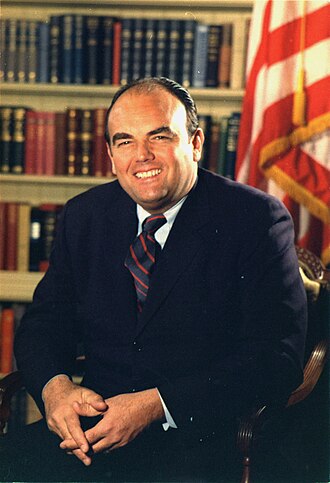
John D. Ehrlichman initially served as Counsel to the President from January 1969 to November 1969, where his duties quickly expanded from legal issues to broader policy development. This shift led to his transition in November 1969 to Assistant to the President for Domestic Affairs, a role he held until April 1973. Throughout the majority of the White House taping period (February 1971 – July 1973), he acted as Nixon's chief domestic advisor and helped direct the covert "Plumbers" unit before the escalating Watergate scandal forced his resignation in April 1973.
What Ehrlichman talks about on the tapes
Economic policy 119Congressional relations 101Public relations 91Watergate 77Vietnam War 58Political strategy 58Legislative strategy 57Welfare Reform 55Revenue sharing 53Busing 52Foreign Policy 47Executive privilege 47
Conversations (807)
— Page 7 of 9George P. Shultz and John D. Ehrlichman discussed personnel matters regarding the second-term administration reorganization, specifically noting that Arnold R. Weber declined potential appointment offers. The pair reviewed a request from Samuel R. Pierce, Jr. to serve as a circuit court judge after completing his current Treasury duties, rather than accepting an ambassadorship. Additionally, they addressed a request for a presidential pardon for William R. Ming, Jr., a Chicago lawyer facing tax fraud charges, which Ehrlichman agreed to refer to John W. Dean, III.
John D. Ehrlichman and George P. Shultz discuss potential presidential pardons for the upcoming Christmas season, specifically addressing the case of a Chicago attorney convicted of tax fraud. Shultz also briefs Ehrlichman on Samuel Pierce’s career objectives, noting that Pierce prefers a judicial appointment over an ambassadorship and intends to remain at the Treasury Department for several more months. The pair coordinate the documentation and handling of these personnel and legal matters for further review by the President.
President Nixon met with H. R. Haldeman, Robert Dole, and various staff members to discuss political appointments, including the selection of George H. W. Bush as the new Republican National Committee Chairman and the departure of Robert Dole. The group also evaluated strategies for a second-term administration reorganization, emphasizing the need for loyal, creative personnel and improved administrative control over the bureaucracy. A significant portion of the discussion focused on managing the public relations fallout of the Watergate scandal and Segretti's campaign sabotage operations, with the President weighing whether to issue a statement to distance the White House from these controversies.
President Nixon and John Ehrlichman met with Jewell R. LaFontant to discuss her recruitment for a high-level role in the Justice Department as part of the administration's second-term reorganization. Nixon offered LaFontant the position of Deputy Solicitor General to build her federal legal experience, explicitly framing this appointment as a stepping stone toward a future nomination to the federal judiciary. The meeting also addressed the administration's desire to appoint more minority and female judges, the strategic challenges of navigating the American Bar Association, and coordination with legal staff to facilitate her transition to Washington, D.C.
President Nixon met with H.R. Haldeman and John Ehrlichman to discuss personnel and organizational strategy for his second term. The participants focused on the importance of appointing a high-profile woman to the White House staff to handle political and PR tasks, with Anne Armstrong identified as a prime candidate due to her toughness and political savvy. They also addressed concerns regarding cabinet performance, the management of congressional relations, and the necessity of re-instituting regular staff meetings to prevent unauthorized end-runs by officials like George Shultz.
In this wide-ranging discussion, President Nixon met with top aides and political associates to strategize for his second term, with a primary focus on navigating the difficult final stages of the Vietnam peace negotiations. Nixon emphasized his resolve to continue bombing campaigns until a satisfactory agreement was reached while managing public perception and Congressional relations. The conversation also covered extensive planning for second-term personnel appointments—including naming John Scali as UN Ambassador—and organizational restructuring to ensure a loyal, efficient administration. Throughout, Nixon stressed the need for his appointees to avoid being captured by existing bureaucracies and to cultivate new political constituencies rather than deferring to the traditional East Coast establishment.
President Nixon met with John Ehrlichman to discuss the second-term administration reorganization, emphasizing the need to assert control over the federal government and prioritize loyalists for key appointments. The two men also strategized on managing Congressional relations, specifically favoring bipartisan cooperation with Democrats like Mike Mansfield to bypass obstructionist Republicans. Additionally, they reviewed domestic policy messaging, with Nixon stressing the importance of brevity in inaugural speeches and direct, disciplined communications to frame his administration’s accomplishments.
President Nixon and John Ehrlichman met to review budgetary priorities, specifically focusing on defense spending and the implementation of revenue sharing programs. They also evaluated costs and funding strategies for the Youth Conservation Corps and various Summer Youth Programs. The discussion centered on balancing these domestic initiatives against federal fiscal constraints.
President Nixon met with Richard Kleindienst and John Ehrlichman to discuss personnel matters for the second term, specifically the potential nomination of L. Patrick Gray as FBI Director and the political risks associated with his confirmation hearings regarding the Watergate scandal. The participants also evaluated potential government reorganizations, including the consolidation of narcotics enforcement resources and a proposed restructuring of the Customs, Border Patrol, and FBI investigative functions. Additionally, Nixon directed Kleindienst to pressure NFL Commissioner Pete Rozelle to end television blackouts for sold-out playoff games, viewing it as a popular policy move that would benefit the public.
President Nixon and John Ehrlichman discussed the strategic reorganization of the executive branch and federal agencies during the transition into the second term. Key focus areas included leadership prospects for the FBI, specifically regarding Richard Kleindienst and Frank Rizzo, and the consolidation of narcotics oversight within the White House. Ehrlichman confirmed he tasked William Timmons with gauging legislative sentiment as the administration moved to centralize administrative control.
President Nixon met with his senior aides and advisors to discuss a wide range of personnel appointments, administrative reorganizations, and the ongoing situation in Vietnam. The group strategized on filling key government roles while simultaneously consolidating executive office functions to reduce staff and streamline bureaucracy. Additionally, they reviewed the military status of the Vietnam War, affirming their commitment to continue military pressure until a satisfactory peace agreement could be secured.
President Nixon met with H. R. Haldeman, John Ehrlichman, and Henry Kissinger to discuss the administration's ongoing challenges with press relations, particularly concerning the media's coverage of the Vietnam peace negotiations. The participants analyzed the political sensitivity surrounding Kissinger’s public comments and potential resignation, while also evaluating the President's credibility and the impact of the 1972 election results. Additionally, the conversation addressed the logistical complexities of the upcoming second-term reorganization and the need for effective communication strategies regarding legislative budget priorities.
President Nixon met with H. R. Haldeman and John Ehrlichman to discuss a wide-ranging set of administrative tasks, including second-term staff reorganization, the reassignment of various White House personnel, and the streamlining of the President's schedule. A significant portion of the discussion addressed concerns over potential Watergate involvement by staffers like Charles Colson and the necessity of managing internal information flows, including the President's news summaries. They also reviewed diplomatic and domestic challenges, specifically evaluating Henry Kissinger's recent morale, his relationship with the press, and the political fallout from the recent bombing campaigns in North Vietnam.
President Nixon met with John Ehrlichman, H.R. Haldeman, and Henry Kissinger to discuss executive branch reorganization, judicial and FBI appointments, and legislative strategy. The President emphasized the need to streamline executive functions by empowering cabinet-level counselors and reducing the White House staff to improve efficiency and minimize concerns regarding executive privilege. Additionally, the group addressed the ongoing Vietnam peace negotiations and the importance of maintaining a unified stance with key administration officials as they prepared to brief Congress on these domestic and foreign policy priorities.
President Nixon met with John Ehrlichman and later Henry Kissinger to discuss public perception of the Vietnam War negotiations, the administration's strategy for managing Congressional criticism, and the government's approach to domestic reorganization. Nixon and his advisors emphasized the necessity of maintaining a firm stance in peace negotiations while framing the conflict as a defense of South Vietnamese civilians against North Vietnamese aggression. The group also evaluated the impact of international criticism—specifically from Canada regarding U.S. bombing campaigns—and determined that while the administration would not be deterred, they would explore methods to exert diplomatic and economic pressure on such critics.
President Nixon met with H.R. Haldeman and John Ehrlichman to discuss high-level staffing, Cabinet appointments, and managing relations with a hostile Congress. The group addressed strategies for the upcoming inaugural, including a simplified Cabinet swearing-in process and limiting White House social events. Additionally, they reviewed potential candidates for various agency roles, the future of L. Patrick Gray at the FBI, and the need to maintain distance from the ongoing Watergate investigation.
President Nixon met with George Shultz, Herbert Stein, and John Ehrlichman to strategize on economic messaging and upcoming policy announcements, specifically regarding the Cost of Living Council and rising food prices. They discussed plans to implement targeted administrative actions—such as reducing export subsidies and adjusting stockpiles—to mitigate inflation while framing congressional overspending as the primary threat to the nation's economic prosperity. Nixon emphasized the need for an aggressive public relations campaign to highlight the administration's economic record and to shift the political burden for potential fiscal instability onto the Democratic-controlled Congress.
In this meeting, President Nixon and his staff, particularly Frederic Malek and Roy Ash, focused on the management reorganization of the federal government for his second term. Nixon emphasized the critical need for absolute loyalty among appointees to ensure that government agencies act in accordance with presidential directives, specifically noting the importance of controlling the IRS and staffing departments with loyalists. Additionally, the President reviewed economic messaging strategies for the upcoming budget, instructed his team to minimize unnecessary paperwork, and discussed sensitive developments regarding potential Vietnam peace negotiations, tasking Henry Kissinger and Alexander Haig with maintaining absolute secrecy.
President Nixon and John Ehrlichman briefly discussed the President’s upcoming schedule and administrative agenda. The conversation focused on managing meetings with new Cabinet officials, specifically mentioning Elliot L. Richardson. No substantive policy decisions were reached during this brief exchange.
President Nixon met with H.R. Haldeman, Charles Colson, and other senior advisors to discuss staffing appointments, media relations, and legal developments concerning the Watergate scandal. The participants focused on identifying candidates for key government positions, including the IRS commissioner, and debated the management of the administration’s public image amid mounting investigative pressures. Additionally, they reviewed potential risks associated with the ongoing Watergate legal proceedings and the potential for congressional inquiries resulting from upcoming trials.
John D. Ehrlichman and President Nixon discuss the scheduling of brief, purposeful meetings with key administration officials to solidify staffing for the second term. They identify the three new counselors, VA administrator Donald E. Johnson, and CEQ leadership under Russell E. Train as priority contacts to confirm their status and provide direction. Ehrlichman is tasked with coordinating these brief, substantive check-ins through H.R. Haldeman to ensure the administrative transition proceeds efficiently.
President Nixon met with members of the Council on Environmental Quality and key administration advisors to discuss the content and delivery of his upcoming State of the Union messages. Nixon emphasized a desire for a positive, forward-looking tone regarding the environment and population growth, while shifting from a single speech to a series of ten installments to maintain sustained media interest. The conversation also touched upon the restructuring of intelligence and resource management, as well as complex diplomatic maneuvers involving Vietnam negotiations and potential Middle East initiatives.
President Nixon met with his Vice President, Cabinet members, and senior staff to conduct a briefing on the upcoming federal budget. The discussion focused on the necessity of fiscal restraint, including the reduction and termination of certain government programs, to avoid tax increases and curb inflationary pressures while maintaining an expanding economy. Cabinet members analyzed projections for the 1974 and 1975 budgets, emphasizing the shift in spending priorities from defense toward human resources and the importance of presenting the budget to Congress and the public as a responsible alternative to higher taxation.
President Nixon and his Cabinet members strategized on how to promote the administration’s 1974 budget and defend proposed spending cuts against inevitable Congressional and lobbying opposition. The participants emphasized shifting from a constituency-based political strategy to a national message centered on fiscal responsibility, specifically using the themes of 'jobs' and 'taxes' to appeal to working-class voters. Nixon underscored the necessity of forcing Congress to accept accountability for spending, ultimately positioning the administration to blame Democrats if tax increases become required to fund legislative priorities.
President Nixon met with H.R. Haldeman and John Ehrlichman to discuss personnel staffing, legislative strategy, and the administration’s approach to managing congressional relations following his reelection. A significant portion of the discussion centered on Vice President Spiro Agnew’s recent attempts to assert independent policy initiatives, with Nixon and his aides expressing concern about Agnew's lack of coordination with the White House and his pursuit of public attention. The group also evaluated strategies for promoting the administration's budget and legislative agenda, specifically focusing on how to handle executive privilege claims and the confirmation of presidential assistants by Congress.
President Nixon met with Republican congressional leadership to outline his fiscal strategy for the 1974 budget, emphasizing the necessity of expenditure control to avoid tax increases and curb inflation. Nixon and his advisors discussed the use of budget impoundments to maintain a spending ceiling of $269 billion, framing this approach as a critical move for economic prosperity despite the anticipated pushback from special interest groups. The meeting concluded with a call for Republican leaders to unify behind the administration's fiscal restraint and to clearly communicate that budget cuts are essential for maintaining national economic stability.
President Nixon met with Vice President Agnew and a broad bipartisan group of Congressional leaders to outline the administration's 1974 federal budget and economic strategy. Economic advisors Herbert Stein and George Shultz presented data highlighting a strong 1972 economy and stressed the necessity of fiscal discipline to curb inflation and maintain growth. The President urged Congress to support his proposed spending ceilings, emphasizing the need to avoid the inflationary deficits experienced during the late 1960s, while briefly acknowledging progress toward a Vietnam peace settlement.
President Nixon met with bipartisan Congressional leaders, cabinet members, and staff to outline the administration’s strategy for the 1973 and 1974 federal budgets, emphasizing a commitment to avoiding tax increases. The President defended his use of impoundment to control spending and curb inflation, arguing that Congress must share the responsibility of fiscal discipline or face the political consequences of tax hikes. The discussion also addressed the economic impact of the Vietnam cease-fire, defense budget priorities, and the need for greater cooperation between the executive and legislative branches to manage spending levels.
President Nixon and John Ehrlichman discuss political strategy regarding the 1974 budget and the congressional confirmation of Peter M. Flanigan. They deliberate on press messaging to leverage opposition against potential tax increases and review the responsiveness of Democratic leaders like Wilbur Mills to the administration's firm fiscal stance. Additionally, the President briefly addresses administrative scheduling with Stephen B. Bull regarding upcoming meetings, including sessions with POW wives.
President Nixon met with Charles Colson and later John Ehrlichman to discuss media strategy, the administration's ongoing struggle with press relations, and managing the political fallout from the Watergate scandal. The participants reviewed the President's performance in recent press conferences and evaluated the benefits of more frequent televised appearances to bypass hostile media coverage and directly influence public opinion. They also addressed specific executive privilege concerns, including the A. Ernest Fitzgerald case, and explored strategies for handling upcoming interactions with figures like Edward Heath and John Connally.
President Nixon and John Ehrlichman met to discuss the logistics of an upcoming meeting with the Executive Committee of the Republican Governors, specifically focusing on how to elevate the status of Kenneth R. Cole, Jr. within the administration. They also reviewed recent political events, including a critique of Speaker Carl B. Albert's performance at a Time magazine anniversary dinner compared to the more favorable impression made by Gerald R. Ford. Finally, they briefly touched on perceived slights by Senator Mark O. Hatfield during a recent presidential breakfast event.
President Nixon met with Robert J. Brown and John D. Ehrlichman to discuss Brown's departure from his White House role and his future professional plans. The discussion covered Brown's potential involvement in international marketing programs and public broadcasting, as well as addressing the broader challenges of the American public image regarding political violence and radicalism. Following the Browns' departure, Nixon and Ehrlichman briefly addressed staffing concerns at the Department of Health, Education, and Welfare, specifically regarding administrative appointments and regionalization policies.
President Nixon met with John Ehrlichman to discuss various administrative, economic, and staffing challenges facing the White House. The participants addressed personnel matters, including the potential departure of Patricia Hitt from HEW and organizational issues involving Herbert Klein and Peter Peterson. They also reviewed economic policy, particularly Phase III controls, and strategized on how to manage Cabinet officers and Congressional relations by utilizing decision papers to streamline presidential involvement. Additionally, the conversation touched upon the complexities of the national energy policy and the upcoming preparation for foreign policy discussions, including SALT.
President Nixon met with key officials, including Earl Butz, James Lynn, Caspar Weinberger, and John Ehrlichman, to coordinate administration policy on housing, welfare reform, and government reorganization. The discussion focused on addressing the ineffectiveness of subsidized housing programs, the potential for a housing moratorium, and the need to craft a cohesive legislative agenda before the upcoming Congressional recess. Nixon emphasized the importance of presenting an aggressive, bipartisan posture to Congress and strategically managing Cabinet relations to ensure unified messaging on domestic policy.
President Nixon met with his key economic advisors—George Shultz, Herbert Stein, Roy Ash, and John Ehrlichman—to assess the administration's economic policy, particularly the transition to Phase III of the wage and price controls. The group discussed the political and economic challenges of managing inflation, maintaining a $250 billion budget ceiling, and navigating potential labor strikes, with Nixon emphasizing the need for a unified strategy and public confidence. The participants also addressed international trade tensions, the devaluation of the dollar, and the necessity of managing Congressional relations to sustain the administration's fiscal objectives.
President Nixon met with H. R. Haldeman and John Ehrlichman to discuss the potential mishandling of David Eisenhower's Navy discharge and the broader political performance of Secretary of the Navy John Warner. The participants also strategized on how to counter the Ervin Committee's Watergate investigation by broadening its scope to include past political campaigns, and they coordinated a messaging plan to defend the administration's impoundment of budget funds. Finally, the group reviewed legislative priorities and briefing materials for an upcoming meeting with Republican Congressional leaders.
President Nixon met with Republican congressional leaders to discuss his administration's legislative priorities, focusing primarily on securing support for a fiscally responsible budget. He emphasized the necessity of cutting spending and utilizing presidential vetoes to combat inflation and avoid tax increases, framing these actions as essential for the nation's economic stability. Additionally, the President and the leaders engaged in an extensive review of recent foreign policy, specifically highlighting the significance of the Vietnam cease-fire and the strategic importance of U.S. global leadership.
President Nixon met with H. R. Haldeman and John Ehrlichman to discuss a wide-ranging agenda, primarily focusing on managing the political fallout from international monetary policy, specifically dollar devaluation, and navigating complex economic and tax legislation with Congressional leadership. The group addressed the President's upcoming schedule, including a potential trip to California, while strategizing on how to handle the escalating Watergate investigations and the role of executive privilege. Throughout the discussion, Nixon emphasized the need for a more proactive and coordinated public relations strategy to counter Congressional opposition and maintain leverage on domestic spending initiatives.
President Nixon met with George Shultz, John Ehrlichman, and others to strategize the communication and rollout of pending economic policies, specifically currency devaluation and trade packages. Nixon and his advisors agreed to separate the announcements to ensure the trade initiatives remained a positive, standalone narrative, fearing that tying them to the complex and potentially controversial devaluation would dilute their impact. Furthermore, they discussed engaging with Congressional leaders like Wilbur Mills to advance legislative goals, including welfare reform, and debated the necessity of incorporating Henry Kissinger into future economic policy deliberations.
President Nixon met with John T. Dunlop and several senior administration officials to formalize Dunlop’s appointment as the new chair of the Cost of Living Council. The discussion centered on the challenges of implementing Phase III of the administration's economic policy, specifically emphasizing the necessity of fiscal restraint and cooperation from labor and management to combat inflation. Nixon expressed his confidence in Dunlop’s unique ability to bridge the gap between business and labor interests to stabilize food prices and the broader economy.
President Nixon met with George Shultz, John Ehrlichman, and Wilbur Mills to coordinate the administration's legislative strategy regarding tax reform, foreign trade, and energy policy. The discussion focused on establishing a bipartisan approach to these initiatives, with Nixon emphasizing the need for political cooperation to advance key priorities like energy independence and trade negotiations while avoiding overly contentious tax reform proposals. The participants agreed on the importance of consulting with congressional leadership to ensure bipartisan support for upcoming legislative packages and discussed leveraging presidential bargaining authority in international trade and monetary affairs.
President Nixon met with Senator Russell Long, John Ehrlichman, and George Shultz to coordinate administration strategy regarding welfare reform, tax policy, and trade legislation. The discussion focused on securing Congressional support for the administration's agenda while maneuvering around bureaucratic interference and the influence of partisan groups like Common Cause. Nixon emphasized the need for a collaborative approach with Congressional leadership, particularly regarding trade negotiations and energy policy, while also reflecting on the importance of maintaining strength and respect in foreign policy.
The meeting began as a farewell session for John L. Campbell, who was departing his administrative role, followed by a transition to a policy briefing. President Nixon then met with Charles J. DiBona, George P. Shultz, John D. Ehrlichman, and Brent G. Scowcroft to discuss DiBona's new role as a special consultant on energy. The group analyzed complex domestic and foreign policy issues regarding energy security, including Middle Eastern oil dependence, the political influence of environmental advocacy groups, and the need for a coordinated interagency strategy.
President Nixon met with John Ehrlichman, George Shultz, and other staff to discuss economic policy, personnel appointments, and administration public relations strategy. The discussion centered on managing the ongoing international monetary crisis, the devaluation of the dollar, and the necessity of passing new trade legislation to address economic imbalances. Nixon emphasized a need for calm, steady leadership to combat public and corporate uncertainty, while also navigating labor relations with figures like Frank Fitzsimmons to build support for the administration's trade agenda.
President Nixon held a series of brief meetings in the Oval Office to express personal appreciation and host photo sessions for various administration officials, their families, and departing staff members. Throughout these interactions, the President acknowledged the professional contributions of personnel from the Treasury and Commerce Departments, as well as individuals transitioning to new roles in law and the public sector. The session served primarily as a gesture of gratitude for their service, during which Nixon also briefly touched upon ongoing administrative priorities such as school desegregation and employment initiatives.
President Nixon met with H.R. Haldeman, John Ehrlichman, Ronald Ziegler, and Stephen Bull to strategize on public relations, press management, and the administration’s social calendar. The President emphasized the need for more impactful, quotable language in his speeches and instructed his team to refine his media appearances and social events to better court political allies and financial contributors. Key decisions included structuring upcoming “Evenings at the White House” to feature small, rotating dinner groups to maximize personal engagement with guests while streamlining the presidential schedule for upcoming weeks.
President Nixon and John Ehrlichman met to coordinate administration strategy on key political and administrative challenges, including farm policy and the confirmation process for acting FBI Director L. Patrick Gray. Nixon emphasized the need for close control over the Gray confirmation to ensure he properly managed Watergate-related inquiries, while also discussing the reassignment of White House staff members to mitigate negative publicity. Additionally, the pair reviewed staffing for the ACTION agency and addressed personnel tensions surrounding H.R. Haldeman’s staff, aiming to improve administration optics and operational cohesion.
President Nixon met with his senior environmental and interior officials to coordinate a public relations strategy for the administration's environmental and energy policies. The discussion focused on framing the upcoming energy message and budget as a positive, proactive agenda rather than a series of cutbacks, while emphasizing the restoration of the environment as a central legacy of the 1970s. The group specifically discussed the need to promote land-use planning and to advocate for the repurposing of the Highway Trust Fund to support mass transit as a solution to urban congestion and smog.
President Nixon, John Ehrlichman, and L. Patrick Gray discussed Gray’s upcoming confirmation process for the FBI directorship amidst the escalating Watergate investigation. Nixon emphasized the necessity of maintaining a relationship with the Bureau director characterized by total discipline and secure, direct communication, akin to his past interactions with J. Edgar Hoover. They deliberated on how Gray should handle hostile questioning regarding domestic wiretaps and potential illegal activities by the previous administration, ultimately deciding that Gray should meet these inquiries head-on to maintain control of the narrative.
President Nixon met with Vice President Agnew, Cabinet members, and key staff to discuss recent foreign policy developments and economic strategy. Vice President Agnew briefed the group on his recent tour of Southeast Asian nations, while Treasury officials and Cabinet members deliberated on international monetary policy, trade barriers, and the need for a more competitive U.S. industrial posture. The President emphasized the importance of maintaining international engagement, securing legislative tools for trade negotiations, and justifying reconstruction aid for Vietnam as a strategic security necessity rather than purely humanitarian relief.
President Nixon, John Ehrlichman, and George Shultz met to discuss labor department personnel, specifically the management and staffing challenges facing Labor Secretary Peter J. Brennan. The participants coordinated travel plans involving Ehrlichman and Brennan, while also addressing George Meany’s inquiries regarding tax reform and presidential authority. Finally, the group discussed political strategy concerning potential aid to North Vietnam and how to frame domestic spending relative to historical post-war investments in Germany and Japan.
President Nixon met with key advisors and staff, including H.R. Haldeman, John Ehrlichman, and Henry Kissinger, to manage several pressing domestic and foreign policy issues. The discussion covered the President's upcoming appearance at the Gridiron dinner, strategic coordination for the proposed energy message and potential deregulation of gas prices, and the finalization of a tax reform package. Additionally, the President and his team addressed personnel matters regarding ACTION, debated the best approach for congressional relations, and received a comprehensive briefing from Kissinger on international developments, specifically regarding Vietnam, the Middle East, and relations with the People's Republic of China.
President Nixon met with Charles S. Rhyne and a large group of individuals, including White House staff and representatives from various organizations. The primary discussions revolved around Rhyne's proposal for a National Institute of Justice Commission, focusing on the need for reform in the U.S. justice system, including legal education, police, and the prison system. They also touched upon international law, the role of the US in its development, and potential funding mechanisms. Later, the President participated in a photo session and received an honorary award from the Boy Scouts of America, who presented their annual report and highlighted their conservation and drug abuse prevention programs.
President Nixon met with D.C. Mayor Walter E. Washington, his family, and staff in the Oval Office to conduct a ceremonial swearing-in for the Mayor's third term. The President praised Washington's leadership, specifically highlighting improvements in city safety and the Mayor's diplomatic role in hosting international dignitaries. The participants also engaged in a photo session and exchanged lighthearted remarks about the upcoming Bicentennial and the Washington Redskins.
President Nixon met with John D. Ehrlichman to discuss legislative strategy, political damage control, and personnel issues, including the administration's stance on executive privilege regarding congressional inquiries. The two reviewed tactics for managing the Watergate investigation, specifically focusing on the involvement of White House staff and the potential impact of public testimony by administration officials. Additionally, they addressed upcoming tax reform proposals, the cultivation of key support groups like farmers and veterans, and the potential intervention required to prevent Jimmy Hoffa from assuming a leadership role in a Detroit labor union.
President Nixon and John Ehrlichman held a brief coordination meeting to finalize arrangements for a scheduled 2:15 p.m. appointment. The discussion was limited to administrative logistics and ensuring both parties were prepared for the upcoming engagement. No substantive policy matters were addressed during this brief encounter.
President Nixon and John Ehrlichman met to discuss the administration's strategy for managing domestic policy, specifically focusing on budget cuts, revenue sharing, and congressional relations. They addressed concerns regarding the impact of federal funding reductions on programs like Model Cities and public service employment, while affirming the President's commitment to maintaining fiscal discipline. Additionally, Nixon directed Ehrlichman to take a more prominent role in overseeing domestic council strategy and coordinating legislative efforts to ensure the administration's budget priorities remain intact.
President Nixon met with John Ehrlichman and Patricia Hitt, along with a White House photographer, to discuss various matters including the President's travel schedule and Hitt's potential appointment. The conversation delved deeply into California politics, particularly the potential candidacies of Finch and Reagan for governor and Senate seats, and the internal dynamics of the California Republican Party. They also extensively debated the role and future of the ACTION agency, volunteerism, and the effectiveness of various government programs like the Peace Corps and VISTA, with Hitt expressing strong opinions on the agency's importance.
President Nixon met with his top advisors, including Roy Ash, George Shultz, John Ehrlichman, and H.R. Haldeman, to discuss the administration's budget, revenue sharing proposals, and congressional relations. Key topics included the perceived partisanship surrounding revenue sharing, potential program cuts, the impact of budget decisions on human resources versus defense spending, and strategies for communicating the administration's fiscal policies to Congress and the public. A significant development was the discussion around managing public perception of the administration's spending priorities and the need to counter negative press narratives, particularly concerning social programs and the effectiveness of federal expenditures.
President Nixon met with John Ehrlichman and William Timmons to coordinate upcoming interactions with Republican congressional leadership, specifically Senators Hugh Scott and Gerald Ford. The discussion centered on managing legislative relations, assessing the loyalty of Republican senators, and addressing potential conflicts regarding presidential visits to the Senate. Additionally, the President directed that a strategic analysis of Democratic political reforms be outsourced to external consultants rather than conducted in-house to maintain a degree of separation.
President Nixon met with his congressional leadership, including Hugh Scott and Gerald Ford, to discuss the administration's legislative strategy, specifically focusing on the management of upcoming vetoes and the difficulty of securing Senate support compared to the House. The group reviewed efforts to promote public awareness of administration programs, the political implications of specific budget cuts, and strategies to recruit Democratic candidates to the Republican Party for the 1974 election cycle. Additionally, Nixon emphasized the need to handle the trade bill with the Soviet Union delicately to accommodate both the administration's foreign policy goals and the concerns of the Jewish community regarding Soviet emigration.
President Nixon met with D.C. Police Chief Jerry V. Wilson and White House staff to discuss law enforcement policy, particularly the administration's hard-line stance on crime, drug pushers, and capital punishment. Nixon outlined his intention to advocate for mandatory sentencing for drug traffickers and emphasized the need for a national signal against permissiveness in the justice system. Additionally, the President and Chief Wilson discussed the potential for Wilson to remain in his post or transition to a federal advisory role regarding police training and urban crime management.
President Nixon and John Ehrlichman met to discuss the administrative burden of the President's schedule, specifically regarding high-level meetings with members of Congress and lobbyists. Nixon expressed frustration over the perceived ungratefulness and demanding nature of some legislators, leading the two to evaluate the political effectiveness of various engagement strategies. They concluded that excessive personal outreach creates unnecessary attrition for the President, and they agreed to shift toward more efficient, targeted interactions that minimize time-consuming, unproductive conversations.
President Nixon met with his Cabinet and staff to discuss legislative strategy, specifically focusing on overcoming congressional opposition to his budget cuts and vetoes. The group evaluated the political risks of opposing rural and urban programs, concluding that the administration must move away from defensive justifications and instead leverage secondary advocacy from business groups and local organizations to pressure Congress. Nixon also emphasized the need to prioritize House support over the Senate, as he deemed the latter uncooperative and inefficient, and discussed long-term political planning for the 1974 midterm elections.
President Nixon met with comedian Bob Hope, advisor John Ehrlichman, and journalist Newbold Noyes, Jr. to discuss the challenges of communicating the administration's policies and accomplishments to the public. The participants addressed the perceived "hard-line" image of the administration, with Noyes encouraging the President to adopt a more reconciliatory tone to unify the country and address domestic social issues. Nixon defended his record on issues like housing and civil rights desegregation, while expressing his frustration with the press's reluctance to report on these efforts, leading to a broader conversation about the role of the presidency in shaping the national mood and legacy.
President Nixon and his Cabinet met to launch a strategic public relations campaign, titled the Presidential Spokesmen program, aimed at pressuring Congress to support his budget priorities and oppose spending-heavy legislation. Nixon urged his officials to frame the budget debate not as a constitutional conflict, but as a direct choice between the economic interests of the 'New American Majority' and the fiscal irresponsibility of the opposition. The session included briefings on foreign policy, defense spending, and law enforcement, emphasizing the need for administration spokesmen to maintain a positive, disciplined narrative while avoiding defensive posturing on 'false issues.'
President Nixon met with his economic advisors to address rising inflation, specifically focusing on the political and economic instability caused by soaring food prices and labor's wage demands. He instructed his team to aggressively bypass bureaucratic resistance and increase the supply of commodities by selling off federal stockpiles and grain surpluses to stabilize the market. Nixon emphasized the need for a more visible and proactive administration stance, including the possibility of issuing a white paper on the food situation to reassure the public and unions.
President Nixon and John Ehrlichman coordinated administrative strategies, focusing on a directive for subordinates to identify and address government surpluses across departments like Defense and the GSA. They discussed the political optics of the President’s recent public statements, noting media coverage and the utility of highlighting how outlets like the Washington Post chose to ignore presidential initiatives. Additionally, they reviewed political messaging regarding the 'new majority,' criticized the media’s failure to report on the administration's positive outreach to minority leaders, and agreed to shift the tone of Secretary Earl Butz’s public comments on food prices to appear more empathetic to consumers.
President Nixon met with H.R. Haldeman and briefly John Ehrlichman to strategize on public relations, presidential travel, and the administration's political narrative. The discussion focused on how to improve the President's approval ratings amidst economic concerns and domestic policy issues, with a specific emphasis on effectively communicating accomplishments and countering media criticism. Key decisions included planning future travel to Latin America and regional locations to dominate the public dialogue, as well as refining the President's upcoming schedule and appearance strategy to maximize political impact.
President Nixon and John Ehrlichman coordinate preparations for an upcoming Cost of Living Council meeting, emphasizing the need for realistic goals, deadlines, and direct reporting through the OMB. They discuss personnel issues regarding Attorney General Richard Kleindienst’s attendance, ultimately agreeing to have Donald Santarelli represent the Justice Department. The conversation also briefly touches on the progress of a draft for an upcoming veterans speech and a speculative proposal for a wrap-up address to a joint session of Congress.
President Nixon and Republican congressional leaders met to discuss the administration's legislative agenda, specifically focusing on the "New Federalism" approach to governance. The President emphasized shifting decision-making power from the federal bureaucracy to local and state authorities through programs like the Better Communities Act and the Responsive Government Act. Additionally, the conversation addressed a robust crime-fighting package, including proposed federal death penalty statutes and mandatory sentences for major drug traffickers, while positioning these initiatives as essential to restoring national law and order.
President Nixon and John Ehrlichman discussed the upcoming 3:00 p.m. meeting with Cabinet officers, specifically focusing on the administration's stance on food prices. Nixon directed Ehrlichman to include members of the stockpile group and emphasized his intention to aggressively confront the attendees regarding these economic concerns. This meeting served as a strategic planning session for managing Cabinet expectations and policy messaging.
President Nixon met with his Cabinet and key administration officials to address the national crisis of rising food prices and related supply chain bottlenecks. The discussion focused on agricultural production, the impact of labor costs on retail food prices, and the implementation of strategic stockpiling policies to stabilize the market. The President instructed his team to prioritize the transportation of farm produce, explore measures to increase production, and maintain clear accountability through regular reporting to manage public concern and inflation.
President Nixon met with H.R. Haldeman and John Ehrlichman to coordinate administration strategy regarding ongoing Watergate investigations and to manage the President’s public messaging. The participants discussed the necessity of maintaining a firm stance on executive privilege while emphasizing full cooperation through sworn written statements to congressional committees. Additionally, they reviewed plans for upcoming speeches, personnel appointments, and strategies to address inflation and spending concerns by framing the administration’s agenda as a divestiture of power from the executive branch back to Congress.
President Nixon and John Ehrlichman discuss the logistics and political risks surrounding the confirmation process for L. Patrick Gray III as FBI Director. They weigh the necessity of vetting potential conflicts, such as Gray's past performance and committee questioning, against the urgency of the appointment. The dialogue reflects a strategic effort to manage the confirmation timeline while considering alternative career placements for Gray, such as a judgeship, should the political situation prove untenable.
President Nixon met with John Ehrlichman to address administrative oversight, White House personnel, and specific policy concerns. Key topics included the management of Soviet trade negotiations involving George Shultz and Henry Kissinger, potential adjustments to the Property Review Board, and the strategy for deregulating natural gas prices. The two also discussed personnel transitions, including the placement of Donald Santarelli and Balzano, and resolved to improve staff morale by addressing complaints regarding segregated dining facilities at the White House.
President Nixon and John Ehrlichman met to discuss a wide-ranging agenda involving personnel appointments at the Department of Health, Education and Welfare, the administration's stance on gun control legislation, and the ongoing crisis at Wounded Knee. They also deliberated on economic policy, including the challenges of Phase III price controls, and managed media relations, specifically the pressure exerted on television networks. The conversation concluded with an extensive, candid evaluation of the escalating Watergate scandal and campaign contribution controversies, where the two men debated the strategic risks of disclosure versus a containment strategy to protect the presidency.
President Nixon and John D. Ehrlichman discussed a recent Washington Post editorial comparing the current Watergate controversy, specifically regarding John W. Dean III, to the historical case of Sherman Adams. They deliberated on the potential necessity for staff members to resign if formal criminal charges were brought against them. The two men reached a consensus that any White House staffer accused of a crime would be required to leave their position.
President Nixon met with his aides and consultant Herman Kahn to discuss public perception, press relations, and the administration's long-term strategy for communicating with the American public, particularly the "leader class." Nixon emphasized the need for better communication strategies, noting that the press and academia often misinterpreted his policies and favored a "joy-love" culture over the values of the silent majority. The conversation included a request for Kahn to prepare a formal research proposal for a study on the long-term prospects of mankind to provide intellectual weight for the upcoming U.S. Bicentennial, as well as an assessment of how the administration could more effectively challenge the narratives promoted by outlets like The New York Times.
President Nixon and John Ehrlichman met to review the daily news summary and discuss ongoing media relations. The conversation centered on the President's approval of specific editorials and the general tone of White House staff coverage in the press. Additionally, the participants touched upon the activities of Wilbur Mills and briefly reviewed the President’s upcoming schedule.
President Nixon, John Ehrlichman, and Stephen Bull coordinated a last-minute cancellation of a scheduled Cabinet meeting. The participants decided to issue a formal memorandum the following morning to notify Cabinet members of the change and the underlying rationale. Furthermore, they arranged for Treasury Secretary George Shultz to provide a briefing on the international monetary situation the following week to ensure leadership was properly informed.
President Nixon met with Republican Congressional leaders and economic advisors to discuss strategies for addressing rising food prices, inflation, and the ongoing transition of the wage-price stabilization program. Key topics included the administration's efforts to increase food supplies and imports, the management of labor-management relations, and the necessity of maintaining party unity to sustain presidential vetoes on spending legislation. The meeting underscored the administration's focus on economic control and the importance of Congressional support in implementing fiscal policy.
President Nixon met with H. R. Haldeman and John Ehrlichman to reorganize White House communications and enhance the administration's public relations strategy, specifically regarding congressional relations and Watergate. The President expressed frustration with his staff's failure to effectively communicate key themes, emphasizing the need for more aggressive counter-attacks against critics and the media. He mandated a shift in focus to ensure that cabinet members and surrogates, rather than just the President, were effectively pushing the administration's agenda to avoid political fallout.
President Nixon met with Vice President George H.W. Bush, New Jersey Governor William Cahill, and other officials to discuss volatile primary election contests in New Jersey and the broader political strategy for upcoming races. The participants focused on managing divisive party primaries—specifically involving Charles Sandman—and the potential fallout from congressional fights and Watergate-related scrutiny. Nixon instructed his team to remain neutral in primaries while offering support to candidates in general elections, and they coordinated a public messaging approach regarding the President's stance on these state-level political matters.
President Nixon and John Ehrlichman met to discuss the growing political crisis surrounding the Watergate scandal, specifically focusing on the administration’s strategy for responding to Congressional inquiries and potential subpoenas. The two debated the merits of issuing a formal White House statement versus maintaining a policy of non-disclosure to manage damaging revelations, while also considering how to insulate the President from the emerging legal troubles of staff members and associates. Additionally, they reviewed potential strategies for handling the Ervin Committee, discussed the legal ramifications of executive privilege, and touched upon developments in the Vesco case involving campaign contribution allegations.
President Nixon and John Ehrlichman met to discuss staffing, the administration's economic and domestic policy messaging, and strategies for navigating political crises. They coordinated the appointment of new Labor Department officials and planned a briefing strategy to address public concerns regarding food prices and economic instability. Additionally, the pair strategized on managing public relations regarding the Watergate scandal, the FBI, and upcoming summer youth programs, with Nixon emphasizing a 'counter-reformation' narrative to define his domestic agenda.
In this Oval Office meeting, President Nixon, John Dean, and H.R. Haldeman discuss the escalating legal and political dangers of the Watergate scandal, which Dean characterizes as a 'cancer' growing within the administration. Dean warns that ongoing blackmail demands from the Watergate burglars and the potential for perjury among key staff members threaten to unravel the administration's containment strategy. The participants deliberate on how to manage these liabilities, weighing the high risks of continued silence against the potential fallout of a public disclosure or a new, controlled grand jury investigation.
President Nixon met with key advisors, including John Dean, H.R. Haldeman, and John Ehrlichman, to develop a strategic defense against the escalating Watergate scandal and the formation of the Senate's Ervin Committee. The participants debated whether to issue a formal presidential statement or commission an internal investigation to preempt Senate hearings and maintain control over the narrative. The conversation focused heavily on the need to distance the White House from the scandal, manage public perception, and potentially utilize a grand jury or a targeted disclosure to limit the scope of external investigations.
President Nixon met with John Dean, John Ehrlichman, H.R. Haldeman, and John Mitchell to strategize on managing the escalating Watergate investigation. The group discussed how to assert executive privilege regarding FBI files and staff testimony to limit the scope of congressional inquiries. They reached a decision to have legal counsel open a dialogue with Senators Ervin and Baker to establish a controlled format for cooperation that avoids public confrontations while protecting presidential authority.
President Nixon met with George Shultz, John Ehrlichman, and others to discuss various administrative and economic policy challenges, including the status of an industrial commission and potential adjustments to farm subsidy programs. The conversation emphasized a desire for proactive political positioning on upcoming legislative issues rather than reactive policymaking. Additionally, the group reviewed personnel matters, specifically the resignation of Henry Kearns and the potential reappointment of Pierre-Paul Schweitzer at the IMF.
President Nixon met with John Ehrlichman, H.R. Haldeman, and others to discuss management strategies for the ongoing Wounded Knee incident and the unfolding Watergate scandal. The participants deliberated on whether to involve White House staff directly in PR for Wounded Knee, weighing the benefits of projecting control against long-term political risks. Regarding Watergate, they explored the possibility of the President appointing a special commission or cooperating with a grand jury to regain the initiative, while also addressing concerns about potential testimony from staff members like John Dean and Jeb Magruder.
President Nixon and John Ehrlichman coordinate a follow-up meeting after Ehrlichman finishes his current obligations. The brief exchange centers on the status of the ongoing Wounded Knee occupation and Ehrlichman's immediate availability to consult with the President. They agree to meet in person at the White House following the conclusion of Ehrlichman's current duties.
President Nixon and John Ehrlichman briefly coordinate a meeting to discuss the ongoing occupation of Wounded Knee. The conversation serves as a logistical check-in to ensure Ehrlichman is prepared to report on the situation. The brief exchange concludes with an instruction for Ehrlichman to proceed to the President's office immediately.
President Nixon and John Ehrlichman discuss the potential resolution of the Wounded Knee occupation, which appears to be collapsing due to reports that leadership absconded with donated funds. Ehrlichman updates the President on the scheduling of Attorney General Richard Kleindienst, noting that logistical conflicts require postponing their meeting until Kleindienst's upcoming trip to Los Angeles. Furthermore, the two coordinate a follow-up with L. Patrick Gray to address his recent silence and discuss reports provided by Senator Howard Baker.
President Nixon met with his senior aides H. R. Haldeman and John D. Ehrlichman for a brief, informal check-in at the Executive Office Building. While the specific details remain obscured by the transcript's lack of substantive dialogue, the participants signaled mutual agreement on preparing for an unspecified political or legal "fight." The exchange concludes with a general confirmation of strategy, highlighting the pressurized atmosphere within the White House inner circle during this period.
President Nixon and John Ehrlichman met to discuss the administration's budgetary strategy and the escalating Wounded Knee standoff. The President sought to refine a simplified public messaging strategy regarding spending ceilings and the broader fiscal situation. Furthermore, Nixon expressed concern over the longevity of the occupation at Wounded Knee and directed Ehrlichman to formulate a clear communication approach to manage public perception of the crisis.
President Nixon and John Ehrlichman discuss the status of a pending presidential statement currently being drafted by staff. Nixon emphasizes his desire for brevity, explicitly instructing that the document should be concise despite his expectation that the final output will likely exceed his preferred length. Ehrlichman agrees to follow up with the staff to secure the draft and deliver it to the President for review.
President Nixon and John Ehrlichman held an extremely brief exchange to discuss the management of ongoing inquiries, likely related to the burgeoning Watergate scandal. The conversation centers on maintaining a strategic distance from external parties, with Nixon emphasizing his desire to avoid direct confrontation or engagement with them at that moment. Ehrlichman affirms this approach, confirming that he will adhere to the President's preferred line of conduct.
President Nixon met with H. R. Haldeman and John Ehrlichman to strategize their response to escalating political damage from the Watergate scandal, specifically focusing on the Ervin Committee's upcoming investigations. The group discussed the risks of executive privilege and the political necessity of having White House staff, particularly John Dean, testify before a grand jury rather than the Senate committee. They also addressed reports of potential leaks from the Judiciary Committee and the urgency of managing internal morale and external public relations, as evidenced by concerns raised by George H. W. Bush regarding the administration's vulnerability.
President Nixon met with his senior aides, including John Ehrlichman and H.R. Haldeman, to coordinate a legal and public relations strategy regarding the escalating Watergate scandal. The primary focus was drafting a statement for John Dean that would permit him to testify before the grand jury while waiving executive privilege to limit political fallout. The participants also discussed ongoing negotiations with the Ervin Committee and strategies to manage potential testimony from former staff, all while attempting to preserve the administration's position ahead of a scheduled presidential address.