Ehrlichman, John D.
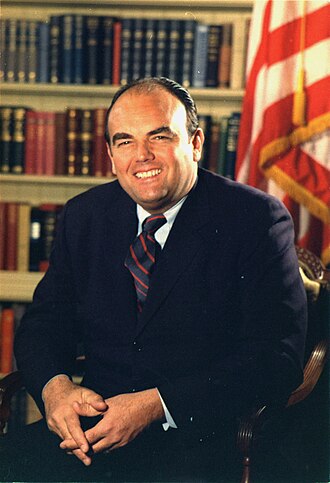
John D. Ehrlichman initially served as Counsel to the President from January 1969 to November 1969, where his duties quickly expanded from legal issues to broader policy development. This shift led to his transition in November 1969 to Assistant to the President for Domestic Affairs, a role he held until April 1973. Throughout the majority of the White House taping period (February 1971 – July 1973), he acted as Nixon's chief domestic advisor and helped direct the covert "Plumbers" unit before the escalating Watergate scandal forced his resignation in April 1973.
What Ehrlichman talks about on the tapes
Economic policy 119Congressional relations 101Public relations 91Watergate 77Vietnam War 58Political strategy 58Legislative strategy 57Welfare Reform 55Revenue sharing 53Busing 52Foreign Policy 47Executive privilege 47
Conversations (807)
— Page 8 of 9John D. Ehrlichman calls Senator Howard H. Baker, Jr. to establish a formal channel of communication between the White House and the Senate Select Committee on Watergate, following a directive from President Nixon. The participants discuss logistical challenges in scheduling a meeting with Senator Sam Ervin, who is currently away for his brother's funeral. Baker expresses concern regarding the lack of centralized coordination within the White House, prompting Ehrlichman to confirm that he has been tasked with overseeing the administration's response to the committee's inquiries.
President Nixon met with John D. Ehrlichman to address administrative matters regarding the former's schedule. The conversation focused primarily on the status and preparation of pending speech drafts. No further significant developments or policy decisions were recorded during this brief exchange.
John D. Ehrlichman initiated a telephone call through the White House operator to contact John W. Dean, III. The interaction served as a logistical attempt to connect the two officials during a period of heightened internal scrutiny. No substantive content was recorded beyond the administrative request to facilitate this communication.
John D. Ehrlichman initiated a request via the White House operator to be connected to John W. Dean III. This interaction reflects the administrative efforts to establish communication between key presidential advisors during a period of escalating tensions. No substantive discussion of policy or strategy occurred, as the call served primarily as a logistical step for internal coordination.
John D. Ehrlichman and John W. Dean III discuss Dean’s precarious legal standing and potential grand jury testimony regarding the Watergate scandal. The conversation centers on navigating the fallout from James McCord’s recent statements and the implications of Dean’s past interactions with key figures, including John Mitchell and Jeb Stuart Magruder. They evaluate the risks of Dean providing voluntary testimony versus appearing before the Ervin Committee, while also addressing allegations surrounding Donald Segretti and the administration's overall liability.
President Nixon and John Ehrlichman met to finalize edits for an upcoming presidential speech while addressing political pressures regarding the ongoing Watergate investigations. The discussion touched on the legal strategy surrounding James McCord’s testimony before the Senate, specifically weighing the risks of allowing individuals to testify before a grand jury. The pair also assessed the potential political fallout and strategic considerations regarding an imminent vote.
President Nixon and John Ehrlichman met to discuss the administration's public relations and legal strategy regarding the escalating Watergate scandal, specifically focusing on the recent testimony of James McCord and the potential for staff members to be called before the grand jury. They debated the merits of issuing a formal statement to clarify the White House’s position on executive privilege and cooperation with investigators. The conversation concluded with a consensus to pursue a strategy of demonstrating full cooperation with the grand jury while proposing a structured arrangement to address the Senate's Ervin Committee concerns.
President Nixon directed John Ehrlichman to draft a concise, clear statement regarding the Watergate scandal that could be distributed to members of Congress, the Cabinet, and Vice President Spiro Agnew. The primary objective was to establish a unified administration message that could be disseminated to journalists and political allies over the upcoming weekend. Ehrlichman confirmed he was already collaborating with Richard Moore on the drafting process to meet the President's request for a quick turnaround.
President Nixon and John Ehrlichman discuss the development of a concise, simplified statement intended for distribution to members of Congress and the Cabinet. The President emphasizes the need for a unified, coherent position to avoid political vulnerabilities or inconsistencies. He directs Ehrlichman to further refine the draft to ensure it effectively serves as a standardized communication tool for the administration.
President Nixon met with George Shultz, Helmut Sonnenfeldt, and John Ehrlichman to coordinate economic and national security policy, specifically focusing on the intersection of trade legislation and East-West diplomacy. Nixon emphasized the need to bridge the gap between Shultz’s economic initiatives and Henry Kissinger’s national security priorities to present a unified administration stance on European and Soviet relations. The participants also reviewed domestic labor and economic policy, including pension reform and minimum wage legislation, with Nixon instructing his team to manage Labor Secretary Peter Brennan’s expectations while maintaining a conservative budgetary position.
Following a brief meeting with journalist R.H. Shackford regarding his retirement and foreign policy, President Nixon met with John Ehrlichman and Ron Ziegler to strategize a public response to Watergate-related allegations. The group focused on drafting talking points intended to refute claims that the White House was attempting to "cover up" information. They ultimately decided to emphasize a stance of cooperation with grand jury investigations while maintaining the constitutional principle of separation of powers, aiming to dispel public misapprehensions without engaging in a public trial via the press.
John Ehrlichman updates President Nixon on a meeting with John Dean, who plans to cooperate with prosecutors and testify before a grand jury regarding the Watergate scandal. Dean intends to notify John Mitchell and Jeb Magruder of his decision to engage in informal discussions with investigators while maintaining that he possesses no information damaging to Mitchell. The participants discuss the potential for Magruder to serve as a volatile witness and the necessity for Dean to manage these communications carefully to ensure the White House is not perceived as attempting to influence testimony.
President Nixon consulted with a White House operator to manage the scheduling of a return telephone call before speaking briefly with his daughter, Julie Nixon Eisenhower. During the call, Nixon alluded to pending decisions regarding unspecified individuals, specifically mentioning plans to coordinate with George and Larry Bush to assess the situation. The brief exchange focused on maintaining discretion and oversight as the President prepared to navigate these developing circumstances.
President Nixon met with H.R. Haldeman, John Ehrlichman, and Leonard Garment to discuss administrative strategies regarding the Watergate investigation and the management of economic policy. The group focused heavily on establishing a "hard-line" stance on executive privilege to navigate upcoming Senate hearings and protect the President's position amidst the unfolding scandal. Additionally, they reviewed economic concerns, including inflation and the challenges of transitioning away from government price controls.
John Ehrlichman updated President Nixon on his preliminary meeting with Senators Sam Ervin and Howard Baker regarding the upcoming Watergate hearings. The discussion focused on establishing the committee's scope, securing the inclusion of Democratic political espionage, and managing witness testimony—specifically regarding John Dean and the potential risk of James McCord's public statements. Ehrlichman aimed to negotiate procedural rules to protect the White House while agreeing to a follow-up meeting to finalize arrangements, reinforcing Nixon's intent to remain distanced from the proceedings.
President Nixon and John Ehrlichman discuss the ongoing fallout from the Watergate investigation, specifically focusing on the precarious position of White House Counsel John Dean. The two men strategize on managing public perceptions and media narratives, emphasizing the need to exercise caution regarding legal allegations. They also touch upon personnel uncertainties and the difficulty of navigating the mounting political pressures facing the administration.
President Nixon and John Ehrlichman discuss a strategy to avoid a high-profile, public confrontation regarding John Dean by refusing to send him to testify before the Senate. They decide that Leonard Garment should adopt a hard line, offering only written interrogatories and sworn statements instead of a television appearance. Additionally, they discuss economic policy, specifically the need for a more effective public spokesperson than George Shultz, and agree to wait for a memorandum from Pierre Rinfret before finalizing administration economic papers.
President Nixon and John Ehrlichman briefly discuss strategy regarding legal or political exposure, emphasizing the need to maintain a disciplined defense to avoid self-destruction. The conversation centers on organizational control and the necessity of keeping their legal or public relations teams unified to withstand pressure. Nixon stresses the importance of holding their position firmly in the face of ongoing external scrutiny.
President Nixon met with Vice President Agnew and a bipartisan group of Congressional leaders to outline the administration's proposed foreign trade legislation. The discussion focused on securing presidential authority to negotiate trade agreements, implementing safeguards for domestic industries, and establishing pension and unemployment insurance reforms. Nixon emphasized the necessity of shifting away from a 'one-way street' trade policy to protect American workers and leverage better terms with international partners, while urging caution against attaching human rights conditions to Most Favored Nation (MFN) status for the Soviet Union to avoid jeopardizing broader diplomatic and arms control initiatives.
President Nixon and John D. Ehrlichman coordinated a brief, unscheduled meeting in the Oval Office. The conversation consisted primarily of the President confirming Ehrlichman's availability to discuss pressing administrative matters. No substantive policy issues were recorded before the short interaction concluded.
President Nixon, John Ehrlichman, and H.R. Haldeman met to coordinate White House strategy regarding the escalating Watergate investigations, focusing particularly on managing forthcoming testimony from John Dean and former Attorney General John Mitchell. The participants discussed the legal risks surrounding hush money payments, the need to unify the narratives of various aides to avoid perjury, and the potential for a counteroffensive to discredit the Ervin Committee. They weighed the benefits of having Haldeman release his opening statement to the press ahead of his committee appearance and considered appointing an independent investigator to provide a favorable report on the White House's conduct.
President Nixon and John Ehrlichman discuss administrative scheduling and the coordination of economic and legislative strategies. They address the need to unify internal options regarding economic policy before meeting with advisors, while also celebrating recent legislative successes in the House and the growing partisan divide that has energized Republican members. Finally, Nixon provides specific instructions on base closures, directing Ehrlichman to delay announcements until after a scheduled reception and to protect certain political interests, specifically regarding Portsmouth and potential Senate candidate Henry Bellmon in Oklahoma.
President Nixon and John Ehrlichman met to discuss upcoming economic preparations and strategies for base closures. The President requested materials for study at Camp David and proposed a follow-up meeting for Saturday morning to review economic options. Additionally, they debated the political implications of closing specific military bases, with Nixon explicitly directing that Portsmouth be closed while advising caution regarding Tinker and Belmont to avoid complicating the political standing of David M. Kennedy (referred to as Belmont).
President Nixon and John Ehrlichman held an extensive meeting to discuss strategy for managing the ongoing Watergate scandal, including committee witness schedules, executive privilege, and the risks posed by testimony from individuals like James McCord and E. Howard Hunt. They assessed potential legal and political exposure regarding campaign funds and the activities of H.R. Haldeman and John Mitchell. Additionally, the President considered a proposal to appoint Supreme Court Justice Byron White as Director of the FBI and reviewed economic policy recommendations from his advisors to address inflation.
President Nixon met with John Ehrlichman to strategize on the administration's response to the escalating Watergate investigation and the upcoming Senate Ervin Committee hearings. They discussed the legal and public relations risks of potential testimony from White House staff, specifically H.R. Haldeman and John Dean, and debated whether to adopt a posture of unified defense or to distance the President from the actions of his subordinates. Additionally, they addressed the need to manage relations with Congressional Republicans and the press to maintain political viability amidst the scandal.
President Nixon met with John Ehrlichman, H.R. Haldeman, and Ronald Ziegler to strategize the White House response to the escalating Watergate investigation and the upcoming Ervin Committee hearings. The participants discussed the political risks of potential testimony from White House staffers and John Dean, the management of executive privilege, and the need to protect the presidency while appearing forthcoming. They specifically addressed allegations regarding Haldeman's role in the hiring of Donald Segretti and the handling of a $350,000 contingency fund, ultimately deciding to coordinate forthcoming statements and testimony to mitigate political fallout.
In this meeting, President Nixon and John Ehrlichman coordinate the administration's response to the escalating Watergate crisis, focusing on the potential appointment of a special prosecutor and the necessity of obtaining sworn statements from White House staff to counter the Ervin Committee's investigation. They discuss the strategic timing of releasing these statements to preempt forthcoming testimony and manage political fallout from key Republicans like Barry Goldwater. Additionally, the participants deliberate over the potential political ramifications of base closures in various states and the necessity of securing H.R. Haldeman's cooperation during the unfolding congressional hearings.
John D. Ehrlichman contacts the White House operator to arrange a connection to the White House Mess. The brief exchange includes background noise of unidentified individuals discussing logistical arrangements concerning transportation to Camp David, specifically mentioning Michigan. No substantive policy decisions are made during this administrative telephone interaction.
John D. Ehrlichman contacted staff at the White House Mess to place a routine lunch order. He requested an egg salad sandwich on white bread and a glass of milk for immediate pickup. The exchange was strictly administrative and limited to arranging the delivery of a meal.
President Nixon and John Ehrlichman met to coordinate the White House's public response to the escalating Watergate investigation, specifically focusing on managing the testimony and legal exposure of staff members like H.R. Haldeman and John Dean. They discussed the tactical merits of having Dean and possibly Haldeman take a leave of absence to provide a sense of accountability and to mitigate negative press. Furthermore, they reviewed internal concerns regarding discrepancies in grand jury testimony involving Gordon Strachan and the handling of intelligence-gathering reports, aiming to minimize the President's personal involvement while attempting to shift the focus of the investigation toward other figures.
President Nixon and John D. Ehrlichman coordinate communication efforts regarding Gordon C. Strachan’s recent interaction with prosecutor Earl J. Silbert. The President expresses concern over John Mitchell’s hardening stance and seeks further intelligence on the nature of the adjustments Strachan intended to make to his testimony or records. Ehrlichman is tasked with investigating the matter and providing a written report to the President through Steve Bull.
President Nixon and John Ehrlichman met to coordinate the White House's legal and public relations strategy regarding the Watergate investigations, specifically addressing the Grand Jury's scrutiny of campaign funds and potential perjury by administration staff. Ehrlichman reported on his recent discussions with Attorney General Richard Kleindienst regarding immunity policies and the legal distinctions between illegal payoffs and legitimate campaign financial practices. They weighed options for managing White House testimony, including the potential for staff to issue sworn statements, the possible departure of John Dean, and the selection of new legal counsel to navigate the impending Ervin Committee hearings.
President Nixon and John Ehrlichman coordinate their schedules and discuss an ongoing meeting involving Charles Colson. The participants focus on the mounting political pressures surrounding the White House and investigate the substance and motivations behind Colson’s recent actions. The conversation serves as a preparatory session for later briefings regarding these unfolding external demands.
President Nixon and John Ehrlichman met to strategize on the worsening Watergate scandal, specifically focusing on damaging allegations against White House staff members including H.R. Haldeman, Charles Colson, and John Dean. The two discussed the threat posed by Jeb Stuart Magruder's potential cooperation with investigators and his claims regarding a tape that allegedly implicated the White House in electronic eavesdropping and obstruction of justice. They weighed options for managing these threats, including hiring an independent special counsel and potentially discrediting Magruder or other witnesses to prevent the scandal from reaching the Oval Office.
President Nixon, H.R. Haldeman, and John Ehrlichman met to strategize on managing the Watergate fallout, focusing specifically on the damaging potential of testimony from Jeb Stuart Magruder and John W. Dean. The participants discussed the risk of indictments targeting former Attorney General John Mitchell and the necessity of keeping the White House insulated from criminal implications. They weighed the merits of asserting executive privilege versus allowing witnesses to testify, while expressing concern over the U.S. Attorney’s investigation and the strategic need to contain potential revelations before the Ervin Committee hearings commenced.
In this meeting, President Nixon discussed the ongoing Watergate investigation with John Ehrlichman, focusing on strategies for dealing with the Ervin Committee and managing testimony. Following Ehrlichman's departure, Henry Kissinger joined the President to review foreign policy concerns, specifically regarding potential military responses to North Vietnamese violations in South Vietnam. The participants also evaluated the political stability of Soviet leader Leonid Brezhnev and discussed the progress of negotiations on a nuclear treaty ahead of a potential summit.
President Nixon and John Ehrlichman held a brief telephone exchange to coordinate their schedules amidst ongoing White House activities. The primary purpose of the call was to arrange a follow-up conversation once Ehrlichman concluded his current tasks. No substantive policy matters were discussed, as the interaction served solely as a logistical coordination for a later communication.
President Nixon and John D. Ehrlichman discussed the impending grand jury testimony of E. Howard Hunt, who was reportedly planning to implicate former Attorney General John Mitchell and White House associates in the Watergate affair. Ehrlichman detailed information from meetings with Charles Colson and David Shapiro regarding Hunt’s loss of faith in promised pardons and his potential to reveal details about a break-in at Hank Greenspun’s safe. The President and Ehrlichman analyzed the threat of Mitchell and Jeb Stuart Magruder cooperating with prosecutors, ultimately deciding to monitor the situation while contemplating how to handle the political fallout and potential allegations against the White House.
President Nixon, H. R. Haldeman, and John Ehrlichman discuss the internal legal maneuvering and shifting loyalties within the administration regarding the Watergate scandal. The participants analyze the credibility of Chuck Colson and the potential for various aides to cooperate with authorities to protect their own interests. They specifically deliberate on the reliability of transcripts and whether key figures like Colson and Jeb Stuart Magruder are prepared to testify truthfully or implicate others.
John D. Ehrlichman and President Nixon consulted on strategies to manage the escalating Watergate scandal, specifically focusing on how to influence or delay upcoming grand jury testimony from E. Howard Hunt. They discussed potential maneuvers to deflect attention from Charles Colson and explored the possibility of persuading John N. Mitchell to take responsibility for the campaign's actions to shield the White House. The pair agreed to review a more comprehensive set of options regarding witness management and legal strategy during a follow-up meeting the next morning.
President Nixon met with his senior advisors and staff to manage the escalating Watergate crisis and coordinate a response to the looming threat of grand jury indictments. The participants debated potential strategies for compelling John Mitchell to testify, considered whether key White House staff should resign or remain in their positions, and assessed the risks of congressional investigations. Nixon emphasized the necessity of seizing the initiative and establishing a narrative of presidential transparency and cooperation to protect the integrity of his administration.
John D. Ehrlichman initiated a request for the White House operator to connect him with John W. Dean, III. This administrative call facilitated direct communication between the two advisors during a period of escalating tensions related to the Watergate investigation. No substantive policy matters or specific decisions were discussed during this brief exchange.
John W. Dean III contacted John D. Ehrlichman to signal his availability for a private meeting to discuss emerging developments related to the Watergate investigation. Dean indicated he had additional information, described as 'more brooding,' that he wanted to relay to Ehrlichman for internal consideration. The two agreed to defer the substantive discussion until they could meet in person away from Dean's current visitors.
President Nixon met with an unidentified individual, H. R. Haldeman, and John Ehrlichman to coordinate the logistics and press coverage for First Lady Pat Nixon’s upcoming Rose Garden tour. The participants discussed the President's itinerary and his role in following the First Lady to ensure appropriate photography opportunities. The conversation focused on managing the public appearance and scheduling the President's movements to accommodate media presence.
President Nixon, H.R. Haldeman, John Ehrlichman, and others met to strategize regarding the escalating legal and political fallout of the Watergate scandal. The discussion centered on the decision of Jeb Stuart Magruder to cooperate with prosecutors and the potential for his testimony to implicate other high-level officials, including John Mitchell. The participants debated how to manage the public narrative, protect the President's standing, and navigate the implications of Senate hearings and grand jury proceedings while considering legal strategies for those facing impending indictments.
John D. Ehrlichman contacted the White House operator to request an urgent telephone connection to Attorney General Richard G. Kleindienst at his private residence. This brief administrative interaction served as the initiation of a high-level communication between Ehrlichman and the Justice Department during the height of the Watergate investigations. No substantive discussion occurred during this exchange beyond the facilitation of the call.
John D. Ehrlichman briefs Attorney General Richard G. Kleindienst on his internal investigation into the Watergate scandal, specifically noting that Jeb Stuart Magruder has decided to cooperate with federal prosecutors. Ehrlichman reports that Magruder's new testimony implicates multiple high-level figures and contradicts previous statements, significantly altering the legal landscape of the case. They discuss the necessity of maintaining proper legal boundaries in information gathering, the potential appointment of a special counsel, and plans to coordinate with Assistant Attorney General Henry Petersen to ensure ongoing investigations proceed without procedural errors.
President Nixon met with H.R. Haldeman and John Ehrlichman to discuss the escalating legal and political fallout surrounding the Watergate scandal. The participants weighed the risks of ongoing investigations, particularly focusing on potential obstruction of justice charges against key figures like John Mitchell and the strategy of preempting further disclosures by "beating them to the punch." Nixon expressed urgency regarding the need to conclude the scandal quickly to prevent it from dominating his administration, contemplating potential resignations and the necessity of managing the public narrative.
President Nixon and John Ehrlichman discuss a strategy to manage the deepening Watergate scandal, focusing on the potential indictment of John Mitchell and the handling of White House staff implicated in the investigation. The President expresses a desire to move toward a more public, forthcoming stance, including potentially waiving executive privilege to allow staff to testify, in order to combat leaks and manage the narrative. They also plan to coordinate with Press Secretary Ron Ziegler and address the upcoming testimony of Jeb Magruder to protect the administration's interests while maintaining the appearance of a thorough internal inquiry.
President Nixon and John Ehrlichman met to discuss the administration's public relations strategy amid the escalating Watergate scandal and concerns over the President's public approval ratings. They evaluated the political impact of recent press coverage, including articles by Jules Witcover and Haynes Johnson, and explored potential staffing changes, specifically regarding the employment of Nicholas Thimmesch. Furthermore, the two analyzed economic policy and communication, with Ehrlichman proposing the appointment of a dedicated Treasury spokesperson to better manage public perception of Phase III economic controls.
President Nixon initiates a call to connect with Assistant Attorney General Henry E. Petersen while John D. Ehrlichman is present. The primary purpose of the conversation is to facilitate direct communication with the Justice Department regarding the ongoing Watergate investigation. No further substantive discussion occurs during this short bridge call beyond the request for the operator to connect to Petersen.
John D. Ehrlichman requested that the White House operator connect him to Acting FBI Director L. Patrick Gray at his private residence. The call was initiated during a period of intense scrutiny regarding the Watergate investigation. This brief interaction served solely as a logistical effort to establish a direct, off-hours line of communication with Gray.
John D. Ehrlichman calls Acting FBI Director L. Patrick Gray to warn him that John Dean is cooperating with the U.S. Attorney and disclosing information regarding sensitive materials previously entrusted to Gray. The two discuss Gray's destruction of these documents, which he claims were purely political in nature, and contemplate how to handle the inevitable scrutiny. Ehrlichman stresses the need for Gray to be prepared, as Dean's cooperation with Henry Petersen creates a significant threat to their efforts to contain the Watergate investigation.
John D. Ehrlichman requests that the White House operator facilitate a call to FBI Director L. Patrick Gray III at his private residence. President Nixon is audible in the background during this coordination effort. This outreach indicates an attempt to establish direct communication with the FBI leadership during the escalating Watergate investigation.
John D. Ehrlichman calls Acting FBI Director L. Patrick Gray III to advise him on how to handle testimony regarding a sensitive envelope containing E. Howard Hunt’s materials. Ehrlichman encourages Gray to maintain that the documents were irrelevant political papers, cautioning him against providing inconsistent testimony that could expose them to broader legal risks. The discussion underscores the escalating pressure and confusion surrounding the White House's efforts to manage the fallout from the Watergate investigation.
President Nixon met with H.R. Haldeman and John Ehrlichman to strategize their response to the escalating Watergate investigation and the upcoming deposition of John Dean. The group discussed managing public perception through a potential White House-led announcement, while specifically addressing legal vulnerabilities regarding “plumbing” operations, unauthorized wiretaps, and the extent of the President's knowledge. They focused on establishing a consistent narrative that would distance the President from illegal activities, particularly by framing past surveillance as national security matters and attributing unauthorized actions to subordinates like John Mitchell.
President Nixon, H. R. Haldeman, and John Ehrlichman met to coordinate a narrative regarding their management of the Watergate investigation. They reviewed the timeline of recent events, specifically emphasizing the President's actions to uncover facts after becoming dissatisfied with the John Dean report. The participants strategized on how to frame these developments to legal authorities and the public, focusing on the decision to involve the Attorney General and the handling of potential witnesses like Mitchell and Magruder.
President Nixon and John Ehrlichman met to discuss the burgeoning Watergate scandal and the escalating pressure from investigations. The conversation centered on the potential legal ramifications for White House staff and the management of ongoing inquiries. They addressed the necessity of coordinating their responses to minimize political fallout as the administration faced mounting scrutiny.
President Nixon met with John Ehrlichman and Ronald Ziegler to navigate the growing legal and public relations pressures surrounding the Watergate investigation. The discussion focused on coordinating a response to grand jury subpoenas, managing potential testimony from White House staff, and negotiating ground rules for committee hearings. Nixon emphasized the need for a unified strategy while expressing concern over the implications of public testimony and potential leaks, ultimately deciding to delay any major public announcement to avoid jeopardizing ongoing legal proceedings.
President Nixon met with Secretary of State William P. Rogers and later consulted with John D. Ehrlichman to strategize on the mounting Watergate crisis. The discussions focused on the unfolding allegations involving John Dean, H.R. Haldeman, John Mitchell, and Jeb Magruder, specifically addressing the disbursement of hush money and the handling of sensitive materials from E. Howard Hunt’s safe. Nixon and his advisors sought to manage the legal and political fallout by coordinating with Assistant Attorney General Henry Petersen while distancing the White House from the increasingly damaging testimony regarding the cover-up.
President Nixon met with H. R. Haldeman and John Ehrlichman to strategize their response to the escalating Watergate investigation and the increasingly uncooperative behavior of White House Counsel John Dean. The participants discussed the dangers of granting immunity to Dean, the potential political fallout from his continued presence in the White House, and the need to manage public perception while protecting the presidency. Consequently, Nixon decided to direct Dean to stay away from the office, while simultaneously planning a public statement regarding the administration's policy on cooperating with the grand jury and handling staff involved in the investigation.
President Nixon and John Ehrlichman coordinated the talking points for Nixon’s upcoming meeting with Assistant Attorney General Henry E. Petersen regarding the Watergate investigation. They established a firm policy against granting immunity to top White House officials, such as John Dean and Charles Colson, while remaining open to immunity for lower-level staffers like Gordon Strachan. Furthermore, they clarified personnel policies regarding suspensions upon indictment and resignations upon conviction, while also planning to confront Petersen about the political damage caused by ongoing leaks from the grand jury.
President Nixon and John Ehrlichman discussed the administration's strategic position regarding legal immunity and potential grand jury indictments for individuals involved in the Watergate scandal. They reached a consensus on adopting a firm policy that excludes immunity for key figures while allowing for flexibility in cases involving corroborating evidence. This brief exchange served to finalize the President's directives for Ehrlichman to convey during his upcoming discussions with Henry Petersen at the Department of Justice.
John D. Ehrlichman initiates a request through the White House operator to reach William E. Timmons, then serving as an assistant to the President for legislative affairs. The brief exchange serves as a logistical attempt to establish contact with Timmons to discuss pressing administrative or legislative matters. No substantive policy decisions or developments occur as the connection fails to materialize during this specific call.
President Nixon, H. R. Haldeman, and John Ehrlichman coordinated with William Timmons to communicate the administration's forthcoming Watergate-related statement to Senator Sam Ervin and Senator Howard Baker. Ehrlichman directed Timmons to read specific portions of the document to both senators rather than soliciting their feedback. This action reflects the White House’s attempt to manage congressional expectations and control the narrative surrounding the President’s impending public announcement.
President Nixon met with H. R. Haldeman and John Ehrlichman to draft a public statement addressing the growing Watergate scandal and the ongoing Justice Department investigation. The participants discussed how to frame the President's involvement, specifically referencing his initiation of a new inquiry on March 21, while debating the political risks of suspending staff members versus waiting for potential indictments. Ultimately, the group sought to project a narrative of progress in uncovering the truth without compromising their legal standing or appearing to cover up misconduct.
President Nixon met with H. R. Haldeman, John Ehrlichman, and Ronald Ziegler to formulate strategies for handling impending legal challenges and potential grand jury testimony related to the Watergate scandal. The discussion focused on managing John Dean's shifting narrative, coordinating with legal counsel, and determining whether to assert executive privilege regarding White House communications. Participants deliberated on the political implications of requesting leaves of absence and the anticipated public pressure from impending congressional hearings.
President Nixon met with William P. Rogers, H.R. Haldeman, and John Ehrlichman to discuss the deepening Watergate scandal and potential legal strategies for the administration. The conversation focused on managing the fallout from emerging testimony, the necessity of forcing the resignation of compromised staff members, and the strategic importance of legal representation and public image. The President expressed significant concern regarding the loyalty of his staff and the risk of being implicated in obstruction of justice, ultimately leaning toward a policy of full disclosure and cooperation with investigators to mitigate further political damage.
President Nixon met with Vice President Agnew and a bipartisan group of Congressional leaders to address the nation's growing energy needs and proposed legislative solutions. The discussion focused on mitigating potential future shortages by balancing environmental protections with domestic production efforts, including natural gas deregulation, expanded offshore oil leasing, and the completion of the Alaska pipeline. The President and his cabinet members emphasized the importance of developing a cohesive national energy strategy to maintain independence and discussed the foreign policy implications of relying on foreign oil exports. The administration sought Congressional cooperation for pending energy legislation and signaled an intent to increase research and development funding for alternative fuel sources like coal and nuclear power.
President Nixon and John Ehrlichman met to discuss the growing legal and political risks surrounding the Watergate scandal, specifically focusing on the recent actions and potential testimony of John Dean. They reviewed their past interactions with Dean, debated his motivations and potential conflict of interest regarding John Mitchell, and examined the vulnerabilities posed by previous meetings. The discussion included strategies for managing the White House response to subpoenas and legal inquiries, as well as the potential application of executive privilege to protect sensitive information.
President Nixon met with his economic advisors and cabinet members to discuss how to manage persistent inflation and public frustration with the economy following the recent passage of the Economic Stabilization Act. Arthur Burns and others proposed various policy adjustments, including a potential return to some Phase 2-style controls like pre-notification, while Roy Ash and Herbert Stein argued for staying the course with Phase 3 to avoid further distorting the market. Ultimately, the administration emphasized the importance of fiscal restraint and maintaining a consistent long-term strategy rather than implementing impulsive or overly restrictive controls that could trigger a recession.
President Nixon met with his economic advisors, including George Shultz, Arthur Burns, and Roy Ash, to discuss the administration's ongoing struggle with inflation and the potential implementation of Phase III economic stabilization measures. The participants analyzed the political and psychological impact of price controls, the efficacy of pre-notification requirements for major corporations, and the necessity of maintaining public confidence amid rising prices. Nixon emphasized the importance of fiscal discipline, particularly regarding the federal budget, while rejecting broad, disruptive price freezes in favor of targeted economic management.
President Nixon met with H. R. Haldeman and John Ehrlichman to discuss White House staff appointments, the ongoing Watergate investigation, and the public relations strategy for addressing the scandal. The participants debated whether to maintain the President's public detachment from the investigation or to proactively frame the administration as victims of subordinates who misled them. Nixon emphasized his desire to insulate the presidency from the unfolding legal crises, while Haldeman and Ehrlichman urged him to project confidence and consider taking a short break from the office to regain his perspective.
President Nixon and John D. Ehrlichman engaged in a brief telephone communication facilitated by a White House operator. The interaction primarily consisted of an apology regarding the handling of the call connection. No substantive policy matters or strategic developments were recorded during this brief exchange.
President Nixon and John Ehrlichman met to discuss legal strategies for defending White House staff members implicated in the developing Watergate scandal. They analyzed the potential for immunity for John Dean, the legal risks regarding campaign funds, and the possibility of separating the legal defense of presidential aides from that of other political figures. The discussion highlighted their concern over how these proceedings might impact the administration's public image and the necessity of managing internal information to protect the President.
President Nixon and John Ehrlichman discuss the status of internal White House investigations into the Watergate scandal. The conversation focuses on whether members of the staff had provided sworn statements regarding their lack of involvement, specifically noting that John Dean had not signed such a statement. They conclude that the effort to secure these affidavits was ultimately abandoned, leaving the administration without formal documentation from all staff members.
President Nixon briefly advises John Ehrlichman to maintain a composed and disciplined demeanor when interacting with White House staff. This exchange serves as a strategic suggestion regarding personnel management and public perception during a period of heightened internal pressure. No formal decisions or specific policy actions were recorded during this brief interaction.
President Nixon, John Ehrlichman, and Stephen Bull meet briefly in the Old Executive Office Building to coordinate a private session. The participants discuss the need for a short break and reference symbolic or metaphorical language regarding seeking energy from a church setting. The meeting serves primarily as a logistical pause in their broader discussions during the height of the Watergate-era legal pressures.
President Nixon and John Ehrlichman coordinate a brief, informal meeting while at the White House. The conversation focuses on logistics, with Nixon suggesting a ten-minute break and Ehrlichman confirming he is located in the gym and can meet the President shortly. No substantive policy matters are discussed, as the exchange is limited to scheduling their immediate encounter.
President Nixon met with John Ehrlichman to discuss the ongoing fallout from the Watergate investigation, specifically focusing on the legal exposure of White House staff members and potential strategies for handling prosecutors. They evaluated the political implications of keeping or removing H.R. Haldeman from his post and analyzed the testimony of John Dean. The discussion also addressed reports regarding the secret removal of political files from the White House, with Ehrlichman advising the President to maintain distance from the daily influx of rumors to avoid distraction.
President Nixon and John Ehrlichman touch base regarding an imminent meeting with Charles Colson. The brief call serves to coordinate schedules as the President prepares to depart the office shortly. Ehrlichman indicates he needs to consult with Colson before reporting back to the President with a status update.
President Nixon met briefly with John Ehrlichman to initiate an inquiry regarding a vague, unspecified matter referred to as a "mystery." The dialogue reflects the intense atmosphere of the escalating Watergate scandal, as the participants exchange minimal information during this short encounter. No specific policy decisions were recorded during this brief exchange.
John Ehrlichman updates President Nixon regarding an ongoing investigation into a mysterious removal of eight boxes of materials from a committee office the day after the Watergate break-in. Ehrlichman reports that Charles Colson, H.R. Haldeman, and others lack knowledge of the event, though they suspect it involved someone with high-level access like Robert C. Odle or Frederick C. LaRue. The President expresses concern over the potential link to Watergate and emphasizes the urgent need to identify the individual who reportedly moved the materials to a private apartment.
President Nixon met with attorneys John J. Wilson and Frank H. Strickler to discuss the evolving Watergate scandal and its potential legal impact on H.R. Haldeman and John D. Ehrlichman. The participants reviewed the status of federal investigations, the handling of secret funds, and the potential for upcoming indictments against White House staff. They also deliberated on the political implications of keeping or removing Haldeman and Ehrlichman from their positions, comparing the situation to historical precedents regarding presidential staff resignations.
President Nixon met with his Cabinet and key staff to coordinate messaging and strategy on pressing administration priorities, specifically energy policy, economic inflation, and the ongoing Watergate investigations. Nixon urged his officials to actively support the administration's legislative agenda, particularly in the face of rising economic concerns and energy supply challenges. He emphasized the necessity of a unified, firm stance against political pressure, framing the current crises as manageable problems rather than catastrophic failures. Additionally, Nixon underscored his commitment to a thorough investigation into Watergate, stressing the need to maintain public order and confidence while the legal process unfolded.
President Nixon met with his top aides, John Ehrlichman and H. R. Haldeman, to coordinate his immediate schedule and manage the administrative flow of the Oval Office. The brief discussion focused on reviewing upcoming meeting requests and prioritizing the President's availability amidst the mounting pressures of the administration. No major policy decisions were recorded during this brief administrative check-in.
In this meeting, President Nixon, H.R. Haldeman, and John Ehrlichman discuss the intensifying Watergate investigation and the shifting legal strategies of John Dean, who had recently changed attorneys. The participants focus on insulating the White House from culpability, with Haldeman and Ehrlichman detailing their lack of direct involvement and asserting that Dean had acted as an impediment to their previous efforts to produce a full report on the scandal. Additionally, they discuss the growing political risks regarding administrative oversight and the danger of accepting broad responsibility for campaign actions.
John D. Ehrlichman initiates a telephone call to the White House operator to facilitate a connection with Geoffrey C. Shepard. The conversation serves primarily as a logistical administrative step to establish communication between Ehrlichman and Shepard. No substantive policy matters or decisions are discussed during this brief exchange.
John D. Ehrlichman contacted Geoffrey C. Shepard to determine if Shepard had any involvement with attorney Peter Wolf or a sensitive collection of documents related to E. Howard Hunt, Jr. Shepard denied any knowledge of the documents or personal connection to Wolf, clarifying that he was not the individual identified in a recent Chicago Tribune inquiry regarding Walter Minnick. The conversation concluded with Ehrlichman attempting to identify a different Shepard formerly associated with George Lincoln's group at the Office of Emergency Preparedness.
H. R. Haldeman, President Nixon, and John Ehrlichman coordinate a call to Stephen B. Bull regarding the tracking of public concerns. The conversation focuses on systematically categorizing incoming inquiries from viewers to better analyze the most prominent domestic policy issues. This initiative reflects the administration's effort to monitor and quantify public sentiment on major national topics during a period of significant political pressure.
H. R. Haldeman, with President Nixon and John Ehrlichman present, directed Stephen Bull to urgently secure and transport recordings from the March 10–23, 1973 period. Haldeman instructed Bull to gather all relevant material and ensure it was placed in a secure container for delivery. Additionally, Bull was tasked with procuring a simple, functional playback device capable of handling the tapes, emphasizing the need for immediate action.
H. R. Haldeman coordinates with President Nixon, John Ehrlichman, and Stephen Bull regarding the logistical handling and delivery of sensitive materials. The discussion centers on the administrative preparation and movement of tapes, highlighting the internal anxiety surrounding their arrival and custody. Haldeman provides specific instructions to Bull to ensure the materials are secured once they are received.
In this extensive meeting, President Nixon, H. R. Haldeman, and John Ehrlichman deliberate over the escalating Watergate crisis and the potential political and legal fallout for their administration. The participants assess the risks associated with various strategies, including whether to resign, take leaves of absence, or maintain a defensive posture while awaiting the findings of the prosecutor. They express significant concern over the cooperation of John Dean, the threat of potential blackmail, and the urgent need to manage press perceptions to protect the presidency from irreparable damage.
President Nixon and John Ehrlichman discuss the handling of sensitive materials related to the Watergate investigation and the break-in at the office of Daniel Ellsberg’s psychiatrist. The two officials debate the tactical implications of disclosing information regarding the involvement of the Watergate burglars in the psychiatrist's office, specifically weighing whether to withhold or voluntarily turn over documentation to federal prosecutors. Nixon ultimately concludes that disclosure is inevitable given the current climate, leading them to prioritize managing the fallout of these revelations.
President Nixon and John D. Ehrlichman engaged in a brief, two-minute exchange following a previous discussion. The conversation focused on the President returning a call to Ehrlichman regarding ongoing administrative concerns. No substantive policy or political developments were recorded during this short follow-up interaction.
President Nixon and John Ehrlichman discuss their strategy to mitigate the damage from John Dean’s potential testimony and disclosures regarding White House involvement in sensitive investigations, including the Ellsberg break-in. Nixon informs Ehrlichman that he has instructed officials to categorize the information as a national security matter to prevent public exposure and counter what they perceive as blackmail attempts by Dean. The two discuss the legal necessity of distancing Ehrlichman's defense from H.R. Haldeman’s, while planning a defensive narrative that emphasizes a lack of prior knowledge regarding illegal activities.
John Ehrlichman meets with President Nixon to discuss his impending departure from the administration amidst the mounting pressures of the Watergate investigation. Ehrlichman updates the President on his communications regarding his professional future and legal exposure, specifically addressing the risks of being drawn into public testimony or project leadership roles. The conversation centers on navigating potential prosecutorial scrutiny and the strategic necessity of Ehrlichman stepping down from his official duties.
President Nixon met with George Shultz and John Ehrlichman to discuss legislative strategy regarding tax reform and the administration's ongoing economic stabilization efforts. The group focused on maintaining a firm stance against tax increases on capital gains and estates, while delegating the political credit or blame for such controversial measures to Congress. They also analyzed public relations tactics for Phase III wage and price controls, weighing the benefits of a potential confrontation with Congress over the Economic Stabilization Act against the risks of public perception.
In this extensive series of meetings and phone calls, President Nixon consults with H. R. Haldeman, John Ehrlichman, Richard Kleindienst, and Henry Petersen to manage the worsening political and legal fallout of the Watergate scandal. The participants deliberate on how to handle the impending revelations concerning the destruction of sensitive documents by FBI Director L. Patrick Gray, which had been previously held in the White House. Faced with intense media scrutiny and the potential for staff resignations, Nixon weighs the risks of maintaining his current team against the necessity of distancing his administration from criminal liability, ultimately deciding to project a posture of responsibility while preparing to weather further disclosures.
John D. Ehrlichman contacted the White House operator to facilitate a meeting between Press Secretary Ronald L. Ziegler and President Nixon. The brief communication served to coordinate Ziegler's attendance at the President's office in the Executive Office Building. This logistical interaction underscores the tight internal scheduling during a period of high-level administration activity.