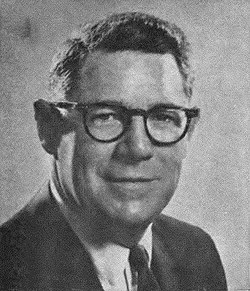
MacGregor, Clark
Clark MacGregor was a Republican U.S. Representative from Minnesota who joined the Nixon administration in January 1971 as Counsel to the President for Congressional Relations. Serving as Nixon's chief legislative liaison during much of the White House taping period, he managed the administration's interactions with Capitol Hill until June 1972. In July 1972, following the Watergate break-in and John Mitchell's resignation, MacGregor transitioned to become Chairman of the Committee for the Re-Election of the President (CRP), successfully guiding the campaign until his departure in November 1972.
President Nixon and his Cabinet met to discuss the ongoing military operations in Indochina and the development of the administration's national health reform agenda. Regarding the war, officials reviewed the progress of South Vietnamese incursions into Laos and Cambodia, noting that the strategy was successfully disrupting enemy supply lines while shifting the burden of ground operations away from American forces. The conversation then transitioned to a detailed proposal from Secretary of Health, Education, and Welfare Elliot Richardson regarding healthcare reform, with the group debating the costs, tax implications, and administrative feasibility of implementing Health Maintenance Organizations (HMOs) and national health insurance standards.
President Nixon met with his senior aides and advisors to strategize the temporary suspension of the Davis-Bacon Act, framing the move as an emergency measure to combat inflation in the construction industry rather than an attack on labor unions. The group, including H.R. Haldeman, John Ehrlichman, Charles Colson, and George Shultz, worked to refine a public statement that would justify the suspension by drawing parallels to the administration's previous interventions in the steel and oil sectors. Nixon emphasized the need to maintain credibility with his political allies while ensuring the message clearly articulated that the suspension was a necessary response to rising costs rather than a permanent repeal of labor protections.
President Nixon hosted a group of officials, family members, and congressional guests in the Oval Office for the ceremonial swearing-in of Thomas S. Kleppe as the new Administrator of the Small Business Administration (SBA). Following the oath of office, the group discussed the agency's primary objectives, specifically emphasizing the need for active engagement with the business community and the provision of low-interest loans for victims of the recent California earthquake. The meeting concluded with the President presenting gifts to the attendees and formal expressions of mutual support and cooperation.
President Nixon met with his task force leaders and advisors to discuss the legislative strategy for the Task Force on International Development proposals and the challenges of securing Congressional support. Key participants included Rudolph Peterson, Peter Peterson, Clark MacGregor, and Henry Kissinger, who debated the jurisdictional split of foreign assistance programs between the State and Defense Departments. The group emphasized the need to integrate foreign aid with broader U.S. economic and trade policies, and Nixon tasked MacGregor with coordinating closely with Congressional leadership to ensure the proposals moved forward without significant delays.
President Nixon met with Republican congressional leaders and cabinet members to discuss rural development initiatives and solicit support for the administration's policy agenda. Secretary of Agriculture Clifford Hardin and staff provided an extensive briefing on the status of rural America, highlighting demographic shifts and explaining the mechanics of proposed federal revenue-sharing programs designed to foster economic growth. Participants also reviewed legislative priorities, including the upcoming vote on the supersonic transport (SST) appropriation and other pending congressional business.
President Nixon met with various staff members and advisors to refine the administration's political and legislative strategy, specifically regarding the textile quota issue and relations with key Congressional leaders like Wilbur Mills and John Byrnes. The President finalized plans to issue a statement on textile legislation while balancing pressure from the industry against the strategic risks of legislative entanglement. Additionally, the President discussed methods for managing Republican Congressional relations through targeted meetings and evaluated strategies to counter negative media coverage through the use of news tapes.
President Nixon met with John Byrnes and senior White House staff to coordinate a unified Administration strategy against House Ways and Means Chairman Wilbur Mills regarding ongoing Japanese textile negotiations. Concerned that Mills was bypassing the White House to conduct his own foreign policy, Nixon directed Byrnes to publicly support the President’s official position and reject the implication that congressional leaders held a veto over executive authority. The group finalized a plan for the President to issue a formal statement that afternoon, followed immediately by Byrnes endorsing the policy to the press to solidify Republican unity.
President Nixon met with his Cabinet and key staff to discuss the status of the administration's revenue sharing legislative agenda and receive briefings on various international developments. Administration officials reported on their outreach efforts to build public and Congressional support for revenue sharing while addressing opposition from labor and minority groups. Additionally, Cabinet members provided updates on their recent foreign travels, emphasizing the geopolitical successes of the Nixon Doctrine in Southeast Asia and the strengthening of international cooperation on transportation and environmental safety.
President Nixon met with Vice President Agnew and Republican Congressional leaders to secure support for two of his primary initiatives: the Supersonic Transport (SST) program and a major government reorganization plan. Secretary of Transportation John Volpe advocated for the SST by addressing environmental, economic, and technological concerns, arguing that the project was essential for U.S. aviation preeminence and long-term economic growth. Subsequently, John Connally detailed the work of the Ash Council, urging the legislators to embrace a fundamental restructuring of the executive branch to improve government efficiency, accountability, and public trust. Nixon emphasized that these measures were critical for ensuring that his administration could effectively manage federal programs and maintain the nation's competitive edge.
President Nixon met with Congressional leaders Hugh Scott and Gerald Ford, along with staff members, to strategize on critical legislative and foreign policy challenges. The participants focused on securing support for the Supersonic Transport (SST) program to prevent Soviet market dominance and discussed messaging strategies regarding the ongoing military operations in Laos and Vietnamization. Nixon emphasized the importance of executive leadership and bipartisan cooperation while addressing concerns over Congressional polling pressures and upcoming milk price support decisions.
President Nixon met with Senator Clifford P. Hansen and Clark MacGregor to lobby for the Senator's support of the Supersonic Transport (SST) program. Nixon emphasized the project's importance to national pride and technological standing while attempting to address Hansen's concerns regarding regional airline service in Wyoming. Despite Nixon's assurances regarding ecological oversight and service improvements, Hansen remained firm in his opposition, citing previous public commitments to his constituents.
President Nixon met with Clark MacGregor to coordinate the President's upcoming schedule and staff engagements. The brief discussion primarily concerned logistical planning for a subsequent meeting with Senator Peter H. Dominick. The conversation concluded with MacGregor exiting the Oval Office shortly before 10:05 am.
President Nixon met with Senator Peter H. Dominick and Clark MacGregor to discuss ongoing legislative challenges, including the Supersonic Transport (SST) funding and environmental policy tensions. Dominick emphasized the need for more direct communication channels between Republican leadership and the White House to better coordinate political strategy, while expressing concern over the Vice President’s public relations impact on younger voters. The participants also reviewed administration efforts in farm reorganization and economic management, with the President prioritizing steady growth to avoid a potential downturn heading into the 1972 election cycle.
President Nixon, Jack Miller, and Clark MacGregor met to discuss the upcoming legislative vote on the Supersonic Transport (SST) project, emphasizing the importance of U.S. leadership in global competition and technological innovation. The group analyzed the vote tally, including the potential influence of uncommitted senators such as David H. Gambrell and Margaret Chase Smith. The President directed Miller and MacGregor to secure votes through parliamentary pairing, specifically mentioning Senators Karl Mundt and Clifford Hansen as potential partners for absent members.
President Nixon met with his staff, including Robert Finch and Clark MacGregor, to coordinate logistics for an upcoming meeting with the Congressional Black Caucus and to arrange a phone call to William M. Allen of Boeing. Nixon emphasized managing the media optics of the caucus meeting by avoiding excessive press coverage and limiting the event's stature to prevent it from being framed as a major political victory for the group. Following these preparations, the President successfully connected with Allen to express his personal disappointment over Congress's decision to defund the Supersonic Transport (SST) project, while reaffirming his commitment to maintaining Boeing's role as a leader in American aviation and technological progress.
President Nixon hosted Reverend Walter E. Fauntroy and his family, accompanied by Clark MacGregor and Robert J. Brown, for a brief social meeting in the Oval Office. The encounter centered on pleasantries, a photo session, and the exchange of presidential gifts, including cufflinks and golf balls. The President also acknowledged Fauntroy’s recent political success and academic achievements during the short, informal engagement.
President Nixon met with members of the Congressional Black Caucus to receive a comprehensive position paper detailing grievances and policy recommendations regarding employment, housing, civil rights, and foreign policy. The Caucus representatives urged the administration to prioritize federal job creation, release frozen urban development funds, and address systemic issues within the criminal justice and military systems. Nixon acknowledged the significance of the meeting as a constructive starting point, promising that his staff would facilitate ongoing communication and proper consideration of the Caucus’s specific proposals.
President Nixon and his Cabinet met to discuss the ongoing challenge of inflation and rising construction costs, focusing on the administration's strategic options for economic stabilization. Dr. Paul McCracken reviewed current inflationary trends and labor market data, outlining a spectrum of potential responses ranging from maintaining current fiscal policies and targeted interventions to implementing more aggressive measures like wage and price controls. The meeting served as a forum to evaluate the efficacy of various regulatory mechanisms, such as the National Commission on Productivity and the suspension of the Davis-Bacon Act, while weighing the political and practical risks of further government intervention in the economy.
President Nixon met with key Congressional leadership, including Hugh Scott, Robert Byrd, Robert Griffin, Gerald Ford, and Carl Albert, to brief them on his upcoming televised address regarding Vietnam policy. The discussion focused on the administration's plan for troop withdrawals, the handling of the Prisoner of War (POW) issue, and the strategic rationale behind ongoing U.S. air operations in Southeast Asia. Nixon emphasized the need for flexibility in negotiations and stressed that Congressional support was essential to maintaining a credible bargaining position against North Vietnam.
President Nixon and a wide-ranging group of Cabinet members, advisors, and Congressional representatives met to discuss the growing national energy crisis and the necessity of transitioning to nuclear power. AEC Chairman Glenn Seaborg and other experts detailed the technological, environmental, and economic advantages of the liquid metal fast breeder reactor, emphasizing its ability to maximize fuel efficiency and provide long-term, pollution-free energy. The participants concluded that a strong national commitment, including significant federal funding and industry collaboration, is essential to accelerate the development of demonstration reactors and ensure future energy independence.
President Nixon met with key members of the Senate Armed Services Committee, including Senators John Stennis and Margaret Chase Smith, to coordinate legislative strategy on defense priorities. The discussion centered on securing a two-year draft extension, managing military manpower reductions, and timing the submission of the military procurement bill to avoid unfavorable Senate floor votes during a sensitive period of international negotiations. Nixon emphasized the importance of maintaining a firm military position amid changing Soviet leadership and discussed his recent intervention in the Lt. William L. Calley Jr. case to maintain military judicial process.
President Nixon met with Senator John L. McClellan, Clark MacGregor, and Kenneth E. BeLieu to discuss legislative priorities, national defense, and the President's political standing. The participants addressed concerns regarding U.S. military strength relative to the Soviet Union, the importance of maintaining nuclear deterrent credibility, and the economic necessity of supporting American industries like steel and aviation. Additionally, the President and Senator McClellan reviewed the progress of the Arkansas River navigation project and discussed pending appointments and committee activities within Congress.
President Nixon met with Vice President Agnew and Republican Congressional leaders to discuss the administration's legislative and economic agenda. The participants analyzed current economic indicators, including inflation and productivity, and evaluated the implementation of the Task Force for International Development's recommendations regarding foreign and military aid. Additionally, the group addressed the future of the military draft, focusing on pay increases and the transition toward an all-volunteer force while assessing potential legislative hurdles in Congress.
President Nixon met with Secretary of Agriculture Clifford Hardin, General George A. Lincoln, and Peter Flanigan to coordinate a strategic response to a severe drought in Texas and Oklahoma. The President emphasized that the administration must appear highly responsive and concerned to mitigate political fallout, even if a full disaster declaration was not yet legally or fiscally advisable. Nixon directed the team to facilitate a high-profile visit to the region, including securing appropriate aircraft and media presence, to reassure farmers and political allies like John Connally and John Tower that the administration was proactively exhausting all available relief channels.
President Nixon met with a group of Republican senators and key advisors, including Henry Kissinger, to discuss the political landscape surrounding the Vietnam War and national defense policy. The conversation focused on the erosion of public support for the war, the impact of various congressional anti-war resolutions, and the importance of maintaining American preeminence despite shifting domestic and international pressures. The participants strategized on how to manage the political fallout of the Vietnamization policy and addressed concerns regarding defense preparedness and the administration's foreign policy initiatives in the Soviet Union and China.
President Nixon met with Gerald Ford, John Byrnes, Elliot Richardson, and other key administration officials to develop a strategy for the administration's health insurance bill. The discussion focused on the political and economic risks of placing the financial burden of the plan on small business owners and marginal employers. To address these concerns and counter potential Democratic opposition led by Edward Kennedy and Wilbur Mills, the group decided to introduce a bill that signals the administration's awareness of the economic impact on small businesses while keeping options open for committee modifications.
President Nixon met with a group of Republican congressmen and administration staff to discuss the dire financial situation of the Lockheed Corporation and the political implications of a government-backed rescue. The discussion focused on the potential economic impact of a Lockheed collapse, particularly regarding job losses among subcontractors, and the challenge of securing congressional approval for necessary financial support. The participants weighed the broader risks to the economy and the administration's leadership against the optics of bailing out a defense contractor amid competing domestic budget priorities.
President Nixon met with Senator Russell Long, administration officials, and congressional representatives to strategize on the advancement of the President’s welfare and health care legislation. The discussion focused on overcoming opposition to the administration's health bill, particularly the competing proposal from Senator Edward Kennedy, while emphasizing the need for congressional education and potential compromises to secure passage. Additionally, the President and Senator Long discussed refining welfare reform, specifically focusing on work incentives, child support enforcement, and addressing public concerns regarding welfare dependency.
President Nixon met with his Cabinet and key staff to coordinate legislative strategies and manage domestic policy agendas. The discussion focused on securing passage for welfare reform and other administration priorities by engaging directly with congressional leadership and balancing competing interests within the labor market. Participants assessed the challenges of mobilizing support among both Democrats and Republicans and emphasized the necessity of persistent lobbying and effective communication with legislative committees.
President Nixon met with Vice President Agnew, Treasury Secretary John Connally, and Republican Congressional leaders to address critical economic and legislative challenges. The primary focus was the potential bankruptcy of the Lockheed Corporation and the necessary legislative strategy to secure government loan guarantees to prevent a ripple effect of industrial failures and job losses. Additionally, the group reviewed the administration's legislative priorities, including welfare reform, general and special revenue sharing, and the status of various appropriations bills.
President Nixon met with Republican congressional leadership, including Hugh Scott and Gerald Ford, to coordinate the administration’s messaging on key domestic and economic issues. The discussion focused on framing the recent mass arrests of anti-war protesters as a necessary measure to maintain public order against vandalism. Additionally, the President urged the leaders to publicly support the Lockheed loan guarantee as a critical initiative for protecting peacetime jobs, aiming to preempt political opposition from Democratic rivals.
President Nixon met with Secretary of Agriculture Clifford Hardin and Nobel Laureate Norman Borlaug, later joined by Clark MacGregor and Congressmen H. R. Gross and Jack R. Miller, to discuss U.S. agricultural aid programs and global food production. The participants emphasized the importance of training local scientists in developing nations and long-term technical assistance over short-term financial aid. A significant portion of the discussion centered on the urgent need to address rapid population growth in countries like India, Pakistan, and Mexico as a prerequisite for global stability. The meeting also included informal exchanges regarding a gift from the National Pork Producers’ Council and a discussion on the health of former Pakistani President Ayub Khan.
President Nixon met with his legislative aides, including Thomas C. Korologos, Max L. Friedersdorf, and William E. Timmons, to acknowledge their work in the Senate and present them with gifts. The brief session included a photo opportunity with the White House photographer to commemorate the staff members' contributions. Following their departure, Ronald L. Ziegler joined the President to briefly discuss a photograph of Nixon's great-great-grandfather, Milhous.
President Nixon met with various administration officials and Secretary of State William P. Rogers to discuss legislative strategy, current foreign policy, and the political outlook of the Middle East. The President coordinated efforts with George Shultz and Clark MacGregor to build congressional support for revenue sharing and the Super Sonic Transport (SST) funding. Following these domestic agenda items, Secretary Rogers provided an extensive debriefing on his recent diplomatic tour of nine countries, focusing on the stability of Thailand, Turkey, Saudi Arabia, and Jordan, as well as his efforts to engage Anwar Sadat in Middle East peace negotiations.
President Nixon and his Cabinet met to receive a briefing on international affairs and domestic policy, with a focus on Secretary of State William P. Rogers' recent diplomatic travels to the Middle East and the feasibility of desalinization technology. Rogers reported on his efforts to stabilize the Middle East through ceasefire maintenance and discussed the geopolitical concerns of various regional leaders. Dr. Edward E. David Jr. and other experts presented a detailed plan to advance domestic water desalinization and nuclear power capabilities, with the President calling for a major, accelerated federal effort to ensure American technological leadership. The meeting concluded with a brief status report from Treasury Secretary David M. Kennedy regarding the current international monetary situation and the fluctuations of the dollar.
President Nixon met with Secretary of Health, Education, and Welfare Elliot Richardson, incoming official Dr. Merlin K. "Morty" DuVal, and senior staff to discuss the administration's health care reform strategy and the challenges of managing federal health bureaucracies. The President emphasized the need for DuVal to establish firm control over autonomous agencies like the NIH and NIMH while cautioning him against being co-opted by the entrenched bureaucracy. The group also strategized on how to secure political support from the medical profession for the administration's health plan, framing it as a pragmatic, centrist alternative to the more radical proposals championed by Senator Edward Kennedy.
President Nixon met with H.R. Haldeman, John Ehrlichman, John Connally, and others to discuss strategies for securing Senate support for the supersonic transport (SST) project and to coordinate political appointments. The group analyzed the legislative landscape, focusing on shifting the framing of the SST from a purely environmental issue to a matter of jobs and economic impact. Furthermore, Nixon emphasized the need for a loyal, aggressive leader within the IRS to ensure the administration could effectively utilize the agency to monitor political enemies and friends alike.
President Nixon initiated a brief telephone call with Clark MacGregor to confirm his current location. The primary purpose of the exchange was to request that MacGregor travel to the White House for an immediate in-person meeting. No substantive policy matters were discussed during this brief logistical coordination.
President Nixon met with his Cabinet and Republican Congressional leaders to coordinate the administration's legislative agenda, specifically addressing the ongoing national railroad strike and the upcoming Congressional vote on the military draft. The discussion also focused on foreign policy, with Secretary of Defense Melvin Laird and Henry Kissinger providing briefings on the status of NATO, the credibility of U.S. military commitments in Europe, and the implications of recent Soviet statements regarding mutual force reductions. The President urged the Congressional leaders to maintain a firm stance against unilateral U.S. force withdrawals while emphasizing the need to handle these matters through stable, negotiated frameworks rather than disruptive legislative amendments.
President Nixon met with Henry Kissinger to finalize the announcement of a breakthrough in the Strategic Arms Limitation Talks (SALT), emphasizing the need for a brief and controlled public presentation. Following this, the President convened a broader group of officials to address domestic policy, specifically focusing on expanding agricultural drought relief for Texas and Oklahoma and managing national economic policy, including interest rates and housing market stability. The meeting concluded with a review of upcoming congressional votes, where administration staff expressed confidence in defeating the Mathias Amendment.
President Nixon met with his Cabinet and key advisors to announce a major breakthrough in Strategic Arms Limitation Talks (SALT) with the Soviet Union, culminating in a joint statement to be released simultaneously in both nations. The agreement establishes a framework to prioritize limiting anti-ballistic missile (ABM) systems while pursuing parallel measures for offensive weapons. Nixon emphasized that the breakthrough was achieved by maintaining a strong U.S. defense posture, and he urged his administration to avoid public speculation or detailed commentary that could complicate sensitive ongoing negotiations.
President Nixon met with Vice President Agnew and a bipartisan group of Congressional leaders to announce a significant diplomatic breakthrough in the Strategic Arms Limitation Talks (SALT). Nixon informed the attendees of a forthcoming joint statement with the Soviet Union pledging to focus on limiting anti-ballistic missile (ABM) systems and certain offensive strategic weapons. While some lawmakers advocated for immediate unilateral U.S. defense cuts to demonstrate good faith, the President and his advisors successfully urged the leaders to maintain existing defense programs during the negotiations to avoid losing vital bargaining leverage.
President Nixon, Vice President Agnew, and a large group of Cabinet members and senior staff met to establish a strategic framework for domestic policy, budget planning for the 1973 fiscal year, and the development of the 1972 Republican legislative and election platform. Participants reviewed polling data regarding national, community, and family concerns, noting that the economy, inflation, and unemployment are primary public priorities while other issues like pollution and consumerism are often driven by media visibility. The President and attendees emphasized the need for better communication to receive credit for administration accomplishments, focusing on a limited number of 'gut issues' rather than overextending on too many programs. Ultimately, the group discussed the necessity of coordinating policy initiatives and messaging to ensure visible progress on key economic and social concerns ahead of the 1972 election.
President Nixon met with H. R. Haldeman, Henry Kissinger, John Sherman Cooper, and Clark MacGregor to discuss the necessity of maintaining secrecy regarding sensitive foreign policy negotiations, particularly those involving the Soviet Union, China, and the ongoing war in Vietnam. Nixon emphasized that he requires time to explore these diplomatic channels and urged Congressional leaders to support his administration's approach rather than forcing early legislative deadlines that could derail potential breakthroughs. The participants reviewed legislative strategy regarding the Vietnam War, including the potential for drafting a substitute to the Nedzi-Whalen Amendment based on Nixon's October 7, 1970, proposal to better reflect the administration's goals.
President Nixon met with Republican congressional leaders, including Gerald Ford and Leslie Arends, to discuss strategies for defeating proposed legislative amendments that would mandate a withdrawal date for U.S. troops in Vietnam. The President emphasized that setting a legislative deadline would undermine sensitive, ongoing, and potentially critical negotiations, while also damaging the U.S. position regarding the return of prisoners of war. Nixon and the leadership agreed to maintain a firm stance against these anti-war resolutions to protect executive authority and preserve bargaining power, while assuring the lawmakers that the administration remained committed to ending the war and ensuring political success for the party.
President Nixon met with Republican Congressional leaders to discuss the administration’s new, multi-pronged national strategy for combating drug abuse, emphasizing a shift toward treatment, rehabilitation, and the creation of a centralized Special Action Office. During the discussion, Nixon and his team outlined plans for increased interdiction, expanded military detoxification programs, and a firm, non-permissive stance against the legalization of marijuana. Furthermore, the participants addressed the political climate surrounding the Vietnam War, with Nixon urging support against anti-war amendments and arguing that congressional deadlines for withdrawal would undermine sensitive ongoing negotiations.
President Nixon met with Senator John L. McClellan and Clark MacGregor to accept a ceremonial Bowie knife and exchange gifts before shifting the discussion to the recent leak of the Pentagon Papers. Nixon and his guests analyzed the implications of the unauthorized disclosure, comparing the publication of the classified documents by the press to the illegal sale of stolen property. They expressed frustration over the media's defense of the act as protected speech, framing the situation instead as a dangerous institutional threat that necessitated government censorship.
President Nixon met with Representative Wendell Wyatt and Clark MacGregor to discuss regional economic concerns, specifically the housing and employment crises affecting Oregon, Washington, and the Seattle area. The conversation transitioned to foreign policy, where Wyatt praised the President's diplomatic efforts toward the People's Republic of China, noting concerns raised by Japanese officials during a recent U.S.-Japan parliamentary conference. Nixon emphasized the strategic necessity of ending China's isolation for long-term global stability and arms control, while maintaining U.S. commitments to Taiwan. The brief meeting concluded with the presentation of gifts to the visitors.
President Nixon met with his staff to orchestrate a coordinated public relations and legal counter-offensive against the New York Times regarding the publication of the Pentagon Papers, framing the leak as the trafficking of stolen goods and an act of providing aid and comfort to the enemy. He subsequently consulted with Senator Barry Goldwater and Clark MacGregor to discuss congressional support for the administration's stance on the war and security, while exploring ways to leverage Goldwater’s influence to shift the narrative. The meeting concluded with a broader review of foreign policy strategies, including relations with China, the Soviet Union, and the status of the U.S. aircraft industry.
John Ehrlichman and Clark MacGregor coordinate the President’s urgent delivery of documents to Congress, acting on advice from Gerald Ford that a prompt response is of the highest importance. The participants discuss scheduling a breakfast meeting to facilitate this transfer and consider expanding the guest list to include key congressional leadership, such as Mike Mansfield and Carl Albert. They conclude by confirming the logistical arrangements to ensure the President’s actions are handled effectively without negative press or legislative friction.
President Nixon met with H. R. Haldeman, John Ehrlichman, and Henry Kissinger to strategize their public and political response to the leak of the Pentagon Papers and the ongoing Vietnam peace negotiations. Nixon emphasized a desire to appear dignified while shifting the burden of declassification to Congress, simultaneously plotting to expose the perceived duplicity of previous Democratic administrations. The President signaled a tough stance against Senate interference, warning that if negotiations with North Vietnam were derailed, he would prioritize a military escalation over a fixed withdrawal date.
John Ehrlichman and Clark MacGregor coordinate the logistics of delivering sensitive documents from the President to Congressional leadership. The conversation addresses confusion regarding communication with Speaker Carl Albert and Vice President Spiro Agnew, as the administration prepares to bypass traditional procedures. Ehrlichman instructs MacGregor to exclude the Vice President from the distribution process, emphasizing that the delivery to Mike Mansfield and joint leadership is an extraordinary procedure.
President Nixon and Clark MacGregor discuss the political impact of a recent presidential letter sent to members of Congress regarding Vietnam policy, which helped counteract pressure from groups like Common Cause. They further coordinate the guest list and program for an upcoming White House dinner, specifically planning for the President to personally recognize key congressional allies during the event. Nixon ultimately resolves to thank those legislators who supported his administration's stance and identifies specific guests to call upon during the gathering.
President Nixon and Clark MacGregor discuss the political challenges facing members of Congress regarding the Vietnam War, acknowledging the pressure representatives face from constituents to vote for withdrawal. To bolster support and show appreciation, the President decides to personally call several members of Congress, including John Jackson, Glenn Davis, and Keating. The meeting serves as a logistical coordination session for these outreach efforts to key legislative allies.
President Nixon and H.R. Haldeman discussed a wide range of administrative and political concerns, focusing heavily on strategies for addressing the leaking of the Pentagon Papers and tightening government security classification systems. The President emphasized his desire to drastically reduce the number of individuals with top-secret clearances and instructed staff to implement a more restrictive, "Presidential" level of classification. Additionally, they reviewed the President's upcoming schedule, including trips and public appearances, and deliberated on personnel matters such as the appointment of an NLRB counsel and potential roles for Marty Anderson.
H. R. Haldeman and Clark MacGregor coordinate on pressing legislative and personnel matters, specifically regarding the ongoing congressional conference committee and the status of the Mansfield amendment. The conversation focuses primarily on the potential appointment of Peter G. Nash as National Labor Relations Board (NLRB) counsel following concerns raised by an unidentified source. MacGregor reports that there is no known opposition to Nash on the Hill and agrees to investigate the matter further before providing a final update to the President.
President Nixon and Clark MacGregor discussed the status of a Congressional conference committee report regarding military pay and the controversial Mansfield Amendment. MacGregor reported a breakthrough on military pay but warned that Representative F. Edward Hébert’s firm opposition to the amendment risked a legislative stalemate through the July 4th holiday. To expedite a compromise that would protect the President's induction authority, MacGregor advised Nixon to call Hébert and advocate for language that avoids setting a terminal date for the draft.
President Nixon met with bipartisan Congressional leaders and senior administration officials to discuss the sensitive diplomatic initiative concerning the normalization of relations between the United States and the People’s Republic of China. The President and Henry Kissinger briefed the group on the nature of these confidential negotiations, emphasizing the necessity of absolute discretion to ensure the process remained successful. Nixon and his team requested that participants avoid speculation and maintain a unified, non-partisan front when speaking publicly about the delicate geopolitical implications of this shift in U.S. foreign policy.
President Nixon met with key Congressional leaders, including John C. Stennis and F. Edward Hébert, along with his advisors to discuss the legislative strategy for upcoming draft bills and the political impact of Congressional interference in Vietnam War policy. The participants debated the risks of establishing a firm troop withdrawal date, with Nixon emphasizing that Congressional restrictions could undermine his negotiating leverage and public perception. The President insisted on maintaining executive freedom of action to ensure a favorable peace settlement and signaled that he would not yield on the inclusion of a binding deadline in draft legislation.
President Nixon and his administration met with Republican Congressional leaders to discuss the 1971-1972 economic outlook, focusing on key indicators such as GNP, unemployment rates, and inflation. The discussion centered on evaluating recent economic growth, managing ongoing labor disputes in the steel and transportation sectors, and addressing political concerns regarding the administration's fiscal and wage-price policies. The President and his economic advisors emphasized their commitment to achieving peacetime economic stability and requested support from leadership to convey a positive but measured economic narrative to the public.
President Nixon met with H.R. Haldeman, Clark MacGregor, and John Ehrlichman to coordinate the administration's legislative strategy, focusing on the draft extension bill, busing, and the People's Republic of China initiative. The participants discussed managing the political fallout from school desegregation and housing issues, as well as the potential impact of Eugene McCarthy's 1972 candidacy on the political left. Additionally, the President and his advisors reviewed economic policy, the handling of government leaks like the Pentagon Papers, and the personal conduct of the President's brother, Donald Nixon.
President Nixon held a series of meetings involving staff and administration officials to coordinate on several pressing domestic and economic policy matters. The participants discussed legislative strategy regarding the Lockheed Corporation, the political risks associated with school busing and desegregation litigation in Texas, and the appointment of William D. Eberle as the new Special Trade Representative. Nixon emphasized a transition toward prioritizing domestic interests in international trade negotiations and sought to align his team on messaging regarding the administration's stance on school integration compliance.
President Nixon met with administration officials, including George Shultz and Donald Johnson, along with Congressmen Charles and Olin Teague to discuss the status and long-term needs of the veterans' healthcare system. The discussion focused on balancing budget constraints with the necessity of upgrading aging VA hospital facilities and addressing the specific health and reintegration challenges faced by Vietnam-era veterans. Nixon emphasized his commitment to providing veterans with an 'edge' in public life and directed the participants to coordinate efforts between the VA and other agencies to develop a comprehensive, long-term health strategy, particularly regarding drug abuse treatment and facility utilization.
President Nixon and George Shultz met with John Connally to discuss the resolution of the steel and rail strikes, emphasizing the need for an administration-led push for Congressional action on labor legislation. The participants explored a sweeping economic program that could include an import tax, investment tax credit, federal spending cuts, and a temporary wage-price freeze to combat inflation and balance-of-payments issues. They also coordinated strategy regarding an upcoming Senate vote on the Lockheed loan guarantee bill and discussed public relations for the administration's economic and social initiatives.
H. R. Haldeman and Clark MacGregor coordinated the administration's lobbying efforts regarding the pending Lockheed loan guarantee legislation. They reviewed President Nixon’s progress in securing necessary votes, noting that Senator William V. Roth, Jr.'s opposition was pressuring Senator J. Caleb Boggs to withhold his support. Haldeman directed MacGregor to report to the Oval Office immediately to strategize further on securing the required Senate backing.
President Nixon met with several senior advisors and staff members, including H. R. Haldeman, John Ehrlichman, Henry Kissinger, and Clark MacGregor, to manage a range of domestic and foreign policy issues. The discussions focused on navigating the fallout of the steel industry settlement, celebrating the recent legislative victory regarding the Lockheed loan guarantee, and refining the administration's stance on busing in Texas schools. Furthermore, the participants coordinated the logistics and messaging for the President’s upcoming press conference, his travel schedule, and his approach to ongoing concerns such as the Vietnam War and the Pentagon Papers.
President Nixon and Clark MacGregor discuss the highly positive congressional and public reception following the President's recent address to Congress. MacGregor reports that key Republican leaders expressed strong support for the speech's bipartisan tone and legislative proposals, particularly regarding revenue sharing and welfare reform. The two also coordinate the logistics and attendee lists for upcoming White House sessions with labor, business, agricultural, and congressional leaders.
President Nixon and Clark MacGregor conducted a brief check-in regarding the current legislative climate and the productivity of congressional members. The discussion focused on the lack of substantive action expected from lawmakers, with Nixon expressing skepticism regarding their willingness to advance the administration's agenda. MacGregor was encouraged to maintain pressure on congressional leadership despite these underlying doubts about legislative progress.
President Nixon, Pat Nixon, and the Cabinet met with their spouses to discuss the implementation and public perception of the administration’s New Economic Policy. Secretary of the Treasury John Connally led a comprehensive briefing on the wage-price freeze, tax reforms, and international monetary adjustments aimed at curbing inflation. The discussion emphasized the necessity of these economic measures for restoring national growth, managing federal expenditures, and building public and congressional support for the administration's program.
President Nixon met with a large group of Republican Congressional leaders to solicit support for his administration's economic initiatives, specifically the New Economic Policy and tax reform measures. Key topics included the Job Development Tax Credit, depreciation reform, and strategies to secure bipartisan support for the Economic Stabilization Act as the program entered its second phase. The participants also discussed the necessity of public and business cooperation, as well as the international trade context of the President's economic agenda.
President Nixon met with Senator Gordon Allott and other administration and congressional officials to secure the passage of the military draft extension bill. The discussion focused on overcoming legislative stalemates, specifically the concerns surrounding the Mansfield Amendment and the threat of a Senate filibuster. Nixon emphasized that extending the draft was critical to maintaining the United States' international standing and global leverage, and he committed to personally lobbying Senate Majority Leader Mike Mansfield to reach a resolution.
President Nixon met with Senate leaders Mike Mansfield and Hugh Scott to discuss the legislative agenda and foreign policy, specifically emphasizing the urgent need to extend the military draft. Nixon explained that securing the draft extension was vital for his leverage in sensitive arms control negotiations and maintaining his credibility with the Soviet Union and China. The participants also reviewed the status of major domestic bills, including welfare reform and government reorganization, while discussing the international reaction to Nixon's recent economic policies and the complexities of Middle East diplomacy.
President Nixon met with H.R. Haldeman and Clark MacGregor in the Executive Office Building to facilitate the delivery of an unspecified item. The brief exchange, which also involved an unidentified participant, focused on the transfer of these materials. No broader policy discussions or strategic decisions were recorded during this brief administrative encounter.
Clark MacGregor updated President Nixon on legislative maneuvers regarding the draft, specifically noting Senator Gordon Allott's attempt to pressure the administration. Allott threatened to move to table legislation prematurely due to concerns about the Defense Procurement Act and the potential lack of support from Representatives F. Edward Hébert and Leslie C. Arends. Nixon refused to contact Hébert and Arends until the legislative action was completed, but he authorized MacGregor to assure Allott of a future meeting involving key stakeholders like Senators John C. Stennis and Margaret Chase Smith to discuss the administration's position.
President Nixon met with his staff and members of the press to review his recent, highly effective performance during a press conference. They discussed the tactical success of his responses regarding key administration initiatives, including the military draft extension, Phase II of his economic policy, and his upcoming summit in the People's Republic of China. The conversation underscored the administration's determination to maintain the draft to safeguard U.S. peace initiatives and focused on framing the South Vietnamese elections within a realistic, historical context of global democratic development. Finally, the group considered future media strategies and the need for supporting data regarding U.S. foreign aid distribution to bolster the President's public narrative.
President Nixon met with a bipartisan group of Congressional leaders to discuss the progress of the 90-day wage-price freeze and to seek input on the development of Phase II economic policies. Treasury Secretary George Shultz provided an overview of the administration's administrative efforts, including the roles of the Cost of Living Council and the IRS in enforcing the freeze. The discussion centered on the need for continued cooperation across sectors—including labor, business, and agriculture—and the development of a framework for economic stabilization once the initial freeze expired.
President Nixon met with Kenneth BeLieu, William Timmons, and Clark MacGregor to discuss BeLieu's transition to his new role as Undersecretary of the Army. The President emphasized the need for stronger leadership and management within the Army and stressed the importance of maintaining close coordination between the Pentagon and the White House on legislative defense matters. The participants further deliberated on potential military leadership candidates, including Gen. Creighton Abrams, and reflected on the ongoing political challenges regarding the military draft.
President Nixon met with congressional leaders and administration officials, including John C. Stennis and Melvin R. Laird, to coordinate legislative strategy regarding HR 6531 and the broader Military Procurement Bill. The participants discussed the status of the bill in Congress, specifically focusing on managing the Mansfield amendment and navigating the conference committee process. The discussion emphasized building support for the administration's military objectives and preparing for legislative action items in the coming week.
President Nixon met with Republican congressional leadership, staff, and advisors to coordinate the administration’s legislative agenda for the final months of the 1971 session. The discussion focused on securing passage of the President's tax package, welfare reform, and revenue-sharing initiatives, while navigating difficult Senate opposition and House parliamentary hurdles. Nixon emphasized the urgent need for political pressure on Democrats regarding a federal wage deferral bill and outlined strategies for upcoming Supreme Court nominations to ensure successful confirmations.
President Nixon met with a group of influential Southern Democratic congressmen and key administration officials to discuss domestic and foreign policy priorities. The dialogue focused primarily on the administration's ongoing efforts regarding the Vietnam War, seeking to gauge and solidify support among conservative Democrats for the President's legislative and military agendas. The meeting served as a strategic outreach effort to maintain congressional backing for the administration's broader policy goals.
President Nixon and Clark MacGregor discuss the administration's recent legislative successes, specifically a Senate vote on federal pay and House passage of a tax bill, which serve as positive momentum for the upcoming Phase II economic policy announcement. The President outlines his strategy for an upcoming meeting with Senator Russell Long to expedite tax legislation and pressure the Senate to act more decisively on his broader domestic agenda. MacGregor confirms his plans to attend a Midwest Republican Conference in Indiana, where he will promote the administration’s legislative programs and the President's vision for government reform.
President Nixon met with Clark MacGregor to commend him for recent legislative successes and to coordinate messaging strategy ahead of an upcoming presidential speech. The discussion touched on the importance of highlighting economic performance and framing the administration's agenda as a historic era of reform. Nixon also provided guidance on handling specific legislative priorities, including revenue sharing and welfare reform, while preparing for an upcoming meeting with Senator Russell Long.
President Nixon met with a bipartisan group of Congressional leaders and key administration officials to discuss his upcoming summit in Moscow and broader U.S. strategy regarding the Soviet Union and China. The President emphasized that his administration sought to maintain a delicate balance between the two powers without appearing to collude with one against the other. The discussion underscored the importance of bipartisan support for national defense funding and the need for diplomatic engagement to prevent escalation in volatile regions like the Middle East.
President Nixon met with his Cabinet and key staff members to review the administration’s domestic and foreign policy priorities, primarily focusing on the economic transition to 'Phase II' and the announcement of a 1972 Soviet summit. Officials discussed the successful implementation of the wage-price freeze and the strategy for securing organized labor's cooperation on the newly formed Pay Board and Price Commission to curb inflation. Additionally, the President addressed the importance of linking economic policy to job growth through his pending tax proposals, while Secretary of State Rogers and the President emphasized that international diplomatic overtures toward the Soviet Union and China were part of a cohesive, long-term strategy for global peace.
President Nixon and Republican Congressional leaders met to coordinate strategy on key foreign and domestic policy initiatives, emphasizing the administration's progress in achieving global peace and economic stabilization. Secretary of State William Rogers provided an assessment of U.S. leadership, focusing on the upcoming United Nations vote regarding Taiwan, the ongoing India-Pakistan crisis, and preparations for Nixon's summits in Moscow and Beijing. The group also discussed legislative tactics for securing Republican priorities, specifically the Economic Stabilization Act and the ongoing challenge of the Mansfield Amendment to Vietnam policy. Nixon urged the leaders to maintain a firm, unified front to avoid projecting vulnerability to foreign adversaries and domestic political opponents.
President Nixon met with various aides and technicians to prepare for and broadcast a televised national address, followed by a meeting with a group of Senators and staff to discuss his recent Supreme Court nominations. During the session, the President focused on the qualifications of his nominees, Lewis F. Powell and William H. Rehnquist, emphasizing the importance of the Supreme Court's role in the government. The conversation concluded with the President greeting and presenting gifts to the television, lighting, and sound crews who assisted with his broadcast.
President Nixon met with Representative Peter H. B. Frelinghuysen, Jr., Alexander M. Haig, Jr., and Clark MacGregor to receive a briefing on Frelinghuysen’s recent fact-finding travels to Pakistan and India. The discussion centered on the escalating humanitarian crisis, the potential for war between the two nations, and the complexities of U.S. foreign aid policy in the region. Nixon and his advisors also engaged in a broader philosophical debate regarding the viability of democratic processes in diverse cultures and the perceived hypocrisy of critics who apply double standards to right-wing versus left-wing regimes.
President Nixon met with Senator Wallace Bennett and senior advisors to discuss legislative strategy for the upcoming Senate session, specifically focusing on a pending tax bill and the potential for a restrictive Senate vote to prevent extraneous amendments like H.R. 1. The participants analyzed the political landscape of the Senate Finance Committee, the influence of Chairman Russell Long, and the administration's cautious approach to welfare and social security reform. Additionally, the President briefly touched upon the United Nations vote regarding Taiwan and his frustration with international reactions toward U.S. policy.
President Nixon met with his legislative leaders and foreign policy advisor Henry Kissinger to discuss the precarious political situation in the House of Representatives regarding Vietnam troop withdrawal legislation and foreign aid. Facing pressure from the Mansfield Amendment and potential legislative deadlines, the President emphasized the need to maintain negotiating leverage—specifically to ensure the return of POWs—and urged his team to prevent the House from forcing an early withdrawal deadline. Nixon directed his allies to reward Democrats who supported his Vietnam policy while instructing them to leverage Justice Department intervention in the Grand Rapids school busing case to gain political favor.
President Nixon and Clark MacGregor discussed legislative strategies for managing a critical continuing resolution for government funding, which included appropriations for the Office of Economic Opportunity and the District of Columbia. They assessed the likelihood of overcoming restrictive amendments proposed by Senate Democrats in upcoming legislative battles, noting that House leadership remained confident in their ability to strip such provisions. The two also addressed diplomatic efforts with key Senators and decided that while Nixon would decline a request to view a film related to Senator Allen J. Ellender, they would assign Henry Kissinger and Robert Finch to review it instead.
President Nixon met with several Republican House members to discuss critical legislative and political concerns, including the administration's judicial nominees, busing policies, and pending Office of Economic Opportunity (OEO) legislation. The participants reviewed the President's upcoming foreign policy agenda, specifically focusing on the Taiwan UN vote and his forthcoming trips to the People's Republic of China and the Soviet Union. The conversation also touched upon domestic economic issues, notably the dock strike and potential grain sales to the Soviet Union, as Nixon sought to align his legislative strategy with key congressional allies.
President Nixon met with Senator Carl T. Curtis and advisor Clark MacGregor to discuss pressing agricultural concerns, specifically corn prices and the political implications of pending legislation regarding strategic grain reserves. The President urged Curtis to maintain a discreet, ongoing assessment of these agricultural issues while balancing farmer sentiment with the Administration's broader economic goals. Following these deliberations, the conversation transitioned to a lengthy interview-style session with journalist Richard Wilson, during which Nixon outlined his philosophy on governance, foreign policy, and the necessity of restoring American competitiveness through institutional reform and long-term strategic initiatives.
President Nixon met with key Congressional leaders and administration officials to address an impending budget crisis caused by the lack of a continuing resolution for several federal agencies, including the OEO, foreign aid, defense, and the District of Columbia. The participants debated the legality of continuing government operations without explicit authorization, with Nixon expressing a firm reluctance to engage in practices he deemed legally questionable. To resolve the standoff before the December 1st pay deadline, the group discussed legislative strategies to expedite authorization bills and tentatively set a target adjournment date of December 4th to allow Congress time to complete essential business.
President Nixon met with H. R. Haldeman, Henry Kissinger, and Clark MacGregor to review the effectiveness of his recent press conference and discuss the political messaging surrounding troop withdrawals from Vietnam. The participants assessed public and press reactions to the President's responses regarding amnesty, POWs, and the Vietnamization policy. Additionally, the group coordinated strategy for an upcoming National Security Council meeting focused on the Strategic Arms Limitation Talks (SALT) and pending negotiations with the Soviet Union.
President Nixon met with his Cabinet officers to discuss a variety of domestic and international issues, including transportation leadership, government funding through a continuing resolution, and the cultivation of opium poppies in Turkey. The conversation also touched upon administrative transitions, such as the departure of Secretary of Agriculture Clifford Hardin, and strategies for managing the national economy and price controls. Nixon emphasized the importance of maintaining clear leadership and coordination across departments to ensure the success of his domestic policy initiatives.
President Nixon, John Connally, Donald Rumsfeld, and a delegation of Republican Congressional leaders met to coordinate legislative strategy regarding the administration's domestic economic program and various foreign policy concerns. The discussion focused on the implementation of wage and price controls, pending tax legislation, and the management of international trade negotiations, particularly regarding Japan and the import surcharge. Participants also addressed the confirmation of Supreme Court nominees Lewis F. Powell and William Rehnquist, as well as ongoing legislative battles concerning the Vietnam War and Defense Department appropriations.
President Nixon met with John H. Hogue, William E. Timmons, and Clark MacGregor to discuss administrative personnel, specifically Hogue's future role within the Treasury Department, and to conduct a brief photography session. The discussion pivoted to legislative strategy, focusing on the confirmation process for Earl L. Butz and efforts to manage congressional relations. Finally, the group addressed the administration’s political positioning regarding the Vietnam War, particularly the necessity of clearly communicating the President’s stance on prisoners of war to the press and Congress.
President Nixon consulted with Clark MacGregor regarding the administration's strategy to defeat the impending Boland amendment during a scheduled congressional vote. MacGregor reported confidence in the outcome while noting efforts to suppress Howard W. Robison’s substitute proposal to ensure a clean up-or-down vote. Nixon emphasized the severe political consequences of the amendment, reinforcing the administration’s firm opposition previously communicated to Gerald R. Ford.
President Nixon and Clark MacGregor briefly discussed ongoing personnel matters and administrative tasks. The conversation centered on ensuring the retention of Miller and confirming that Secretary of Defense Melvin Laird was actively managing the situation regarding Stetson. The exchange concluded with the President signaling that no further immediate action was required from MacGregor regarding the discussed efforts.
President Nixon met with H.R. Haldeman and other staff members to review the political impact of Treasury Secretary John Connally's recent press conference and the broader public perception of the administration’s economic and foreign policies. The discussion focused on analyzing negative polling data, evaluating the administration's tense relationship with George Meany and the AFL-CIO, and strategizing on how to manage legislative priorities, specifically the pending tax bill. Nixon decided to pressure Congress to finalize the tax legislation, potentially calling a special session to force the issue and hold lawmakers accountable for its passage.