MacGregor, Clark
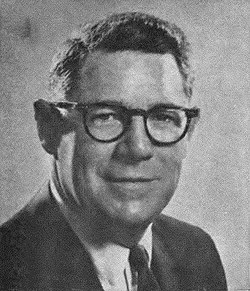
Clark MacGregor was a Republican U.S. Representative from Minnesota who joined the Nixon administration in January 1971 as Counsel to the President for Congressional Relations. Serving as Nixon's chief legislative liaison during much of the White House taping period, he managed the administration's interactions with Capitol Hill until June 1972. In July 1972, following the Watergate break-in and John Mitchell's resignation, MacGregor transitioned to become Chairman of the Committee for the Re-Election of the President (CRP), successfully guiding the campaign until his departure in November 1972.
President Nixon met with H.R. Haldeman, Clark MacGregor, and John Connally to coordinate legislative strategy and manage the President's public schedule. Key discussions focused on securing the confirmation of Earl Butz, advancing economic and tax legislation, and navigating partisan challenges regarding campaign finance reform. The participants also strategized on potential presidential vetoes and discussed public relations efforts to bolster the administration's standing with labor and Congress.
H. R. Haldeman consulted Clark MacGregor to determine the expected schedule for the Senate's Thanksgiving recess. MacGregor projected that the Senate would likely adjourn between 3:00 p.m. and 5:00 p.m. on Wednesday, noting that legislators were eager to travel home for the holiday. No further legislative sessions were anticipated for that Wednesday evening.
President Nixon consulted with Clark MacGregor regarding a strategy to publicly criticize Congress for its legislative inaction and delays surrounding the Thanksgiving recess. Nixon directed MacGregor and William Timmons to prepare a presidential statement highlighting congressional failure to progress on key issues, specifically foreign assistance legislation. MacGregor provided an update on the status of the House conference committee, noting the specific role of Thomas E. Morgan in stalling committee meetings, and was subsequently invited to the Oval Office to further discuss the administration’s response.
President Nixon, Clark MacGregor, and Charles Colson confer with Secretary of the Treasury John Connally to praise his recent press conference performance regarding the national economy. The participants evaluate Connally's messaging strategy, specifically debating the effectiveness of his remarks concerning George Meany and organized labor. The conversation also briefly addresses external complications, including a news bulletin regarding India's attack on East Pakistan that threatened to overshadow the administration's economic narrative.
President Nixon and Clark MacGregor coordinated final lobbying efforts regarding an upcoming legislative vote on campaign financing. They discussed the tactical use of a potential presidential veto threat and the distribution of John Connally's recent press conference transcripts to sway Southern Democratic senators. The conversation concluded with a review of vote-pairing strategies, specifically targeting Senator John Stennis to ensure his opposition or a neutral pair, while emphasizing the need to retain Senator Jack Miller’s support.
President Nixon and Clark MacGregor discussed the strategic potential of threatening a special congressional session to influence legislative voting behavior. MacGregor confirmed he broached the topic with Senate Minority Leader Hugh Scott as a way to pressure the Senate to avoid passing an unacceptable bill before their December 15th adjournment. Nixon approved of MacGregor's approach to planting the idea without directly linking it to the President.
President Nixon and Clark MacGregor discussed ongoing efforts to defeat the campaign reform bill and the controversial campaign check-off provision currently moving through the Senate. MacGregor provided updates on vote counting, specifically regarding potential swing votes like Senator William B. Spong, Jr., and the intense pressure being exerted by Democratic leadership. The two men reaffirmed their shared opposition to the legislation on principle, with Nixon confirming his intent to veto the bill if it reached his desk despite the political fallout.
President Nixon and Clark MacGregor discuss the political implications of upcoming legislation and its effect on party dynamics. They examine potential strategies for managing congressional opposition and the impact of fundraising pressures on the political landscape. The conversation concludes with an assessment of the legislative timeline and the risks posed by party defections.
President Nixon and Clark MacGregor discuss the administration's 52-47 defeat on a critical Senate vote regarding Title 10 of the Pastore amendment to a tax bill. Faced with this legislative setback, Nixon confirms his intention to veto the measure and coordinates a strategy session for the following morning. MacGregor advises on press messaging regarding the tax check-off provision and receives approval to bring Bill Timmons to the upcoming breakfast meeting to discuss further efforts to influence the House of Representatives.
President Nixon and Clark MacGregor discuss a favorable recent Senate vote and the potential forestalling of the Cooper-Church amendment. MacGregor provides an update on the legislative schedule, noting the possibility of an early Senate adjournment, which would allow the President to depart for California sooner. Additionally, the President speaks briefly with Anna Chennault to acknowledge her ongoing fundraising efforts and express appreciation for her political support.
President Nixon consulted with Clark MacGregor regarding the Senate's legislative schedule and expected adjournment. MacGregor confirmed that the Senate would conclude its business by 2 p.m. following the passage of remaining minor, non-controversial bills. Due to many senators departing early, MacGregor expressed doubt that a quorum could be maintained for the remainder of the session.
President Nixon met with Clark MacGregor to briefly discuss the status of a bill that had passed the previous evening. The two men acknowledged the competitive nature of the legislative outcome. No further specific actions or policy directives were established during this brief exchange.
President Nixon met with John Mitchell, John Ehrlichman, Clark MacGregor, and William Timmons to discuss legislative strategy, primarily regarding a pending tax bill and the controversial Pastore amendment. The group deliberated whether the President should publicly signal his intention to veto the bill if it retained the amendment, weighing the potential impact on 1972 campaign financing against the desire to assert executive authority. Additionally, the participants reviewed the contentious confirmation process for Earl L. Butz as Secretary of Agriculture, ultimately deciding to maintain the nomination and reject calls for his withdrawal.
President Nixon and Clark MacGregor strategize the rollout of a formal presidential statement regarding pending tax legislation. Nixon instructs MacGregor to draft the statement in the third person for his review and outlines a plan to brief key congressional leaders. The strategy involves providing last-minute courtesy notice to Wilbur Mills and Russell Long while giving Republican and Democratic allies advance warning to ensure they are prepared to publicly support the measure.
President Nixon and Henry Kissinger discussed foreign policy priorities and scheduling, specifically focusing on handling potential meetings with Italian leadership, the geopolitical implications of the India-Pakistan conflict, and managing diplomatic leaks. They agreed to defer any official visit from Italian officials until after their domestic elections to avoid political complications. Regarding the India-Pakistan situation, Kissinger advocated for a tougher stance against India, including cutting off military aid to gain leverage and discourage Indian reliance on the Soviet Union. The pair also addressed the fallout from a news leak attributed to Arthur Burns involving John Connally, reaffirming their support for Connally's role in the administration.
President Nixon met with his personal secretary Rose Mary Woods to discuss various administrative, scheduling, and personnel matters. The conversation included coordinating details for upcoming White House events and travel, as well as evaluating the efficiency and size of his White House staff. The President expressed concerns regarding office space, staffing levels during trips, and general administrative organization.
President Nixon coordinated an urgent scheduling adjustment for a meeting with Clark MacGregor and Ronald L. Ziegler regarding ongoing staff projects. The President instructed MacGregor to enlist the assistance of speechwriter Raymond K. Price, Jr. to finalize preparations before the group convened in the Oval Office. Nixon also directed MacGregor to utilize phone outreach to ensure key personnel were alerted to specific action items.
President Nixon and Charles Colson discuss plans to force the removal of a controversial 'check-off' provision from a pending tax bill by threatening a presidential veto. The President instructs Clark MacGregor to publicize this veto threat to shift responsibility onto Democrats and pressure them to adjust the legislation. The conversation also touches on the potential long-term political ramifications of the provision, the strength of the national economy, and strategies to influence legislative support.
President Nixon met with Charles Colson, Clark MacGregor, and Ronald Ziegler to coordinate the White House's public messaging regarding pending tax legislation and the financing of political campaigns. The participants discussed the potential impact of public campaign financing on presidential mandates and the necessity of passing tax relief before Congress adjourned. MacGregor was instructed to issue a strong statement framing the tax bill as a vital economic measure while pressuring Democrats to avoid partisan obstruction.
President Nixon, along with Haldeman, Bull, Ziegler, and MacGregor, discussed strategies for managing public perception and legislative efforts. Key topics included the effectiveness of media appearances, potential political risks and benefits of certain actions, and legislative priorities such as tax bills and childcare revisions. A significant development was the agreement to have Charlie Walker meet with Joe Wagner and Russell Long regarding Treasury's willingness to discuss matters of dispute, and the President's commitment to securing a suitable tax bill before Congress adjourns.
President Nixon and Clark MacGregor discussed the congressional reaction to MacGregor’s recent statement regarding the administration’s tax bill and the potential for a presidential veto. The conversation touched upon concerns regarding the Pastore amendment and the need to coordinate with key legislative figures like John W. Byrnes. Additionally, they assessed the political implications of securing television time to advocate for the administration’s tax reform goals.
President Nixon and Clark MacGregor discussed potential political strategies regarding media access, specifically focusing on the promotion of free television time for political candidates. Nixon suggested distancing the White House from the proposal by attributing the idea to others, such as Anderson, to avoid the appearance of administrative invention. The conversation concluded with instructions to circulate this concept to test its viability and impact on tax policy.
President Nixon met with H.R. Haldeman and later journalists Hobart D. Lewis and David Reed to prepare for an upcoming Reader's Digest interview. The discussion focused on Nixon’s foreign policy goals regarding Vietnam, the Soviet Union, and the People's Republic of China, as well as the broader challenges of maintaining American global competitiveness. The President emphasized his desire to transition toward a "generation of peace" while maintaining military strength to ensure credibility in diplomatic negotiations. The meeting concluded with the President presenting gifts to Reed's children.
President Nixon and Clark MacGregor discussed the legislative status of the Economic Stabilization Act and the prospects for concluding the current congressional session. They specifically addressed the potential need for an extended session due to ongoing negotiations, as well as reaction to recent administration statements regarding tax legislation. The participants evaluated the progress of these economic measures in the Senate and House to determine the timeline for adjournment.
President Nixon and Clark MacGregor met to discuss the legislative strategy for the tax bill currently stalled in conference, specifically focusing on the controversial political campaign "check-off" provision. Nixon maintained a firm stance against the check-off on principle, ultimately deciding that he would oppose any version of it, request its repeal in the next legislative session, and veto any associated appropriation bills. Additionally, the pair briefly discussed administrative actions to support corn prices and noted the declining health of George Meany.
President Nixon met with H.R. Haldeman, Clark MacGregor, and others to discuss key administrative and political matters, including the successful confirmation of Earl Butz as Secretary of Agriculture despite opposition, and the management of legislative issues such as the tax bill. The group also coordinated the President’s upcoming diplomatic schedule, the logistical handling of his planned trip to the People's Republic of China, and strategies for improving the quality and impact of presidential speeches. Finally, Rose Mary Woods joined the President to review his personal schedule, correspondence, and various staffing concerns.
President Nixon hosted a large gathering in the Oval Office, including Secretary of Agriculture Earl Butz, several members of Congress, and various agricultural officials, to discuss the state of the American agricultural sector. The President highlighted the efficiency of American farmers and the affordability of food for domestic consumers as a significant national achievement. The meeting served as a public relations event to underscore the importance of agriculture to the nation's overall well-being and to reinforce support for administration policies.
President Nixon met with a bipartisan group of Congressional leaders from the House Ways and Means Committee and the Senate Finance Committee to mark the signing of the Revenue Act of 1971. The President utilized the ceremony to praise the legislators for their cooperation in passing a responsible tax bill, contrasting it with fears that the measure would become an unmanageable 'Christmas tree' of amendments. The discussion highlighted the economic benefits of the legislation, particularly its role in job creation and the stimulation of the automobile industry following the administration's new economic program initiated in August.
President Nixon met with a bipartisan group of Congressional leaders to brief them on his recent diplomatic discussions with French President Georges Pompidou and the status of U.S. international economic policy. The conversation focused on efforts to address the global monetary crisis, the necessity of realigning exchange rates to restore the competitive position of American goods, and the importance of burden-sharing among trade partners. Nixon highlighted the recent breakthrough in negotiations with France as a critical step toward stabilizing the international monetary system and advancing domestic economic goals like job creation and inflation control.
President Nixon met with Clark MacGregor to discuss legislative strategy, the President's public image, and various diplomatic considerations. MacGregor briefed the President on a proposal by Anna Chennault for a potential summit of anti-communist Asian leaders, while also reporting on legislative outlooks for revenue sharing and welfare reform. Additionally, the two addressed recent media coverage, including a Dan Rather interview, and clarified rumors regarding MacGregor's potential appointment as Attorney General.
President Nixon met with his economic advisors and cabinet members to strategize the administration's approach to pending trade legislation and international monetary negotiations. A central focus was delaying the introduction of a trade bill until February to allow for ongoing negotiations with European and Japanese partners while avoiding negative links to the price of gold in Congressional hearings. The President emphasized the need for a long-term economic strategy and directed advisors to prepare a comprehensive plan for future trade expansion that would appease domestic protectionist concerns without committing to immediate, politically risky legislative action.
President Nixon met with his senior advisors and staff to debrief on the reception and political impact of his January 1972 State of the Union address. The participants analyzed media commentary and the reactions of congressional Democrats, specifically noting the effectiveness of the President's shift toward a more statesmanlike, moderate tone. Nixon and his team developed a strategy to pressure Congress by highlighting legislative inaction through daily congressional floor reminders, aiming to frame Democrats as obstructionists ahead of the 1972 election. They also discussed future messaging, emphasizing the importance of focusing on tangible economic results over rhetoric.
President Nixon met with Vice President Agnew and Republican congressional leaders to discuss strategy regarding his recent speech on Vietnam and the administration's upcoming FY 1973 budget. The President and Henry Kissinger briefed the attendees on the Vietnam peace negotiations, emphasizing that the U.S. had made comprehensive offers while denouncing North Vietnamese intransigence and political maneuvering. Economic advisors, including George Shultz and Herbert Stein, presented the administration's fiscal plans, highlighting the importance of balancing the budget while supporting a transition to a peacetime economy through controlled spending and wage-price stabilization. Participants agreed on the necessity of maintaining a firm stance on defense and economic policy to solidify public support and improve the administration's negotiating leverage.
President Nixon met with Henry Kissinger to discuss the administration's strategic response to North Vietnam's rejection of the latest U.S. peace proposal, agreeing to maintain a tough, offensive public relations stance. Following this, the President held an extensive session with Representative Page Belcher, Secretary of Agriculture Earl Butz, and Clark MacGregor to address agricultural policy, congressional relations, and the political necessity of better maintaining ties with key legislative allies. During the meeting, Nixon authorized a mortgage guarantee for a Tulsa hospital and emphasized his desire for more frequent, direct communication with his congressional supporters to improve morale and political coordination.
President Nixon directed Clark MacGregor to contact officials in Tulsa, Oklahoma, to authorize the finalization of an pending agreement. Nixon clarified that this move followed his meeting with Congressman Page Belcher, who was present during the call. MacGregor committed to immediately instructing the Tulsa parties to proceed with signing the necessary documentation.
President Nixon and Clark MacGregor discuss the highly positive reception from congressional leaders, including Barry Goldwater and J. William Fulbright, regarding the President's recent diplomatic trip to the People's Republic of China. MacGregor emphasizes the Senate's pride in the upcoming visit of Majority Leader Mike Mansfield and Minority Leader Hugh Scott to China, noting it bolsters institutional morale. The conversation also touches upon managing Fulbright's specific concerns regarding Radio Free Europe and Radio Liberty, as well as the President’s need for rest following his intense workload during the trip.
President Nixon met with a bipartisan group of Congressional leaders to provide a firsthand report on his recent diplomatic mission to the People's Republic of China (PRC). During the briefing, the President discussed his interactions with Chinese leadership, the strategic importance of establishing communication channels, and the complex geopolitical dynamics concerning Taiwan and the broader Pacific region. The meeting emphasized the necessity of maintaining trust and diplomatic dialogue to navigate future international relations and manage long-term foreign policy objectives.
President Nixon met with his Cabinet and senior staff to debrief them on the results and implications of his recent diplomatic trip to the People's Republic of China. The President emphasized that the primary success of the visit was the establishment of a new communication channel between the two nations, which he argued was essential for managing long-term stability and reducing the potential for future conflict. Nixon shared his impressions of Chinese leadership, particularly his discussions with Chou En-lai, noting the stark ideological differences while highlighting common strategic interests, such as peace in the Pacific and balancing influence against the Soviet Union. The discussion concluded with a focus on how this opening could be leveraged to reshape international relations and manage regional tensions across Asia.
President Nixon and Clark MacGregor briefly discussed the ongoing challenges regarding public messaging and the management of political expectations. They addressed the necessity of adding nuance to their outreach efforts while acknowledging the limitations in establishing new governmental institutions. The President encouraged MacGregor to maintain a visible and authoritative presence to help boost morale and maintain momentum for the administration’s agenda.
President Nixon met with the Cabinet Committee on Education to deliberate on federal education policy, with a primary focus on the political and constitutional challenges surrounding school busing and desegregation. The discussion addressed the need for improved quality of education in inner-city and rural schools, the complexities of federal financing, and the potential implementation of tax credits for private education. The participants explored ways to balance integration mandates with community-based solutions, emphasizing the importance of school accountability and the development of a coherent administration strategy to address public concerns.
President Nixon met with Vice President Agnew and Republican Congressional leaders to coordinate legislative strategy on key domestic priorities, specifically revenue sharing, welfare reform, and Social Security legislation. The discussion focused on overcoming legislative stalemates in the Ways and Means Committee and the Senate, particularly regarding the influence of Chairman Wilbur Mills and the need for a unified Republican stance. The President urged the leadership to maintain pressure for compromise bills that align with administration goals while avoiding fiscally irresponsible mandates during an election year.
President Nixon met with H. Allen Smith, Clark MacGregor, and William E. Timmons to strategize on legislative priorities and congressional scheduling ahead of the upcoming national conventions. The participants discussed the feasibility of a constitutional amendment regarding school busing and coordinated efforts to finalize key appropriations bills before the Republican National Convention. Nixon emphasized the need for a small group of senior leaders to reach a consensus on legislative tactics to maximize efficiency during the tight three-to-four-month window before the party conventions.
President Nixon met with his Cabinet Committee on Education and a group of prominent private attorneys to develop a legislative and constitutional strategy for addressing federal court-ordered school busing. The participants debated the merits of proposing a temporary moratorium on new busing orders while Congress pursued longer-term, systemic solutions focused on improving educational quality. The meeting resulted in a consensus to refine these legislative proposals and maintain strict confidentiality regarding the involvement of the private counsel to protect the administration's political and legal standing.
President Nixon, H.R. Haldeman, and Clark MacGregor discussed navigating political tensions involving Secretary of State William Rogers and National Security Advisor Henry Kissinger, specifically regarding Kissinger's private briefings with the Foreign Relations Committee. The participants addressed the perceived rift between Rogers and Kissinger, strategies for managing legislative relations, and concerns about the ongoing ITT hearings. The President also reviewed his communication strategy, emphasizing the use of television press conferences to bypass traditional media narratives and reach the public directly.
President Nixon met with bipartisan Congressional leaders, administration officials, and cabinet members to advocate for a legislative moratorium on court-ordered busing to achieve racial balance in schools. Nixon argued that current judicial mandates were causing societal turmoil and urged Congress to act immediately to stop new busing orders while advancing his broader 'Equal Educational Opportunities Act.' The administration proposed a two-pronged strategy involving an immediate legislative moratorium followed by a long-term commitment to compensatory education funding to improve school quality, specifically for low-income and minority students.
President Nixon met with members of the Cost of Living Council and other key economic advisors to assess the efficacy of Phase II wage and price controls. The discussion focused on controlling inflation, managing food prices, and navigating political pressures from organized labor and Congress. Participants evaluated the impact of economic policies on the public interest and discussed strategies for future price stability across various sectors.
President Nixon met with Clark MacGregor and Alexander Butterfield to coordinate a messaging strategy for Republican members of Congress regarding the economy and the administration's price stabilization program ahead of their recess. The discussion also addressed the stalled confirmation of Richard G. Kleindienst and the ongoing ITT controversy, with Nixon pushing for a swift committee vote to resolve the matter. Finally, Nixon and Alexander Haig discussed the geopolitical risks and potential benefits of including a stop in Poland during the President's upcoming trip to the Soviet Union.
President Nixon met with Republican congressional leaders and cabinet officials to strategize on the administration's legislative agenda, specifically focusing on revenue sharing, welfare reform, and the Equal Educational Opportunities Act. The discussion addressed the political and procedural challenges of implementing a busing moratorium and the importance of countering Democratic criticism regarding the economy. Nixon emphasized the need for a unified party strategy to leverage economic accomplishments and maintain pressure on Democratic opponents leading into the 1972 election cycle.
H. R. Haldeman, Clark MacGregor, and Charles Colson coordinated strategies to successfully terminate the Senate hearings concerning the ITT case. MacGregor outlined efforts to secure necessary votes from Republican senators and Senator James Eastland, while discussing potential concessions and scheduling hurdles. The participants also considered whether Peter Flanigan should provide a statement to the committee, weighing the political benefits against the risks of breaching executive privilege.
President Nixon met with Clark MacGregor, H. R. Haldeman, and Charles Colson to strategize on ending the ongoing Senate Judiciary Committee hearings regarding the International Telephone and Telegraph (ITT) case and the nomination of Richard G. Kleindienst. The group expressed concern that the hearings were damaging the administration and discussed orchestrating a committee vote to terminate the proceedings, despite potential political blowback. They also deliberated on the best way for Kleindienst to manage his public image and address the nomination impasse, while acknowledging frustrations regarding poor communication and handling of the controversy by White House staff.
President Nixon, Clark MacGregor, and H. R. Haldeman discussed legislative progress regarding anti-busing initiatives and the ongoing Senate Judiciary Committee hearings on the ITT case. MacGregor reported successful engagement with Southern House members to solidify support for the Administration's moratorium proposal, while expressing concern over the lack of unity among Republican senators regarding the ITT hearings. The President emphasized the need to secure a vote to terminate the ITT hearings, framing the struggle as a critical political confrontation between the Administration and Senator Edward Kennedy.
President Nixon met with Clark MacGregor to debrief on a recent meeting with Southern legislators and gauge the support of House Republicans. The discussion focused on navigating legislative hurdles and ensuring party unity regarding ongoing policy challenges. The President emphasized the strategic importance of managing these political relationships and maintaining momentum during the upcoming legislative recess.
President Nixon met with James E. Stewart and Clark MacGregor, accompanied briefly by a White House photographer, to discuss political relations, potential travel logistics, and administrative appointments. The conversation touched upon Stewart’s history in Minneapolis, praise for Nixon’s recent trip to the People's Republic of China, and anticipation for his upcoming visit to the Soviet Union. The participants also briefly addressed pending Supreme Court nominations and the search for an Attorney General, with Nixon advising caution regarding staff travel requests.
President Nixon met with Republican congressional leadership to coordinate administration talking points on sensitive domestic and foreign policy issues. The discussion focused primarily on the ongoing military situation in Vietnam, emphasizing the success of Vietnamization, the importance of maintaining public support, and the necessity of keeping political opposition from undermining the war effort. Additionally, the President and his advisors briefed members on key legislative priorities, specifically the administration's stance against forced busing and efforts to address rising food prices and drug-related crime. The participants discussed strategies for distributing these fact sheets and maintaining a unified front to influence public perception and legislative outcomes.
President Nixon met with Congressional leaders Hugh Scott, Gerald Ford, Clark MacGregor, and William Timmons to coordinate messaging regarding the ongoing Vietnam War and upcoming travel to the People's Republic of China. Nixon emphasized the necessity of projecting strength, instructing the group to underscore the administration's willingness to negotiate while firmly rejecting any appearance of negotiating a surrender under duress. The participants also discussed the importance of highlighting South Vietnamese resilience and Soviet support for the North Vietnamese offensive to ensure a unified public stance.
President Nixon coordinated with staff members Stephen Bull, Clark MacGregor, and Alexander Butterfield to arrange a private trip aboard the presidential yacht, the Sequoia. The participants finalized the logistics for a late afternoon departure and dinner, while also briefly discussing the timing of an urgent telephone call to be placed by the President. These arrangements were intended to facilitate an informal meeting away from the office.
President Nixon initiated a brief telephone call to Clark MacGregor to coordinate an immediate, informal meeting at the White House. The two discussed MacGregor’s current location and availability to convene at the Oval Office. This conversation served primarily as a logistical exchange to facilitate an urgent face-to-face consultation between the President and his advisor.
President Nixon met with Clark MacGregor to coordinate the administration's legal and political defense regarding the Senate investigation into the ITT antitrust settlement. They strategized on managing witness testimony and committee dynamics, specifically aiming to mitigate aggressive questioning from Democratic senators Edward Kennedy and John Tunney by utilizing Republican committee allies. Furthermore, Nixon urged MacGregor to maintain an offensive political posture, particularly by contrasting the administration's actions with previous Democratic inaction on conglomerates and by framing the administration's stance on the Vietnam War as a necessary defense against communist aggression.
President Nixon met with Charles Colson and other staff members to strategize regarding the public perception of his Vietnam policy and the administration's upcoming diplomatic efforts. They discussed the positive impact of increased bombing in North Vietnam, the success of recent press backgrounders in shaping the President's image as a courageous leader, and the importance of using supportive polling data to counter political opposition. Nixon emphasized his determination to maintain military pressure regardless of political risks to his reelection or the upcoming Soviet summit, while also coordinating the public handling of Henry Kissinger's secret trip to Moscow.
President Nixon and Clark MacGregor discussed ongoing military operations in Vietnam, specifically focusing on continued B-52 bombing raids and the administration's firm stance against North Vietnam. MacGregor provided positive feedback regarding public reception to recent statements made by the Vice President and the appointment of John Mooty as the CRP chairman in Minnesota. Additionally, they reviewed the status of Richard G. Kleindienst’s confirmation proceedings, anticipating a favorable committee vote on his nomination the following morning.
President Nixon met with Vice President Agnew, Cabinet members, and senior staff to discuss the administration's recent escalation in Vietnam, specifically the blockade of North Vietnamese ports. The President articulated his rationale for the decision and sought unified support from his team to manage potential congressional and public opposition. He emphasized the necessity of leadership during difficult times and urged his Cabinet to present a cohesive front in defending the policy to the public.
President Nixon met with his Cabinet and key staff to discuss the upcoming departure of Secretary of the Treasury John B. Connally and to address broader administration matters. The discussion covered the timing of administrative changes, the transition of economic policy responsibilities to George Shultz, and the status of ongoing federal investigations following the recent shooting of George C. Wallace. Connally reflected on his tenure as Treasury Secretary and his future plans, while the President reaffirmed his commitment to his current economic program and leadership agenda.
President Nixon met with Clark MacGregor to discuss congressional reactions to the Vietnam War, specifically focusing on opposition to the blockade of Haiphong harbor and concerns regarding Senate negotiations with the National Liberation Front. They reviewed recent Harris Poll data indicating public support for the President’s policies despite negative media coverage and critical Senate maneuvers. The conversation also touched upon the assassination attempt on George Wallace, the management of the Black Lung bill, and upcoming changes in the Treasury Department.
President Nixon met with Senator Robert C. Byrd, John Ehrlichman, and Clark MacGregor to discuss the pending black lung benefits bill. Acknowledging the fiscal concerns and potential budget implications, Nixon informed Byrd of his decision to sign the legislation, concluding that a veto would likely be overridden by Congress. They coordinated a public relations strategy for the announcement, agreeing that Byrd would signal his satisfaction with the meeting to the press while emphasizing the President's careful deliberation of the budgetary and humanitarian factors.
President Nixon met with bipartisan Congressional leaders to discuss the upcoming Soviet summit and the administration's strategic approach to international relations. The discussion focused on complex issues including trade, Most Favored Nation (MFN) status for the Soviet Union, and the potential for bilateral cooperation despite ideological differences. Nixon emphasized the importance of maintaining a unified stance to ensure the success of the negotiations while managing domestic political expectations.
President Nixon met with Vice President Agnew and key Republican Congressional leaders to coordinate legislative strategy on critical administration priorities, specifically revenue sharing, the defense procurement bill, and Vietnam-related war powers resolutions. The discussion focused on overcoming Democratic resistance to the President’s revenue-sharing program and maintaining a firm legislative stance on maintaining military strength. Nixon emphasized that American foreign policy, including negotiations with the Soviet Union, remains contingent upon the credibility of U.S. defenses and a unified national commitment.
President Nixon met with Vice President Agnew and Republican Congressional leaders to analyze the current political landscape and formulate electoral strategies heading into the 1972 campaign. A significant portion of the discussion focused on the perceived bias of the media in their treatment of Democratic candidate George McGovern compared to historical GOP figures like Barry Goldwater. Nixon encouraged leadership to coordinate closely on legislative and campaign messaging, noting that the Republican party must remain disciplined to capitalize on the internal divisions within the Democratic party.
President Nixon met with Republican congressional leaders and key aides to strategize on gaining legislative support for the Strategic Arms Limitation Treaty (SALT) and to discuss the timing of its implementation alongside Soviet relations. The participants also reviewed foreign policy priorities, specifically addressing the political dangers of a rapid withdrawal from Vietnam and the importance of maintaining U.S. defense commitments, including security assistance to Israel. Furthermore, the group coordinated on domestic legislative priorities, including Revenue Sharing and House Resolution 1.
President Nixon met with Clark MacGregor, Henry Kissinger, and H.R. Haldeman to finalize the strategy and logistics for a forthcoming Congressional briefing on the Strategic Arms Limitation Treaty (SALT). The group discussed the coordination of testimony between the State Department and the Department of Defense, the specific roles of Kissinger and Cabinet members, and the format for managing inquiries from key legislators such as J. William Fulbright. Additionally, the conversation addressed broader administration concerns, including political strategy regarding a black lung bill and the President's firm position on amnesty for Vietnam-era draft resisters.
President Nixon met with H.R. Haldeman, Clark MacGregor, Henry Kissinger, and others to discuss a wide-ranging agenda involving domestic policy, legislative strategy, and the President's public image. Key topics included the potential for presidential vetoes on various bills, the administration's stance on military amnesty, preparations for a press conference, and the logistics for an upcoming Congressional briefing on the Strategic Arms Limitation Treaty (SALT). The group also reviewed intellectual commentary on higher education and debated campaign finance matters, ultimately coordinating the administration's messaging and travel schedule.
President Nixon met with his senior advisors and Cabinet members, including Elliot Richardson and Caspar Weinberger, to evaluate the legislative strategy for H.R. 1, the administration's welfare reform bill. The participants debated whether to maintain a firm stance on the original proposal or pursue a compromise with Senator Ribicoff to improve the chances of Senate passage before the Democratic National Convention. Nixon expressed concern that moving toward a compromise might blur the administration's policy distinctions from Democratic nominee George McGovern, while his advisors argued that failing to act could lead to the collapse of the legislation. Ultimately, the President deferred a final decision, requesting further analysis on the political and budgetary implications of the potential concessions.
President Nixon met with Alexander Haig to assess the status of the Vietnam War, discuss legislative strategy, and review international relations with the Soviet Union and China. They focused on countering North Vietnamese public relations efforts in the U.S. press, managing congressional support for administration policies, and evaluating the military preparedness of South Vietnamese forces. Nixon ultimately decided against engaging with Senator J. William Fulbright, choosing instead to maintain a firm stance on foreign policy and arms control negotiations.
President Nixon and Clark MacGregor consulted regarding legislative strategy and the administration’s response to ongoing congressional debates over Vietnam policy. The discussion touched upon the timing of legislative actions, the effectiveness of specific messaging proposed in a memorandum by Patrick J. Buchanan, and the political implications of compromise on war-related votes. Nixon emphasized a cautious approach, advising against certain public statements while evaluating how congressional movements might influence North Vietnamese strategy.
President Nixon met with his economic and policy advisors, including George P. Shultz, Herbert Stein, and John D. Ehrlichman, to deliberate on fiscal strategy, federal spending constraints, and the administration's legislative priorities. The discussion focused on managing the federal budget for fiscal years 1973 through 1975, specifically addressing inflation, revenue sharing, welfare reform, and potential veto strategies to control congressional expenditures. The participants also explored the political ramifications of proposed spending cuts and tax policy adjustments ahead of the upcoming election cycle.
President Nixon met with Republican members of the Senate Finance Committee to discuss the legislative impasse surrounding welfare reform (H.R. 1) and upcoming fiscal challenges. The participants evaluated the political feasibility of passing administration-backed legislation, expressing concerns over the influence of liberal amendments, rising costs, and the lack of support from Chairman Russell Long. Ultimately, the group discussed strategies for managing the impending debt ceiling extension and the threat of an unpopular Social Security increase, with the President firming his stance on vetoing non-budgetary spending items.
President Nixon held a large-scale photographic session in the Oval Office with numerous Republican senators, representatives, and congressional candidates. The event was coordinated by technical staff to capture official images of the President with party members. Following the main group session, Clark MacGregor remained for a brief private discussion with the President.
President Nixon met with Clark MacGregor to discuss the political implications of a potential veto of the Social Security bill, specifically addressing the fiscal impact of the Frank Church amendment and concerns regarding debt ceiling extensions. They strategized on managing Congressional support and navigating the Ways and Means Committee, while also weighing the administration's stance as a campaign issue against Democratic opposition. The meeting concluded with a brief interruption to host Ernesto V. Lagdameo, his wife, and Anna C. Chennault for scheduled greetings and photographs.
President Nixon, H.R. Haldeman, and Clark MacGregor held an extensive meeting to discuss legislative business, specifically the Social Security bill, alongside a major focus on the emerging Watergate scandal. The participants coordinated efforts to manage the political fallout and investigation regarding the Committee to Re-elect the President, including the involvement of G. Gordon Liddy, E. Howard Hunt, and John Mitchell. They deliberated on creating a strategic 'scenario' to handle the cover-up, addressed campaign finance irregularities, and managed the optics of John Mitchell's potential resignation.
H. R. Haldeman and Clark MacGregor engaged in a telephone conversation to discuss matters related to the Nixon reelection campaign and political strategy. Given the lack of a transcript and the presence of withdrawn material, the specific nature of their discourse remains classified. The discussion appears to focus on high-level coordination between the White House and the Committee for the Re-Election of the President.
President Nixon and H. R. Haldeman met with Julie Nixon Eisenhower and other staff to discuss the first family's public relations strategy, scheduling for upcoming events, and the political climate. A significant portion of the conversation focused on the resignation of John N. Mitchell, with the President coordinating how the administration would address media inquiries regarding the departure and the ongoing Watergate investigation. They also evaluated the effectiveness of recent speeches given by family members and discussed the political implications of upcoming travels and appearances.
President Nixon met with his Cabinet and senior staff to discuss strategies for achieving a balanced federal budget by 1975, emphasizing the necessity of immediate spending cuts and potential vetoes of congressional legislation to curb inflation. Budget Director George Shultz outlined the administration’s plan to issue "ceiling letters" to agency heads to enforce strict fiscal guidelines and reduce government deficits. The participants also reviewed recent positive economic indicators, including growth in the Gross National Product and declining unemployment, while noting that the public generally views government spending as a primary driver of inflation.
President Nixon met with H. R. Haldeman, Clark MacGregor, and Robert J. Dole to strategize regarding the upcoming 1972 presidential campaign. The discussion focused on political maneuvering and the coordination of campaign efforts in the lead-up to the election. While a significant portion of the meeting was withdrawn from public record, the session served as a tactical planning assembly for the administration's political team.
H. R. Haldeman and Clark MacGregor discussed the breaking news that Democratic vice-presidential nominee Thomas Eagleton had disclosed a history of hospitalizations for mental health treatment, including electric shock therapy. MacGregor confirmed his prior awareness of Eagleton’s medical records and noted reports of a potential additional hospitalization at Johns Hopkins that Eagleton failed to mention. To manage the political fallout, Haldeman relayed the President's strict instructions for the campaign staff to maintain a policy of silence regarding the matter.
President Nixon consulted with Clark MacGregor regarding the management of the 1972 reelection campaign and political strategy. The discussion focused on organizational efforts and the tactical positioning of the campaign during the primary election season. No definitive actions or major policy shifts were recorded, as the conversation primarily served as an update on internal campaign affairs.
President Nixon met with Clark MacGregor to discuss campaign strategy and assess the vulnerabilities of Democratic challenger George McGovern. The two reviewed McGovern's campaign staff, his controversial selection of Thomas Eagleton as a running mate, and perceived arrogance among McGovern's intellectual supporters. Additionally, they considered Nelson Rockefeller's perspective on MacGregor’s performance and his interactions with a hostile press corps.
President Nixon met with a large group of Republican Congressional leaders to coordinate legislative strategy and discuss the administration's economic record ahead of the upcoming election. The conversation focused on countering Senator George McGovern's economic proposals, with the President and his advisors emphasizing that the administration's policies had fostered recovery, reduced inflation, and increased civilian employment. Key action items included distributing briefing materials to counter Democratic attacks, pushing for a government spending ceiling to avoid future tax increases, and planning strategy for upcoming votes on controversial appropriation bills and foreign aid legislation.
President Nixon met with his senior advisors to coordinate campaign strategy for his re-election, specifically addressing the tone of his upcoming acceptance speech and public appearances. The group discussed countering Senator George McGovern's policies, particularly regarding Vietnam and welfare, while also devising a public relations strategy to address the ongoing Watergate investigation. Nixon emphasized the need for a strong, combative campaign posture that avoids defensive positioning and effectively utilizes his cabinet members to attack political opponents.
President Nixon met with Vice President Agnew and Republican Congressional leaders to coordinate legislative strategy ahead of the upcoming election, specifically focusing on the status of pending bills and the management of the Congressional schedule. Key priorities included securing a federal spending ceiling, advancing revenue sharing, and emphasizing anti-busing legislation as a must-pass measure to counter Democratic-led policies. The President urged the leadership to maintain a unified front on fiscal restraint, framing opposition to Republican economic proposals as reckless and warning that Democrats should bear the political cost for failing to curb government spending.
President Nixon met with Walter Hickel, Clark MacGregor, and John Ehrlichman to discuss campaign strategy and the political climate leading up to the 1972 election. Hickel shared insights from his domestic travels, emphasizing the need for a strong electoral mandate to overcome Congressional gridlock and implement domestic reforms, particularly regarding urban development and transportation. The participants also explored foreign policy issues, including potential future diplomatic visits to China and the Soviet Union, and strategic concerns regarding resource competition in Asia.
President Nixon met with H.R. Haldeman and John Dean to discuss the ongoing fallout and public perception of the Watergate investigation, emphasizing the need to keep the affair contained while criticizing potential political opponents. The participants assessed the progress of internal investigations and debated strategies for managing the Democratic National Committee's activities, including potential legislative and legal maneuvers. Nixon expressed a firm determination to reorganize the administration after the election, insisting that political loyalty and control over the federal bureaucracy would be prioritized to eliminate perceived incompetence and disloyalty within the ranks.
President Nixon met with key advisors and political allies to strategize on the 1972 presidential campaign, the legislative handling of the Office of Economic Opportunity (OEO) bill, and security concerns regarding Henry Kissinger. The group discussed the political advisability of vetoing the OEO and water bills, emphasizing fiscal responsibility, and explored campaign messaging tactics, including the use of "mini-documentaries" highlighting the President's foreign policy achievements. A significant development was the focus on producing television spots that frame the President's leadership as nonpartisan and statesmanlike, contrasting his record with that of Senator George McGovern.
President Nixon met with Clark MacGregor, Maurice Stans, and a large group of staff from the Finance Committee of the Committee to Re-elect the President in the Cabinet Room. The meeting served as a morale-boosting session or formal gathering for the campaign’s fundraising team. Due to the presence of a withdrawn item spanning over seven minutes, the specific substantive discussions remain restricted or were largely ceremonial in nature.
President Nixon met with a large group of reporters and staff in the Oval Office to conduct a press conference, followed by a private debriefing with his senior aides, including H.R. Haldeman, John Ehrlichman, and Charles Colson. During the public session, Nixon addressed current events such as the 1972 campaign, the status of the Vietnam peace negotiations, allegations regarding the U.S.-Soviet grain deal, and his stance against a 1973 tax increase. Following the departure of the press, the President and his advisors discussed the effectiveness of his performance, particularly the benefit of using his responses as recorded campaign material, and strategized on future scheduling and media messaging.
President Nixon met with his senior staff and campaign advisors to assess his 1972 reelection strategy, focusing on framing the debate against George McGovern around key issues like Vietnam, welfare, busing, and national defense. The group discussed the necessity of moving from a defensive posture to an aggressive offense by highlighting the radical nature of McGovern's positions to the general public. Additionally, the President met with James Hodgson and other officials to review progress on veterans' benefits and education programs, confirming plans to maintain support among Vietnam-era veterans as part of the broader campaign effort.
President Nixon met with members of the Black Executive Advisory Committee of the Committee to Re-elect the President to discuss the administration's record and ongoing efforts to support the Black community. The discussion focused on educational opportunities and the progress made regarding economic empowerment and federal outreach. Participants highlighted the importance of these initiatives in mobilizing support and fostering positive change within Black communities during the 1972 election cycle.
President Nixon met with H.R. Haldeman, John Connally, and other advisors to discuss campaign messaging, the effectiveness of recent political television broadcasts, and the President's upcoming schedule. The group evaluated the impact of Nixon’s defense and foreign policy messaging, deciding to forgo the release of a new tax plan to avoid unnecessary controversy. Nixon and his team also strategized on the handling of upcoming legislative vetoes, particularly a water bill, while weighing the benefits of presidential travel versus remaining in Washington to maintain a 'presidential' public image.
President Nixon met with his senior advisors and campaign staff to coordinate strategy for the final weeks of the 1972 presidential election, focusing heavily on the political ramifications of ongoing Vietnam peace negotiations. The President expressed a firm commitment to securing a durable peace that ensured the survival of South Vietnam, while advisors discussed how to counter George McGovern’s criticisms regarding the war and economic issues. The conversation also covered campaign media tactics, including radio and television appearances, and touched upon concerns regarding press coverage of Watergate-related controversies like the Segretti activities.