Dean, John W., III
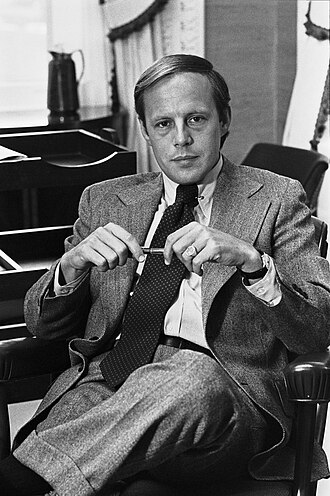
John W. Dean III began his service in the Nixon administration as Associate Deputy Attorney General from February 1969 to July 1970, when he transitioned to Counsel to the President after his predecessor, John Ehrlichman, became chief domestic adviser. Serving as White House Counsel throughout the majority of the taping period, Dean acted as Nixon's primary legal advisor and became deeply involved in orchestrating the Watergate cover-up. He famously warned Nixon of a "cancer on the presidency" in March 1973 and began cooperating with federal prosecutors, which led to his dismissal in April 1973.
President Nixon held two distinct meetings in the Oval Office: the first with Turkish diplomat Targut Menemencioglu and his team to discuss geopolitical concerns in Pakistan, India, and Turkey, including the future of the Central Treaty Organization (CENTO); the second with Chief Justice Warren Burger, John Mitchell, and John Dean regarding judicial reform and the President's potential appearance at an American Bar Association event in London. During the first session, Nixon reaffirmed the importance of maintaining U.S. support for Pakistan and stability in the region despite domestic Congressional opposition. The subsequent meeting focused on the need to expedite the criminal justice system in the U.S. and coordinated scheduling for Law Day and judicial conferences.
President Nixon and H.R. Haldeman discuss political strategy ahead of a forthcoming Vietnam policy speech, focusing on managing congressional support and public perception. A significant portion of the conversation involves the potential resignation of Vice President Spiro T. Agnew, with Nixon and John Dean exploring the constitutional mechanisms for filling a vice presidential vacancy and the political impact of such a move on his 1972 re-election campaign. Nixon expresses deep frustration with the perceived weakness of his congressional allies and evaluates the political viability of potential replacements, including John B. Connally.
President Nixon met with H.R. Haldeman, John Mitchell, and John Dean to discuss the administration's strategic response to a recent unanimous Supreme Court ruling on school busing. The group focused on distancing the White House from the controversial decision, emphasizing that enforcement should remain the responsibility of local school authorities and district courts rather than federal agencies like HEW. Nixon firmly instructed his staff to avoid taking credit for the ruling, express no personal endorsement of it, and ensure that HEW officials do not overstep their authority in implementing desegregation plans.
President Nixon, Henry Kissinger, H.R. Haldeman, and John Dean discussed strategies for managing political fallout from the ongoing Vietnam War, particularly regarding public and congressional perception. The President expressed frustration with military leadership and the impact of war protests, deciding to prioritize a definitive end to U.S. ground combat and the draft to stabilize his political position. Additionally, the group reviewed internal polling data and economic messaging, agreeing to leverage improved consumer price index figures to bolster support among Republican legislators and conservative constituencies.
President Nixon directs John Dean to ensure that local police and authorities take no action against anti-war veterans demonstrating in Washington, D.C. Nixon emphasizes a strategy of inaction, instructing Dean to stall any decision-making through meetings while allowing the protesters to continue their activities undisturbed. This directive reflects the President's desire to avoid confrontation and potential negative optics pending a resolution from the Supreme Court.
President Nixon and John Dean discuss the status of anti-war protests in Washington, D.C., specifically focusing on a planned demonstration at the Capitol. Dean informs the President that approximately 2,000 protesters intend to march on the Capitol, but confirms that local authorities are prepared to handle the situation without federal intervention. The conversation concludes with an assessment that the protesters' movement is losing momentum due to internal tactical disagreements among leadership figures like Rennie Davis.
President Nixon, H.R. Haldeman, and John Dean met to discuss political strategy regarding regional economic challenges, specifically the drought situation and unemployment in key states like California. They evaluated the effectiveness of recent administration outreach and media tactics, including utilizing the President’s press conferences to bypass critical coverage and shape public opinion. The participants also discussed coordinating with congressional leadership to build support among Southern Democrats for the administration’s legislative agenda.
President Nixon met with D.C. Mayor Walter Washington, Chief of Police Jerry Wilson, and military/legal officials to commend their handling of the recent anti-war demonstrations in Washington, D.C. The discussion focused on the tactical success of the city’s response, the heavy costs and logistical challenges of policing mass arrests, and the administration’s firm stance against civil disobedience. Nixon affirmed his full support for their actions and emphasized that his administration would continue to prioritize law and order over the disruptions caused by protesters.
President Nixon met with his Cabinet and key advisors to announce a major breakthrough in Strategic Arms Limitation Talks (SALT) with the Soviet Union, culminating in a joint statement to be released simultaneously in both nations. The agreement establishes a framework to prioritize limiting anti-ballistic missile (ABM) systems while pursuing parallel measures for offensive weapons. Nixon emphasized that the breakthrough was achieved by maintaining a strong U.S. defense posture, and he urged his administration to avoid public speculation or detailed commentary that could complicate sensitive ongoing negotiations.
President Nixon met with his senior advisors to strategize the timing and presentation of a major, upcoming national economic policy package. Discussions focused on whether to prioritize domestic measures like wage and price freezes or to address international monetary instability by closing the "gold window." Nixon expressed concern about appearing panicky and weighed the political benefits of delivering a televised address versus a more understated written announcement. Additionally, the group reviewed the success of a recent press briefing by Ehrlichman, which successfully shifted the media narrative regarding the declassification of government documents and the administration's stance on the Pentagon Papers.
President Nixon met with legal scholars Paul A. Freund, Julius Goebel, Jr., and Charles Fairman, along with Librarian of Congress Quincy Mumford and aide John Dean, to discuss book preservation and library contributions. The conversation focused on the physical handling of historical legal volumes, the nuances of the President's writing and dictation process, and historical anecdotes regarding Supreme Court justices Oliver Wendell Holmes, Jr. and Louis Brandeis. During the meeting, the President presented the guests with official gifts, including signed pens and presidential cufflinks.
President Nixon met with his attorney Frank DeMarco, Jr. and White House Counsel John W. Dean, III to finalize personal tax-related matters. The participants discussed the closure of specific financial or legal business, with DeMarco expressing relief upon the conclusion of the affair. No further substantive policy matters were recorded during this brief encounter.
President Nixon held an Oval Office meeting with key staff members and guests, including First Lady Pat Nixon, H.R. Haldeman, John Ehrlichman, and John Dean. While the majority of the discussion is classified as a withdrawn item, the session focused on administrative scheduling matters involving John Ehrlichman. The meeting concluded after approximately 23 minutes with the departure of Alexander P. Butterfield and his associates.
President Nixon met with H.R. Haldeman and John Dean to discuss the ongoing fallout and public perception of the Watergate investigation, emphasizing the need to keep the affair contained while criticizing potential political opponents. The participants assessed the progress of internal investigations and debated strategies for managing the Democratic National Committee's activities, including potential legislative and legal maneuvers. Nixon expressed a firm determination to reorganize the administration after the election, insisting that political loyalty and control over the federal bureaucracy would be prioritized to eliminate perceived incompetence and disloyalty within the ranks.
President Nixon met with newspaper magnate Samuel I. Newhouse, Herbert Klein, and John Dean to discuss concerns regarding antitrust enforcement and the potential for federal bureaucracy to challenge Newhouse's extensive media holdings. Newhouse expressed anxiety over public interest groups and government regulators targeting his business model, while Nixon and Dean reassured him of the administration's pro-business philosophy, which prioritizes successful management over anti-bigness ideology. The discussion concluded with lighthearted exchanges regarding the 1972 campaign and the presentation of presidential gifts to Newhouse.
President Nixon and H.R. Haldeman met to discuss a wide-ranging agenda of personnel appointments, political strategy, and the ongoing Watergate investigation. Key topics included coordinating legislative strategy with Senator Howard Baker regarding the Ervin Committee hearings, managing the public image of the administration, and navigating staffing transitions within the Justice Department and the Bicentennial Commission. The President also deliberated on the handling of upcoming public appearances, potential executive privilege claims, and campaign funds, ultimately deciding to maintain a firm stance on staff loyalty and the strategic use of political assets.
H. R. Haldeman and John Dean discussed strategies for encouraging the Senate Select Committee, specifically Senator Howard Baker, to broaden their inquiry to include Democratic campaign irregularities. Haldeman proposed leveraging opposition research, such as potential communist financing and the activities of Dick Tuck within the McGovern campaign, to create a more balanced investigation. They acknowledged a current lack of hard documentation but agreed to continue compiling and sharing any available materials to support this offensive approach.
President Nixon met with John Dean and Stephen Bull to discuss the White House's strategy for responding to congressional investigations, particularly concerning executive privilege and the testimony of staff. They debated how to balance cooperation with Congress against protecting sensitive information, referencing past abuses by previous administrations. A key action item was the finalization and release of a statement clarifying the administration's position on staff testimony, intended to preemptively address potential inquiries and manage public perception.
President Nixon, John Dean, and Stephen Bull discussed potential judicial appointments, focusing on diversity and qualifications for Supreme Court and Court of Appeals positions. They also touched upon the issue of "leaks" within the administration and the handling of investigations, particularly concerning W. Mark Felt. A significant portion of the conversation involved strategies for managing public perception and congressional inquiries related to ongoing investigations, including the potential impact of certain individuals testifying.
President Nixon met with John Dean and Manolo Sanchez to discuss the handling of FBI information and potential leaks to Congress. Dean reported on his conversations with L. Patrick Gray III regarding the FBI's cooperation with Senate investigations, noting Gray's surprising stance on making FBI records available. They also discussed the 1968 bugging incident and the possibility of Cartha "Deke" DeLoach lying about it, with Nixon instructing Dean to gather information on past administrations' use of the FBI for espionage.
President Nixon, Henry Kissinger, Ronald Ziegler, and John Dean discussed the upcoming signing of international agreements on Vietnam, including the release of POWs and the implementation of the ceasefire. They also reviewed President Kennedy's foreign policy decisions, particularly regarding Europe and the Skybolt missile crisis, contrasting them with Nixon's approach. Additionally, the conversation touched upon National Security Council meeting protocols, potential personnel changes within the Treasury Department, and the ongoing diplomatic efforts concerning Golda Meir's visit and Middle East arms sales.
President Nixon and John Dean discussed strategies for managing the Watergate investigation, specifically focusing on the administration’s position regarding executive privilege and the release of FBI information to Congress. Dean reviewed historical precedents, such as the Truman administration's refusal to release investigative files, to support a policy of providing relevant information while resisting congressional demands for White House staff testimony. The two also addressed the perceived political vulnerability of former Attorney General John Mitchell and the necessity of managing Attorney General Richard Kleindienst’s loyalties during the ongoing inquiry.
President Nixon and John Dean discussed the ongoing confirmation hearings for L. Patrick Gray as FBI Director, specifically focusing on the administration’s strategy to limit his cooperation with the Senate committee. They deliberated on the application of executive privilege for current and former White House staff, stressing the need for disciplined witness preparation to mirror successful tactics used in historical cases like the Alger Hiss inquiry. Additionally, Dean provided a briefing on raw FBI intelligence regarding past abuses and expressed concerns about the political reliability of certain senators, particularly Howard Baker.
President Nixon and John Dean discussed strategies for the upcoming Senate hearings regarding L. Patrick Gray’s nomination to head the FBI, focusing on methods to expose past FBI abuses under previous administrations to deflect criticism. Following Dean’s departure, H. R. Haldeman joined to review presidential scheduling, including the management of state dinners and the necessity of engaging more effectively with Congress members. The conversation also covered foreign policy planning with Henry Kissinger, specifically regarding upcoming summits with Leonid Brezhnev and the careful navigation of international relations and domestic PR initiatives.
President Nixon and John Dean discussed strategies for managing negative press coverage and testimony related to the Watergate scandal, specifically focusing on the activities of Dwight Chapin and L. Patrick Gray. They sought to frame allegations of sabotage as mere innuendo and worked to influence the Senate confirmation hearings by planting specific questions regarding the FBI's investigation into the DNC bugging. Dean confirmed he was coordinating with Senator Edward Gurney to ensure these strategic questions were introduced during the proceedings to counter the prevailing media narrative.
President Nixon, H.R. Haldeman, and John Dean met to coordinate the administration's response to mounting Watergate-related inquiries and the upcoming confirmation hearings for L. Patrick Gray as FBI Director. The group discussed the political strategy for handling tough questions, specifically deciding to maintain a firm stance on executive privilege by refusing to allow White House staff to testify formally while remaining willing to provide written information. Additionally, they debated whether to utilize damaging information held by former FBI official William C. Sullivan regarding past Democratic political abuses to shift the focus away from the White House and onto the opposition.
President Nixon and John Dean discuss the administration's strategy for responding to an invitation from the Senate Judiciary Committee regarding Dean's potential testimony during L. Patrick Gray III’s confirmation hearings. Nixon directs Dean to coordinate with Press Secretary Ron Ziegler to prepare for an upcoming press briefing, specifically emphasizing the need to manage public perception without appearing to block or whitewash the investigation. The President further instructs Dean to avoid involving H.R. Haldeman and John Ehrlichman in the planning due to their direct involvement in the Watergate scandal, tasking Dean instead with formulating a response that preserves constitutional executive privilege while maintaining flexibility for future procedural options.
President Nixon and John Dean confer briefly to discuss a strategy regarding the gathering and dissemination of statistical data related to political tactics and Republican Party messaging. Nixon instructs Dean to independently evaluate the provided information and determine the best course of action, expressing his desire to remain removed from the granular details of the process. The conversation concludes with Nixon delegating the responsibility of synthesizing these views and procedural steps to Dean.
President Nixon met with John Dean, Ronald Ziegler, and Richard Moore to strategize the administration's public response to intensifying Watergate inquiries and impending Senate hearings. The discussion centered on managing potential executive privilege claims, addressing congressional subpoenas, and formulating a consistent narrative regarding White House staff involvement and campaign tactics like those of Donald Segretti. Ultimately, the participants weighed the risks of transparency against the dangers of further exposing staff vulnerabilities, with Nixon emphasizing the need for legalistic, non-committal answers to deflect political pressure.
President Nixon and John Dean coordinate their schedules following a press briefing by Ronald Ziegler. Nixon instructs Dean to consult with Richard Moore regarding lunch plans and prepares to meet with both men afterward. The brief discussion serves primarily to arrange a subsequent meeting to address undisclosed sensitive matters.
President Nixon and John Dean engaged in a brief, informal exchange regarding the schedule and availability of Ron Ziegler. The conversation focuses on coordinating a follow-up meeting once Ziegler completes his current briefing duties. No substantive policy matters were addressed during this short administrative interaction.
President Nixon met with Richard A. Moore and John W. Dean, III to strategize on managing the escalating legal and political challenges posed by the Ervin Committee and various lawsuits related to the Watergate scandal. The discussion centered on maintaining executive privilege, handling potential subpoenas for White House staff, and crafting a public relations strategy that emphasizes cooperation while asserting executive authority. Nixon specifically explored using historical precedents, such as the Alger Hiss case and the Truman administration's non-cooperation with Congress, to justify the White House's resistance to legislative overreach.
President Nixon directed John Dean to immediately investigate whether the FBI had ever provided raw files to congressional committees, expressing intense frustration regarding the practice. Nixon threatened to fire the entire bureau if they failed to provide an answer within three minutes. This call underscores the administration's defensive stance toward congressional oversight and the President's confrontational approach to managing intelligence agencies during the Watergate era.
President Nixon met with his staff and Henry Kissinger to strategize for an upcoming press conference, focusing heavily on managing the Watergate scandal and defending the administration against congressional investigations. The discussion centered on maintaining executive privilege, handling inquiries regarding political sabotage and the Segretti case, and establishing a consistent, firm posture to avoid being drawn into speculative or partisan questioning. Additionally, the President reviewed foreign policy messaging, specifically regarding Vietnam, U.S.-Soviet trade relations, and concerns over military aid, while refining his public stance on 'shield laws' and press relations.
President Nixon, John Dean, and Ron Ziegler discuss the administration's policy regarding Congressional access to raw FBI files amidst the Watergate investigation. Dean clarifies that while historical precedents exist for allowing committee members like Senators Eastland and McClellan to view sensitive files informally for investigative purposes, these materials were never officially surrendered or made public. The President decides to leverage J. Edgar Hoover’s legacy of strict security to justify denying formal access to current committees while maintaining pressure on executive agencies to improve their responsiveness.
President Nixon, Ronald Ziegler, and John Dean consult on how to manage anticipated press inquiries regarding a potential subpoena of Dean in a Common Cause civil suit. They weigh the legal implications of executive privilege, discussing whether Dean's testimony would pertain to his official duties as White House Counsel or extraneous matters. The group decides to adopt a strategy of denial, maintaining that Dean has not been served and emphasizing the lack of information regarding the basis for any potential legal action.
President Nixon, John Dean, and Richard Moore met in the Oval Office to strategize following a press conference, focusing on managing the ongoing Watergate investigation and congressional inquiries. The discussion centered on maintaining an assertive stance against the Senate's Ervin Committee, particularly regarding executive privilege and the separation of powers. Nixon drew parallels between current events and his 1948 investigation of Alger Hiss, using the historical precedent to justify his refusal to disclose sensitive raw FBI files or allow staff testimony. The group also evaluated the political risks associated with potential subpoenas for White House staff, such as Dwight Chapin and Charles Colson, ultimately aiming to utilize legal court tests to delay testimony and control the administration's narrative.
President Nixon, John Dean, and Ronald Ziegler met to formulate a strategic communication policy regarding the administration's cooperation with the Senate Watergate investigation. The discussion focused on restricting congressional access to raw FBI files while projecting an image of transparency and cooperation through evaluated summaries. Nixon emphasized that the primary political threat was the perception of a cover-up, and the group finalized instructions for Attorney General Richard Kleindienst to convey these firm, controlled guidelines to Senators Sam Ervin and Howard Baker.
President Nixon and John Dean discussed strategies for managing the Watergate investigation and the upcoming sentencing of the burglars by Judge John Sirica. They reviewed the successful negotiation with the Ervin Committee regarding access to FBI files and considered drafting a general, non-specific public statement to bolster the President's claims of White House innocence. Nixon also directed Dean to prepare a full disclosure regarding Donald Segretti, viewing it as a way to demonstrate a forthcoming posture while distancing the White House from the core Watergate scandal.
In this meeting, President Nixon, H. R. Haldeman, and John Dean discussed strategies for managing the unfolding Watergate scandal and associated congressional investigations. They focused on ways to contain the political fallout, including potentially limiting the scope of Senator Sam Ervin's hearings and establishing a favorable narrative regarding the White House's lack of prior knowledge. Additionally, the participants reviewed legislative priorities with Wilbur Mills regarding tax and trade policy and considered the political utility of providing access to presidential records for sympathetic journalists.
President Nixon met with John Dean and Richard Moore to develop a public relations and legal strategy regarding the growing Watergate scandal. The participants discussed the potential risks of various disclosure methods, the limits of executive privilege, and the necessity of maintaining control over testimony to avoid political damage. They considered adopting a policy of appearing cooperative with inquiries while carefully limiting the scope of information released to protect the confidentiality of the presidency.
President Nixon and John Dean discuss the status of a pending public statement, which Dean indicates is currently being finalized. Nixon instructs Dean to deliver the draft to him immediately upon completion for review. This brief exchange reflects the ongoing efforts of the White House staff to coordinate messaging regarding the escalating Watergate investigation.
President Nixon and John Dean briefly conferred regarding the status of a potential public statement. The exchange focused on whether Dean had prepared a draft or if the two needed to coordinate the planning of a joint release. No specific decisions were reached during this short preliminary discussion, which functioned as a prompt to align their messaging strategy.
President Nixon and John W. Dean III coordinate a meeting to review a nearly finalized draft letter prepared with the assistance of Richard A. Moore. They discuss the urgency of the document's release, with Dean suggesting it should be sent that afternoon. Ultimately, they agree to meet at 1:30 pm to discuss the final version of the text.
President Nixon and John W. Dean met briefly to coordinate the timing and preparation of upcoming legal or strategic documentation involving Richard Moore and Dick Carter. The President instructed Dean to focus on finalizing these materials before scheduling a follow-up discussion. The interaction concluded with the pair tentatively aligning their calendars for a 1:30 meeting to review progress.
President Nixon met with H.R. Haldeman, John Dean, and Richard Moore to discuss administration messaging, the importance of maintaining a unified strategy against political opponents, and the ongoing Watergate investigations. The President expressed frustration with the lack of leadership and backbone among his staff and the Republican political class, emphasizing that he and his team must seize the initiative through a more vigorous public relations counterattack. They specifically focused on coordinating a response to the Senate's Ervin Committee by preparing written interrogatories and shifting public focus toward potential Democratic abuses, such as past improper uses of the FBI.
President Nixon and John Dean discuss the political fallout of the Senate Watergate hearings, focusing specifically on the confirmation struggles of FBI Acting Director L. Patrick Gray. The participants strategize on how to manage congressional inquiries, including the potential for a "stonewall" defense and the merits of providing a general statement to reassure administration allies. Nixon directs Dean to provide a comprehensive, private briefing the following morning to ensure the President is fully informed of the "soft spots" and potential liabilities regarding the scandal.
President Nixon and John Dean discussed strategies for responding to escalating political pressure, specifically focusing on how the administration could handle inquiries regarding potential wrongdoing. Nixon urged Dean to prepare a general, carefully controlled statement or oral report that would exonerate specific White House staff members without providing exhaustive details. The conversation centers on navigating public and congressional scrutiny while minimizing the administration's exposure to further investigation.
In this Oval Office meeting, President Nixon, John Dean, and H.R. Haldeman discuss the escalating legal and political dangers of the Watergate scandal, which Dean characterizes as a 'cancer' growing within the administration. Dean warns that ongoing blackmail demands from the Watergate burglars and the potential for perjury among key staff members threaten to unravel the administration's containment strategy. The participants deliberate on how to manage these liabilities, weighing the high risks of continued silence against the potential fallout of a public disclosure or a new, controlled grand jury investigation.
President Nixon met with key advisors, including John Dean, H.R. Haldeman, and John Ehrlichman, to develop a strategic defense against the escalating Watergate scandal and the formation of the Senate's Ervin Committee. The participants debated whether to issue a formal presidential statement or commission an internal investigation to preempt Senate hearings and maintain control over the narrative. The conversation focused heavily on the need to distance the White House from the scandal, manage public perception, and potentially utilize a grand jury or a targeted disclosure to limit the scope of external investigations.
President Nixon met with John Dean, John Ehrlichman, H.R. Haldeman, and John Mitchell to strategize on managing the escalating Watergate investigation. The group discussed how to assert executive privilege regarding FBI files and staff testimony to limit the scope of congressional inquiries. They reached a decision to have legal counsel open a dialogue with Senators Ervin and Baker to establish a controlled format for cooperation that avoids public confrontations while protecting presidential authority.
John W. Dean III requested that the White House operator connect him to Press Secretary Ronald L. Ziegler. The brief interaction served as a logistical attempt to initiate communication between Dean and Ziegler during the heightened period of the Watergate scandal. No substantive policy matters or tactical decisions were discussed during this request for a connection.
John W. Dean III and Press Secretary Ronald L. Ziegler coordinate the White House's public relations strategy regarding the ongoing Watergate investigation. Dean emphasizes the necessity of delaying official statements until the administration has fully verified the facts to avoid premature or inaccurate disclosures. They agree to meet in person to further align their messaging after their respective briefings conclude.
H. R. Haldeman and John Dean discussed the White House's urgent need for intelligence regarding ongoing grand jury proceedings and the testimony of E. Howard Hunt. Due to Dean’s increased public profile, they coordinated for Richard Moore and Fred Fielding to act as intermediaries with Henry Petersen to secure updates. The conversation also addressed concerns regarding potential political sabotage, specifically noting that attorney Bernard Fensterwald had reportedly expressed interest in targeting President Nixon while representing James McCord.
President Nixon met with his senior advisors—including H.R. Haldeman, John Dean, and Charles Colson—to strategize on how the White House should respond to the mounting pressure of the Watergate investigation, specifically focusing on the legal jeopardy of White House staff and the potential for staff members to testify. The group debated whether it would appear as an overreaction to engage directly with Judge Sirica to offer total cooperation and the potential appointment of a special prosecutor. Ultimately, the discussion centered on controlling the narrative, managing potential testimony from staff, and navigating the risks posed by James McCord's ongoing cooperation with investigators.
President Nixon, H.R. Haldeman, and John Dean met to discuss the growing legal and political risks surrounding the Watergate scandal, specifically focusing on the emerging testimony of Jeb Magruder and the potential for perjury charges. The participants examined the inconsistencies in Magruder's story regarding prior knowledge, the intelligence budget, and the involvement of high-ranking White House staff, including Charles Colson. The discussion centered on developing a legal strategy to protect the President and his staff, focusing on the use of executive privilege and the management of future appearances before the Ervin Committee to prevent further damaging disclosures.
President Nixon met with his senior aides, including John Ehrlichman and H.R. Haldeman, to coordinate a legal and public relations strategy regarding the escalating Watergate scandal. The primary focus was drafting a statement for John Dean that would permit him to testify before the grand jury while waiving executive privilege to limit political fallout. The participants also discussed ongoing negotiations with the Ervin Committee and strategies to manage potential testimony from former staff, all while attempting to preserve the administration's position ahead of a scheduled presidential address.
John D. Ehrlichman and John W. Dean III discuss Dean’s precarious legal standing and potential grand jury testimony regarding the Watergate scandal. The conversation centers on navigating the fallout from James McCord’s recent statements and the implications of Dean’s past interactions with key figures, including John Mitchell and Jeb Stuart Magruder. They evaluate the risks of Dean providing voluntary testimony versus appearing before the Ervin Committee, while also addressing allegations surrounding Donald Segretti and the administration's overall liability.
President Nixon met with his senior advisors and staff to manage the escalating Watergate crisis and coordinate a response to the looming threat of grand jury indictments. The participants debated potential strategies for compelling John Mitchell to testify, considered whether key White House staff should resign or remain in their positions, and assessed the risks of congressional investigations. Nixon emphasized the necessity of seizing the initiative and establishing a narrative of presidential transparency and cooperation to protect the integrity of his administration.
John W. Dean III contacted John D. Ehrlichman to signal his availability for a private meeting to discuss emerging developments related to the Watergate investigation. Dean indicated he had additional information, described as 'more brooding,' that he wanted to relay to Ehrlichman for internal consideration. The two agreed to defer the substantive discussion until they could meet in person away from Dean's current visitors.
President Nixon met with John Dean to strategize on managing potential legal and political fallout from the Watergate investigation, specifically focusing on the possibility of looming indictments for top White House aides H.R. Haldeman and John Ehrlichman. Nixon instructed Dean to prepare resignation letters for various staff members to have on hand as a precautionary measure should evidence against them emerge. Throughout the discussion, the two navigated the distinction between criminal culpability and "technical" obstruction of justice, while attempting to craft a public relations narrative that emphasized the President’s desire to uncover the truth.
President Nixon calls John Dean to coordinate an immediate in-person meeting in the Executive Office Building following a scheduling delay caused by a prior engagement with Peter Peterson. The brief exchange serves as logistical preparation for a high-stakes discussion regarding the unfolding Watergate investigation. Dean acknowledges the request and agrees to proceed to the President's location immediately.
President Nixon, John W. Dean, III, and Stephen B. Bull met briefly to coordinate scheduling and the flow of information regarding impending briefings. The participants discussed the President’s upcoming meetings with William P. Rogers and H.R. Haldeman. The interaction served as a logistical pivot point to manage the President’s time and the sequence of key administrative consultations.
President Nixon and John Dean met to discuss the drafting of a public statement intended to address the mounting Watergate-related legal pressures facing the White House. The conversation centered on the potential risks of appearing to prejudge staff members, the complexities of managing public perception regarding internal investigations, and the need to insulate the President from specific illicit schemes. They specifically addressed the optics of staff members testifying before the grand jury and considered various ways to present these actions to the public without creating a liability or a perception of scapegoating.
President Nixon and John Dean discuss the political and legal implications of the ongoing Watergate investigation, specifically focusing on the potential impact of a public presidential statement on the case. They review a document drafted by Leonard Garment and deliberate on whether a public declaration might inadvertently impair the government's prosecution, particularly regarding Jeb Stuart Magruder's expected testimony. The two agree to meet later in the afternoon to further evaluate the legal risks and procedural questions surrounding the court's handling of the case.
President Nixon and John Dean discussed ongoing legal strategies and the risks associated with the unfolding Watergate situation, specifically addressing concerns about judicial procedures and potential constitutional challenges. They deliberated on the handling of court appearances and the implications of open court proceedings for figures like John Mitchell. Nixon tasked Dean with providing a discreet analysis of these constitutional vulnerabilities to better understand their legal standing as the investigation intensified.
Press Secretary Ronald Ziegler and White House Counsel John Dean coordinate their messaging regarding the unfolding Watergate scandal. Ziegler informs Dean of his intent to adhere to a consistent public posture, emphasizing that the administration's goal is to uncover the truth and cooperate with the grand jury rather than seeking a scapegoat. The pair discusses the necessity of maintaining this unified narrative during upcoming press briefings.
President Nixon and Press Secretary Ronald Ziegler met to coordinate the White House's public response to a defiant statement released by White House Counsel John Dean, who vowed not to serve as a scapegoat in the burgeoning Watergate scandal. The discussion focused on insulating the presidency from the unfolding investigation, with Nixon and Ziegler agreeing that the administration’s official stance should prioritize finding the truth rather than identifying scapegoats. Ziegler was instructed to avoid commenting on Dean’s individual credibility while emphasizing the administration's cooperation with the grand jury to maintain a posture of ignorance regarding prior wrongdoing.