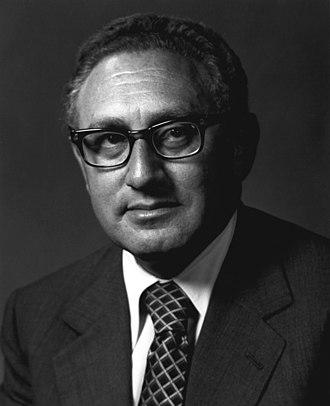
Kissinger, Henry A.
During the Nixon administration, Henry A. Kissinger served as the Assistant to the President for National Security Affairs from January 1969 through the end of Nixon's presidency, acting as the chief architect of U.S. foreign policy. Throughout the White House taping period (February 1971 to July 1973), he was captured extensively on tape advising the president on pivotal events such as the secret opening to China, détente with the Soviet Union, and the negotiation of the Paris Peace Accords. In September 1973, shortly after the taping system was dismantled, Kissinger was additionally appointed as Secretary of State, holding both powerful positions simultaneously until Nixon's resignation in August 1974.
President Nixon and Henry Kissinger met to discuss diplomatic personnel, legislative strategy, and the administration's broader foreign policy messaging. Nixon praised the integrity of Ambassador David K. E. Bruce, specifically highlighting him as the ideal candidate for potential future negotiations regarding the People's Republic of China. Additionally, the two discussed the administration's recent victory in defeating the Harold E. Hughes pay amendment in the Senate and Nixon's desire to shift the public narrative away from Vietnam to focus on the future of U.S. relations with the USSR, China, and the domestic economy.
President Nixon met with H. R. Haldeman, Henry Kissinger, and others to discuss administrative matters, including the President's recent Southern trip, press strategy, and upcoming state visits. The group reviewed the success of the President's recent tour, debated the merits of using certificates of appreciation to bolster local support, and strategized on how to better leverage public relations for administration priorities like the drug crisis. Furthermore, the President and Kissinger discussed the ongoing Strategic Arms Limitation Talks (SALT), with Nixon emphasizing the need to adopt a hardline stance toward the Soviet Union to ensure progress before any potential summit.
President Nixon met with H.R. Haldeman and later Henry Kissinger to navigate sensitive political scheduling and high-stakes foreign policy dilemmas. The group discussed managing state visits, including the logistical and political optics of hosting King Faisal and Anastasio Somoza, while also deliberating on the timing of a presidential press conference and potential meetings with congressional leadership. A significant portion of the session focused on the 'Two Chinas' issue, where the President weighed the risk of losing Taiwan's United Nations seat against the diplomatic consequences of shifting U.S. policy toward the People's Republic of China. Ultimately, Nixon directed his team to stall for time, opting for noncommittal consultations with allies while prioritizing the preservation of existing diplomatic postures.
President Nixon and Henry Kissinger met to strategize on two critical foreign policy initiatives: the pursuit of Mutual and Balanced Force Reductions (MBFR) in Europe and the shifting U.S. approach toward the People's Republic of China (PRC) and the United Nations. They discussed the tactical necessity of appearing proactive while maintaining control over the pace of negotiations, specifically regarding a potential 10% troop reduction in Europe and the delicate diplomatic maneuverings required to manage Taiwan's status at the UN. Secretary of State William P. Rogers joined the discussion to refine these strategies, and the President emphasized the importance of consulting with allies before making any final policy declarations to ensure domestic and international stability.
President Nixon met with his senior staff and cabinet members to finalize a new, centralized strategy for combating the heroin epidemic among Vietnam veterans and the general public, including the establishment of a Special Action Office. The President directed that this new office would oversee federal drug rehabilitation, prevention, and enforcement efforts across all departments, emphasizing the urgent need for a cohesive, high-level response to prevent former servicemen from turning to crime. During the discussions, Nixon also pressed for stricter loyalty within the administration, authorized an investigation into intelligence leaks, and evaluated personnel appointments within the CIA and military leadership.
President Nixon met with H.R. Haldeman, Henry Kissinger, and other staff members to strategize on administration messaging, foreign policy initiatives, and political tactics. The conversation centered on managing the upcoming press conference, refining the administration's stance on drug policy by shifting focus toward youth rather than just veterans, and monitoring polling data regarding China and the United Nations. Nixon and his advisors also reviewed plans for an upcoming speech at West Point and discussed sensitive diplomatic maneuvering regarding potential summits and China-related negotiations.
President Nixon and Henry Kissinger met with the departing Danish Ambassador, Torben Ronne, to mark the conclusion of his six-and-a-half-year tenure. The meeting focused on formal farewells, with Ronne expressing his appreciation for the cooperation he received during his time in Washington. The participants briefly discussed Ronne's transition back to Denmark and his future aspirations to continue his public service.
President Nixon met with Danish representative Torben Ronne and Henry Kissinger to discuss international security, specifically regarding the People's Republic of China, the Soviet Union, and ongoing Vietnam War tensions. The discussion emphasized the need for a coordinated alliance position on arms control and regional stability, while Ronne expressed concerns regarding potential unilateral diplomatic recognition of Hanoi by other Scandinavian countries. Nixon reaffirmed the administration's commitment to consulting with Denmark on sensitive regional matters and acknowledged the Danish government's support regarding troop levels and foreign policy alignment.
President Nixon and Henry Kissinger met to discuss foreign policy initiatives, specifically the delicate handling of the People's Republic of China, and the broader political landscape concerning the administration's re-election prospects. They evaluated the performance of cabinet members, with Kissinger expressing distrust toward Secretary of Defense Melvin Laird’s political ambitions and perceived lack of loyalty. Additionally, they addressed concerns regarding the Vietnam War, emphasizing the necessity of preventing a collapse of Saigon before the 1972 election while noting the military's ongoing struggles with drug abuse.
President Nixon met with Henry Kissinger, John N. Mitchell, and other staff to refine a forthcoming speech at West Point and discuss a wide range of domestic and international political strategy. Key topics included the U.S. response to Soviet naval activity in Cuba, the ongoing effort to manage the Vietnam War in the public consciousness, and organizational strategies for the 1972 primaries, specifically concerning Ohio, California, and Texas. Nixon and Mitchell also reviewed potential personnel appointments and cabinet-level changes, including the roles of Leonard Firestone and Louie Nunn, while finalizing the administration's political positioning regarding Democratic challengers.
President Nixon met with H.R. Haldeman and Henry Kissinger to strategize on high-stakes foreign policy issues, including Vietnam peace negotiations, the Berlin Agreement, and the impending US-Soviet summit. The President emphasized his desire to present a firm, blunt ultimatum to the North Vietnamese to force a final resolution, while also discussing the political necessity of ensuring the U.S. is disengaged from ground combat before the 1972 election. The conversation also touched upon domestic political concerns, including the management of the press, the potential impact of Democratic candidates' foreign policy positions, and Nixon's efforts to cultivate support through key allies like Nelson Rockefeller.
President Nixon and Henry Kissinger coordinate a telephone call to Governor Nelson A. Rockefeller. The brief exchange serves as a logistical precursor to a private consultation between the President and the Governor. No substantive policy matters are finalized during this connection process.
President Nixon and Henry Kissinger met to discuss the status of ongoing diplomatic negotiations regarding the Vietnam War and broader international relations. Kissinger provided an update on recent discussions with negotiators, noting that while a peace settlement remained uncertain, the current dialogue was the most substantive it had been in four years. The two men also deliberated on the strategic timing for public announcements concerning high-level engagement with China and its potential impact on relations with the Soviet Union.
President Nixon and Henry Kissinger met to discuss the Case-Reed proposal and the influence of Patrick J. Buchanan on the administration's messaging. They also addressed coordination regarding upcoming diplomatic communications with the Soviet Union and determined that Secretary of Defense Melvin Laird should be directed to call the President to discuss the administration's formal stance. These consultations reflect ongoing efforts to manage foreign policy strategy and internal bureaucratic alignment.
President Nixon and Henry Kissinger discussed a recent Richard Wilson column in the Washington Post that criticized Democratic presidential candidates for their opposition to the administration's ABM deployment policy. They noted that the column strongly supported the White House position on strategic arms negotiations, contradicting a poorly phrased entry in the daily news summary that had initially confused the President. Kissinger agreed to meet with William F. Buckley to ensure that the administration's strategy and the nuance of these developments were effectively communicated to conservative audiences.
President Nixon and Henry Kissinger discussed administrative and logistical arrangements regarding the use of the presidential yacht, the Sequoia. They reviewed maintenance requirements and scheduling for the upcoming year to ensure the vessel remained in proper condition. The conversation concluded with an agreement to coordinate these plans with the relevant staff to manage expectations and oversight.
President Nixon and Henry Kissinger met to deliberate on sensitive foreign policy objectives, specifically addressing the administration's "Two China" strategy regarding Taiwan's United Nations membership. The discussion also evaluated ongoing U.S. military operations in Vietnam and Cambodia, assessing the effectiveness of South Vietnamese forces. Additionally, the participants touched upon press relations and communications strategy, referencing the involvement of Herbert G. Klein.
President Nixon and Henry Kissinger coordinate the public messaging strategy regarding the origins of the May 20th Strategic Arms Limitation Treaty (SALT) announcement. They resolve to describe the diplomatic process as an exchange initiated by a January 9th message to Soviet leaders that successfully broke the negotiation deadlock. The two finalize the language used to characterize the agreement to prioritize antiballistic missile (ABM) defenses while pursuing offensive limitations, agreeing to defer technical specifics to future background briefings.
President Richard M. Nixon and Henry A. Kissinger engaged in a brief, two-minute meeting in the Old Executive Office Building. Due to the incoherent and irrelevant nature of the transcript provided, which consists entirely of repeated phrases in Welsh unrelated to administrative or foreign policy matters, no substantive political topics or actionable decisions can be determined from this record.
President Nixon and Henry Kissinger debriefed regarding the President's June 1, 1971, press conference, expressing mutual satisfaction with his performance and the public's likely reception. They analyzed the President's firm stance on the recent May Day demonstrations and reviewed his handling of complex foreign policy questions concerning the USSR, the Middle East, and relations with the People's Republic of China. Both agreed that the television format remained an essential tool for the President to communicate directly with the public, and they committed to holding such press conferences on a regular, recurring basis.
In this extensive meeting, President Nixon and H. R. Haldeman, later joined by Henry Kissinger and other staff, discussed a broad range of administrative, political, and foreign policy matters. The conversation focused heavily on the President's recent press conference, strategies for managing the press and domestic public opinion, and the imperative to achieve foreign policy breakthroughs in Vietnam, relations with the USSR, and potential overtures to the People's Republic of China. Significant developments included internal planning for clandestine diplomatic channels and a firm resolve to maintain a "law and order" stance against anti-war demonstrators and critics of the administration.
President Nixon and Henry Kissinger met in the Oval Office to discuss scheduling and the management of Kissinger's calendar. The conversation primarily focused on coordinating upcoming engagements and strategic planning regarding the National Security Advisor's availability. No major policy decisions were reached, as the discussion remained centered on administrative logistics.
President Nixon and Henry Kissinger met to coordinate strategy regarding ongoing diplomatic negotiations, specifically concerning Vietnam and the President's upcoming trip to the People's Republic of China. They discussed the importance of maintaining secrecy and timing for these sensitive foreign policy initiatives while addressing the domestic political fallout from the recent May Day demonstrations and military controversies. Additionally, the pair evaluated the geopolitical complexities surrounding the India-Pakistan conflict and expressed a desire to keep U.S. involvement limited to protect broader strategic interests.
President Nixon, Henry Kissinger, and H.R. Haldeman met to discuss a wide-ranging agenda involving U.S. foreign policy, specifically relations with India, Pakistan, China, and the Soviet Union, as well as the ongoing conflict in Vietnam. They strategized on managing domestic political pressures, including the potential for trade with China and the Soviet Union and how to mitigate public criticism regarding the war. The President emphasized the need to maintain a firm stance with international allies and adversaries, particularly regarding force reductions and prisoner of war issues, while seeking ways to keep the administration's diplomatic initiatives in a positive light.
President Nixon met with New York Governor Nelson Rockefeller to discuss a variety of domestic policy issues, most notably the implementation of federal revenue sharing and strategies to address New York's fiscal challenges. They explored the potential for a Hoover-type commission to examine municipal corruption and inefficiency, and coordinated on the President's upcoming travel plans, including a trip to Rochester. Additionally, the conversation touched upon managing political optics regarding diplomatic visits by foreign leaders and the legislative hurdles for revenue-sharing bills in Congress.
President Nixon and the President’s Foreign Intelligence Advisory Board (PFIAB) met to discuss global foreign policy strategy, with a focus on shifting relationships with the People's Republic of China, the Soviet Union, and Taiwan. The discussion centered on the necessity of intelligence capabilities to navigate future arms agreements and maintain regional stability in the Pacific following the eventual conclusion of the Vietnam War. The participants also reviewed the effectiveness and accelerated timelines of current U.S. intelligence programs under the President’s leadership.
President Nixon and Henry Kissinger met to discuss the logistics and political implications of Vice President Spiro Agnew's upcoming foreign trip, focusing on concerns that Agnew's planned stop in Greece would become an emotional focal point for his critics. The conversation also covered broader foreign policy objectives, including sensitive negotiations regarding China, Vietnam, and the Soviet Union, while managing the President's personal schedule and image. Nixon ultimately directed Kissinger to coordinate a breakfast meeting to finalize Agnew's itinerary, emphasizing the need to steer the Vice President away from controversial stops while maintaining discretion regarding ongoing geopolitical initiatives.
President Nixon and Henry Kissinger discuss managing labor leader Jay Lovestone regarding grain export licenses to avoid congressional pressure. Additionally, they review reports from Cambodia, with Kissinger expressing concern over the veracity of General Creighton Abrams and his staff regarding recent military failures. Nixon and Kissinger acknowledge frustrations with the command's performance but decide against making drastic leadership changes at that time.
President Nixon met with Henry Kissinger to discuss the Vietnam War, particularly the military situation in the Mekong Delta and the political challenges posed by the McGovern-Hatfield amendment. They strategized on foreign policy, specifically the ongoing Berlin negotiations, the pursuit of a U.S.-Soviet summit, and potential future initiatives involving the People's Republic of China. Later, the President consulted with John Ehrlichman and Virginia Governor Linwood Holton regarding domestic school integration, emphasizing the importance of legal compliance in the South without public confrontation, and addressed various scheduling and administrative matters.
President Nixon and Henry Kissinger met to follow up on a previous discussion with labor leader Jay Lovestone regarding foreign policy strategy. The conversation specifically addressed the complexities of managing long-term versus short-term grain export policies and the ongoing status of the Vietnam War. They weighed the implications of current casualty rates and bombing campaigns as part of their broader evaluation of the administration's military and trade objectives.
President Nixon and Henry Kissinger met to briefly coordinate their schedules and address administrative matters. They specifically discussed a memo regarding textile policy authored by Peter G. Peterson. The two men aimed to synchronize their upcoming movements and finalize their approach to the pending textile issues.
President Nixon met with Peter G. Peterson and Henry Kissinger to discuss the sensitive diplomatic implications of the upcoming Okinawa reversion, specifically addressing the Senkaku Islands sovereignty dispute and its potential impact on relations with Taiwan and Japan. To mitigate backlash from Nationalist China regarding the reversion, the group decided to offer Taiwan a low-profile, long-term commitment to provide military equipment, with formal discussions postponed until August to avoid public friction with Congress. Additionally, Peterson briefed the President on a planned bipartisan Congressional session aimed at presenting the Administration's long-term economic and technological strategies, with a particular focus on fostering innovation through unconventional, high-level scientific talent and better integrating R&D with national goals.
President Nixon met with John Ehrlichman to critique a draft of a major housing policy statement, specifically directing that the document be shortened and purged of moralistic language and unclear legal interpretations regarding housing referendums. Nixon emphasized the need to project a stronger, more precise stance that resonates with voters who support neighborhood exclusivity. Following Ehrlichman's departure, Nixon consulted briefly with Henry Kissinger regarding administrative messaging, including the release of casualty figures to demonstrate the success of presidential policies.
President Nixon, Henry Kissinger, and John Ehrlichman discussed administrative coordination, including the editing of a housing statement and managing Amtrak-related scheduling concerns. Kissinger briefed the President on the administration's defensive strategy regarding Senator W. Stuart Symington’s presentation on Laos, focusing on efforts to counter negative press coverage. The conversation concluded with instructions to use record-low Vietnam casualty figures for public relations purposes and the decision to reschedule Secretary of Defense Melvin Laird’s upcoming Asia trip to avoid complicating sensitive diplomatic initiatives.
President Nixon met with his personal secretary, Rose Mary Woods, and others to discuss logistics and guest management for the upcoming wedding of his daughter, Tricia Nixon Cox. The conversation focused on refining the wedding guest list, coordinating social arrangements with the Drown family, and managing the President’s personal schedule amidst the event festivities. Nixon expressed a desire to minimize social distractions and interference, emphasizing his need to focus on presidential duties following the conclusion of the wedding events.
President Nixon, Henry Kissinger, and Alexander Butterfield met to coordinate strategy regarding ongoing Vietnam peace negotiations and broader geopolitical concerns, including trade and upcoming summits. The discussion focused on the administration's frustration with the lack of progress in Vietnam negotiations, the political challenges posed by domestic anti-war sentiment, and the necessity of maintaining a firm stance to ensure the survival of South Vietnam. Nixon directed his staff to expedite decision-making and secure a more assertive military and diplomatic posture to avoid being perceived as weak during the troop withdrawal process.
President Nixon and Billy Graham discussed the disruptions caused by Yippie protesters at Graham's recent Chicago crusade, comparing these incidents to broader trends of civil unrest. The conversation also touched upon the upcoming wedding of Tricia Nixon Cox, arrangements for guest Ethel Waters, and the political implications of media bias. Additionally, the participants examined public opinion polling regarding the administration’s handling of demonstrators and critiqued the perceived liberal influence within the press and church institutions.
President Nixon met with William F. Graham, Henry Kissinger, Ronald Reagan, and John Ehrlichman to discuss political strategy, labor relations, and foreign policy. The group addressed public support for the administration, including the President's firm stance against demonstrators, and strategic moves involving maritime unions and grain exports to the People's Republic of China. Nixon and Kissinger further evaluated ongoing Vietnam negotiations and the importance of maintaining military strength to retain political leverage over domestic critics and international rivals.
President Nixon initiated this call to Governor Ronald Reagan to coordinate federal support for California, specifically announcing a new shipbuilding contract for San Diego intended to boost employment. Nixon also expressed appreciation for Reagan's recent letter to the Young Americans for Freedom before transitioning the call to Henry Kissinger. Kissinger and Reagan discussed upcoming travel plans involving Vice President Spiro Agnew and reviewed positive foreign policy developments, including declining Vietnam War casualty rates and the recent diplomatic activity of Romanian President Nicolae Ceaușescu.
President Nixon, Tricia Nixon Cox, and Henry A. Kissinger coordinate the logistical details for upcoming social engagements. The primary topics involve the timing of a visit to the Executive Office Building to view wedding presents and the scheduling of a dinner event aboard the presidential yacht, the Sequoia. The participants ensure the attendance of First Lady Pat Nixon is appropriately integrated into the timeline of these activities.
President Nixon met with H. R. Haldeman and Henry Kissinger to discuss the administration's political strategy regarding the Vietnam War, press relations, and international economic policy. The group addressed criticism from figures like Clark Clifford and Senator Edward Kennedy, while emphasizing the importance of projecting positive movement in peace negotiations and foreign initiatives. Additionally, Nixon directed his staff to adopt a tougher stance on international loan policies and foreign leaders, specifically targeting Salvador Allende in Chile and bureaucratic resistance within the State Department.
President Nixon met with H. R. Haldeman, Henry Kissinger, John Sherman Cooper, and Clark MacGregor to discuss the necessity of maintaining secrecy regarding sensitive foreign policy negotiations, particularly those involving the Soviet Union, China, and the ongoing war in Vietnam. Nixon emphasized that he requires time to explore these diplomatic channels and urged Congressional leaders to support his administration's approach rather than forcing early legislative deadlines that could derail potential breakthroughs. The participants reviewed legislative strategy regarding the Vietnam War, including the potential for drafting a substitute to the Nedzi-Whalen Amendment based on Nixon's October 7, 1970, proposal to better reflect the administration's goals.
President Nixon and Henry Kissinger met briefly in the Oval Office to coordinate the President's upcoming schedule. The primary focus of the discussion concerned the status and engagement of Robert C. Hill. This brief exchange served to finalize administrative arrangements regarding Hill's role and the President's immediate agenda.
President Nixon met with Henry Kissinger and John Connally to coordinate a firm, unified U.S. foreign policy toward Latin American nations that have expropriated American assets. The discussion focused on leveraging international lending agencies, such as the World Bank and the Inter-American Development Bank, to apply economic pressure or withhold loans from countries like Chile and Bolivia that pursue anti-American policies. The participants agreed to bypass bureaucratic hesitation from the State Department to ensure a more cohesive and hard-nosed strategy, including a potential policy shift regarding relations with the Chilean military.
President Nixon met with H. R. Haldeman and Henry Kissinger to discuss personnel changes within the State Department and strategic shifts in U.S. foreign policy. The conversation focused on the need for more "vigorous" and loyal leadership in diplomatic postings, specifically criticizing the performance of Graham A. Martin in Italy and exploring potential roles for Peter M. Flanigan. Additionally, the group reviewed the status of U.S. relations with China, the Soviet Union's internal leadership dynamics, and plans for managing international expropriation issues.
President Nixon and Henry Kissinger discuss diplomatic progress regarding the People's Republic of China, expressing optimism that a response from the Chinese leadership is forthcoming. The conversation shifts to managing relations with the press, with Nixon proposing a conciliatory, personal outreach to media figures like William Paley to alleviate institutional tensions. Additionally, they touch upon political maneuvers involving figures such as Clark Clifford, Edward Kennedy, and Hubert Humphrey, alongside logistics concerning potential wheat shipments to the USSR.
President Nixon and Henry Kissinger discussed the ongoing diplomatic efforts to end the Vietnam War, focusing on the strategic movements of North Vietnamese negotiator Le Duc Tho and the potential for a breakthrough in negotiations. Kissinger briefed the President on logistics for secret travel to facilitate these talks, while both men assessed the impact of the domestic political climate and media opposition on their foreign policy initiatives. Additionally, they reviewed progress regarding upcoming summits with the Soviet Union and the People's Republic of China, emphasizing the need for discretion and timing to maintain diplomatic leverage.
President Nixon and Henry Kissinger discuss the publication of the Pentagon Papers by The New York Times, framing the leak as an unconscionable act of treason that primarily indicts the Kennedy and Johnson administrations. Nixon expresses frustration over the security breach and directs Kissinger to consult with Attorney General John Mitchell regarding potential legal or congressional investigations, albeit noting the political need to delay action until after upcoming legislative votes. Beyond the leak, the two briefly touch upon current Vietnam casualty statistics and the ongoing diplomatic efforts involving North Vietnamese negotiator Le Duc Tho.
President Richard Nixon and Henry Kissinger met to discuss international political developments and foreign policy strategy. The conversation focused on the challenges of interpreting foreign actors' intentions and the necessity of maintaining strategic clarity while navigating complex geopolitical shifts. They emphasized the importance of effective communication and ensuring that U.S. actions remain consistent with their long-term foreign policy objectives.
President Nixon met with Henry Kissinger and U.S. negotiator Kenneth Rush to review high-stakes foreign policy developments, including progress on secret channels regarding the People's Republic of China and sensitive negotiations over Berlin. The discussion emphasized the need to link various diplomatic issues, such as the Berlin Agreement and Mutual and Balanced Force Reduction (MBFR) talks, to prevent the Soviets from isolating or dividing Western allies. Nixon directed the team to maintain strategic pressure and prepare for an upcoming meeting with West German Chancellor Willy Brandt, while acknowledging the importance of Rush's role in the ongoing negotiations.
President Nixon and Henry Kissinger discussed the administration's response to the New York Times' publication of the Pentagon Papers. Nixon expressed a firm intent to take legal action against the newspaper despite anticipated criticism regarding freedom of the press. The pair also briefly reviewed the status of Vietnam negotiations and Kissinger's recent consultations with other administration officials regarding foreign policy and staffing.
President Nixon consults with John Mitchell and Henry Kissinger regarding the legal response to the New York Times' publication of classified documents. The participants agree to take a low-key, formal approach by putting the newspaper on legal notice while simultaneously initiating a covert investigation to identify the leakers. Nixon secures support for this stance by leveraging Henry Kissinger's report that former President Lyndon Johnson would publicly back actions taken to defend the integrity of government against such security breaches.
President Nixon, John Mitchell, and Henry Kissinger met to discuss the administration's response to the unauthorized publication of the Pentagon Papers and its potential impact on ongoing peace negotiations. The participants emphasized the need to defend government integrity against the leak while strategizing how to prevent political rhetoric from undermining the North Vietnamese incentive to negotiate. Additionally, Kissinger briefed the President on his upcoming Asia trip, highlighting the diplomatic importance of the China initiative and the necessity of maintaining operational secrecy during his travels.
President Nixon met with Republican Congressional leaders to discuss the administration’s new, multi-pronged national strategy for combating drug abuse, emphasizing a shift toward treatment, rehabilitation, and the creation of a centralized Special Action Office. During the discussion, Nixon and his team outlined plans for increased interdiction, expanded military detoxification programs, and a firm, non-permissive stance against the legalization of marijuana. Furthermore, the participants addressed the political climate surrounding the Vietnam War, with Nixon urging support against anti-war amendments and arguing that congressional deadlines for withdrawal would undermine sensitive ongoing negotiations.
President Nixon, Henry Kissinger, and Ron Ziegler met to coordinate the administration's public relations and legal strategy regarding the leaking of the Pentagon Papers and pending Vietnam legislation. The President emphasized a firm stance against the New York Times' publication of classified documents, framing the administration's legal injunction as a necessary defense of government integrity rather than a partisan effort to shield previous administrations. They also discussed managing congressional support for Vietnam policy and the importance of maintaining strict secrecy around sensitive diplomatic negotiations, including ongoing back-channel communications with China and the Soviet Union.
President Nixon and West German Chancellor Willy Brandt met in the Oval Office to coordinate their respective diplomatic strategies regarding the Soviet Union, Berlin, and European security. The two leaders emphasized the importance of maintaining a unified stance on Berlin negotiations and the potential ratification of treaties, while navigating the delicate balance of maintaining U.S. troop presence and European defense burden-sharing. They also discussed broader geopolitical challenges, including the rise of Japan, relations with the People’s Republic of China, and the ongoing crisis between India and Pakistan, reaffirming their commitment to close cooperation and open channels of communication.
President Nixon and Henry Kissinger met to coordinate strategy regarding sensitive international negotiations, including Strategic Arms Limitation Talks (SALT), relations with the People's Republic of China, and the ongoing war in Vietnam. They discussed managing diplomatic obstacles, such as the potential for an undesirable five-power conference, while Kissinger prepared for upcoming meetings with Soviet ambassador Anatoliy Dobrynin. Furthermore, the two prioritized maintaining strict control over sensitive records to circumvent potential leaks from the State and Defense Department bureaucracies, which Nixon explicitly stated he no longer trusted.
President Nixon, Henry Kissinger, and Soviet Ambassador Anatoliy Dobrynin met to discuss a Soviet proposal for a Five Powers nuclear conference and broader bilateral relations. The participants prioritized maintaining confidential diplomatic channels to foster progress on critical issues such as SALT and the status of Berlin. Nixon emphasized that substantive results on these matters are more significant than public rhetoric and underscored the necessity of managing tensions in volatile regions like the Middle East to avoid unintended escalation.
President Nixon and Henry Kissinger met to discuss high-level foreign policy developments, including ongoing diplomatic channels with the Soviet Union and the PRC, while expressing frustration over the persistent challenges posed by the press and political establishment. The conversation focused heavily on the recent publication of the Pentagon Papers, which both men viewed as a direct attack on the integrity of the presidency rather than just the previous administration. In response to these perceived threats, Nixon and Kissinger strategized on how to manage media access and tighten administrative controls to prevent further unauthorized leaks.
President Nixon met with Ambassador Kenneth Keating and Henry Kissinger to discuss the evolving political climate in India following Indira Gandhi’s decisive election victory, as well as the escalating humanitarian crisis in East Pakistan. The group explored strategies for the President's upcoming meeting with the Indian Foreign Minister, specifically focusing on providing economic assistance to alleviate the refugee burden while avoiding direct entanglement in the internal conflict between India and Pakistan. Additionally, Nixon and Kissinger addressed the national security implications of the leaked Pentagon Papers, expressing deep frustration with the New York Times and the broader intellectual establishment, while reviewing progress on sensitive diplomatic channels with China and the Soviet Union.
Henry Kissinger requested that the White House operator place an urgent call to Egon Bahr, a key aide to West German Chancellor Willy Brandt. Kissinger directed the operator to coordinate with his office to obtain the necessary contact information to reach Bahr. This effort highlights ongoing high-level diplomatic communications between the Nixon administration and the West German government.
Henry Kissinger and Egon Bahr discussed President Nixon's dissatisfaction with West German Chancellor Willy Brandt’s toast at a recent White House function, which the President perceived as focused on domestic politics and ambiguous regarding Vietnam. Kissinger urged Bahr to encourage Brandt to make more positive, public statements regarding U.S.-West German cooperation during his upcoming meetings with the press and the Senate Foreign Relations Committee. Bahr agreed to convey these concerns to the Chancellor, framing the request as a private diplomatic effort to clarify the relationship and dispel any lingering misunderstandings.
President Nixon met with H.R. Haldeman, Henry Kissinger, and other key advisors to formulate the administration's strategic response to the unauthorized publication of the Pentagon Papers. The President emphasized a firm, unified messaging approach that distinguishes between the protection of classified national security information and the political culpability of the previous administrations, while also directing staff to maintain strict discipline regarding press access. Furthermore, the meeting addressed pressing foreign and domestic policy matters, including the need for a bipartisan response to the drug crisis, the management of relations with West German Chancellor Willy Brandt, and the long-term support strategy for South Vietnam.
President Nixon met with Indian Foreign Minister Swaran Singh, Ambassador Lakshmi Kant Jha, Ambassador Kenneth B. Keating, and Joseph J. Sisco to discuss the escalating refugee crisis in East Pakistan and the broader India-Pakistan conflict. While acknowledging the humanitarian urgency and pledging $70 million in U.S. financial aid, Nixon emphasized the necessity of "quiet diplomacy" over public pressure to influence Pakistani leadership toward a political solution. The discussion underscored Nixon's efforts to prevent an armed conflict and his frustration with other nations that offered rhetorical support without matching financial contributions.
In this meeting, President Nixon met with administration officials and businessman Charles Bluhdorn to discuss foreign policy concerns, specifically the implications of the Sugar Act and the treatment of U.S.-friendly nations in Latin America. Bluhdorn, representing Gulf and Western, lobbied the President to protect the Dominican Republic's sugar quotas, arguing that the administration should favor loyal allies over countries that engage in the expropriation of American assets. Nixon expressed strong support for rewarding friendly nations, criticizing the State Department's perceived leniency toward countries like Peru, Bolivia, and Chile, and directed his staff to pursue a more assertive policy in Congress regarding trade quotas and investment protections.
President Nixon met with John M. O'Neill and other representatives of Vietnam Veterans for a Just Peace to discuss the political challenges of the Vietnam War and efforts to counter anti-war sentiment led by figures like John Kerry. Nixon expressed his appreciation for the group's public support, framing the conflict as a test of national resolve and criticizing the media and 'Eastern establishment' for their lack of patriotism. The conversation emphasized the necessity of staying the course to avoid the geopolitical consequences of abandonment, with Nixon invoking the legacy of Munich to argue for presidential leadership over public opinion polls.
President Nixon met with H. R. Haldeman and key staff members to discuss administration strategy regarding the unauthorized publication of the Pentagon Papers and the public messaging for a new drug policy. Regarding the Pentagon Papers, the participants analyzed the shifting public and press sentiment, with Nixon deciding to withhold a formal presidential statement for the moment while exploring potential leaks concerning the Kennedy administration. Simultaneously, they deliberated the format for a drug policy announcement, ultimately rejecting a request for prime-time television in favor of a concise, high-impact radio or press room statement to emphasize the administration's proactive stance. The President also evaluated political polling data and coordination efforts within the Domestic Council to ensure that upcoming legislative and public initiatives were effectively managed.
President Nixon met with his National Security Council to discuss strategy for Mutual and Balanced Force Reduction (MBFR) negotiations with the Soviet Union, emphasizing the importance of verification and maintaining allied unity. The President and his advisors examined how to use these potential force reductions to counter domestic congressional pressure for unilateral troop withdrawals. Additionally, the group addressed the ongoing crisis surrounding the publication of the Pentagon Papers, with Nixon expressing a need to strengthen penalties for leaking classified information and to defend the executive branch's ability to maintain secure communications.
President Nixon met with his staff and businessman Donald McI. Kendall to coordinate administration messaging, discuss drug policy, and review foreign relations. The group focused on refining the President's public rhetoric regarding federal drug enforcement efforts, with Nixon expressing frustration with current speechwriting and emphasizing the need for a more decisive, impactful message. Kendall provided an extensive briefing on international affairs, specifically regarding Greece, Iran, Egypt, and Japan, advocating for a pragmatic trade policy that prioritizes American economic interests over traditional foreign aid paradigms.
President Nixon met with his staff to orchestrate a coordinated public relations and legal counter-offensive against the New York Times regarding the publication of the Pentagon Papers, framing the leak as the trafficking of stolen goods and an act of providing aid and comfort to the enemy. He subsequently consulted with Senator Barry Goldwater and Clark MacGregor to discuss congressional support for the administration's stance on the war and security, while exploring ways to leverage Goldwater’s influence to shift the narrative. The meeting concluded with a broader review of foreign policy strategies, including relations with China, the Soviet Union, and the status of the U.S. aircraft industry.
President Nixon, Henry Kissinger, and Manolo Sanchez met briefly in the Oval Office to share refreshments. Following Sanchez’s departure, Nixon and Kissinger engaged in a short, fragmented discussion regarding an unspecified matter the President expressed an urgent desire to address. The conversation concluded with the President instructing an individual to leave the area.
President Nixon met with H.R. Haldeman, John Ehrlichman, and Henry Kissinger to coordinate an aggressive administration response to the New York Times' publication of the Pentagon Papers. Nixon emphasized the need to frame the issue as a defense of the integrity of the presidency and the necessity of maintaining national security, rather than merely litigating the court case. The group discussed strategies to pressure the press, leak information regarding Daniel Ellsberg, and discredit the previous administrations of Johnson and Kennedy regarding their Vietnam policy.
President Nixon and Henry Kissinger discuss strategies for managing the public fallout from the Pentagon Papers leak, specifically focusing on the need for former President Lyndon B. Johnson to publicly defend his administration. Nixon expresses frustration that his administration is bearing the political burden alone and directs Kissinger to contact Walt Rostow to pressure Johnson into holding a press conference. Kissinger advises shifting the focus toward defending the integrity of the presidency and the illegality of the document theft rather than focusing solely on Johnson's personal defense.
President Nixon and Henry Kissinger discussed strategies regarding the fallout of the Pentagon Papers, specifically focusing on the potential for a public statement from former President Lyndon B. Johnson. Kissinger confirmed that Walt W. Rostow and William J. Jordan were drafting a statement for Johnson, though he expressed reservations about Nixon aligning himself too closely with the former administration on this issue. They agreed to defer a final decision until the next day’s staff meeting, where they would review the draft and provide a formal recommendation to the President.
President Nixon met with his senior advisors and Cabinet members to discuss managing the political and legal fallout of the Pentagon Papers release. The group strategized how to handle demands for document declassification and congressional access without appearing to capitulate to leakers or damaging the ongoing criminal prosecution of the New York Times. Nixon decided to distance himself from direct negotiations with congressional leaders, opting instead to have Secretaries Laird and Rogers manage the process through administrative channels, while firmly limiting the scope of declassification to prevent broader security compromises.
President Nixon and Vice President Agnew met with a group of Appalachian governors and key administration advisors to discuss the legislative strategy for extending the Appalachian Regional Commission (ARC) and managing regional political concerns. The discussion shifted toward the administration's aggressive response to the leaking of the Pentagon Papers, which Nixon characterized as a threat to national security and a move by political opponents to damage his administration. Nixon and Agnew coordinated on the narrative for Agnew's upcoming international trip, with the President tasking his team with countering domestic criticism and emphasizing the administration's commitment to ending the Vietnam War through established diplomatic channels.
President Nixon met with his senior advisors to strategize on managing the political fallout from the release of the Pentagon Papers and the Senate's recent passage of the non-binding Mansfield amendment regarding troop withdrawals. The President decided to counter the growing legislative pressure by emphasizing that the amendment was inconsistent with ongoing diplomatic efforts to secure a ceasefire and prisoner of war (POW) releases, while also directing his team to frame the document leak as a breach of national security perpetrated by the previous Democratic administrations. Additionally, the participants discussed the ongoing legal battle against the New York Times and the Washington Post, weighing the public relations benefits of pursuing the case through the Supreme Court versus allowing the matter to be resolved through congressional inquiry.
President Nixon and Henry Kissinger discussed political strategies for managing the fallout from the Pentagon Papers leak and ongoing opposition to the Vietnam War. They analyzed the political vulnerabilities of Democratic figures like Ted Kennedy and agreed that the administration should adopt a combative public stance to discredit critics. Nixon suggested that Vice President Spiro Agnew deliver a forceful speech to rally support and coordinate this effort through Patrick Buchanan.
President Nixon met with H. R. Haldeman, John Ehrlichman, and Henry Kissinger to strategize their public and political response to the leak of the Pentagon Papers and the ongoing Vietnam peace negotiations. Nixon emphasized a desire to appear dignified while shifting the burden of declassification to Congress, simultaneously plotting to expose the perceived duplicity of previous Democratic administrations. The President signaled a tough stance against Senate interference, warning that if negotiations with North Vietnam were derailed, he would prioritize a military escalation over a fixed withdrawal date.
President Nixon and his senior advisors and business leaders convened to formalize a national strategy for increasing veteran employment, emphasizing the need for businesses to provide veterans with a hiring advantage. The discussion included strategies for managing the fallout from the recently leaked Pentagon Papers, with Nixon directing his team to resist congressional hearings on war conduct while ensuring the documents were securely channeled to responsible leadership. Nixon also expressed a desire to keep the focus of the controversy on the previous administrations and away from current operations, tasking officials with maintaining a unified, firm stance against political opportunists.
President Nixon and Henry Kissinger coordinate a brief, in-person meeting at the Oval Office. During this exchange, the President instructs the White House operator to delay a pending call to Billy Graham in favor of speaking with Kissinger. The discussion concludes with an agreement for Kissinger to arrive at the office shortly.
President Nixon and Henry Kissinger spoke briefly via telephone to coordinate their locations and ensure a secure line of communication. The exchange served primarily as a logistical check-in to facilitate a subsequent, more substantive discussion. No major policy decisions were reached during this short interaction, which functioned as a precursor to further executive consultation.
President Nixon and Henry Kissinger met to discuss recent developments in the Vietnam peace negotiations, specifically a significant counter-proposal delivered by the North Vietnamese during Kissinger's secret trip to Paris. The two reviewed the North Vietnamese concessions, including the potential for prisoner releases and a formal ceasefire, while strategizing on how to handle the political status of the South Vietnamese leadership. The conversation also touched upon broader foreign policy initiatives, including plans for Nixon's opening to the People's Republic of China and the ongoing impact of the Pentagon Papers on domestic politics and the administration's credibility.
President Nixon met with H.R. Haldeman, Henry Kissinger, and other aides to devise political and legislative strategies to counter a looming Congressional effort to cut off funding for the Vietnam War. The discussion focused on stalling tactics, such as the potential for a Senate filibuster, to buy time for the administration's broader foreign policy initiatives, including upcoming breakthroughs regarding China and the Soviet Union. Nixon and his team aimed to use these diplomatic successes to shift public and Congressional focus away from the war, despite concerns that a legislative fund cutoff remained a significant threat by the autumn.
President Nixon, H.R. Haldeman, and Henry Kissinger met to discuss administration strategy regarding the upcoming announcement of the President’s planned visit to the People’s Republic of China and the ongoing controversy surrounding the Pentagon Papers. The group focused on coordinating a disciplined message for a forthcoming Cabinet meeting, emphasizing the need to project strength and unity to both Congress and the public. Kissinger provided updates on Vietnam peace negotiations and international diplomatic dynamics, while Nixon finalized plans for the television address to announce the China trip.
President Nixon and his advisors, including H. R. Haldeman and Henry Kissinger, discussed a recent New York Times leak suggesting Nixon was seeking a diplomatic opening to China. The President expressed frustration with the unauthorized disclosure and its potential impact on his delicate diplomatic strategy, deciding to postpone ambassadorial appointments as a disciplinary measure against leaks. Additionally, the group addressed the necessity of tighter control over presidential travel, the management of personal guests at the President's California home, and the political insights provided by John Connally regarding the President’s public image and the 1972 election strategy.
President Nixon and Henry Kissinger discuss a sensitive special project intended to curb government leaks and centralize control over security clearances. Nixon instructs Kissinger to coordinate with General Alexander Haig to inventory individuals holding clearances and potentially revoke them, specifically excluding the State and Defense Departments from the deliberation process. The President emphasizes his intention to issue an immediate executive directive without consulting other agencies to ensure strict adherence to these new security protocols.
President Nixon directs Henry Kissinger to aggressively restrict access to classified information by cutting off institutions like the Brookings Institution, RAND Corporation, and the Council on Foreign Relations. The President mandates a 90% reduction in the number of personnel cleared for top-secret documents across the government, including embassies and the Departments of State and Defense. This directive serves as a strategic move to secure sensitive information and limit external exposure to government intelligence.
President Nixon and Henry Kissinger met to coordinate the delicate logistics and strategic sequencing of potential summits with the Soviet Union and the People’s Republic of China. They discussed the diplomatic risks of managing these two major powers simultaneously, specifically aiming to secure a Soviet summit while maintaining the initiative on China through a high-level emissary. The participants emphasized the need for a major July 15 announcement to exert pressure on North Vietnam and agreed to reconvene later in the week to finalize their approach.
President Nixon, Henry Kissinger, Alexander Haig, and Representative F. Edward Hébert met to discuss congressional strategy regarding the draft and the influence of legislative language on ongoing Vietnam peace negotiations. The President tasked Hébert with reviewing specific amendment language to ensure it aligned with White House objectives while avoiding problematic deadline constraints. The discussion also addressed the administration's high-stakes diplomatic maneuvering, specifically balancing potential summits with the Soviet Union and China.
President Nixon met with H.R. Haldeman, Henry Kissinger, and Representative F. Edward Hébert to discuss legislative strategy, public relations, and foreign affairs. The primary focus was navigating a Congressional resolution on the Vietnam War, with Nixon instructing Hébert to resist firm withdrawal deadlines while attempting to tie any potential concessions to a ceasefire and prisoner exchange. Additionally, the participants reviewed press leaks involving the Supreme Court, planned the President’s upcoming July 3rd appearance, and coordinated a personal response to the tragic deaths of three Soviet cosmonauts.
Henry Kissinger and Alexander Haig coordinate the President's final revisions to a Congressional resolution concerning Vietnam. Kissinger emphasizes that the administration must ensure the resolution is not distributed until finalized and clarifies that the White House is merely acquiescing to, rather than supporting, the measure. Haig is tasked with disseminating these instructions to relevant staff to ensure the administration's stance remains properly framed.
Henry Kissinger requested that the White House operator place an immediate telephone call to Soviet Ambassador Anatoliy F. Dobrynin. The brief interaction served as a logistical step to facilitate direct communication between the National Security Advisor and the Soviet envoy. This outreach reflects the ongoing high-level diplomatic channels maintained by the Nixon administration during this period of Cold War engagement.
President Nixon, supported by Henry Kissinger, held a telephone conversation with Soviet Ambassador Anatoliy Dobrynin to express his personal condolences following the tragic deaths of Soviet cosmonauts. Nixon emphasized his genuine empathy by sharing a personal anecdote about receiving the news from his daughter, Julie, and drew parallels to the loss of American astronauts in the Apollo 1 fire. The call served to bolster diplomatic relations by conveying a heartfelt, non-routine message of solidarity between the two spacefaring nations.
President Nixon and Representative F. Edward Hébert, in consultation with Henry Kissinger, discussed strategies for the Congressional conference committee regarding the Selective Service Act. Nixon provided Hébert with alternative legislative language that the White House could tolerate, while emphasizing his firm opposition to the Mansfield Amendment or any provision containing a withdrawal date. The President insisted that any language must include requirements for a ceasefire and prisoner exchange, directing Hébert to present the White House's preferred language as his own to maintain the appearance of administration distance from the legislative negotiations.
In this meeting, President Nixon and Henry Kissinger discussed the administration's legislative strategy regarding the Mansfield Amendment on Vietnam, emphasizing the need for congressional responsibility in foreign policy. They also addressed the progress of Berlin negotiations and prepared for upcoming National Security Council discussions regarding normalization with the People's Republic of China. Additionally, the President reviewed his public image and economic policy, expressing concern over national defeatism and the need to bolster confidence in the American economy through strong leadership.
President Nixon met with Henry Kissinger and Attorney General John Mitchell to discuss the legal and political fallout following the Supreme Court's ruling on the Pentagon Papers. The President directed his team to aggressively pursue the criminal case against Daniel Ellsberg, emphasizing that they should utilize leaks to the press to discredit him and his supporters. They also strategized on reforming the executive classification system to prevent future unauthorized disclosures of presidential memoranda and sensitive national security information.
President Nixon met with his senior advisors, including H.R. Haldeman, Henry Kissinger, John Mitchell, and Melvin Laird, to determine the administration's strategy following the Supreme Court's ruling allowing the publication of the Pentagon Papers. The President rejected the idea of broad declassification as a response to the court defeat, fearing it would appear like an admission that the government's classification system was worthless. Instead, he decided to maintain a hard line on the prosecution of Daniel Ellsberg, pursue investigations into potential leaks and conspiracies within the government, and direct his staff to target the Brookings Institution to recover classified materials.
President Nixon met with H.R. Haldeman, Alexander Haig, and Henry Kissinger to strategize against the ongoing unauthorized leaking of classified government documents, specifically focusing on the Pentagon Papers and the role of Rand Corporation analyst Daniel Ellsberg. Expressing deep frustration with administration personnel like Charles Cooke, whom he suspected of compromising national security by sharing cables with Ellsberg, Nixon demanded a tougher, more aggressive approach to identifying and punishing leakers. The President directed his staff to implement a strict, "gloves off" policy toward the press while orchestrating a campaign to use leaked information to discredit his political opponents and shift public focus away from Vietnam.
President Nixon met with Henry Kissinger and Alexander Haig to finalize strategy and messaging for Kissinger’s upcoming secret mission to Pakistan and his eventual trip to the People's Republic of China. The participants discussed controlling the size and composition of the presidential delegation and press corps to exclude perceived hostile outlets like The New York Times and The Washington Post. Nixon directed that his foreign policy briefings emphasize American strength and resolve, particularly regarding Vietnam, Japan, and the Soviet Union, while cautioning against appearing weak or overly conciliatory on the issue of Taiwan.