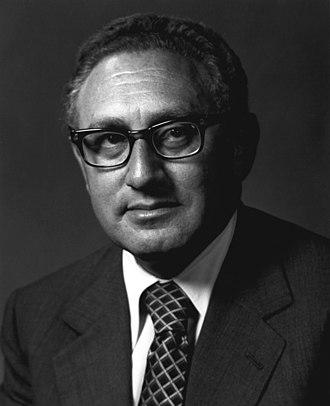
Kissinger, Henry A.
During the Nixon administration, Henry A. Kissinger served as the Assistant to the President for National Security Affairs from January 1969 through the end of Nixon's presidency, acting as the chief architect of U.S. foreign policy. Throughout the White House taping period (February 1971 to July 1973), he was captured extensively on tape advising the president on pivotal events such as the secret opening to China, détente with the Soviet Union, and the negotiation of the Paris Peace Accords. In September 1973, shortly after the taping system was dismantled, Kissinger was additionally appointed as Secretary of State, holding both powerful positions simultaneously until Nixon's resignation in August 1974.
President Nixon and Henry Kissinger discussed the positive reception to the President’s recent interview with a group of newspaper editors and influential figures. They reviewed how Nixon maintained firm, non-committal positions on sensitive foreign policy issues, specifically Vietnam and China, while successfully defending the administration's stance on figures like J. Edgar Hoover and Spiro Agnew. The pair also addressed a minor technical discrepancy regarding the President’s announced Vietnam withdrawal date and exchanged pleasantries regarding guests at a dinner event.
President Nixon instructed Henry Kissinger to contact Otis Chandler to praise the quality of Chandler’s questions during a recent interview with newspaper editors. The discussion highlighted the administration’s strategy of cultivating positive relations with influential media figures following a session where topics like Asian policy, China, and environmental issues were addressed. Kissinger agreed to place the call immediately, noting the importance of the gesture in managing the press.
President Nixon and Henry Kissinger debrief following the President's interview with newspaper editors, evaluating the public reception of his comments on the People's Republic of China and Vietnam policy. They discuss the strategic framing of residual forces in Vietnam and the potential for a historical diplomatic breakthrough with China. Kissinger is tasked with contacting journalist Otis Chandler to relay the President’s appreciation for the quality of the interview questions and to emphasize that the President’s remarks regarding China were aspirational rather than formal policy shifts.
President Nixon met with his economic advisors and Henry Kissinger to strategize on managing mounting domestic and international pressures regarding textile, steel, and shoe import quotas. The discussion focused on leveraging diplomatic and economic inducements, such as trade initiatives and aid, to secure favorable voluntary restraint agreements with Japan, Taiwan, Hong Kong, and Korea. The participants concluded that a coordinated strategy involving high-level diplomatic outreach followed by technical negotiations was necessary to address industry concerns and prevent restrictive legislative action.
President Nixon spoke with J. Edgar Hoover to offer personal support following recent public criticism and media speculation regarding the FBI Director's potential resignation. Nixon reassured Hoover that he had publicly defended him during a recent interview with newspaper editors, framing the attacks as malicious and unwarranted. The call concluded with Henry Kissinger joining the conversation to echo his admiration for the President’s stance and provide further support to Hoover.
President Nixon met with Senate Majority Leader Mike Mansfield and National Security Advisor Henry Kissinger to discuss U.S. foreign policy toward the People's Republic of China (PRC). The President sought to use Mansfield as a private channel to gauge interest in a potential high-level visit to China, aiming to initiate a dialogue while maintaining a step-by-step approach regarding trade and travel restrictions. The participants emphasized the importance of conducting these overtures privately to avoid public rejection and to manage the delicate balance of power between the U.S., China, and the Soviet Union.
President Nixon and Henry Kissinger discuss the travel status of Director of Communications Herbert G. Klein, who is currently en route to Dallas. Following an brief update from the White House operator, the President determines that no immediate action is necessary regarding Klein. Nixon concludes the brief coordination call by deciding to delay any further communication with Klein until the following day.
President Nixon met with H. R. Haldeman, Henry Kissinger, and other staff members to discuss political messaging, media relations, and administrative strategy. A primary focus was neutralizing the political threat posed by Congressman Paul McCloskey, whose public dissent regarding U.S. operations in Southeast Asia and accusations of misconduct in Vietnam were causing friction. The group agreed to handle such dissent by having Congressional allies—rather than the White House—directly refute these claims to avoid elevating the critic's profile. Additionally, the President reviewed his public schedule, emphasizing the need to maintain a composed, energetic appearance to manage perceptions of his stamina and leadership.
President Nixon consulted with a White House operator in an attempt to reach his daughter, Julie Nixon Eisenhower. After confirming she had not yet returned, the President briefly coordinated with Henry Kissinger regarding the call. No substantive policy or political developments occurred during this brief administrative exchange.
President Nixon and Henry Kissinger discussed strategies for managing public perception regarding the Vietnam War, specifically the fallout from General Creighton Abrams' speculative comments about military operations in Laos. Nixon instructed Kissinger to ensure White House Press Secretary Ronald Ziegler and military leadership refrain from further commentary to prevent the press from manufacturing negative headlines. Additionally, the pair coordinated on high-stakes diplomatic negotiations with China, ultimately deciding to delay Kissinger’s meeting with Romanian ambassador Corneliu Bogdan to maintain flexibility for potential high-level communications.
President Nixon and Henry Kissinger discuss managing public and press perceptions regarding recent foreign policy developments, specifically focusing on clarifying the Administration's position on Vietnam and countering Democratic criticism surrounding the President's initiative toward the People's Republic of China. Kissinger updates the President on efforts to coordinate a consistent response with White House and Defense officials to avoid misinterpretation of abstract military capabilities. They also review the historical timeline of the China opening, noting that Nixon had initiated secret channels as early as February 1969, a fact they intend to use to discredit political opponents who claim the policy lacks foresight.
President Nixon and Henry Kissinger discuss strategies to contain political fallout following a controversial, off-the-cuff remark made by General Creighton Abrams regarding military operations in Laos. To avoid granting the issue undue prominence or prompting a restrictive Senate resolution, they agree to distance the White House from the incident by referring all press inquiries to the Department of Defense. The conversation also touches upon shifting Soviet military dispositions in Eastern Europe and the broader geopolitical implications of U.S.-Soviet relations on the People's Republic of China.
President Nixon and Henry Kissinger met to discuss urgent foreign policy matters, specifically the status of Vietnam negotiations and ongoing relations with the Soviet Union and the People's Republic of China. Kissinger briefed the President on planned communications with Soviet Ambassador Anatoliy Dobrynin regarding the Vietnam conflict, while the two analyzed political fallout from domestic media coverage and recent anti-war demonstrations. Additionally, they reviewed poll data on the administration's Vietnam policy and discussed the political necessity of maintaining a firm stance against partisan criticism from Democrats.
President Nixon, H. R. Haldeman, and Henry Kissinger met to discuss political strategy, the administration's public image, and the challenges posed by entrenched liberal opposition within the federal bureaucracy and the media. The participants analyzed recent military developments in Vietnam and Laos, affirming that success on the battlefield—such as in Firebase 6—remains the most effective tool for neutralizing critics who prioritize ideological opposition over national interest. Nixon emphasized the necessity of a future purge of the federal government to dismantle the long-standing Democratic influence, particularly within the State Department and other agencies.
President Nixon met with the executive council of the AFL-CIO Building and Construction Trades Department to discuss the state of the construction industry, economic growth, and the administration's recent suspension of the Davis-Bacon Act. The discussion addressed concerns regarding job stability, the rising costs of land and construction, and the need for continued labor-management cooperation under the administration's new wage stabilization policies. Nixon emphasized his support for the trades and sought their partnership in fostering economic stability, while also pivoting to broader topics of national security, international defense commitments, and the strategic importance of U.S. economic and military strength in the global landscape.
President Nixon met with H. R. Haldeman, Henry Kissinger, Stephen Bull, and Ronald Ziegler to manage various administrative priorities, focusing heavily on controlling the narrative surrounding Vice President Spiro Agnew’s recent unauthorized remarks regarding the administration's China policy. The group also discussed the logistics of upcoming public appearances, including a strategic approach to a recent Supreme Court ruling on school busing and the management of high-level personnel changes. Furthermore, they coordinated foreign policy messaging, specifically addressing Secretary of State William Rogers’s upcoming Middle East trip and the need to establish a discreet, direct communications channel with the People's Republic of China.
President Nixon met with Henry Kissinger and International Committee of the Red Cross (ICRC) representatives Marcel Naville and Melchior Borsinger to discuss humanitarian concerns, particularly the treatment of prisoners of war (POWs) and civilian populations in the Vietnam conflict. The participants addressed the difficulties the ICRC faces in gaining access to North Vietnamese facilities and discussed U.S. efforts to enforce rules of engagement and investigate alleged military atrocities. Nixon emphasized his commitment to humane conduct while the ICRC representatives advocated for universal standards and the establishment of new international protocols for internal conflicts.
President Nixon and Henry Kissinger discussed a recent meeting between the President and Marcel Naville of the International Red Cross, during which Naville attempted to lecture the administration on the conduct of American soldiers in Vietnam. Nixon expressed strong indignation at this perceived lack of neutrality and instructed Kissinger to maintain a firm stance against international officials who criticize U.S. policy. The two also addressed broader geopolitical strategy, focusing on leveraging relations with the USSR and the PRC to protect American interests and prevent domestic political opposition from weakening the nation's global military posture.
President Nixon met with a group of Republican senators and key advisors, including Henry Kissinger, to discuss the political landscape surrounding the Vietnam War and national defense policy. The conversation focused on the erosion of public support for the war, the impact of various congressional anti-war resolutions, and the importance of maintaining American preeminence despite shifting domestic and international pressures. The participants strategized on how to manage the political fallout of the Vietnamization policy and addressed concerns regarding defense preparedness and the administration's foreign policy initiatives in the Soviet Union and China.
President Nixon, Henry Kissinger, and H.R. Haldeman discuss strategies for managing political support and public opinion regarding the Vietnam War, particularly in light of recent legislative concerns. They emphasize the necessity of conveying a sense of progress to Congress to maintain support for the administration's broader policy agenda. The group also reviews the strategic distribution of favorable poll results to Republican lawmakers and touches upon ongoing surveillance regarding Congressman Hale Boggs.
President Nixon and Henry Kissinger discuss the need to manage Secretary of Defense Melvin Laird, whom Nixon accuses of distancing himself from the administration's Laos policy while speaking with Republican senators like Howard Baker and Edward Gurney. Nixon expresses frustration that Defense and State Department officials are attempting to shift blame for the Laos operation, insisting that Laird must publicly support the administration's decision. To address this, the President decides to schedule a breakfast meeting with Laird for the coming Thursday to ensure internal alignment and improve communication.
President Nixon met with Graham B. Steenhoven, leader of the U.S. table tennis team, along with Henry Kissinger, Ronald Ziegler, and John Scali to discuss the team's recent historic trip to the People's Republic of China (PRC). Steenhoven provided detailed accounts of his interactions with Chinese officials, including Chou En-lai, and the team's experiences navigating the culture and political atmosphere of China. The group discussed the logistical and diplomatic considerations for a reciprocal visit by a Chinese table tennis team to the United States, emphasizing the need for a well-planned, dignified exchange to avoid a media circus or political embarrassment.
President Nixon, Henry Kissinger, H.R. Haldeman, and John Dean discussed strategies for managing political fallout from the ongoing Vietnam War, particularly regarding public and congressional perception. The President expressed frustration with military leadership and the impact of war protests, deciding to prioritize a definitive end to U.S. ground combat and the draft to stabilize his political position. Additionally, the group reviewed internal polling data and economic messaging, agreeing to leverage improved consumer price index figures to bolster support among Republican legislators and conservative constituencies.
President Nixon and Henry Kissinger discuss strategies for managing the upcoming U.S. visit of the People's Republic of China ping pong team to ensure the event is handled with appropriate subtlety and control. Nixon directs Kissinger to coordinate with John Scali to oversee the logistics and press engagement, specifically intending to keep the State Department from dominating the initiative. The President emphasizes the need for a discreet, well-managed approach to avoid domestic political pitfalls while managing delicate diplomatic outreach.
President Nixon and Henry Kissinger discussed a Tass report regarding Sino-Soviet tensions and the strategic implications for U.S. foreign policy. Kissinger shared an unsolicited, optimistic appraisal from Sir Robert Thompson, who argued that recent military operations in Laos had crippled North Vietnamese offensive capabilities through 1972 and highlighted the professional improvement of South Vietnamese forces. Additionally, the two reviewed concerns regarding potential troop withdrawals of Korean forces in Vietnam and noted a positive trend in declining casualty reports.
President Nixon met with Henry Kissinger, H. R. Haldeman, and other staff members to discuss administration messaging regarding the China initiative and the ongoing anti-war protests in Washington, D.C. The President expressed frustration over not receiving proper credit for his foreign policy initiatives and directed his team to ensure the public understands these efforts are directed by him rather than the State Department. Regarding the protests, Nixon instructed his team to maintain a posture of 'cool respect,' avoid direct confrontation, and leverage public sentiment against the demonstrators to reinforce his broader philosophy of personal responsibility and national character.
President Nixon met with H.R. Haldeman, Henry Kissinger, and Alexander Butterfield to discuss a variety of domestic and foreign policy concerns, including managing public messaging and controlling high-level political interactions. The President expressed frustration with the press's coverage of Vietnam Veterans Against the War and sought to limit the political visibility of figures like Senator Mike Mansfield regarding potential diplomatic outreach to China. Additionally, the group addressed the need for more reliable spokespeople for the administration's Vietnam policy and considered leadership changes within the military and NSC to better promote the President's agenda.
President Nixon and Henry Kissinger met to discuss personnel issues, including the reassignment of Ambassador Edward M. Korry, and to coordinate upcoming announcements regarding the Strategic Arms Limitation Talks (SALT) and a potential summit with the Soviet Union. The conversation shifted to a broad analysis of the Vietnam War, with both men expressing frustration toward the media and political critics who they believed were working to undermine the administration’s strategy of Vietnamization. Nixon and Kissinger also strategized on a forthcoming diplomatic initiative in Paris, agreeing that Kissinger should adopt a firm posture and hint at the potential use of severe measures if North Vietnam refused to negotiate in good faith.
President Nixon and Henry Kissinger discussed the administration's strategic position on the Vietnam War amidst mounting domestic political opposition and a perceived national malaise. They analyzed the historical parallels of leadership challenges faced by Thomas Jefferson and Woodrow Wilson while critiquing the role of the intellectual and academic communities in shaping national values. Ultimately, the two affirmed their resolve to maintain a firm policy stance and continue the fight against political adversaries despite the persistent pressure from the press and anti-war critics.
President Nixon consulted with H.R. Haldeman regarding political strategy, specifically focusing on government reorganization and managing public perception through media engagement and the mobilization of pro-administration veterans. The discussion shifted to foreign affairs when Henry Kissinger joined to report on recent negotiations with Soviet Ambassador Anatoliy Dobrynin concerning the Strategic Arms Limitation Talks (SALT) and plans for a summit meeting. They finalized a plan to handle the SALT negotiations through private assurances rather than immediate public disclosure, while avoiding premature commitments regarding the status of Berlin.
President Nixon met with Secretary of Transportation John A. Volpe and others to discuss administrative strategies, including suburban housing integration, the status of the 'Operation Breakthrough' housing program, and federal reorganization efforts. Volpe expressed a desire for greater inclusion of Cabinet members in the decision-making process and offered suggestions for improving morale among federal civil servants through more frequent direct engagement with the President. The participants also touched on foreign policy concerns regarding Latin American politics and the potential for a visit by Volpe to Italy to gauge regional conditions.
President Nixon met with H. R. Haldeman and Henry Kissinger to discuss public relations strategies, domestic protest management, and potential diplomatic maneuvers regarding the Vietnam War. Following recent anti-war demonstrations, Nixon and his advisors debated aggressive military responses and the need to present a new, 'novel' peace proposal through negotiator David K. E. Bruce to preempt Congressional pressure and maintain support among POW families. The conversation also touched upon the administration's stance on Strategic Arms Limitation Talks (SALT), with Nixon emphasizing a firm approach toward Soviet negotiations.
In this Oval Office meeting, President Nixon consulted with his advisors regarding the administration's ongoing strategies for Vietnam, domestic antitrust enforcement, and economic policy. The President discussed the status of peace negotiations with Henry Kissinger, emphasizing the need for public relations maneuvers concerning prisoners of war (POWs) and a time-certain troop withdrawal, while concurrently utilizing military pressure. Additionally, Nixon directed his staff to maintain political secrecy regarding antitrust cases involving ITT and the television networks, and he reviewed welfare reform and revenue sharing progress with George Shultz.
President Nixon, H.R. Haldeman, and Henry Kissinger discussed the political fallout and public optics of anti-war protests occurring at the U.S. Capitol, which were causing significant disturbances for members of Congress. Nixon expressed satisfaction with the Senate's reaction to the protesters, specifically citing supportive comments from Senator Russell Long, and analyzed how these demonstrations might alienate the public. The participants deliberated on strategies for managing upcoming protests in Washington, D.C., ultimately deciding to prioritize law enforcement arrests to maintain order while cautioning against overreaching for new federal legislation at that time.
President Nixon consulted with Henry Kissinger regarding the administration's strategic response to congressional efforts to curtail executive war powers. The discussion focused on formulating a firm stance against the Javits resolution, which sought to limit the President's authority over military engagements. Nixon directed Kissinger to ensure that representatives from the State and Defense Departments testify in direct opposition to these legislative restrictions.
President Nixon and Henry Kissinger met to deliberate on the administration's public relations strategy regarding the ongoing conflict in Vietnam. The discussion focused on addressing negative press coverage and managing the political implications of critical reports. Nixon initiated the session to dictate a memorandum outlining potential administrative responses to dampen public opposition and control the narrative surrounding the war effort.
President Nixon met with Henry Kissinger and subsequently with Henry Ford II and Lee Iacocca to discuss major policy and political concerns. The conversation with Kissinger focused on Vietnam strategy, including the management of public perception, the administration's frustration with the 'establishment' and anti-war activists, and the President's diplomatic initiatives regarding the People's Republic of China. Later, Ford and Iacocca briefed the President on the economic and logistical burdens placed on the auto industry by Department of Transportation and environmental regulations, specifically regarding safety, emissions, and bumper standards. Nixon acknowledged the industry's concerns, emphasizing the need to balance safety and environmental goals with the economic realities of maintaining a competitive U.S. automotive sector.
President Nixon and Henry Kissinger discuss the delicate diplomatic opening with the People's Republic of China, specifically debating the merits of sending a high-profile, non-government emissary like Nelson Rockefeller to lead negotiations. They analyze the impact of their broader 'linkage' strategy, which has successfully connected issues like Berlin, SALT, and Vietnam into a cohesive diplomatic framework. To manage public and political expectations, they agree to hold official inquiries in abeyance while maintaining an enigmatic public posture until a more formal, constructive response to the Chinese can be prepared.
President Nixon met with H. R. Haldeman and Henry Kissinger to strategize on domestic political messaging, cabinet management, and sensitive foreign policy initiatives. The discussion focused on preparing for an upcoming press conference, the need for more aggressive public relations regarding the Administration's programs, and organizational changes within the Cabinet. Additionally, Kissinger provided a detailed briefing on the status of secret diplomatic communications with the People’s Republic of China mediated through Pakistan.
President Nixon, H.R. Haldeman, and Henry Kissinger met to coordinate administrative strategy regarding the President’s upcoming press conference and ongoing foreign policy initiatives, specifically China and the Strategic Arms Limitation Talks (SALT). Kissinger provided intelligence on Chinese communications regarding Taiwan and discussed the potential for a breakthrough in SALT negotiations with the Soviet Union. Nixon expressed a desire to project a firmer, more controlled image, vowing to confront his critics and political opponents more aggressively while maintaining strict secrecy around these diplomatic efforts.
President Nixon met with West German politician Gerhardt Schroeder, Henry Kissinger, and Helmut Sonnenfeldt to discuss international security and the shifting global balance of power. The participants engaged in a wide-ranging dialogue regarding the ongoing Berlin negotiations, East-West relations, the importance of British entry into the European Economic Community, and the potential impact of Chinese diplomacy on the Vietnam War. Nixon emphasized the necessity of a multipolar world order where strong, independent power centers—including a unified Europe, Japan, and the United States—serve to maintain global stability.
President Nixon, Henry Kissinger, and H. R. Haldeman met to strategize the opening of diplomatic relations with the People's Republic of China (PRC), focusing on the logistics of a secret emissary mission to arrange a potential presidential summit. They debated the merits of using public versus private envoys, ultimately favoring a clandestine approach to maintain leverage and control over sensitive issues like Taiwan and the Vietnam War. The President emphasized his desire to manage these negotiations personally through Kissinger to ensure the initiative remained under strict White House control rather than through the State Department.
President Nixon and Henry Kissinger discussed the high-stakes negotiations regarding American prisoners of war (POWs) in Vietnam. They assessed the potential for a formal offer from the North Vietnamese and explored the necessity of a public presidential response or speech should negotiations stall. The two agreed that they must maintain a firm position to avoid being outmaneuvered, even if it meant risking an public rejection of the administration's own ceasefire proposals.
President Nixon and Henry Kissinger discuss the strategic challenges posed by the impending prisoner of war (POW) negotiations and the potential for a public relations crisis. They analyze intelligence suggesting that outside actors are coordinating with the North Vietnamese, which threatens to undermine the administration’s existing proposal. Nixon expresses concern over the timing of their offer and concludes that they must maintain discipline while preparing for the possibility that the current diplomatic approach will be rejected.
President Nixon and Henry Kissinger discussed sensitive foreign policy developments, including progress in communications with the Soviet Union regarding arms control negotiations and potential summit timing. They also coordinated strategies for managing public announcements regarding relations with the People's Republic of China and Vietnam-related negotiations. Additionally, the pair addressed domestic political concerns, specifically planning for upcoming meetings with POW families and assessing the viability of transitioning to a volunteer army.
President Nixon and Henry Kissinger met to discuss stalled Strategic Arms Limitation Talks (SALT) with the USSR and ongoing efforts to secure a peace agreement in Vietnam. Kissinger expressed frustration with Soviet stonewalling and advised that the administration adopt a tougher public stance if no progress was made by the following week. The two also coordinated plans for managing congressional pressure regarding the Vietnam War, including the possibility of publicly proposing a ceasefire deadline, and reviewed logistics for Kissinger's forthcoming secret diplomatic initiatives with the People's Republic of China.
President Nixon met with various administration officials and Secretary of State William P. Rogers to discuss legislative strategy, current foreign policy, and the political outlook of the Middle East. The President coordinated efforts with George Shultz and Clark MacGregor to build congressional support for revenue sharing and the Super Sonic Transport (SST) funding. Following these domestic agenda items, Secretary Rogers provided an extensive debriefing on his recent diplomatic tour of nine countries, focusing on the stability of Thailand, Turkey, Saudi Arabia, and Jordan, as well as his efforts to engage Anwar Sadat in Middle East peace negotiations.
President Nixon consulted with William Safire to devise a strategic communications plan for the release of revised first-quarter Gross National Product (GNP) figures. Nixon aimed to maximize the positive economic impact of the 30.8 billion figure while maintaining a subtle approach to avoid appearing overly boastful. He directed Safire to coordinate with George Shultz to manage potential media leaks and ensure favorable coverage in prominent news outlets and on television.
President Nixon coordinated with Henry Kissinger to place a telephone call to Senator Henry M. “Scoop” Jackson. The conversation served as a logistical preparation for the President to initiate contact with the Senator. No substantive policy discussions were recorded during this brief administrative exchange.
President Nixon met with Henry Kissinger and H.R. Haldeman to coordinate strategy regarding the Mansfield Amendment, which sought to withdraw U.S. troops from Europe. The President emphasized his firm opposition to the amendment, arguing that such decisions must be handled through executive negotiation rather than legislative mandate. The discussion also covered the delicate geopolitical maneuvering regarding a 'two-China' policy at the United Nations, domestic welfare reform messaging, and the management of economic news to combat negative public sentiment.
In this meeting, President Nixon and Henry Kissinger discussed the delicate status of SALT negotiations, specifically weighing whether to press for further wording changes with the Soviets or accept the current draft to avoid diplomatic irritation and potential leaks. Following Kissinger's departure, Nixon met with John Ehrlichman, Peter Peterson, and James Roche to address the challenges facing the American automobile industry. The group focused on mitigating overly rigid safety and environmental regulations that threatened the industry's competitiveness against foreign imports, while exploring broader strategies to maintain America's technological and economic dominance in an increasingly globalized market.
President Nixon met with a large group of senior military and diplomatic officials to discuss the current state of NATO and the importance of maintaining U.S. commitment to the alliance. The participants focused on the economic and political strength of Europe, the potential for future unity, and the necessity of preventing unilateral troop reductions that could jeopardize geopolitical stability. The discussion highlighted the administration's efforts to influence congressional opinion, specifically regarding legislative proposals like the Mansfield Amendment, while emphasizing the administration's resolve to sustain a strong, collective defense posture.
President Nixon and Henry Kissinger met to discuss legislative strategy regarding the Mansfield resolution on U.S. troops in Europe and the upcoming announcement of the Strategic Arms Limitation Talks (SALT). Kissinger updated the President on sensitive negotiations with Soviet Ambassador Anatoliy Dobrynin and emphasized the political value of Nixon leading the 'establishment' on foreign policy to neutralize congressional opposition. The conversation underscored the President's goal of securing a bipartisan consensus to bolster his foreign policy agenda ahead of the upcoming congressional recess.
President Nixon and Henry Kissinger met to refine the wording and timing of a forthcoming public announcement regarding ongoing negotiations. The discussion also addressed the shifting geopolitical climate surrounding the Vietnam War, specifically analyzing confusing signals from Soviet and Chinese diplomatic channels regarding prisoner exchanges and potential military offensives. Furthermore, Nixon touched upon recent discussions regarding U.S. troop levels in Europe, expressing disdain for the perspectives of various establishment figures and reinforcing his intent to maintain firm control over foreign policy strategy.
President Nixon and Henry Kissinger met with Senator Edward Brooke to discuss the administration's strategic foreign policy, specifically focusing on the delicate negotiations regarding the People's Republic of China, Vietnam, and arms control. The President emphasized the need for discretion regarding ongoing initiatives to avoid undermining diplomatic efforts or domestic support, while urging Brooke to maintain a unified front against congressional efforts to impose troop withdrawal deadlines. The conversation served to align their messaging and ensure that legislative pressure, such as the Mansfield Amendment, would not jeopardize the administration's broader geopolitical objectives.
President Nixon and Henry Kissinger coordinate a brief, informal meeting to take place in the Lincoln Sitting Room. The exchange serves primarily as a logistical check-in to confirm the location for their upcoming discussion. No substantive policy matters are addressed during this short administrative call.
President Nixon and Henry Kissinger discussed urgent strategy regarding the ongoing Strategic Arms Limitation Talks (SALT) and the necessity of finalizing agreements with Soviet officials. The conversation focused on navigating diplomatic obstacles, specifically concerning the precise wording of proposed terms and coordination with Anatoliy Dobrynin. Nixon emphasized the importance of resolving these issues promptly during the current week to preempt potential domestic political complications, such as the Mansfield amendment.
President Nixon met with his Cabinet and Republican Congressional leaders to coordinate the administration's legislative agenda, specifically addressing the ongoing national railroad strike and the upcoming Congressional vote on the military draft. The discussion also focused on foreign policy, with Secretary of Defense Melvin Laird and Henry Kissinger providing briefings on the status of NATO, the credibility of U.S. military commitments in Europe, and the implications of recent Soviet statements regarding mutual force reductions. The President urged the Congressional leaders to maintain a firm stance against unilateral U.S. force withdrawals while emphasizing the need to handle these matters through stable, negotiated frameworks rather than disruptive legislative amendments.
President Nixon and Henry Kissinger met to discuss the status of negotiations for the Strategic Arms Limitation Talks (SALT) and concerns regarding a potential delay or rejection of the agreement by the Soviet Union. Kissinger provided updates on his communications with Anatoliy Dobrynin, emphasizing the importance of managing the announcement timing and the need to maneuver around domestic congressional pressure, specifically the Mathias Amendment. Nixon expressed deep frustration with the lack of resolve among Republican congressional leadership and reiterated his commitment to maintaining a firm stance on foreign policy and military force levels despite political opposition.
President Nixon met with H.R. Haldeman to finalize his upcoming public schedule, focusing on managing media engagements and minimizing redundant appearances with business leaders. The conversation addressed the logistical handling of upcoming events, including a trip to the Lyndon B. Johnson Library opening and the scheduling of Saudi King Faisal, while also coordinating the administration's stance on the Supersonic Transport (SST) funding and a ongoing railroad strike. Additionally, they reviewed internal personnel issues, specifically regarding the promotion of a member of the First Family's extended relatives and the necessity of maintaining presidential control over executive scheduling.
President Nixon and Henry Kissinger met to discuss the status of ongoing Strategic Arms Limitation Talks (SALT) negotiations with the Soviet Union, specifically focusing on the timing of a public announcement and the potential for bureaucratic delays. Kissinger expressed confidence that an agreement remained likely, despite concerns over the State Department's recent publication of diplomatic communications and the political implications of the Mansfield Amendment. The conversation also touched upon domestic political challenges, with both men expressing skepticism regarding the seriousness of various Democratic politicians, including Jimmy Carter and Edward Kennedy.
President Nixon and Henry Kissinger met in the Oval Office to coordinate strategy regarding ongoing SALT negotiations and domestic opposition in the Senate. They discussed frustration over Soviet delays in finalizing terms and explored the potential for a major breakthrough in foreign policy, including upcoming summits and arms control agreements. Additionally, the President reviewed his interactions with Congressional leadership and expressed disdain for the lack of support from moderate Republicans and Senate colleagues regarding his Vietnam and foreign policy agenda.
President Nixon, H.R. Haldeman, and Charles Colson met to discuss political strategy for the 1972 election, focusing on how to undermine potential Democratic rivals like Edward Kennedy and Edmund Muskie. They also assessed the legislative status of the Supersonic Transport (SST) and expressed frustration regarding the current leadership in the U.S. Senate. Henry Kissinger joined the latter portion of the meeting to finalize the timing and announcement strategy for the upcoming Strategic Arms Limitation Talks (SALT) negotiations with the USSR.
President Nixon met with his staff and advisors to coordinate the strategic announcement of the Strategic Arms Limitation Talks (SALT) agreement with the Soviet Union. The group focused heavily on controlling the release of information to the press and Congressional leaders to prevent premature leaks and to ensure that the administration controlled the narrative regarding the agreement's historical significance. They devised a plan to conduct high-level briefings for wire services and network correspondents to shape media coverage, while also briefly discussing the termination of the Supersonic Transport (SST) project.
President Nixon met with H.R. Haldeman, Henry Kissinger, George Shultz, and others to discuss recent legislative developments, specifically the House progress on a manpower revenue-sharing bill and the resolution of an impending rail strike. The group reviewed the President's recent meeting with business leaders, focusing on his stance on free trade and domestic economic priorities. Additionally, Nixon emphasized his refusal to be pressured into reactive international monetary policy changes and authorized the initiation of a new intelligence program.
President Nixon and Henry Kissinger met to refine the messaging and strategy for the upcoming public announcement regarding the Strategic Arms Limitation Talks (SALT). They discussed the content of the President's public statement, debating whether to emphasize personal involvement in initiating negotiations with Soviet leadership versus keeping the announcement brief and formal. To manage potential skepticism and ensure support, they also planned a background briefing for key columnists and a meeting with the verification panel to solidify Congressional and public confidence.
President Nixon, H. R. Haldeman, and Henry Kissinger met to coordinate the upcoming public announcement of a breakthrough in the Strategic Arms Limitation Talks (SALT). A primary concern for the participants was managing the ego and professional expectations of Secretary of State William P. Rogers, who was reportedly frustrated by his exclusion from these sensitive negotiations. The group decided to present the achievement as a collective effort involving the State and Defense Departments, while privately acknowledging that such high-level diplomatic channels are uniquely the President's responsibility. They also finalized the schedule for briefing congressional leaders and Cabinet members to ensure the announcement was handled with appropriate gravitas and controlled messaging.
President Nixon held separate discussions with Rose Mary Woods and Henry Kissinger regarding social, political, and strategic matters. Woods reported on her recent travel and media appearances, while Kissinger briefed the President on delicate negotiations involving Strategic Arms Limitation Talks (SALT), Soviet relations, and potential leaks regarding Vietnam defense policies. The President provided guidance on managing various political associates and addressed concerns regarding Secretary of Defense Melvin Laird’s communication tactics.
President Nixon, H. R. Haldeman, and Henry Kissinger discussed how to manage Secretary of State William Rogers' frustration regarding his exclusion from sensitive SALT negotiations. The participants aimed to develop a unified 'party line' for Rogers to use with Congress and the press, framing the breakthrough as a successful presidential initiative while shielding the specifics of the diplomatic channels used. They agreed that Rogers must be reassured of his standing and protected from appearing uninformed, even as they emphasized that maintaining secrecy was essential to the negotiation's success.
President Nixon, H. R. Haldeman, and Henry Kissinger met to coordinate the announcement of a breakthrough in the Strategic Arms Limitation Talks (SALT), emphasizing that the agreement was a presidential initiative. They strategized on how to manage key Cabinet members, particularly William Rogers and Melvin Laird, to ensure they felt included and supportive without revealing the sensitive details of the negotiation process. Additionally, the President discussed his plans to brief legislative leaders and handle potential leaks, while Kissinger briefed the group on secret diplomatic efforts involving China and North Vietnam.
President Nixon, Melvin Laird, and Henry Kissinger discussed the administration's strategic approach to upcoming NATO defense meetings, emphasizing the need to avoid being pressured into premature agreements regarding Mutual and Balanced Force Reductions (MBFR). The participants reviewed the status of the SALT negotiations, highlighting the necessity of maintaining the Anti-Ballistic Missile (ABM) program as a critical bargaining chip against Soviet offensive weapons. They also addressed personnel changes within the Department of Defense, including potential replacements for Deputy Secretary David Packard and the Secretary of the Army, while coordinating strategy for managing Congressional relations and ongoing military assistance in Vietnam and Cambodia.
President Nixon met with Henry Kissinger, Gerard C. Smith, and a group of defense and foreign policy advisors to discuss the status of the Strategic Arms Limitation Talks (SALT). The group reviewed the progress toward an Anti-Ballistic Missile (ABM) agreement with the Soviet Union, evaluating verification concerns, technological competition, and the potential impact of troop reductions in Europe. Additionally, the President emphasized the importance of maintaining a neutral, balanced diplomatic stance toward both the Soviet Union and the People's Republic of China while exploring minor trade gestures to improve relations with the Soviets.
President Nixon met with Henry Kissinger to finalize the announcement of a breakthrough in the Strategic Arms Limitation Talks (SALT), emphasizing the need for a brief and controlled public presentation. Following this, the President convened a broader group of officials to address domestic policy, specifically focusing on expanding agricultural drought relief for Texas and Oklahoma and managing national economic policy, including interest rates and housing market stability. The meeting concluded with a review of upcoming congressional votes, where administration staff expressed confidence in defeating the Mathias Amendment.
President Nixon and Henry Kissinger discussed the legislative maneuvering surrounding the Charles McC. Mathias amendment, which threatened to impact the administration's foreign policy agenda. To address the precarious vote count, Nixon and Kissinger strategized on how to influence key senators. As a direct result, Kissinger committed to contacting Senator John Sherman Cooper to lobby for his support against the amendment.
In this Oval Office meeting, President Nixon met with H.R. Haldeman, Henry Kissinger, and other key staff to coordinate the rollout of a major breakthrough in the Strategic Arms Limitation Talks (SALT) with the Soviet Union. The President emphasized the need to maintain secrecy regarding the specific channels used to achieve this diplomatic progress while ensuring that the public message highlighted his personal initiative and the transition to simultaneous negotiations on offensive and defensive weapons. Additionally, Donald Rumsfeld and Robert Finch reported on their recent foreign tour, discussing European perceptions of U.S. foreign policy, the status of U.S. ambassadors, and the challenge of managing drug usage among military personnel abroad.
President Nixon and Henry Kissinger discuss the successful defeat of the Mathias resolution, which failed by a vote of 73 to 24. They attribute the legislative victory to the administration's firm stance and strategic coordination with Congressional leaders, noting that the vote of Senator John Sherman Cooper was pivotal in securing the outcome. Additionally, they discuss maintaining morale within the State Department and reaffirm the value of William P. Rogers' continued tenure as Secretary of State amid the administration's recent foreign policy successes.
President Nixon directed Henry Kissinger to organize an informal cocktail reception for Gerard C. Smith and the SALT delegation before their return to Vienna for further negotiations. While Kissinger initially expressed concern that the event might signal a loosening of oversight on the negotiators, Nixon clarified that the gathering was strictly social in nature. The President finalized plans to host the event in the State Dining Room, including the invitation of William P. Rogers, Melvin R. Laird, and Admiral Thomas H. Moorer.
President Nixon and Henry Kissinger met to refine the public announcement of a breakthrough in the Strategic Arms Limitation Talks (SALT), focusing on the precise wording to characterize the agreement and its potential to improve U.S.-Soviet relations. Beyond the announcement, they reviewed recent legislative successes, including the defeat of the Mathias amendment, and discussed strategies for improving communication with the State Department and key congressional allies like Senator John C. Stennis. The President emphasized the need for strict secrecy regarding the negotiations until the simultaneous release in Washington and Moscow to prevent leaks and maximize the political impact.
President Nixon met with his Cabinet and key advisors to announce a major breakthrough in Strategic Arms Limitation Talks (SALT) with the Soviet Union, culminating in a joint statement to be released simultaneously in both nations. The agreement establishes a framework to prioritize limiting anti-ballistic missile (ABM) systems while pursuing parallel measures for offensive weapons. Nixon emphasized that the breakthrough was achieved by maintaining a strong U.S. defense posture, and he urged his administration to avoid public speculation or detailed commentary that could complicate sensitive ongoing negotiations.
In this meeting, President Nixon consulted with Secretary of State William P. Rogers regarding Middle East diplomacy, emphasizing his desire to push for a peace settlement before the upcoming election season and expressing frustration with the influence of Israeli interests. Following this, the President met with Henry Kissinger and Ronald Ziegler to coordinate the upcoming public announcement of a SALT agreement with the Soviet Union. Nixon and Kissinger strategically aligned on how to brief Congressional leaders while minimizing specific disclosures about negotiating history, MIRVs, and treaty structures to maintain control over the process.
President Nixon and Henry Kissinger met to finalize talking points for a briefing with Congressional leaders regarding the impending announcement of the Strategic Arms Limitation Talks (SALT) agreement. They discussed the strategic framing of the announcement, specifically focusing on positioning the initiative as a personal presidential endeavor while acknowledging defensive weapons limitations. Stephen B. Bull joined the discussion to coordinate the arrival of Democratic leadership, and the group reviewed the planned script to ensure an effective presentation of the administration's progress on nuclear arms control.
President Nixon met with Vice President Agnew and a bipartisan group of Congressional leaders to announce a significant diplomatic breakthrough in the Strategic Arms Limitation Talks (SALT). Nixon informed the attendees of a forthcoming joint statement with the Soviet Union pledging to focus on limiting anti-ballistic missile (ABM) systems and certain offensive strategic weapons. While some lawmakers advocated for immediate unilateral U.S. defense cuts to demonstrate good faith, the President and his advisors successfully urged the leaders to maintain existing defense programs during the negotiations to avoid losing vital bargaining leverage.
President Nixon and his advisors met to finalize the announcement of the Strategic Arms Limitation Talks (SALT) agreement and coordinate the administration's strategy for managing congressional and public reactions. The discussion focused on emphasizing the historic nature of the deal—despite its initial status as a framework—and included logistical planning for a televised address and related press briefings. Additionally, the President addressed minor White House operational concerns, such as plumbing issues in his residence, while maintaining focus on the political leverage gained through recent ABM (Antiballistic Missile) defense initiatives.
President Nixon and his senior aides, including H. R. Haldeman and Henry Kissinger, reviewed the successful public reception of the President's televised announcement regarding the Strategic Arms Limitation Talks (SALT) agreement. They analyzed press coverage, specifically the favorable reactions from media figures like Dan Rather, and discussed the strategic value of the brief, dramatic presentation to the public. Additionally, the group addressed the tepid responses from certain congressional leaders and planned a follow-up briefing for the NSC and negotiating team to reinforce the narrative of a mutual, high-level diplomatic breakthrough.
President Nixon met with his senior advisors to coordinate the administration's messaging strategy following the announcement of the Strategic Arms Limitation Talks (SALT) agreement. The participants discussed managing the press, addressing potential discrepancies between U.S. and Soviet translations of the agreement, and ensuring the President received proper credit for the diplomatic breakthrough. Kissinger provided updates on his communication with Soviet Ambassador Anatoliy Dobrynin, while the group planned briefings to counter potential negative interpretations from the media and ensure a unified administration position.
President Nixon met with key advisors including John Ehrlichman, George Shultz, and Henry Kissinger to navigate a broad agenda covering economic policy, domestic legislative priorities, and the recent Strategic Arms Limitation Talks (SALT) agreement. The participants discussed strategies for managing inflation and fiscal policy, coordinating economic messaging through the Quadriad, and securing congressional support for revenue-sharing initiatives. Furthermore, the President focused on maintaining political discipline regarding his SALT negotiations, successfully leveraging support from key figures like McGeorge Bundy to bolster the agreement's reception among Senate leadership.
President Nixon and Henry Kissinger coordinate a brief administrative request to contact Rose Mary Woods via the White House operator. This exchange serves as a logistical bridge to facilitate further private communication between the President and his secretary. No substantive policy matters are addressed during this brief connection.
President Nixon directs Henry Kissinger to meet with columnist Joseph Alsop to manage his public reporting and address his frustrations regarding administration policy. Additionally, Nixon and Kissinger coordinate on the timing of a statement regarding Strategic Arms Limitation Talks (SALT), with Nixon advising that comments concerning Gerard C. Smith be withheld until after Smith returns from Vienna to prevent premature international disclosure.
President Nixon and Henry Kissinger discuss the importance of upcoming media briefings with representatives from Time and Newsweek, specifically mentioning journalists Jerrold L. Schecter and John L. Steele. Nixon emphasizes the critical nature of the coverage expected for the following week and directs Kissinger to ensure he personally speaks with these correspondents before their respective deadlines. Kissinger confirms his intent to meet with the reporters to manage the administration's messaging.
President Nixon met with H.R. Haldeman, Henry Kissinger, and other advisors to review his upcoming schedule, including appearances at the INTELSAT conference and a National Medal of Science ceremony. The discussion covered the President’s recent surprise visit to a Tulane alumni dinner, various domestic policy issues such as school desegregation and environmental regulations, and potential personnel moves within the administration. Additionally, the President and his staff strategized on handling media coverage of the SALT agreement and discussed the importance of presenting a confident, coordinated economic policy in anticipation of upcoming meetings in Europe.
President Nixon met with his SALT delegation, including Henry Kissinger and Gerard C. Smith, to strategize for upcoming negotiations in Helsinki and manage public and bureaucratic expectations. The discussion focused on maintaining a firm stance on the 'Safeguard' ABM program while emphasizing the need to keep details confidential to prevent premature leaks and political opposition. Nixon stressed that the delegation should project strength and avoid defensiveness, ultimately aiming to finalize a comprehensive treaty that would serve American security interests.
President Nixon and Henry Kissinger discussed the media's coverage of the ongoing Strategic Arms Limitation Talks (SALT), specifically focusing on how major outlets like The New York Times and The Washington Post were portraying the negotiations. Nixon expressed frustration with the press's characterization of the potential agreement, viewing their critical stance as an attempt to protect their past editorial positions. Ultimately, they agreed that Kissinger should maintain a positive, firm narrative during upcoming press briefings, emphasizing the importance of a simultaneous approach to both offensive and defensive weapons.
President Nixon met with H. R. Haldeman, George Shultz, John Ehrlichman, and Henry Kissinger to discuss several pressing domestic and foreign policy issues. The team reviewed Peter Peterson's potential new roles in intelligence and government reorganization, addressed political concerns regarding environmental regulations, and formulated plans to require an "economic impact statement" for future agency decisions. Additionally, the President and Kissinger finalized plans for a diplomatic meeting with South Vietnamese President Nguyen Van Thieu, deciding to prioritize the regional impact over potential negative reactions from American liberals.
President Nixon and Henry Kissinger discuss the strategic importance of ongoing negotiations with the Soviet Union and the necessity of establishing clear linkage between various diplomatic issues. They evaluate the political risks of a potential failure in reaching an agreement, characterizing the situation as a critical test of whether the two nations can conduct substantive business. The conversation emphasizes that the administration’s forthcoming public announcement will serve as a definitive gauge of Soviet intentions.
President Nixon and Henry Kissinger discuss the favorable media coverage surrounding the administration's progress in the Strategic Arms Limitation Talks (SALT). Kissinger reports on his briefings with prominent journalists, noting that their reporting confirms a growing consensus that the President is achieving a historic breakthrough in U.S.-Soviet relations. The two reflect on their strategic decision-making process since December 1970 regarding the USSR and China, concluding that their diplomatic maneuvering has effectively neutralized political opposition.
President Nixon and Henry Kissinger discussed strategies for managing Vietnam policy, specifically regarding the timing of a proposed meeting with South Vietnamese President Nguyen Van Thieu. They evaluated the political risks of prematurely announcing an end to combat operations and agreed to delay public actions until mid-June to align with potential developments in negotiations and ongoing diplomatic efforts with the Soviet Union and China. Kissinger advised the President to use a firm, deadline-driven approach with the Soviets regarding a potential summit to avoid being manipulated by their stalling tactics.
President Nixon, H.R. Haldeman, and Henry Kissinger discussed the recent killings of police officers in New York and Washington D.C., with Nixon expressing strong support for law enforcement and frustration over perceived inaction. They also covered upcoming presidential travel, including potential trips for Vice President Agnew and Kissinger's own international engagements, as well as the ongoing Vietnam War and the complex diplomatic situation regarding the People's Republic of China. A decision was made to schedule a press conference for Tuesday, May 25th, and Nixon emphasized the need for a strong statement on marijuana policy.
President Nixon, Henry Kissinger, and David K. E. Bruce met to discuss the terms of Bruce's resignation from his role in the Vietnam negotiations and his future potential as a presidential consultant. The participants reviewed the status of the Paris peace talks, including the challenges regarding prisoner of war issues and the need for a graceful exit strategy for Bruce. Additionally, Nixon and Kissinger solicited Bruce’s insights on potential diplomatic outreach to the People's Republic of China, emphasizing that his future involvement would be most effective after he had officially left his current position.
President Nixon met with Hong Kong-based businessman Harold Lee and Henry Kissinger to solicit an expert perspective on the shifting geopolitical landscape in Asia. The discussion focused on U.S.-China relations, the motivations behind the People's Republic of China's recent diplomatic openness, and the broader, even-handed foreign policy Nixon intended to pursue between the USSR and China. Nixon and Kissinger also discussed the difficulties of maintaining U.S. alliances, specifically regarding Taiwan, while managing the pragmatic realities of global power dynamics.
President Nixon and Henry Kissinger discuss the strategic importance of U.S. relations with the People's Republic of China, emphasizing the Chinese leadership's long-range geopolitical thinking. Nixon contrasts this perspective with the more tactical approach of the Soviet Union while advising Kissinger on logistical arrangements for his potential upcoming trip to Asia. The brief consultation serves as a high-level assessment of the diplomatic climate regarding the administration's outreach to Beijing.