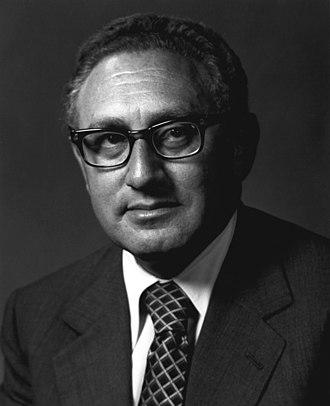
Kissinger, Henry A.
During the Nixon administration, Henry A. Kissinger served as the Assistant to the President for National Security Affairs from January 1969 through the end of Nixon's presidency, acting as the chief architect of U.S. foreign policy. Throughout the White House taping period (February 1971 to July 1973), he was captured extensively on tape advising the president on pivotal events such as the secret opening to China, détente with the Soviet Union, and the negotiation of the Paris Peace Accords. In September 1973, shortly after the taping system was dismantled, Kissinger was additionally appointed as Secretary of State, holding both powerful positions simultaneously until Nixon's resignation in August 1974.
President Nixon met with his senior aides, including H. R. Haldeman, Charles Colson, and John Ehrlichman, to discuss the political management of the Pentagon Papers case and the administration's public response. Nixon emphasized the need for a dedicated White House coordinator to spearhead an aggressive, clandestine effort to expose leaks and political adversaries, drawing on strategies he used during the Hiss case. The President directed staff to avoid appearing defensive while simultaneously undermining the credibility of the press and the political establishment, focusing on the potential for irreparable damage to national security.
President Nixon met with Henry Kissinger, H. R. Haldeman, John Ehrlichman, and others to discuss sensitive foreign policy matters, specifically the Vietnam War negotiations and the status of U.S.-China relations. The participants evaluated propaganda efforts regarding the peace process and reviewed internal concerns about potential leaks and the handling of classified materials, including the Daniel Ellsberg case. Additionally, the President provided directives to staff regarding administrative scheduling and his desire to minimize unauthorized communication between the White House and the press.
President Nixon and Henry Kissinger met to review and coordinate Kissinger’s upcoming travel schedule and availability. The discussion centered on logistical planning for future diplomatic engagements and ensuring the President’s itinerary remained flexible. No major policy decisions were recorded, as the dialogue focused primarily on administrative preparation.
President Nixon and Henry Kissinger discussed the administration's public relations strategy regarding the Pentagon Papers and the Supreme Court's pending decision, ultimately agreeing to avoid a formal statement to remain on the offensive. They also reviewed the complexities of Kissinger’s upcoming diplomatic mission to the People's Republic of China, emphasizing the need for absolute secrecy to ensure its success. Furthermore, the participants addressed the ongoing challenge of media leaks and their potential to undermine both domestic policy and sensitive international negotiations.
President Nixon met with bipartisan Congressional leaders and senior administration officials to discuss the sensitive diplomatic initiative concerning the normalization of relations between the United States and the People’s Republic of China. The President and Henry Kissinger briefed the group on the nature of these confidential negotiations, emphasizing the necessity of absolute discretion to ensure the process remained successful. Nixon and his team requested that participants avoid speculation and maintain a unified, non-partisan front when speaking publicly about the delicate geopolitical implications of this shift in U.S. foreign policy.
President Nixon met with key Congressional leaders, including John C. Stennis and F. Edward Hébert, along with his advisors to discuss the legislative strategy for upcoming draft bills and the political impact of Congressional interference in Vietnam War policy. The participants debated the risks of establishing a firm troop withdrawal date, with Nixon emphasizing that Congressional restrictions could undermine his negotiating leverage and public perception. The President insisted on maintaining executive freedom of action to ensure a favorable peace settlement and signaled that he would not yield on the inclusion of a binding deadline in draft legislation.
President Nixon, H.R. Haldeman, and Henry Kissinger met to discuss the positive domestic media reception of the administration's surprise initiative toward the People’s Republic of China. The participants reviewed the favorable coverage in national magazines, emphasizing the importance of maintaining strict secrecy while framing the initiative as a decisive, presidential-led move. They also addressed political strategy, including managing congressional relations, handling potential polling volatility related to the Vietnam War, and coordinating upcoming briefings for the White House staff.
President Nixon and Henry Kissinger met to discuss strategy and messaging regarding the recent announcement of the U.S. opening to the People’s Republic of China. They reviewed how to manage press coverage and addressed leaks emanating from the State Department, specifically concerning the administration's internal process and lack of awareness among other cabinet members. Nixon provided instructions for Kissinger’s upcoming press briefing, emphasizing the need to highlight the President's personal qualifications, diplomatic experience, and philosophical approach as uniquely suited for the high-stakes negotiation with Chinese leadership.
President Nixon met with John B. Connally and Henry Kissinger to discuss the sensitive diplomatic implications of the recent announcement regarding U.S. relations with the People's Republic of China, emphasizing the need for absolute secrecy and tight control over foreign policy information. Beyond foreign policy, the participants addressed internal administrative challenges, specifically regarding personnel appointments in the Treasury Department and the importance of professional discipline and loyalty among White House staff. The conversation concluded with an extensive political analysis concerning the upcoming 1972 election, potential Democratic challengers, and the strategic future of John B. Connally within the administration.
President Nixon and Henry Kissinger met to briefly coordinate the President’s upcoming schedule. The discussion focused on managing the logistics and timing of high-level engagements. No substantive policy decisions were reached during this brief administrative exchange.
President Nixon and Henry Kissinger met to discuss the strategic orchestration of upcoming international summits, specifically focusing on the delicate balance between diplomatic relations with China and the Soviet Union. Kissinger provided a debrief on his recent engagements, emphasizing the need for a carefully sequenced public announcement strategy to maximize political impact. The two discussed the importance of managing expectations for these meetings while maintaining a position of strength and strategic ambiguity to prevent preemptive interference from other global powers.
President Nixon and his administration met with Republican Congressional leaders to discuss the 1971-1972 economic outlook, focusing on key indicators such as GNP, unemployment rates, and inflation. The discussion centered on evaluating recent economic growth, managing ongoing labor disputes in the steel and transportation sectors, and addressing political concerns regarding the administration's fiscal and wage-price policies. The President and his economic advisors emphasized their commitment to achieving peacetime economic stability and requested support from leadership to convey a positive but measured economic narrative to the public.
President Nixon, Secretary of State William P. Rogers, and National Security Advisor Henry Kissinger coordinated strategy regarding ongoing efforts to achieve an honorable end to the Vietnam War. The discussion centered on aligning U.S. negotiating objectives—specifically a ceasefire, POW release, and regional peace—with potential legislative maneuvers in Congress. The participants evaluated how to manage Senate Majority Leader Mike Mansfield’s involvement to prevent unfavorable legislative interference with the administration's diplomatic goals.
President Nixon and Henry Kissinger met in the Oval Office to conduct a brief, private consultation. While the specific substance of the dialogue is not captured in the available transcript, the meeting served as a direct exchange between the President and his National Security Advisor during a period of high-stakes diplomatic maneuvering. No specific policy decisions or action items are discernable from this brief encounter.
President Nixon and Henry Kissinger met to coordinate messaging strategy regarding the secret opening of relations with the People's Republic of China. They discussed managing congressional and conservative skepticism, emphasizing the importance of maintaining secrecy while presenting an upbeat, controlled public narrative. The conversation also touched upon potential Vietnam peace negotiations and the strategic implications of a prospective summit with the Soviet Union in light of the PRC initiative.
President Richard Nixon and Henry Kissinger coordinated a schedule for an upcoming meeting, ensuring Kissinger arrived before another visitor to discuss ongoing foreign policy developments. The discussion primarily served as a logistical bridge to facilitate a more substantive, private consultation later that afternoon. The pair agreed to meet at 3:00 p.m. to review sensitive diplomatic matters.
President Nixon and Henry Kissinger met to review the progress of delicate, back-channel diplomatic efforts to open relations with the People's Republic of China. The discussion focused on maintaining strict discretion regarding upcoming trips and managing the political fallout from domestic figures, such as other politicians or Cabinet members like Secretary of State William P. Rogers, seeking to involve themselves in the process. The two agreed on the necessity of shielding the sensitive negotiations from external interference and ensuring that the diplomatic initiative remained firmly under the control of the President.
President Nixon met with H.R. Haldeman and John Ehrlichman to discuss legislative strategy regarding Congressional appropriations and the distribution of discretionary funds, with a particular focus on prioritizing key states for political advantage. The group also evaluated the shifting foreign policy landscape, specifically addressing the public reaction to the upcoming China summit and the risks posed by potential congressional delegations visiting the PRC. A significant portion of the discussion centered on the political liability of Vice President Spiro Agnew, with the President and his staff contemplating the feasibility and timing of his potential resignation and replacement by John Connally to strengthen the 1972 ticket.
President Nixon and Henry Kissinger met to strategize the upcoming presidential summit with the People's Republic of China (PRC), focusing on maintaining tight control over negotiations and logistics to preserve the President's diplomatic leverage. The two discussed their concerns regarding premature visits to China by other U.S. officials and politicians, agreeing that such unauthorized contact could complicate the administration's foreign policy goals and limit Nixon's freedom of action. Additionally, Nixon emphasized the importance of ensuring that the historical record correctly reflects that the PRC initiative was a product of his direct collaboration with Kissinger, rather than an achievement of the State Department.
President Nixon met with H. R. Haldeman and Henry Kissinger to refine the President's upcoming schedule, focusing on high-profile diplomatic trips, including the pivotal mission to the People's Republic of China, and various domestic events. The participants discussed managing public relations for the China initiative, maintaining communication channels with the Soviet Union, and balancing presidential appearances to maximize political impact. Additionally, they addressed personnel matters, including ambassadorial appointments and strategies for handling congressional relations and party dissenters.
President Nixon and Henry Kissinger met to coordinate the President's schedule and finalize logistical arrangements for upcoming high-level meetings. Stephen B. Bull joined the discussion briefly to receive instructions regarding these scheduling requests. The brief exchange focused exclusively on managing the President's calendar and ensuring administrative preparedness.
President Nixon, H. R. Haldeman, Charles Colson, and Henry Kissinger met to discuss the domestic and international implications of the administration's new initiative toward the People's Republic of China (PRC). The group evaluated the public’s fascination with the move, comparing its impact to the release of the Pentagon Papers, and strategized on how to leverage the policy to appeal to American youth ahead of the 1972 election. They also addressed political contingencies, including the potential for Vice President Spiro Agnew’s resignation, the political future of John Connally, and ongoing efforts to secure a resolution to the Vietnam War.
President Nixon, William P. Rogers, and Henry Kissinger met to coordinate foreign policy strategy, focusing on the administration’s initiative toward the People’s Republic of China (PRC) and its impact on the United Nations and U.S.-Japan relations. The participants discussed managing the delicate diplomatic transition regarding Taiwan’s UN membership, the importance of maintaining strong ties with Japan, and the domestic political advantages of the evolving foreign policy, particularly concerning the Vietnam War and the Pentagon Papers. The President also reviewed legislative strategy for a bipartisan Vietnam ceasefire resolution with Senator Mike Mansfield and planned logistics for his upcoming visit to China.
President Nixon met with Secretary of Defense Melvin Laird and National Security Advisor Henry Kissinger to review recent foreign policy developments, specifically Laird's trip to Japan and South Korea. The discussion focused on Japanese defense modernization, the status of U.S. military commitments in Korea, and the implementation of the Nixon Doctrine in light of the administration’s secret initiative to open relations with the People's Republic of China. Additionally, the participants addressed the Vietnam War, including the importance of maintaining robust supplies for South Vietnamese forces, and explored strategies for consolidating political support from moderate figures like Nelson Rockefeller.
President Nixon, H. R. Haldeman, and Henry Kissinger discussed the positive political reception of the recent announcement regarding the opening of relations with the People's Republic of China, emphasizing its favorable impact among the nation's leadership class and broad public support. The group reviewed early poll data that suggested strong approval for the initiative, noting that this shift in sentiment potentially countered negative political fallout from the ongoing Pentagon Papers controversy. Additionally, the President and his staff discussed the potential appointment of David M. Kennedy as Ambassador to Japan and reviewed logistical arrangements for upcoming presidential schedule items.
President Nixon and Henry Kissinger coordinated a telephone call to journalist Stewart Alsop, who was currently hospitalized at the National Institute of Health. The participants sought to locate Alsop's direct contact information through the White House operator to facilitate the outreach. This brief exchange focused entirely on the logistics of reaching the ailing columnist.
President Nixon coordinated with H. R. Haldeman to arrange a briefing with Henry Kissinger regarding his upcoming schedule and travel. The discussion served as a logistical preparation for a formal meeting between the President and Kissinger. The primary objective was to ensure the National Security Advisor was available for a direct consultation on pressing foreign policy matters.
President Nixon met with Henry Kissinger and H.R. Haldeman to discuss the domestic political impact of his opening to the People's Republic of China, specifically focusing on leveraging the initiative to bolster his support among youth and conservative factions. The group evaluated personnel moves, including appointing David M. Kennedy as Ambassador to Japan and assigning Robert H. Finch to the Office of Emergency Preparedness. Nixon directed his staff to prioritize an organized outreach effort on college campuses regarding foreign policy and mandated the expedited release of internal poll data to generate momentum and counter potentially unfavorable Gallup polling.
President Nixon met with his economic and national security advisors to address urgent concerns regarding the federal budget, economic growth, and the size of the government. Seeking to shift toward a balanced budget, Nixon directed his team to pursue aggressive spending cuts, including an across-the-board 10% reduction in federal personnel and significant decreases in defense and intelligence agency staffing. He emphasized that these efforts were essential for restoring confidence in the private sector and demanded a strategic overhaul of mission requirements, particularly within the Department of Defense and the CIA, to eliminate waste and redundant programs.
President Nixon met with H.R. Haldeman, Henry Kissinger, John Ehrlichman, and Alexander Butterfield to coordinate the administration's response to ongoing leaks of classified national security information. The President directed that all staff with access to sensitive documents be subjected to polygraph tests to identify the sources, expressing deep frustration with the Department of State and the Department of Defense. Additionally, the participants reviewed the status of Vietnam peace negotiations and planning for the President's forthcoming diplomatic initiative with the People's Republic of China.
President Nixon met with Indonesian Ambassador Soedjatmoko and Henry Kissinger to discuss the geopolitical implications of the administration's recent initiative to open diplomatic relations with the People's Republic of China. The participants addressed concerns from Asian allies regarding potential U.S. withdrawal from the region, with Nixon emphasizing that the U.S. remains committed to an active security and economic presence in Asia despite the normalization efforts. Additionally, Nixon and Kissinger reviewed the status of secret Vietnam peace negotiations and planned a series of diplomatic communications to reassure global leaders of the strategic intent behind the China policy.
President Nixon and Henry Kissinger met to coordinate strategy for an upcoming press conference, focusing on managing public and political expectations regarding the administration's foreign policy initiatives. They discussed the timing of Nixon's summit in the People's Republic of China, emphasizing the need for favorable weather and political leverage, as well as the progress of Vietnam peace negotiations. Additionally, they reviewed domestic political concerns, including the 1972 election landscape, the impact of the Pentagon Papers, and the necessity of maintaining a firm stance against leaks and political opponents.
President Nixon, H. R. Haldeman, and Henry Kissinger discussed strategies for managing public and congressional expectations regarding the upcoming diplomatic initiative with the People's Republic of China. The conversation centered on neutralizing political opposition, balancing relations with Japan, and ensuring the PRC summit serves as a strategic maneuver against the Soviet Union. Nixon emphasized the necessity of a cold-blooded approach, maintaining that foreign policy successes should be used to strengthen his domestic political position and re-election prospects.
President Nixon, Vice President Agnew, and Secretary of State Rogers met to debrief on Agnew's recent diplomatic tour of Africa and the Middle East, while also discussing the administration's ongoing initiative to open relations with the People's Republic of China. The participants expressed frustration with press coverage—specifically in Newsweek—regarding the Vice President's trip and the China policy, and they strategized on how to manage the ensuing public and congressional reactions. Additionally, the President and his staff discussed personnel changes, including the potential replacement of Ambassador Joseph Farland in Pakistan, and reviewed the broader geopolitical implications of the unfolding China initiative.
President Nixon and Henry Kissinger met with Pakistani Ambassador Agha Hilaly to express gratitude for Pakistan's pivotal, secret role in facilitating the administration's opening to the People's Republic of China. The discussion addressed the diplomatic handling of the PRC's upcoming UN membership, the search for a new UN Secretary General, and the ongoing regional tensions between India and Pakistan. Nixon encouraged the Pakistani government to improve its public relations efforts regarding the humanitarian situation in East Pakistan to better counter critical Western press coverage while pledging continued, though constrained, U.S. economic support.
President Nixon and Henry Kissinger coordinate a logistics plan for an immediate, unscheduled meeting at the Executive Office Building. The brief exchange serves solely to confirm their respective locations and establish a rendezvous point. Kissinger acknowledges the directive and prepares to depart his current office to join the President.
President Nixon met with H.R. Haldeman and Henry Kissinger to discuss his upcoming schedule, specifically deciding to cancel his planned visit to the Bohemian Grove due to concerns regarding press intrusion and the potential breach of the club's traditional off-the-record atmosphere. The participants also reviewed foreign policy developments, including the China initiative and ongoing Vietnam peace negotiations, while addressing the need to manage conservative discontent within the party. Finally, they evaluated the political implications of recent labor disputes and strategized on the handling of upcoming presidential trips and public relations.
President Nixon met with his staff and advisors, including H.R. Haldeman and Henry Kissinger, to discuss political messaging, criticism of the Domestic Council, and strategies for upcoming foreign policy initiatives. Nixon expressed frustration with the liberal bias of the media and the academic community, particularly regarding environmental and social issues, and directed his team to sharpen his administration's messaging. Additionally, the participants discussed the logistics and strategic timing of a potential presidential trip to China, weighing the domestic political implications against international relations.
President Nixon and Henry Kissinger discussed the delicate management of the forthcoming public announcement regarding the People's Republic of China (PRC) and its potential impact on U.S. relations with Taiwan. They emphasized the importance of maintaining a tough negotiating stance for the President's upcoming trip to Beijing to ensure no conditions are forced upon the U.S. Additionally, they reviewed regional crises, specifically the distribution of food aid in Pakistan and the destabilizing role of India, while coordinating strategies to manage conservative domestic critics and press narratives.
President Nixon and Henry Kissinger discuss strategies for managing political optics and countering unfavorable media coverage regarding the national economy. Nixon emphasizes the need to mobilize Republican allies, specifically mentioning Senator Lowell Weicker, to build support and shape public perception. The conversation reflects the President's frustration with media commentary and his determination to shift the prevailing narrative through organized political outreach.
President Nixon met with his senior advisors and John Connally to address two primary issues: the implementation of a firm administration stance against school busing and the development of a comprehensive new economic policy. Nixon explicitly ordered the discipline of HEW regional staff for their role in busing mandates and directed his team to prepare a strategy for a wage-price freeze and potential tax reforms. The President decided to delay these major economic announcements until September to ensure thorough preparation, avoid Congressional interference during the summer recess, and build a cohesive narrative of national renewal for his upcoming State of the Union address.
President Nixon and Henry Kissinger met to discuss strategies regarding business-side tax reform initiatives. The President directed Kissinger to formalize his input on the matter through a written letter to help influence administration thinking. They also briefly exchanged pleasantries regarding a personal contact, Mrs. Crosby, before concluding the brief discussion.
President Nixon met with several senior advisors and staff members, including H. R. Haldeman, John Ehrlichman, Henry Kissinger, and Clark MacGregor, to manage a range of domestic and foreign policy issues. The discussions focused on navigating the fallout of the steel industry settlement, celebrating the recent legislative victory regarding the Lockheed loan guarantee, and refining the administration's stance on busing in Texas schools. Furthermore, the participants coordinated the logistics and messaging for the President’s upcoming press conference, his travel schedule, and his approach to ongoing concerns such as the Vietnam War and the Pentagon Papers.
President Nixon and Henry Kissinger met to coordinate talking points for a forthcoming press conference, specifically regarding the complex approval status of the Kama River Project foundry deal with the Soviet Union. The discussion touched upon managing potential inquiries from the Senate Foreign Relations Committee and the broader diplomatic implications of U.S.-Soviet relations. Additionally, the participants briefly reviewed administrative matters, including the upcoming departure of David K.E. Bruce and perceptions of Secretary of State William P. Rogers among liberal factions.
President Nixon and Henry Kissinger met to discuss the status of arms and economic aid to Pakistan in the face of mounting pressure from Congress. The primary focus was on navigating the potential for adverse Senate action regarding an arms embargo against the Pakistani government. This discussion highlights the administration's efforts to manage foreign policy challenges amid legislative scrutiny during the ongoing crisis in the region.
President Nixon and Henry Kissinger met to prepare for an upcoming press conference, specifically focusing on potential foreign policy questions. They discussed the administration's stance on Pakistan, including the status of arms sales, and reviewed internal disagreements regarding China and Taiwan involving Secretary of State William P. Rogers. Additionally, the conversation addressed the progress of Vietnam negotiations in Paris following the arrival of William J. Porter.
President Nixon, H.R. Haldeman, Henry Kissinger, and John Connally met in the Oval Office to analyze the success of the President's recent press conference and strategize on forthcoming communication regarding the economy and foreign policy. The group discussed the importance of managing public perception of the administration's economic initiatives and the strategic sequencing of potential summit meetings with the Soviet Union versus the upcoming visit to the People's Republic of China. Additionally, the President and his staff coordinated his travel schedule, focusing on balancing public engagements at the Illinois State Fair and the Grand Teton National Park with necessary time for speech preparation and internal meetings.
President Nixon, Henry Kissinger, and H. R. Haldeman met to coordinate communication strategies and manage relations with various political factions and the media. Key discussions focused on neutralizing conservative opposition to the Administration's foreign policy—specifically regarding China and defense budget concerns—and crafting a narrative that prioritized the President's foreign policy successes over economic criticisms. The group also evaluated the impact of recent presidential trips on public opinion and planned upcoming public relations efforts to highlight legislative inaction by Congress and address the ongoing debate over the Pentagon Papers.
President Nixon met with H. R. Haldeman and Henry Kissinger to dictate several administrative memoranda regarding personal outreach and regional intelligence. He directed a congratulatory message to be sent to baseball player Harmon Killebrew and requested communication with Billy Graham. Additionally, Nixon addressed a missionary report concerning tribal irregular forces in Laos, highlighting their strategic importance in countering communist influence in Southeast Asia.
President Nixon met with Henry Kissinger and H.R. Haldeman to coordinate high-level foreign policy initiatives, specifically focusing on the status of Vietnam peace negotiations, potential US-China relations, and ongoing diplomatic channels with the Soviet Union. The discussion addressed the political implications of Vietnam POW releases, the management of sensitive communications through unofficial channels, and strategic defense budgetary concerns regarding anti-ballistic missile limitations. Additionally, the participants touched upon Nixon's domestic popularity and the perceived conservative shift in the national mood, which they viewed as favorable for the President's upcoming political prospects.
President Nixon and Henry Kissinger met to discuss sensitive foreign policy issues, primarily focusing on ongoing Vietnam peace negotiations and the strategic implications of recent press coverage. They evaluated North Vietnamese positions, including North Vietnamese demands for U.S. withdrawal and economic aid, while also considering how these developments affected the administration's leverage with South Vietnamese leader Nguyen Van Thieu. Additionally, the participants touched upon regional crises, including the India-Pakistan situation and evolving diplomatic relations with the People's Republic of China.
President Nixon, H. R. Haldeman, and Henry Kissinger met to discuss foreign policy, specifically relations with the PRC, USSR, India, and Pakistan, while also coordinating their strategy regarding the Vietnam War. A central focus of the conversation was the hostile press coverage of the administration, which they analyzed using an Edith Efron media study to confirm network bias against the President. Nixon and his advisors decided to maintain a low profile on Vietnam while launching a more aggressive public relations effort to challenge the media's credibility and the liberal establishment's influence on government policy.
President Nixon met with John Mitchell, H.R. Haldeman, and Henry Kissinger to address serious unauthorized leaks of sensitive government documents, specifically a Kissinger memorandum regarding talks with Chou En-lai and a proposed "gold window" economic policy. The President expressed intense frustration over the disclosures in Paul Scott’s column and directed his staff to identify the sources, suspecting potential leaks from the Treasury Department or the Council of Economic Advisers. Additionally, the group discussed political strategies for managing the Kent State grand jury announcement, handling the Teamsters' request for Jimmy Hoffa's pardon, and balancing the President's public appearances before veterans' organizations.
President Nixon met with Ellsworth Bunker and Henry Kissinger to discuss the volatile political and military situation in South Vietnam, specifically focusing on the upcoming elections and the strained relationship between President Nguyen Van Thieu and Duong Van Minh. The participants reviewed the effectiveness of U.S. military aid, the status of ongoing negotiations with North Vietnam, and the broader geopolitical implications of Nixon's planned trip to China. Nixon emphasized the necessity of maintaining robust military support for South Vietnam, including the provision of M-48 tanks, despite expected domestic political opposition.
President Nixon met with H.R. Haldeman and Henry Kissinger to discuss personnel changes, press relations, and upcoming strategic initiatives. The group reviewed the President's public image, specifically criticizing the media's use of negative adjectives and tone, while coordinating a strategy to promote a media study by Edith Efron. They also reviewed foreign policy issues, including arms control and upcoming diplomatic efforts with China, and addressed the need for strict internal secrecy regarding pending economic policy decisions.
This recording captures informal, pre-meeting exchanges in the Cabinet Room between White House staff, including Oliver Atkins, and members of a visiting Cambodian delegation led by Sisowath Sirik Matak. The discussion primarily centers on logistical arrangements for the delegation's upcoming schedule, the management of press access, and general pleasantries regarding White House protocol and history. No substantive policy negotiations between President Nixon and the delegation occurred during this specific segment of the recording.
President Nixon met with Cambodian Prime Minister Sisowath Sirik Matak to discuss the military and political situation in Cambodia amidst the ongoing Vietnam War. The discussion focused on Cambodia's defense strategy, the resilience of the Cambodian people against North Vietnamese aggression, and concerns regarding the regional impact of U.S. troop withdrawals from South Vietnam. Nixon reaffirmed the U.S. commitment to Asian independence and maintaining a military presence in the Pacific to prevent communist domination, while emphasizing that regional nations must ultimately bear the primary responsibility for their own defense.
President Nixon and Henry Kissinger discuss coordinating a meeting involving H.R. Haldeman to clarify specific administrative or strategic objectives. The President emphasizes his desire to establish clear expectations and ensure that all parties are aligned regarding the intended focus of the discussion. This brief interaction serves as a preparatory step to streamline communication and firm up the agenda for the subsequent meeting.
President Nixon met with H. R. Haldeman and Henry Kissinger to discuss sensitive foreign policy initiatives, including the upcoming secret negotiations with the Soviet Union and planning for his potential visits to China and Moscow. The President emphasized a strict information blackout regarding these trips, directing that the New York Times be excluded from access, and expressed his frustration with media coverage, specifically an interview involving James Reston and Zhou Enlai. Additionally, they reviewed domestic political concerns, including responding to urban issues and the President's stance on busing, while finalizing public relations strategies for his upcoming diplomatic agenda.
President Nixon and Henry Kissinger coordinate their schedules for an upcoming discussion, deliberating on whether to meet immediately at the Executive Office Building or communicate via telephone later. The brief exchange focuses on logistical arrangements to facilitate a follow-up consultation involving key staff members. Ultimately, they agree to delay the substantive discussion, with the President initiating the next point of contact.
President Nixon met with Henry Kissinger, Adm. Thomas Moorer, and other administration officials to strategize on the escalating India-Pakistan crisis, specifically aiming to prevent an outbreak of war. The discussion emphasized a policy of U.S. neutrality and the importance of avoiding public pressure on Pakistan while encouraging quiet, behind-the-scenes diplomatic efforts to reach a political accommodation. Nixon decided to send representatives to explore humanitarian relief options as a pragmatic vehicle to facilitate these sensitive political conversations with Pakistani leader Yahya Khan.
President Nixon and George Shultz met to deliberate on the implementation of a major new economic program, specifically focusing on the necessity of a wage-price freeze and a potential import tax to combat inflation and restore public confidence. They discussed the legal and political complexities of these actions, weighing the risks of such measures against the need for U.S. economic leadership and stability. Henry Kissinger joined the meeting briefly to coordinate on international affairs, including the Accidental War Agreement and diplomatic relations with China and the Soviet Union, before the conversation returned to the logistical challenges of the domestic economic agenda, including federal budget cuts and public communication strategies.
President Nixon and Henry Kissinger discuss coordinating a diplomatic signing ceremony with Soviet Foreign Minister Andrei Gromyko, slated for September 30th, and the necessity of managing State Department involvement through William Rogers. The conversation also addresses the administration's fiscal strategy, specifically balancing the push for increased national security and defense spending against the political liability of raising taxes. Nixon directs Kissinger to coordinate with George Shultz and David Packard to develop a budget approach that maintains military strength without necessitating immediate tax hikes.
President Nixon and Henry Kissinger met briefly to coordinate their schedules and manage upcoming staff interactions. The discussion focused on preparing for a press briefing involving John Ehrlichman concerning the Pentagon Papers. Nixon specifically requested the inclusion of key advisors to ensure a unified administrative message during the press engagement.
President Nixon met with his senior staff, including H. R. Haldeman, Henry Kissinger, and John Ehrlichman, to discuss a range of domestic and foreign policy priorities. Key deliberations focused on the national economy—specifically addressing textile import issues and preparations for a significant upcoming economic announcement involving potential wage-price freezes—alongside strategies for managing national security declassifications and press relations. The President also reviewed his schedule, including upcoming diplomatic trips to China and the USSR and various domestic scheduling concerns, while emphasizing the need for a cohesive administration stance on legislative and public communication strategies.
President Nixon and Henry Kissinger discuss the administration's recent public communications strategy, specifically reviewing a positive report from Ronald Ziegler regarding a press conference led by John Ehrlichman. They also touch upon the issue of declassifying government documents and address diplomatic negotiations concerning textile trade agreements with Japan involving Attorney General John Mitchell. These discussions reflect the President's ongoing focus on managing administration critics and coordinating key domestic and foreign policy messaging.
President Nixon met with H. R. Haldeman and Henry Kissinger to coordinate administrative logistics, including the President's upcoming travel schedule, press strategies, and the development of a domestic economic package. The conversation also touched upon sensitive foreign policy matters, specifically the complexities of U.S. relations with the People's Republic of China, ongoing concerns regarding Vietnam, and international monetary issues. The participants deliberated on the timing and public presentation of these policy initiatives to ensure effective communication and political management.
President Nixon met with H. R. Haldeman and Henry Kissinger to coordinate logistics for a upcoming weekend at Camp David, where the President planned to host the 'Quadriad' (his top economic advisers) to discuss budget policy and the national economy. Kissinger provided a briefing on defense budget issues, US military dispositions in the Pacific, and preparations for his upcoming high-level negotiations regarding the People’s Republic of China. Additionally, the participants reviewed speechwriting strategies and administrative matters, including the Bicentennial Commission and upcoming church services.
President Nixon and members of the National Security Council met to review the Fiscal Year 1973 defense budget and evaluate U.S. strategic capabilities relative to the USSR. The discussion centered on balancing budgetary constraints with the requirements of the Nixon Doctrine, specifically regarding troop deployments in Europe, East Asia, and the need for flexible "swing forces." The participants assessed the modernization of strategic forces, naval requirements, and the political implications of U.S. military presence abroad in the context of ongoing diplomatic negotiations with China and the Soviet Union.
President Nixon met with his staff and advisors to organize a crucial upcoming strategy session at Camp David regarding his forthcoming economic program. The discussion focused on finalizing the details of his August 16, 1971, address, specifically addressing the closing of the gold window, the implementation of import taxes, and the mechanics of a wage-price freeze. Nixon emphasized the need for decisive action and strict control over the bureaucratic process to ensure a coherent policy rollout, while also addressing ongoing concerns regarding school desegregation and busing litigation.
President Nixon consulted with H.R. Haldeman regarding upcoming travel schedules and the need for a series of speeches to maintain public momentum for his new economic program. Following Haldeman's departure, Henry Kissinger joined the discussion to coordinate the timing of upcoming summit announcements with the Soviet Union and China. The participants strategized that these diplomatic breakthroughs would provide a necessary psychological lift to the nation and effectively distract from media criticism regarding Vietnam and the economy.
President Nixon met with the Council on International Economic Policy (CIEP) and key economic advisors to discuss the administration's post-August 15 New Economic Policy (NEP) and future international trade strategy. Peter G. Peterson led a presentation analyzing the shortcomings of global liberal trading systems and the challenges posed by foreign competitors like Japan, while other officials addressed the domestic economic impact, labor relations, and the status of ongoing monetary negotiations. The President emphasized the need for a firm but diplomatic approach toward Japan and directed his team to maintain the offensive on domestic economic policy while keeping options flexible regarding international monetary reform.
President Nixon and Henry Kissinger met briefly in the Old Executive Office Building to coordinate scheduling and pending administrative matters. During the exchange, they addressed Kissinger’s inquiries regarding upcoming appointments and arranged for the arrival of speechwriter Raymond K. Price, Jr. The discussion functioned primarily as a logistical bridge to facilitate subsequent staff meetings.
President Nixon and Henry Kissinger discussed the scheduling and public presentation of an upcoming summit with the Soviet Union, aiming to leverage the announcement to dominate the news cycle. They addressed U.S. strategy at the United Nations regarding the Taiwan representation issue, specifically the importance of passing an 'important question' resolution to prevent Taiwan's expulsion from the Security Council. Additionally, they reviewed Vietnam policy, including the political implications of South Vietnamese elections, the impact of severe flooding in North Vietnam on infiltration, and potential avenues for peace negotiations.
President Nixon and Henry Kissinger discussed the political and economic strategy surrounding upcoming international monetary policy negotiations. Nixon emphasized that the complexity of these issues transcends the capacity of Peter G. Peterson's staff and requires a more high-level strategic approach. The participants also reviewed recent input from Treasury Secretary John Connally regarding the communication strategy for the President's public addresses and impending calls with global leaders Willy Brandt and Georges Pompidou.
President Nixon met with H.R. Haldeman, Henry Kissinger, and other staff to discuss political strategies following his September 9, 1971, economic speech, specifically focusing on managing bureaucratic handling of Japanese trade negotiations and exchange rates. The group addressed concerns regarding the competency of Peter G. Peterson and the necessity of centralizing economic authority within a small White House-led group. Additionally, they reviewed positive public reaction to the President's assertive leadership tone and discussed upcoming scheduling matters, including a potential appearance at the Al Smith dinner and the terminal illness of Senator Winston L. Prouty.
President Nixon and Henry Kissinger met to coordinate administrative and diplomatic priorities, specifically agreeing to exempt Latin American nations from a proposed ten-percent foreign aid cut. They also discussed strategies for an upcoming meeting with Japanese official Takeo Fukuda and deliberated on the political complexities of South Vietnamese elections involving President Nguyen Van Thieu. The discussion further touched upon the administration's stance regarding the People's Republic of China and ongoing Vietnam peace negotiations.
President Nixon and Henry Kissinger met to discuss the status of the Vietnam War, focusing on the complexities of ceasefire negotiations and the potential for a unilateral withdrawal of American forces. They evaluated the domestic and geopolitical pressures influencing their strategy, specifically weighing the risks of diplomatic engagement with the Soviet Union versus the benefits of independent action. The conversation underscored the administration's struggle to find an honorable exit from the conflict while managing public perception and the volatile nature of the peace talks.
President Nixon and Henry Kissinger met to coordinate the scheduling and public messaging for upcoming high-level summits in Moscow and the People's Republic of China, emphasizing the need to maintain a firm stance on Vietnam during these negotiations. The discussion focused on managing public perception, the potential for troop withdrawals, and ensuring South Vietnamese stability without appearing to abandon the country. Additionally, the President expressed a desire to address the recent Attica Prison riots and emphasized that the administration would maintain its commitment to military protection and foreign policy objectives despite domestic and political pressures.
President Nixon met with H. R. Haldeman, Henry Kissinger, and others to discuss television strategy, public relations for his upcoming foreign summits, and administrative crises. The President emphasized his desire to use live television broadcasts from China to maximize public impact and discussed managing domestic perceptions through news-time appearances. The participants also addressed the Attica Prison riots, coordinating presidential support for Governor Nelson Rockefeller, and discussed policy options regarding Chile and Vietnam, including planning for an upcoming National Security Council meeting.
Henry A. Kissinger directed the White House operator to place a telephone call to Secretary of State William P. Rogers. The brief exchange served as a logistical request to facilitate communication between the two high-ranking officials. No substantive policy matters were discussed during this brief administrative interaction.
Henry Kissinger and William Rogers discuss the potential political fallout from the Montoya Amendment regarding military assistance to South Vietnam and the precarious position of President Nguyen Van Thieu. They express concern that internal instability in South Vietnam, combined with domestic congressional pressure, threatens U.S. policy objectives. The pair also coordinate scheduling for an upcoming National Security Council meeting and prepare for the diplomatic arrival of Soviet Foreign Minister Andrei Gromyko.
President Nixon and Henry Kissinger met to coordinate strategy ahead of an upcoming presidential press conference. The discussion focused on finalizing necessary documentation and briefing materials to ensure the President was prepared for the event. Nixon expressed satisfaction with Kissinger’s preparation, specifically approving a memo related to foreign aid policy.
President Nixon met with Alexander Haig and Henry Kissinger to strategize on public relations, the upcoming U.S. troop withdrawal schedule, and foreign policy maneuvers regarding the People's Republic of China and Vietnam. The discussion focused on timing troop announcements to maintain political leverage, counter domestic critics, and navigate delicate diplomatic relations with the USSR and North Vietnam. The participants agreed that sustaining a phased withdrawal—coupled with strategic public disclosures—was essential to maintain executive authority and protect the administration’s negotiating position ahead of the President's planned summit travel.
President Nixon and Henry Kissinger discuss the stalled peace negotiations regarding Vietnam and the critical, unresolved issue of American prisoners of war. Facing pressure from Senator Mike Mansfield to set a withdrawal deadline, Nixon expresses frustration with the political opposition and orders an urgent, independent military and political assessment from Sir Robert Thompson. Additionally, the pair reviews the status of the Draft Extension Bill, with Nixon expressing deep skepticism regarding the feasibility and cost of transitioning to an all-volunteer military.
President Nixon and Henry Kissinger discuss economic and military data intended to support administration foreign policy objectives. The President requests comparative statistics on Japan’s Gross National Product versus the rest of Asia, as well as a breakdown of the U.S. military budget relative to those of Europe and Japan. This information is sought to substantiate arguments regarding the distribution of global defense burdens and international financial contributions.
President Nixon, Representative F. Edward Hébert, and Henry Kissinger discussed legislative strategies for securing a draft extension bill, emphasizing the necessity of maintaining national security and presidential authority. The participants strategized on how to manage congressional opposition and media pressure, specifically regarding artificial Vietnam withdrawal deadlines and the potential political fallout of the Mansfield amendment. Nixon and his advisors also reviewed foreign policy accomplishments and agreed to adopt an aggressive, non-defensive public stance regarding Vietnam and the Attica prison riots to counter critical media narratives.
President Nixon and Henry Kissinger discussed the political management of the Mack Truck deal with the Soviet Union, emphasizing the need for a swift and effective public relations strategy to address political fallout. The two also coordinated the President’s messaging regarding the UN Security Council vote on China, specifically focusing on the US stance on Taiwan. Additionally, they reviewed protocol for a potential meeting with Soviet Foreign Minister Andrei Gromyko and addressed the broader implications of US policy toward Vietnam.
President Nixon and Henry Kissinger discussed the management of a pending announcement regarding an accidental event. The two determined that the situation would not be made public that day to ensure proper coordination. They agreed to deflect press inquiries by stating that the matter remained under active consideration.
President Nixon met with his staff and members of the press to review his recent, highly effective performance during a press conference. They discussed the tactical success of his responses regarding key administration initiatives, including the military draft extension, Phase II of his economic policy, and his upcoming summit in the People's Republic of China. The conversation underscored the administration's determination to maintain the draft to safeguard U.S. peace initiatives and focused on framing the South Vietnamese elections within a realistic, historical context of global democratic development. Finally, the group considered future media strategies and the need for supporting data regarding U.S. foreign aid distribution to bolster the President's public narrative.
President Nixon and his advisors, including H. R. Haldeman and Henry Kissinger, held this meeting to strategize on public relations, congressional management, and the administration's aggressive posture toward political opponents. The discussion focused on framing the President's economic policies, neutralizing criticism regarding the military draft and Vietnam, and managing press relations to better promote the administration's leadership. Key outcomes included a decision to escalate military pressure in the DMZ and a plan to utilize media allies and station owners to counter perceived bias in news coverage.
President Nixon held two distinct discussions: first, he met with Maurice Stans, George Shultz, and Kenneth Cole to strategize on economic policy, specifically debating the budget and political messaging for the Minority Business Enterprise program and the potential for controlling bank profits. He then met with Romanian Ambassador Corneliu Bogdan and Henry Kissinger to discuss international relations, including the desire for strengthened U.S.-Romanian economic ties and Romania's autonomy within the Eastern Bloc. Throughout the meeting, the President emphasized his firm stance on maintaining U.S. credibility and pressure regarding the ongoing Vietnam War negotiations.
President Nixon and Henry Kissinger discussed strategic options for ending the Vietnam War, including the possibility of a military blockade to force a settlement and address the plight of American prisoners of war. They evaluated the political timing of such actions in relation to the 1972 presidential election, with Kissinger advising that a firm stance against anti-war critics would bolster Nixon's leadership image. Furthermore, they coordinated efforts to influence domestic congressional support, particularly regarding the military draft, and discussed managing political opponents to maintain the administration's position.
President Nixon met with H.R. Haldeman and other staff members to review a wide range of administrative, political, and foreign policy matters, notably including the impending vacancy on the Supreme Court following Justice Hugo Black's resignation. The discussion addressed the political strategy for potential court nominees, the administration's stance on the Office of Economic Opportunity extension bill, and military maneuvers in Vietnam. Additionally, the President reviewed his upcoming travel schedule and press relations, and he met briefly with reporter Eugene Risher to bid him farewell before his departure for a fellowship.
President Nixon met with his inner circle, including John Mitchell, Henry Kissinger, and John Ehrlichman, to discuss a range of urgent issues including Middle East tensions, the SALT negotiations, and Supreme Court vacancies. The President directed that the Middle East situation be kept low-profile to avoid political complications, emphasized the need for a conservative nominee to fill the Supreme Court vacancy, and ordered his staff to secure comprehensive files on the Bay of Pigs and the Pentagon Papers to better manage political messaging. Additionally, the participants reviewed economic indicators, discussed the President's public relations strategy regarding J. Edgar Hoover, and brainstormed ways to capitalize on the Democratic Party's internal divisions.
President Nixon and National Security Advisor Henry Kissinger met in the Oval Office to consult on pressing foreign policy matters and administrative scheduling. The discussion focused on coordinating upcoming executive priorities and managing diplomatic communications. The meeting served as a brief strategy session to align the President and his advisor on current international affairs.
President Nixon met with H.R. Haldeman and Henry Kissinger to navigate a complex array of domestic and foreign policy priorities, including Supreme Court nominations, upcoming economic press conferences, and the management of Vice President Agnew's public relations. The discussion heavily emphasized foreign strategy, particularly regarding Vietnam negotiations, the logistics of Nixon’s forthcoming summit in the People’s Republic of China, and international economic tensions involving currency flotation and Japanese textile quotas. The participants sought to coordinate a unified administration position on economic policy and military air strikes while ensuring that bureaucratic infighting did not undermine their primary diplomatic objectives.
President Nixon met with the National Security Council and senior advisors to conduct an extensive assessment of the deteriorating political and military situation in South Vietnam, focusing on the stability of the Nguyen Van Thieu administration and the threat posed by opposition factions and communist forces. The discussion covered strategic military planning for the upcoming dry season in Cambodia and Laos, the progress of Vietnamization, and the implications of U.S. troop withdrawal timelines on both the battlefield and domestic public opinion. Participants also evaluated the potential impact of diplomatic initiatives, including the President's announcement regarding Henry Kissinger’s trip to Peking, on North Vietnam's strategic calculations and internal morale.
President Nixon and Henry Kissinger met to coordinate the schedule and activities of Treasury Secretary John B. Connally. The discussion focused on Connally's recent engagements and the logistical arrangements surrounding his ongoing policy work. No major policy shifts were recorded, but the exchange emphasized the internal administrative alignment between the White House and the Treasury Department.
President Nixon, Charles Colson, and Henry Kissinger met to discuss the strategic timing of military actions in Vietnam, the upcoming PRC summit, and the influence of these events on international negotiations and domestic political stability. The discussion emphasized leveraging air strikes against enemy supply lines, particularly in Cambodia, to apply pressure on North Vietnam. Kissinger and Nixon also analyzed how the 1972 election cycle might impact the willingness of North Vietnam and the Soviet Union to engage in serious diplomatic agreements.