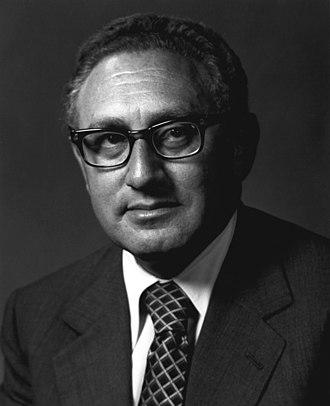
Kissinger, Henry A.
During the Nixon administration, Henry A. Kissinger served as the Assistant to the President for National Security Affairs from January 1969 through the end of Nixon's presidency, acting as the chief architect of U.S. foreign policy. Throughout the White House taping period (February 1971 to July 1973), he was captured extensively on tape advising the president on pivotal events such as the secret opening to China, détente with the Soviet Union, and the negotiation of the Paris Peace Accords. In September 1973, shortly after the taping system was dismantled, Kissinger was additionally appointed as Secretary of State, holding both powerful positions simultaneously until Nixon's resignation in August 1974.
What Kissinger talks about on the tapes
Vietnam War 628Foreign Policy 477Public relations 209People's Republic of China 138Congressional relations 135Diplomacy 122Press relations 92Soviet Union 90Military Strategy 81US-Soviet Relations 75Peace negotiations 74Economic policy 68
Conversations (1,504)
— Page 5 of 16President Nixon met with H.R. Haldeman and other staff to review administrative and political matters, including the handling of the Pentagon Papers and the reorganization of the Council on International Economic Policy (CIEP). The President emphasized the need to move beyond current staffing limitations by centering economic policy work around George Shultz and John Connally, rather than Peter Peterson. Additionally, the group discussed potential candidates for Secretary of Agriculture, the legislative strategy for a Supreme Court appointment, and the necessity of managing Vice President Agnew's role leading into the upcoming campaign.
President Nixon, H. R. Haldeman, and Henry Kissinger met to coordinate the President's upcoming schedule, focusing on balancing his public appearances at various receptions with the need to protect his time. They discussed logistics for the President's Alaska trip, including interactions with newspaper publishers and potential appearances alongside Bill Rogers. Kissinger subsequently joined the meeting to brief the President on mounting evidence of domestic instability within the People's Republic of China, specifically citing the unexplained cancellation of civil aviation flights and the potential death or removal of Mao Zedong, which threatened the status of upcoming diplomatic initiatives.
Manolo Sanchez and Henry A. Kissinger met briefly in the Oval Office to conduct a short, largely unintelligible exchange. Due to the lack of audible content in the recording, no substantive policy discussions, decisions, or action items were captured. The encounter concluded within two minutes, providing no significant historical insight into administration activities.
President Nixon and Henry Kissinger discussed the ongoing diplomatic efforts regarding the People's Republic of China, specifically focusing on the uncertainty surrounding Mao Zedong's health and internal political instability. Kissinger updated the President on recent communications with Chinese officials and the logistical challenges of finalizing dates for a presidential visit. The pair concluded that regardless of internal Chinese turmoil, the administration's strategic position remained advantageous for upcoming diplomatic negotiations, including potential summits with the Soviet Union.
President Nixon and Henry Kissinger met to evaluate the stability of the People's Republic of China, specifically discussing recent reports on Mao Zedong's health and potential political purges by Chou En-lai. The conversation shifted to managing foreign policy optics, with Nixon rejecting the need for public press engagements and emphasizing the importance of maintaining direct, exclusive control over high-stakes diplomatic summits with the USSR and China. They also coordinated their strategy to marginalize the State Department and other cabinet members from key negotiations to ensure that the administration retains full credit for its foreign policy successes.
President Nixon and Henry Kissinger met to discuss urgent foreign policy and domestic administrative matters, focusing primarily on the status of ongoing diplomatic initiatives with the People's Republic of China (PRC) and upcoming economic policy announcements. Kissinger provided updates on the internal power dynamics within the Chinese leadership and coordination regarding the President's planned trip. Additionally, they reviewed talking points for an economic statement—involving coordination with Treasury Secretary John Connally and Arthur Burns—and strategized on how to leverage Kissinger’s public profile for future political and academic engagements.
President Nixon and Henry Kissinger met to finalize the strategic communications plan regarding the upcoming announcement of Kissinger’s trip to the People's Republic of China. The discussion focused on coordinating the announcement timing to maximize geopolitical advantage, particularly in managing the Soviet Union's reaction, while determining which technical details should be withheld for the President's subsequent press conference. They successfully aligned the schedule to build momentum and ensure that staff remained tight-lipped, allowing the administration to control the narrative surrounding the normalization of relations with China.
President Nixon met with his senior advisors and Henry Kissinger to discuss pressing political, economic, and foreign policy matters, including the handling of Justice Hugo Black's funeral, the legislative challenge of the Mansfield amendment, and the upcoming strategy for Vietnam. Nixon expressed a desire to avoid the public exploitation of funerals and the visible presence of Secret Service agents on running boards, while also directing a low-key approach to his attendance at Justice Black's service. The conversation further addressed managing the economy to ensure a stable political environment and finalized scheduling for diplomatic meetings with the International Monetary Fund and Soviet official Andrei Gromyko.
President Nixon met with a delegation from the Organization of African Unity (OAU), led by Mauritanian President Moktar Ould Daddah, to discuss African decolonization and the liberation of southern Africa from minority rule. The delegation advocated for U.S. support in implementing UN resolutions regarding Namibia, South Africa, Rhodesia, and Portuguese territories, while specifically expressing concern over potential U.S. legislation to purchase chrome from Rhodesia. Nixon reaffirmed the administration's opposition to the legislative amendment and emphasized his personal commitment to African affairs, while the delegates expressed gratitude for the open, diplomatic dialogue.
President Nixon, H. R. Haldeman, Henry Kissinger, and Charles Colson met to coordinate administration strategy regarding the upcoming Mansfield Amendment vote in the House, Kissinger’s secret trip to the People’s Republic of China, and the President’s scheduled address to the National League of Families. The participants discussed managing potential legislative defeats, minimizing the political fallout of the China announcement on the upcoming UN Taiwan vote, and addressing criticism from Senator Edward Kennedy regarding POWs. Nixon ultimately decided to maintain a low-profile approach for his visit to the POW families and affirmed his intent to control the China trip logistics without State Department interference.
President Nixon and Henry Kissinger discuss the President’s recent meeting with the National League of Families, where Nixon successfully addressed concerns regarding prisoners of war (POWs). The two strategize on how to respond to potential failures in peace negotiations, with Nixon expressing a willingness to implement a hard-line policy, such as a naval blockade, rather than withdrawing troops. Additionally, they coordinate plans to counter Senator Edward Kennedy's criticisms regarding POWs and discuss upcoming diplomatic maneuvering involving Soviet officials and UN Ambassador George H.W. Bush.
President Nixon and Henry Kissinger met to discuss diplomatic strategy, focusing on upcoming meetings with Soviet Foreign Minister Andrei Gromyko and the announcement of a planned presidential summit in the USSR. The conversation covered logistical arrangements for hosting Gromyko, including the use of the Roosevelt Map Room, and the framing of policy positions regarding a European Security Conference. Alexander P. Butterfield briefly joined the meeting to coordinate administrative details and document delivery for the scheduled diplomatic sessions.
President Nixon, H. R. Haldeman, and Henry Kissinger met to discuss domestic and foreign policy priorities, including the administration's upcoming economic 'Phase II' announcements, potential personnel changes, and the President's diplomatic strategy. The conversation focused on balancing the President's public image and economic messaging with the complexities of managing international relations, particularly regarding the Soviet Union and China. Nixon and Kissinger also evaluated the political implications of recent events, such as the funeral of Justice Hugo Black and the handling of the prisoner of war issue, while coordinating the President's schedule and approach for high-level meetings with foreign officials.
President Nixon and Henry Kissinger met to coordinate strategy for an upcoming diplomatic engagement with Soviet Foreign Minister Andrei Gromyko. Their discussion focused on critical agenda items including Soviet missile production and the ratification of the Berlin Agreement. Following this, the President and H. R. Haldeman briefly addressed logistical arrangements for Nixon's schedule, specifically regarding the logistics of the meeting with Gromyko and an upcoming International Monetary Fund reception involving John B. Connally.
President Nixon met with Soviet Foreign Minister Andrei Gromyko and other officials to discuss the state of U.S.-Soviet bilateral relations, focusing on arms control, trade, and regional conflicts. The conversation addressed the status of the Berlin Agreement, progress on Strategic Arms Limitation Talks (SALT), and the need for diplomatic coordination regarding the Middle East and South Asia. Both sides emphasized the importance of maintaining direct, private channels of communication to manage tensions and facilitate future progress toward a potential summit meeting.
President Nixon met with Secretary of State William P. Rogers and National Security Advisor Henry Kissinger to discuss U.S.-Soviet relations following Nixon's earlier meeting with Soviet Foreign Minister Andrei Gromyko. The participants reviewed the status of communication with Leonid Brezhnev and the strategic importance of balancing upcoming summits with both the USSR and the People's Republic of China. The discussion focused on coordinating the timing and announcement of the President's visit to the Soviet Union and managing potential diplomatic sensitivities regarding the two major powers.
President Nixon met with H.R. Haldeman and later Henry Kissinger to review a wide array of administrative, political, and scheduling matters. They discussed the President’s recent domestic trips, potential public statements on federal pay raises, and strategies to address political attacks from critics like Senator Ted Kennedy. Additionally, the group reviewed sensitive intelligence reports, discussed the status of Supreme Court nominations, and consulted on the strategic timing of international diplomatic engagements, including Kissinger’s upcoming trip to China and the President’s meeting with Andrei Gromyko.
President Nixon, Henry Kissinger, George H. W. Bush, and John Ehrlichman met to discuss the administration's critical foreign policy challenges, specifically the upcoming UN vote on Taiwan's status and the strategic implications of upcoming high-level summits. Bush was instructed to maintain a firm, public stance in New York regarding the UN resolution, while Kissinger and the President coordinated the timing of U.S. outreach to the Soviet Union and China to avoid domestic and diplomatic conflicts. The meeting also addressed domestic administrative issues, including housing litigation strategy, welfare reform messaging to Congress, and tax policy coordination with Treasury Secretary John Connally.
President Nixon, Secretary of State William Rogers, and National Security Advisor Henry Kissinger met to discuss the sensitive timing of Kissinger's upcoming trip to the People's Republic of China (PRC). Rogers expressed strong concern that the trip's timing—coinciding with the critical United Nations vote on the status of Taiwan—would create a political backlash and make it appear that the U.S. was undermining its own efforts at the UN. Ultimately, the group discussed potential strategies to delay the trip or alter its public framing to avoid the appearance of being manipulated by the Chinese or signaling disinterest in the UN vote.
President Nixon met with George Shultz, Herbert Stein, and Henry Kissinger to strategize the administration's economic policy for the post-freeze 'Phase II' period. The discussion centered on the necessity of establishing a tripartite board to manage wage and price controls, balancing the need for inflation control with the political requirement of securing labor cooperation. Nixon decided to keep his personal involvement in the technical details minimal, tasking Secretary John Connally with leading the public-facing aspects of the transition while aiming to avoid a crisis-heavy presentation to the public.
President Nixon and Henry Kissinger met to deliberate the timing of Kissinger’s upcoming trip to the People's Republic of China in relation to the looming United Nations vote on the status of Taiwan. They weighed the political risks of announcing the visit, fearing that a public announcement near the UN vote or traveling to China immediately after a potential Taiwanese expulsion would trigger intense backlash from American conservatives. Ultimately, they discussed the logistical constraints of negotiating travel dates with the Chinese while maintaining a credible US strategy to prevent Taiwan's loss of their UN seat.
President Nixon met with Sir Alexander F. Douglas-Home, the Earl of Cromer, and Henry Kissinger to discuss the geopolitical landscape, specifically focusing on Vietnam, arms control negotiations with the USSR, and the situation in South Asia. The participants addressed the status of the Vietnam War, the impact of U.S. troop withdrawals, and the necessity of managing domestic political pressure and potential isolationism. Nixon also sought British cooperation regarding upcoming United Nations votes and provided updates on European security conferences and Middle East diplomatic efforts.
President Nixon met with his senior staff and economic advisers to finalize the rollout strategy for Phase II of his economic program. The discussion focused on establishing an effective, low-key announcement strategy for the upcoming wage and price controls, balancing the need for public cooperation with the desire to avoid the appearance of a crisis. Key decisions included keeping the address concise, maintaining a tone of confidence, and utilizing prime-time news slots to maximize reach while minimizing disruption to entertainment programming.
President Nixon and Henry Kissinger met to review the administration’s progress on major foreign policy initiatives, specifically the opening of relations with the People's Republic of China and preparations for a Soviet Union summit. They analyzed the favorable domestic and geopolitical reception of these efforts, contrasting their successful strategy of linkage against potential opposition from the Senate and the bureaucracy. The discussion also addressed ongoing Vietnam War negotiations and the tactical timing of future military actions, such as bombing strikes to secure the release of prisoners of war.
President Nixon consulted with aides John Mitchell, Charles Colson, H. R. Haldeman, Henry Kissinger, and John Connally regarding strategic messaging for the upcoming Phase II economic policy and the political fallout of his planned trip to the People's Republic of China. The participants coordinated a media roll-out for the economic plan, specifically scheduling Connally to hold a follow-up press conference to anchor the administration's position after the President’s speech. Additionally, the group discussed the positive impact of the China announcement on foreign policy optics, successfully shifting media focus away from the recent South Vietnamese election.
President Nixon and Henry Kissinger met to coordinate administrative strategy regarding sensitive foreign policy and domestic legislative issues. The discussion centered on silencing speculation about Kissinger's upcoming trip to the People's Republic of China, managing State Department leaks, and addressing the ongoing textile negotiations with Taiwan and Japan. Additionally, Nixon directed Kissinger to clarify the administration's stance on the Byrd Amendment regarding Rhodesian chrome and advised Senator Hugh Scott on navigating upcoming Senate votes to ensure the success of his Phase 2 economic announcement.
President Nixon and Henry Kissinger discuss the scheduling and arrival of Senate Minority Leader Hugh Scott at the White House. The conversation focuses on coordinating this meeting as the President instructs Kissinger to maintain ongoing efforts regarding the logistics of Scott's visit. This brief exchange serves to manage the President's immediate morning agenda and ensures the senator's arrival is handled appropriately.
President Nixon and Henry Kissinger discussed legislative strategy regarding the Byrd amendment on chrome, focusing on the need to manage relations with Senator Harry F. Byrd, Jr. and the broader implications for Congress. The conversation also touched upon the administration's stance on the PRC and upcoming messaging efforts, including the preparation of the President's Phase II economic speech. Kissinger committed to coordinating with Clark MacGregor to ensure key political allies were reassured and remained aligned with the administration's objectives.
President Nixon met with H. R. Haldeman, Henry Kissinger, and other staff to coordinate communications and legislative strategy, specifically focusing on the announcement of a planned Soviet summit and the importance of timing to manage press and congressional reactions. They discussed the effectiveness of congressional lobbying efforts, including recent successes in the House, and debated the strategic timing and format of a proposed "Western Summit" involving key allies. The President prioritized controlling the narrative through deliberate, sudden announcements and emphasized the need for direct communication with heads of state via personal letters to maintain diplomatic influence without compromising the administration's strategic agenda.
President Nixon and Henry Kissinger met to discuss the volatile situation between India and Pakistan. The conversation focused on rising tensions at the border and the potential strategic implications of United States involvement in the regional conflict. The exchange served as a briefing on maintaining neutrality while monitoring military developments in South Asia.
President Nixon and Henry Kissinger met to coordinate foreign policy maneuvers, specifically focusing on the upcoming announcement of Kissinger’s trip to the People's Republic of China and the strategic timing of Vietnam-related policy announcements. They reviewed recent legislative developments, including the passage of the Byrd Amendment, and discussed managing domestic political reactions to foreign affairs, such as the UN vote and potential impacts on the U.S.-USSR summit. Nixon emphasized his desire to keep foreign policy initiatives low-key to minimize criticism while simultaneously pressuring officials to ensure that ongoing crises, such as the India-Pakistan situation, remained under control.
President Nixon and Henry Kissinger met to coordinate public relations strategy regarding sensitive foreign policy developments and to discuss the domestic political landscape. They agreed to maintain a matter-of-fact, low-key approach to upcoming diplomatic announcements to preserve bargaining leverage with the Soviet Union and China. The discussion also touched on Nelson Rockefeller’s state of mind following the Attica Prison riots and the administration’s intention to minimize reliance on mainstream press outlets like the New York Times in favor of direct communication. Finally, they explored potential initiatives to better publicize the administration's foreign policy achievements, including a possible television appearance by the President.
President Nixon and Henry Kissinger met to coordinate strategy regarding upcoming announcements on Vietnam troop levels and the diplomatic implications of Nixon’s planned trip to the People's Republic of China. The discussion focused on carefully timing these announcements to maximize political impact and maintain public confusion regarding administration objectives. Additionally, they explored the logistics of hosting a potential European summit in Washington, D.C., and touched upon diplomatic communications involving Pakistan and the USSR.
President Nixon met with John Ehrlichman and CIA Director Richard Helms to discuss the President's access to sensitive, classified intelligence documents, specifically concerning past operations like the Bay of Pigs and the assassination of Ngo Dinh Diem. Nixon emphasized his need for full information regarding historical foreign policy and intelligence "dirty tricks" to prepare for upcoming diplomatic negotiations and to manage political exposure. Following this, Nixon met with David Kennedy, Henry Kissinger, and Peter Peterson to strategize on high-stakes textile trade negotiations with Japan, where they aimed to secure an agreement by applying pressure while maintaining the credibility of the U.S. position.
President Nixon and Henry Kissinger met to review the President's upcoming schedule and address outstanding questions regarding pending administrative priorities. The discussion served as a strategic planning session to resolve procedural uncertainties and coordinate future diplomatic or executive tasks. No major policy shifts were finalized, as the dialogue focused primarily on organizing the President's immediate agenda.
President Nixon and Henry Kissinger met to finalize the logistics and strategy for the upcoming presidential trip to the People's Republic of China, with a primary focus on maintaining extreme operational security and minimizing the size of the accompanying delegation. Nixon mandated that the traveling party remain as small as possible—eschewing excessive communications infrastructure, large staff support, and luxury services—to ensure the trip remained a focused, high-level diplomatic mission rather than a media spectacle. Furthermore, they coordinated on the messaging for the concurrent US-Soviet Union summit, prioritizing the need for the President to personally manage the briefing while maintaining a carefully controlled sense of mystery regarding the geopolitical agenda.
President Nixon met with Italian Foreign Minister Aldo Moro and his delegation to discuss European foreign policy, the international role of the United States, and the upcoming United Nations vote concerning the representation of Taiwan and the People's Republic of China. Nixon emphasized the necessity of close cooperation among the world's major powers to ensure global stability, while acknowledging Italy's difficult domestic and international balancing act. The conversation also touched on Nixon's ongoing efforts regarding the Middle East and the importance of maintaining a unified, responsible front among Western allies.
President Nixon and Henry Kissinger discussed strategies for the upcoming October 12, 1971, press conference, focusing specifically on the announcement of the President's trip to Moscow. They expressed concern regarding potential news leaks to the Japanese by the Soviets and coordinated a 'no comment' policy for Press Secretary Ronald Ziegler should the information emerge prematurely. Furthermore, they deliberated on how the President should address sensitive topics like China's status at the UN and the controversial Byrd Amendment, ultimately deciding that Nixon would deliver a brief, deadpan statement to maintain control over the messaging.
President Nixon and Henry Kissinger met to discuss strategy regarding interactions with an individual identified as Johnson and the management of sensitive information networks. The dialogue focused on navigating potential inquiries and defining a clear, cautious posture to avoid compromising official positions during external questioning. The two reached an understanding on maintaining discretion and prioritized internal consensus over written documentation.
President Nixon and Henry Kissinger met to discuss logistics regarding Kissinger's upcoming trip to Chicago and broader political strategy, including judicial appointments. A significant portion of the conversation focused on the internal administration response to the situation in Chile. The two discussed the development of an options paper and the potential for a public statement by the President to clarify the U.S. position on the unfolding events.
Henry Kissinger contacted George Meany to provide advance notice of President Nixon's upcoming public announcement regarding a scheduled 1972 summit meeting in Moscow. Kissinger explained that the strategic goal of the summit is to balance Soviet and Chinese interests while advancing negotiations concerning Vietnam and the Middle East. He concluded the call by promising to meet with Meany in the following days to provide a more detailed briefing on the administration's foreign policy strategy.
President Nixon consulted with aides Patrick J. Buchanan and Henry A. Kissinger regarding economic policies, the impending announcement of a U.S.-Soviet Union summit, and potential Supreme Court appointments. The participants discussed strategies for the Pay Board, the timing of foreign policy announcements, and the political implications of prospective judicial candidates. Significant actions included coordinating briefings for labor leader George Meany and finalizing preparations for the President’s public announcement regarding upcoming diplomatic negotiations.
President Nixon and Henry Kissinger met to coordinate administrative scheduling and personnel matters. The discussion focused on the upcoming itinerary for Henry Kissinger and the involvement of Alexander M. Haig, Jr. in an impending press conference. The pair briefly aligned on these operational details to ensure clear communication regarding the administration's public messaging.
President Nixon met with Henry Kissinger, Ronald Ziegler, and Stephen Bull to discuss the strategy and media optics surrounding upcoming diplomatic announcements, including a forthcoming US-USSR summit. The group reviewed the effectiveness of the President's recent press conference performance and the administration’s messaging regarding foreign policy. Additionally, Nixon provided instructions to Ziegler regarding press management and coordination for upcoming inauguration-related communications.
President Nixon, Henry Kissinger, and William P. Rogers met to coordinate U.S. strategy regarding upcoming European diplomatic engagements and a potential summit. They agreed to maintain a cautious stance on the proposed European Security Conference to avoid granting concessions to the Soviets prematurely. Additionally, the group explored the feasibility of hosting a 'Big Four' summit including Japan, tasking John B. Connally with further development of the concept.
President Nixon met with a bipartisan group of Congressional leaders and key administration officials to discuss his upcoming summit in Moscow and broader U.S. strategy regarding the Soviet Union and China. The President emphasized that his administration sought to maintain a delicate balance between the two powers without appearing to collude with one against the other. The discussion underscored the importance of bipartisan support for national defense funding and the need for diplomatic engagement to prevent escalation in volatile regions like the Middle East.
President Nixon, H. R. Haldeman, Henry Kissinger, and George Shultz met to discuss recent developments regarding upcoming summits with the Soviet Union and the status of domestic labor relations. Kissinger provided a status update on the diplomatic conditioning for the Soviet visit and emphasized the strategic importance of the ongoing negotiations with the USSR and the PRC. Concurrently, Shultz and the President coordinated a public response to organized labor’s agreement to serve on the Pay Board, deciding to frame the cooperation as a victory for the country’s economic program rather than a political win for either side.
President Nixon, Henry Kissinger, Charles Colson, and Ronald Ziegler met to discuss the administration's foreign policy achievements, particularly regarding the Soviet Union and China. The participants emphasized the strategic necessity of maintaining a balance between these two powers while managing domestic and international skepticism. They also evaluated potential successors to the presidency, weighing the qualifications and political viability of figures such as John Connally, Spiro Agnew, and Nelson Rockefeller, while noting the unique pressures and emotional toll of the office.
Henry Kissinger contacts Secretary of Health, Education, and Welfare Elliot Richardson to request that he attend the upcoming inauguration of South Vietnamese President Nguyen Van Thieu as the President's personal representative. Kissinger argues that Richardson’s presence would signal a focus on peaceful development and humanitarian aid, intentionally opting for a less hawkish diplomatic profile than Secretary of Defense Melvin Laird. Richardson expresses willingness to accept the assignment, pending a brief review of his schedule and congressional commitments.
Henry Kissinger contacted the White House operator to facilitate an urgent telephone connection with Secretary of the Treasury John B. Connally. The brief exchange served as a logistical administrative step to establish communication between the two officials. No substantive policy discussions occurred during this interaction.
Henry Kissinger coordinates with the White House operator to facilitate contact with Treasury Secretary John B. Connally following his arrival at Andrews Air Force Base. Kissinger requests to be notified as soon as Connally reaches his residence to ensure communication. The call establishes a logistical plan to bridge the two officials once Connally becomes available.
President Nixon met with John Ehrlichman and later Henry Kissinger to discuss a range of sensitive administrative and political matters, including Supreme Court appointments and the declassification of CIA documents related to the Ngo Dinh Diem assassination. The participants strategized on managing intelligence disclosures and potential immunity questions, while also coordinating the President's upcoming schedule, budget priorities, and Phase II wage and price controls. Finally, they deliberated on diplomatic appointments for the inauguration of South Vietnamese President Nguyen Van Thieu, ultimately favoring Elliot Richardson for the delegation.
President Nixon and Henry Kissinger met to discuss logistical planning and delegation size for the President's upcoming trip to the People's Republic of China. Nixon emphasized the necessity of significantly reducing the size of the accompanying press corps and security details to maintain a streamlined operation. The conversation also touched upon Kissinger's upcoming schedule in Chicago, including efforts to promote administration accomplishments and manage domestic political optics.
Henry Kissinger informs President Nixon that Secretary of the Treasury John Connally has readily agreed to represent the administration at the inauguration of South Vietnamese President Nguyen Van Thieu. Kissinger praises Connally’s cooperative attitude and willingness to support the policy publicly, contrasting his stance with other cabinet members who prioritize their own schedules. Nixon endorses the plan to send Connally on the presidential plane, noting that the gesture will demonstrate strong American support for a key ally and outshine domestic critics.
President Nixon and Henry Kissinger discussed the political optics and strategic value of demonstrating support for a key ally. The conversation centers on a planned diplomatic trip, which they agree will project strength and resolve, particularly regarding the role of the Secretary of the Navy. Nixon confirms his support for this approach, viewing the potential international visit as a significant opportunity to reinforce administration policy.
President Nixon briefly coordinates travel logistics with his personal aide, Manolo Sanchez, before engaging in a broader strategic discussion with National Security Advisor Henry Kissinger. The conversation with Kissinger touches upon delicate international relations, focusing on reactions to upcoming presidential travel and the management of sensitive diplomatic intelligence involving Moscow and North Korea. Nixon emphasizes the importance of utilizing highly capable personnel to navigate these complex geopolitical challenges.
President Nixon and Henry Kissinger discuss the progress of preparations for Nixon's upcoming diplomatic initiatives, including a review of a briefing book regarding Japan. The two men assess the delicate geopolitical balance of informing the Japanese government about the planned U.S.-USSR summit without causing alarm, noting that the Chinese leadership has maintained silence on the matter. Additionally, Nixon criticizes the State Department's efficiency compared to Kissinger's National Security Council staff and requests that Kissinger mobilize political and economic support from figures like George Meany and corporate executives during his travels.
Henry A. Kissinger contacted the White House operator to facilitate a routine request for a connection to his office. This brief administrative interaction served as a logistical bridge to manage his internal communications. No substantive policy discussions or policy-related decisions occurred during this brief exchange.
Henry A. Kissinger directed an aide to have Alexander Haig and Winston Lord immediately deliver a draft of a communique to his Executive Office Building (EOB) location. The primary purpose was to expedite the receipt of the document for review in its current state. Kissinger instructed the staff to place the document in an envelope and forward it to his office without further delay.
Henry Kissinger contacted the White House operator to facilitate a connection to his own office. This brief administrative exchange served solely as a logistical request to re-establish internal communications. No policy matters or substantive discussions took place during this brief interaction.
Henry Kissinger requested that the White House operator connect him with Ambassador Gerard C. Smith, the director of the Arms Control and Disarmament Agency. This administrative outreach served to facilitate direct communication between Kissinger and the lead U.S. negotiator on arms control matters. The conversation was limited strictly to the logistics of initiating this contact.
Henry A. Kissinger and Gerard C. Smith conferred to establish clearance protocols for an individual under review. Kissinger instructed Smith to adhere to standard vetting criteria, specifically directing that a single negative evaluation should not be weighted heavily when the vast majority of findings are favorable. Smith agreed to follow these instructions and proceed with the clearance accordingly.
President Nixon and Henry Kissinger discuss a successful meeting with senators and coordinate on various foreign policy and administrative issues. They deliberate on potential diplomatic assignments, including a proposed trip to Japan and Vietnam by John Connally, and express frustration regarding the conduct of Gerard C. Smith at the Strategic Arms Limitation Talks (SALT). Additionally, they evaluate administrative strategy regarding UN voting, specifically aiming to pressure countries like Panama and Venezuela to support U.S. positions.
President Nixon, Henry Kissinger, and John Connally meet to discuss diplomatic strategy regarding upcoming high-level international travel and sensitive foreign policy issues. A primary focus is planning a trip to Asia for Connally to reassure allies—specifically Indonesia, Japan, and Vietnam—about U.S. commitment in the region amid concerns regarding the President’s pending diplomatic initiatives with China. The group also addresses tactical considerations for the China summit, the importance of maintaining a strong public image, and the selection of a new U.S. representative to the United Nations.
President Nixon and his advisors, including Henry Kissinger and Peter Peterson, discussed the political challenges surrounding the textile trade industry and the upcoming announcement of a new agreement. The conversation also touched upon the necessity of managing various personnel issues, including the potential resignation of a Supreme Court justice and growing concerns regarding the deteriorating leadership and internal stability of FBI Director J. Edgar Hoover. Nixon expressed frustration with staff members threatening resignation, ultimately asserting that he would prioritize decisive administrative control over such internal pressures.
President Nixon and H. R. Haldeman engaged in an extensive discussion regarding the logistical and symbolic challenges of managing the President's upcoming state visits to China and Russia. The conversation focused on balancing the desire for positive public optics—such as large crowds—with the diplomatic necessity of not appearing as a captive of foreign governments. Nixon emphasized the importance of maintaining control over his itinerary and messaging, particularly regarding the potential inclusion of First Lady Pat Nixon, to ensure these high-stakes diplomatic missions aligned with American foreign policy interests.
President Nixon, Henry Kissinger, and Japanese Ambassador Nobuhiko Ushiba met to discuss the status of delicate Japanese-American relations, specifically focusing on the progress of textile trade negotiations involving Peter G. Peterson. The participants addressed the necessity of managing political expectations in Congress and maintaining a collaborative approach to foreign policy issues. The meeting concluded with a brief exchange regarding planned diplomatic efforts and the presentation of a formal gift.
President Nixon met with John B. Connally, Henry Kissinger, and Robert S. McNamara to discuss various administrative and foreign policy issues, including logistics for upcoming presidential travel and the management of press coverage. The conversation covered concerns regarding the size of the presidential entourage, particularly the number of military personnel, and criticized the press for sensationalist reporting regarding administration officials. The group also addressed economic matters, specifically the complexities of global expropriation of U.S. business interests and strategies for dealing with international financial institutions.
President Nixon met with Henry Kissinger, John Mitchell, and John Ehrlichman to discuss high-level administration business, ranging from foreign policy to domestic personnel matters. The primary focus of the session was an extensive deliberation regarding potential Supreme Court nominees—specifically evaluating candidates like Herschel Friday and Mildred Lillie—amidst reports of Chief Justice Warren Burger’s dissatisfaction and rumored resignation threats. Additionally, the group reviewed internal FBI tensions, including the management of William C. Sullivan and the leadership status of J. Edgar Hoover, as well as various trade and political scheduling issues.
President Nixon met with his staff and Henry Kissinger to coordinate logistics and public relations strategies for his upcoming diplomatic trips to the People's Republic of China and the USSR. The discussion focused on managing international itineraries, advance team assignments, telecommunications infrastructure, and the extensive press corps requirements for these state visits. Additionally, the group addressed domestic personnel matters, including Supreme Court appointment contingencies and media coverage regarding the President's personal finances.
President Nixon and Henry Kissinger discussed global security and diplomatic strategy, specifically focusing on developments in Vietnam, Japan, and the United Nations vote on Taiwan. Nixon expressed frustration over the perceived lack of support from allies and uncommitted nations regarding the Taiwan issue and tasked the administration with applying more aggressive diplomatic pressure. The two also reviewed the status of India-Pakistan border tensions and Kissinger's upcoming travel schedule.
President Nixon and Henry Kissinger discuss international diplomatic strategies and the necessity of securing support within Congress regarding the status of Taiwan. The conversation touches upon the importance of leveraging relationships with various nations, including Greece and Turkey, to bolster the administration's foreign policy goals. Nixon emphasizes the need for a coordinated effort among his staff and diplomatic envoys to ensure consistent backing for their objectives.
President Nixon met with his senior advisors, including Henry Kissinger, H.R. Haldeman, and Ronald Ziegler, to discuss the political fallout of the United Nations' vote to expel Taiwan and seat the People's Republic of China. Nixon expressed frustration with the State Department and perceived efforts by Secretary of State William Rogers to undermine his China policy and independent diplomatic efforts. The group focused on controlling the narrative regarding the UN vote, specifically by emphasizing the 'shocking' and 'disrespectful' conduct of delegates who celebrated the U.S. defeat, rather than dwelling on the vote itself, to channel public and Congressional anger away from the administration. Consequently, they decided to adopt a low-key approach regarding future announcements of Nixon’s China trip and to avoid a public, high-level meeting with Ambassador George H.W. Bush to minimize media speculation.
President Nixon and his senior advisors, including H. R. Haldeman, Henry Kissinger, and John Connally, met to discuss defense budget strategies, the political fallout from Taiwan's expulsion from the United Nations, and preparations for upcoming foreign diplomacy. Nixon emphasized the need for a leaner, more effective military posture that focuses on strategic procurement rather than broad manpower, while also debating the risks of domestic political opposition and the impact of the defense budget on the economy. The group analyzed the necessity of maintaining a strong defense to bolster negotiating positions with the Soviet Union and China, while also coordinating the administration’s measured public response to the UN vote.
President Nixon met with H.R. Haldeman and Henry Kissinger to discuss scheduling logistics for upcoming diplomatic engagements, specifically regarding the visit of Yugoslav President Josip Broz Tito. The participants addressed the handling of White House visitor lists, the potential inclusion of additional officials in diplomatic meetings, and the management of domestic political fallout regarding the United Nations vote on China. Nixon also reviewed his recent efforts to secure support from members of Congress for the foreign aid bill and debated the optimal timing for a public announcement regarding U.S. troop levels in Vietnam.
President Nixon met with Yugoslav President Josip Broz Tito to discuss international crises, specifically the escalating tensions between India and Pakistan and the ongoing conflict in the Middle East. The leaders examined the roles of the Soviet Union and China in these regional disputes, emphasizing the urgent need to prevent war and outlining the U.S. commitment to providing humanitarian aid to refugees. Additionally, they reviewed bilateral US-Yugoslav relations, including military cooperation and plans for further discussions on European security and strategic arms limitations.
President Nixon and Henry Kissinger met to discuss the administration's foreign policy challenges, particularly the United Nations vote to expel Taiwan and the potential for a new geopolitical dynamic involving the People's Republic of China and the USSR. They reviewed the political impact of the UN loss, dismissing it as an unavoidable setback while framing it as a catalyst for future organizational reform. Additionally, the participants touched upon regional tensions, specifically criticizing Indian demands regarding Pakistan, and coordinated the scheduling of an upcoming meeting with Yugoslav President Josip Broz Tito.
President Nixon met with his economic advisors (the "Quadriad") and Henry Kissinger to discuss international monetary policy, trade negotiations, and the upcoming Asian trip for John B. Connally. The group addressed the urgency of trade concessions, the complexities of gold convertibility, and the need to manage currency realignments while maintaining a firm U.S. negotiating position. Nixon provided specific instructions for Connally’s itinerary, emphasizing the need to reassure allies in Japan, Thailand, and Indonesia of U.S. commitment while avoiding being sidelined by State Department staff during sensitive private discussions.
President Nixon, Henry Kissinger, and H.R. Haldeman met to discuss strategies for managing international relations, specifically navigating the complex diplomatic process surrounding the President's upcoming trip to the People's Republic of China (PRC). A primary focus was neutralizing Secretary of State William Rogers's potential interference and tendency to critique the administration's independent diplomatic initiatives. Nixon instructed Kissinger to engage with Rogers regarding the proposed communique while maintaining tight control over the process to prevent leaks and ensure the President's personal oversight remained paramount.
President Nixon met with H. R. Haldeman and Henry Kissinger to navigate complex foreign and domestic policy challenges, including the recent UN vote to expel Taiwan and the administration's strategic approach to the People's Republic of China. The participants analyzed the political fallout of the UN vote, debated the professional conduct of Secretary of State William Rogers, and discussed strategies for the upcoming presidential trips to China and the Soviet Union. Nixon emphasized the necessity of maintaining control over sensitive diplomatic negotiations while managing public relations and domestic conservative opinion, ultimately directing his staff to streamline communication and prioritize the administration's primary foreign policy objectives.
President Nixon, Charles Colson, and Henry Kissinger discuss recent political developments, focusing on the public reaction to the U.N. vote regarding Taiwan and the President's upcoming trip to China. They analyze Senator Hugh Scott's effective leadership, the political fallout from the U.N. proceedings, and the ongoing public interest in the Harris Poll. Additionally, Nixon instructs Colson to coordinate a private, off-the-record meeting between Arthur Burns and a group of influential business leaders to communicate an optimistic outlook on the national economy.
President Nixon met with Henry Kissinger and Charles Colson to discuss foreign policy developments, specifically focusing on the unstable future of Yugoslavia following the eventual departure of Josip Broz Tito. They examined concerns regarding Soviet interference in the region and evaluated recent diplomatic communications with Yugoslav foreign minister Mirko Tepavac. Additionally, the group reviewed the domestic and international political fallout concerning United States policy toward the People's Republic of China, including recent congressional reactions.
President Nixon met with Alexander Butterfield, H.R. Haldeman, Charles Colson, and Henry Kissinger to discuss a range of domestic and foreign policy issues, with a significant focus on the public and political fallout from the United Nations vote to expel Taiwan. The participants evaluated the effectiveness of recent administration outreach and media appearances, specifically addressing criticisms from the John Birch Society and the reactions of various UN delegates captured on film. Additionally, they reviewed economic concerns, including interest rates and housing, and coordinated communications strategies to manage the 1972 political landscape.
Henry A. Kissinger directed the White House operator to place a call to James C.H. Shen, the Ambassador of the Republic of China in Washington, D.C. After clarifying the specific individual and embassy being referenced, Kissinger instructed the operator to contact the Nationalist Chinese Embassy directly to reach the ambassador. This brief interaction served as a logistical step to facilitate direct communication with the Taiwanese diplomatic mission.
Henry A. Kissinger directed the White House operator to reroute an incoming call from James C.H. Shen, the Ambassador of the Republic of China, directly to his office. This brief administrative exchange facilitated a private line for Kissinger to communicate with the Taiwanese diplomat. No substantive policy discussions were captured during this short logistical interaction.
President Nixon and Henry Kissinger met to discuss the political fallout from the United Nations' recent vote to expel Taiwan and the potential impact of Nixon's upcoming initiative to visit the People's Republic of China. The two reviewed U.S. diplomatic efforts, assessed public and political reaction among domestic critics, and discussed strategies for managing international relations ahead of the 1972 election. They also addressed coordination with figures like Ronald Reagan regarding his recent Asia trip and finalized arrangements for upcoming scheduling and correspondence.
President Nixon and Henry Kissinger discuss the Senate's unexpected vote to reject the foreign aid program and the lack of reconsideration. Kissinger advises issuing a strong public statement condemning the action as an irresponsible departure from 25 years of bipartisan foreign policy. Nixon approves the plan, agreeing that the administration should demand immediate reconsideration and hold the Senate accountable for the potential consequences.
President Nixon directed Henry Kissinger to coordinate with Senate Republican Leader Hugh Scott and legislative aide Clark MacGregor regarding the administration's response to an impending Senate vote on the foreign aid program. Kissinger was instructed to ensure both men were aligned with the White House's messaging strategy. He agreed to contact Scott and MacGregor immediately to finalize these efforts.
President Nixon met with H. R. Haldeman, Henry Kissinger, and Charles Colson to discuss the fallout from a surprise Senate defeat of the foreign aid bill, which the administration attributed to bipartisan disloyalty and the recent UN vote on Taiwan. The participants analyzed the political motivations of opponents, particularly Senator Edward Kennedy, whose recent criticism of the President’s China initiative and Taiwan policy was characterized by Nixon as opportunistic and inconsistent. The President directed his staff to counter these attacks by highlighting Kennedy's political maneuvers and leveraging press coverage to discredit his reliability, while simultaneously strategizing on how to resurrect foreign aid through parliamentary maneuvering.
President Nixon and Henry Kissinger met to discuss the legislative failure of the foreign aid bill, the recent UN vote on Taiwan, and the broader implications for the President's foreign policy initiatives. Nixon expressed profound frustration with congressional Democrats and the liberal press, asserting that he would take a hard line on foreign policy, including potential military action in Vietnam, regardless of political opposition. Kissinger and the President also planned a series of high-level diplomatic meetings with European leaders and strategies to manage the U.S. economic import surcharge. Finally, Nixon directed that the responsibility for presenting diplomatic credentials be delegated to the Vice President to avoid personal meetings with representatives of countries that voted against U.S. interests.
President Nixon met with his senior staff, including H. R. Haldeman, Henry Kissinger, and John Ehrlichman, to coordinate a strategy for countering Congressional opposition to the foreign aid program and to manage the administration's public relations. The participants discussed the necessity of adopting an aggressive offensive stance against partisan critics who threatened national security initiatives, while also planning for a future Cabinet meeting focused on the 1972 campaign. Furthermore, they reviewed internal personnel shifts, including potential changes within the Justice Department and the FBI, and aligned on the timing and messaging for upcoming Vietnam troop withdrawal announcements to maximize political impact.
President Nixon consulted with Henry Kissinger regarding the scheduling and coordination of an upcoming meeting with Secretary of Defense Melvin Laird. The President instructed Kissinger to attend the session, which was slated for that afternoon at the Executive Office Building. This conversation served to organize the administrative logistics and ensure the national security advisor's presence for the consultation with the Defense Secretary.
President Nixon met with Henry Kissinger and Melvin Laird to discuss legislative strategies for securing foreign aid funding and maintaining support for the administration's defense and foreign policy agenda. They addressed the challenges of navigating congressional opposition while managing alliance relationships, particularly regarding German financial contributions to U.S. forces in Europe. The group also evaluated the timing of Vietnam troop withdrawals and personnel staffing needs within the Department of Defense.
Henry Kissinger and Ronald Ziegler coordinate logistics for an upcoming photo opportunity involving President Nixon and Secretary of Defense Melvin Laird. Kissinger confirms the President's departure time and provides specific positioning instructions for Ziegler to ensure he is properly placed on the President’s right side. This brief exchange serves to synchronize staff movement to facilitate official media coverage.
President Nixon and Henry Kissinger discussed strategies to counter media narratives, particularly articles in the New York Times, that diminished the President’s role in the China initiative. They also addressed the potential political ramifications of granting executive clemency to Jimmy Hoffa, weighing the possibility of gaining support from the Teamsters against potential public and political backlash. Finally, the two men examined the internal disputes within the Pay Board concerning wage controls and contingency planning for labor resistance.
President Nixon and Henry Kissinger discuss the political strategy surrounding the administration's foreign aid program following a recent legislative setback. They coordinate efforts to ensure Secretary of State William P. Rogers publicly reinforces a hard-line stance, similar to recent statements made by Melvin Laird, to avoid compromising on security versus development assistance. Additionally, they review Vietnam casualty reporting and strategize the push for a 30-day continuing resolution to maintain legislative authority.
President Nixon and Henry Kissinger discussed the scheduling of upcoming international travel, including potential visits to Australia, New Zealand, and Japan, to reassure allies following the President's planned trip to the People's Republic of China. The conversation also touched upon the recent United Nations vote regarding Taiwan, foreign policy management, and the necessity of maintaining personal correspondence with global leaders to preserve diplomatic relations. Additionally, they reviewed strategies for managing political optics during meetings with international figures, specifically addressing tensions in Pakistan and India.
In this Oval Office meeting, President Nixon, John Ehrlichman, and Henry Kissinger discussed various administrative and political priorities, including government reorganization, the replacement of Cabinet Secretaries, and the management of the Agriculture Department. The participants also reviewed strategies for handling the Pentagon Papers controversy, addressed the status of the FBI under J. Edgar Hoover, and debated the implementation of a Value Added Tax (VAT). Additionally, the group strategized on domestic legislative hurdles, specifically the pending Congressional vote on school busing, and coordinated their approach to upcoming meetings regarding Vietnam troop withdrawal policies.
President Nixon met with his legislative leaders and foreign policy advisor Henry Kissinger to discuss the precarious political situation in the House of Representatives regarding Vietnam troop withdrawal legislation and foreign aid. Facing pressure from the Mansfield Amendment and potential legislative deadlines, the President emphasized the need to maintain negotiating leverage—specifically to ensure the return of POWs—and urged his team to prevent the House from forcing an early withdrawal deadline. Nixon directed his allies to reward Democrats who supported his Vietnam policy while instructing them to leverage Justice Department intervention in the Grand Rapids school busing case to gain political favor.
President Nixon and Henry Kissinger debriefed on the success of the recent State Dinner for Australian Prime Minister William McMahon and discussed potential diplomatic travel to Australia, New Zealand, and Japan. They also evaluated recent diplomatic messages from the People's Republic of China regarding the President’s forthcoming visit and the aftermath of the United Nations vote on Taiwan. Additionally, the President proposed appointing Clare Boothe Luce to a government advisory board as a strategic move to honor her support and increase female representation in his administration.