Kissinger, Henry A.
During the Nixon administration, Henry A. Kissinger served as the Assistant to the President for National Security Affairs from January 1969 through the end of Nixon's presidency, acting as the chief architect of U.S. foreign policy. Throughout the White House taping period (February 1971 to July 1973), he was captured extensively on tape advising the president on pivotal events such as the secret opening to China, détente with the Soviet Union, and the negotiation of the Paris Peace Accords. In September 1973, shortly after the taping system was dismantled, Kissinger was additionally appointed as Secretary of State, holding both powerful positions simultaneously until Nixon's resignation in August 1974.
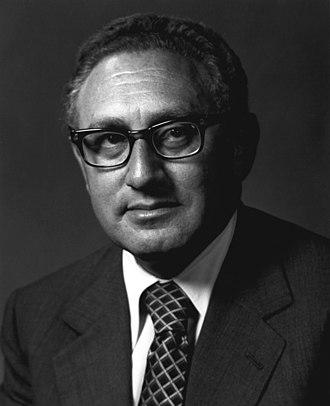
What Kissinger talks about on the tapes
Vietnam War 628Foreign Policy 477Public relations 209People's Republic of China 138Congressional relations 135Diplomacy 122Press relations 92Soviet Union 90Military Strategy 81US-Soviet Relations 75Peace negotiations 74Economic policy 68
Conversations (1,504)
— Page 6 of 16President Nixon instructed his personal secretary, Rose Mary Woods, to contact Ambassador Walter H. Annenberg regarding recent election results and the administration's political positioning. Nixon specifically requested that Woods inform Annenberg of his congratulatory call to Frank L. Rizzo, emphasizing the importance of Rizzo's victory over William Thacher Longstreth. The conversation also touched upon favorable electoral outcomes for Republicans Richard G. Lugar and Ralph J. Perk, reflecting the President's satisfaction with these results.
President Nixon and Henry Kissinger met briefly to coordinate their schedules regarding a meeting with former French Prime Minister Jacques Maurice Couve de Murville. The discussion served as a logistical check-in to ensure the President was prepared for the upcoming engagement with the French diplomat. Kissinger confirmed the arrangements, and the two finalized their plans for the immediate succession of meetings.
President Nixon and Henry Kissinger reflect on the second anniversary of Nixon’s November 3, 1969, speech regarding the Vietnam War, assessing its long-term political significance and role in stabilizing a deteriorating situation. The discussion touches upon the endurance required during their tenure and briefly incorporates a favorable perspective from Clare Boothe Luce concerning the administration's current trajectory. No formal policy decisions were made during this brief retrospective exchange.
President Nixon and Henry Kissinger discussed coordinating talking points for Robert Finch's upcoming diplomatic trip to Latin America to ensure they aligned with White House policy rather than just State Department directives. The President also tasked Kissinger with monitoring progress on the U.S. import surcharge regarding Latin America and Canada. To facilitate this, Nixon requested an interim status briefing involving himself, Kissinger, George Shultz, Peter Peterson, and Paul McCracken prior to Finch's departure.
President Nixon met with his senior staff and economic advisors to manage the ongoing national economic stabilization program, focusing specifically on the Pay Board's negotiations and the administration's messaging strategy. Amidst concerns regarding the money supply and Federal Reserve policy, Nixon dictated a firm memorandum to Arthur Burns, stressing the electoral importance of economic expansion and the dangers of restrictive monetary policy. The President also discussed diplomatic and personnel matters, including upcoming meetings with world leaders, media relations, and potential staffing changes within public broadcasting and the executive branch.
Henry A. Kissinger met with an unidentified individual in the Oval Office to briefly discuss scheduling matters. The discussion concluded quickly as both participants departed the office within eleven minutes. No substantive policy or political issues were addressed in the recorded portion of the exchange.
President Nixon and Henry Kissinger met to review the President's recent discussions with Indian Prime Minister Indira Gandhi and coordinate strategy regarding the escalating tensions between India and Pakistan. The President expressed satisfaction with his firm approach toward Gandhi, particularly in discouraging military action and addressing the Indo-Soviet treaty. Kissinger was tasked with reinforcing these points during his upcoming meeting with Indian official P.N. Haksar, specifically emphasizing the potential for Pakistan's President Yahya Khan to consider humanitarian concessions while maintaining a firm stance against war.
President Nixon and Henry Kissinger discuss strategies for managing relations with India and Pakistan ahead of a meeting with Prime Minister Indira Gandhi. Nixon expresses deep frustration with the Indian leadership and skepticism regarding their intentions toward Pakistan, urging Secretary of State William Rogers to adopt a tougher diplomatic stance. They also touch upon Vietnam negotiations, specifically addressing the status of American POWs and military operations in Laos and Cambodia.
President Nixon and Henry Kissinger coordinate the President's upcoming schedule and preparation requirements following a demanding day involving meetings with foreign dignitaries, including Kofi Busia and Indira Gandhi. The discussion focuses on managing Nixon's time and readiness for high-stakes 'pitch sessions' or diplomatic briefings. Kissinger confirms the logistics for an upcoming appointment, ensuring the President is adequately prepared for the scheduled engagement.
President Nixon and Henry Kissinger discuss finalizing a grain deal with the Soviet Union that has been stalled by shipping labor disputes. Nixon emphasizes the significant political impact the agreement will have on the Corn Belt and instructs Kissinger to coordinate with Charles Colson and the Soviet embassy to resolve the remaining obstacles. The President expresses urgency in securing the agreement, aiming to make a formal announcement by the following day.
President Nixon met with Henry Kissinger and subsequently Arthur F. Burns to discuss high-stakes foreign policy and domestic economic stabilization. The conversation touched upon the delicate diplomatic handling of Indian Prime Minister Indira Gandhi, specifically focusing on managing the threat of conflict between India and Pakistan and coordinating messages to the USSR and Vietnam. Regarding the economy, Nixon and Burns reviewed the money supply, interest rates, and potential contingency plans for the Pay Board should labor leaders like George Meany resist wage stabilization policies.
President Nixon and Henry Kissinger discussed a Washington Star news report concerning escalating tensions between India and Pakistan. The two men reviewed the origins of the media leak, assessing the extent of Indian involvement in disseminating the information. They ultimately sought to clarify the administration's position and ensure there were no misunderstandings regarding the United States' communication with Pakistan.
President Nixon and Henry Kissinger met briefly in the Old Executive Office Building to coordinate the President's upcoming daily schedule. The discussion focused on managing the logistics and priorities of the presidential calendar during a busy period in the administration. This brief consultation ensured alignment on time management and the prioritization of pending executive tasks.
President Nixon and Henry Kissinger met to discuss strategy for an upcoming troop withdrawal announcement in Vietnam, specifically debating whether to set a withdrawal figure of 40,000 or 45,000 troops. The President aimed to seize the political initiative and neutralize administration critics while maintaining a residual force as a key leverage point for future negotiations with North Vietnam. Additionally, the President spoke briefly with Chicago Mayor Richard J. Daley to thank him for his hospitality during a recent visit. The conversation also touched upon the President's diplomatic outreach to China and the Soviet Union in the pursuit of a "generation of peace."
President Nixon, Secretary of Defense Melvin Laird, and National Security Advisor Henry Kissinger met to discuss the status of the Vietnam War following Laird's recent trip to South Vietnam, specifically focusing on the military situation, Vietnamization progress, and future troop withdrawal strategies. Laird expressed confidence in the combat effectiveness of the South Vietnamese forces and their improved logistical capabilities, while the group evaluated the political ramifications of the recent South Vietnamese election and the need for continued U.S. financial support. The participants also debated the timing and logistics of future troop withdrawal announcements to balance domestic political pressures with ongoing negotiations with North Vietnam.
President Nixon and Henry Kissinger discuss personnel concerns regarding Secretary of the Air Force Robert C. Seamans, Jr. and the internal political dynamics involving Secretary of Defense Melvin Laird and Secretary of State William P. Rogers. They address strategic planning for upcoming Vietnam troop withdrawal announcements and the timing of congressional pressure. Additionally, they review Kissinger's recent media engagements regarding foreign policy—including India-Pakistan tensions—and coordinate the scheduling of upcoming meetings with international leaders like Willy Brandt and Georges Pompidou.
President Nixon and Henry Kissinger met briefly in the Old Executive Office Building to coordinate the National Security Advisor's schedule. The discussion focused on managing Kissinger’s availability to ensure efficient access to the President. No major policy decisions were recorded during this brief administrative exchange.
President Nixon met with H. R. Haldeman and Henry Kissinger to strategize for an upcoming televised announcement, weighing the benefits of holding it in the Oval Office versus the press room to maximize public impact while limiting media access. The conversation also shifted to staffing concerns, specifically the President's frustration with Peter Peterson's performance and the need for a more loyal, strategic replacement in the commerce role. Finally, the group discussed foreign policy and domestic political risks, including the timing of further troop withdrawals in Vietnam and the complications of a potential European diplomatic trip.
Henry Kissinger directed the White House operator to connect him with National Security Council staffer Helmut Sonnenfeldt. The brief exchange served as a logistical request to initiate a telephone communication between the two officials. No substantive policy matters were discussed during this connection attempt.
Henry Kissinger directs Helmut Sonnenfeldt to draft talking points for Arthur K. Watson regarding an upcoming meeting with French President Georges Pompidou. The objective is to secure a preliminary, informal meeting between the Nixon administration and Pompidou before engaging with other international counterparts, despite potential protocol constraints. Kissinger requests to review the draft personally before it is transmitted via back-channel communications.
President Nixon calls Senate Minority Leader Hugh Scott to extend birthday wishes and commend him for his successful leadership in securing a key Senate vote on a foreign military aid amendment. The conversation focuses on the strategic value of providing foreign assistance to reduce U.S. troop levels in regions like Korea and Vietnam. Henry Kissinger joins briefly to offer further congratulations and acknowledge Scott's recent progress in fostering Republican unity during legislative proceedings.
President Nixon and Henry Kissinger discuss the strategy for an upcoming Vietnam troop withdrawal announcement, expressing significant frustration with Secretary of State William P. Rogers and Secretary of Defense Melvin Laird over their policy disagreements and suspected leaks to the press. Nixon evaluates different withdrawal timelines and troop levels, ultimately leaning toward a two-month incremental plan despite pressure from his cabinet for longer-term commitments. The conversation concludes with Kissinger tasked to manage the communications with Rogers and Laird to ensure they align with the President's preferred policy direction.
President Nixon and Henry Kissinger discussed the upcoming announcement regarding Vietnam troop withdrawal timelines. The conversation centered on weighing various withdrawal options, with Nixon expressing a preference to deliberate further despite internal debate over the proposed durations. Kissinger was tasked with coordinating with Secretary of State William P. Rogers to manage the messaging and internal policy friction surrounding these strategic decisions.
President Nixon coordinated with the White House operator to place an urgent call to prominent attorney John J. McCloy. Kissinger provided assistance in locating McCloy’s contact information, directing the operator to reach him at his private residence. The conversation focused exclusively on the logistics of establishing this communication link.
Henry Kissinger coordinated with the White House operator to initiate a telephone call to diplomat John J. McCloy. Kissinger requested that the operator route the call through his office, ensuring the connection was properly facilitated for his discussion with McCloy. This administrative coordination reflects Kissinger’s ongoing efforts to manage high-level communications during his tenure as National Security Advisor.
Henry Kissinger contacted John J. McCloy to gauge his interest in serving as the U.S. Ambassador to NATO. Motivated by a desire to strengthen U.S.-European relations and address concerns regarding Mutual and Balanced Force Reductions (MBFR), the administration sought a figure of McCloy’s stature to restore confidence among allies. Kissinger framed the potential one-year appointment as a significant sacrifice, intended to preemptively test McCloy's willingness before a formal request from the President.
President Nixon and Henry Kissinger discussed strategies for managing Vietnam troop withdrawal announcements to minimize political backlash and maintain leverage in ongoing negotiations. During their conversation, they identified John J. McCloy as a potential candidate for the U.S. Ambassador to NATO, tasking Kissinger with persuading him to accept the position to bolster U.S.-European relations. They also reviewed personnel matters and planning for the President's upcoming trip to the USSR, specifically emphasizing the importance of avoiding stopovers that could undermine their diplomatic objectives.
President Nixon and Henry Kissinger discuss the potential appointment of John J. McCloy to the administration. Seeking to avoid the complications of a Cabinet-level position, Nixon decides to offer McCloy a role specifically within the National Security Council focusing on European matters. This decision aims to utilize McCloy's expertise while limiting his influence over broader administrative concerns.
President Nixon and Henry Kissinger coordinate the communication strategy regarding a forthcoming announcement involving Japan. Nixon directs Kissinger to inform the Japanese government of the news immediately rather than delaying. To handle this diplomatic notification, they agree to use a back-channel approach via Treasury Secretary John B. Connally, a move Nixon views as a strategic effort to bolster Connally’s standing.
President Nixon and Henry Kissinger discuss concerns regarding internal leaks and personnel loyalty within the administration. Expressing frustration over unauthorized disclosures to the press, the President emphasizes the need to identify the sources of these leaks and enforce internal discipline to prevent further backbiting. The conversation concludes with a directive to handle personnel matters discreetly while reinforcing the administration's stance against untrustworthy staff members.
President Nixon and Henry Kissinger met to strategize the upcoming announcement regarding U.S. troop withdrawals from Vietnam and the management of associated press inquiries. They discussed the risks of potential leaks by White House staff and the necessity of coordinating the messaging with key congressional leaders like Gerald Ford and Hugh Scott. Furthermore, the conversation touched upon the ongoing India-Pakistan conflict, the status of diplomatic appointments, and the development of contingency plans for increased air power in Vietnam should peace negotiations with North Vietnam collapse.
President Nixon and Henry Kissinger deliberated on the messaging strategy for an upcoming announcement regarding U.S. troop withdrawals in Vietnam. They assessed how to respond to potential press inquiries concerning the pace of the withdrawal and specifically debated whether to explicitly characterize the policy as an increased rate of removal. The two agreed on a strategy for managing follow-up questions from the media to ensure the administration's narrative remained controlled.
President Nixon and Henry Kissinger strategized on the public messaging surrounding the forthcoming troop withdrawal announcement in Vietnam. They focused on anticipating challenging press inquiries from figures like Ronald Ziegler, specifically concerning the size of a residual force and its connection to the release of prisoners of war. Nixon ultimately decided to maintain ambiguity regarding specific withdrawal numbers to avoid premature commitments during negotiations.
President Nixon and Henry Kissinger discussed the messaging strategy regarding an upcoming troop withdrawal announcement in Vietnam. They focused on how to handle potential press inquiries, specifically addressing whether or not to disclose specific numbers or dates related to the withdrawal. The conversation concluded with the President deciding to withhold specific figures to maintain leverage in ongoing negotiations with North Vietnam.
President Nixon and Henry Kissinger met to discuss potential personnel changes within the administration, specifically debating the merits of Elliot Richardson versus Nelson Rockefeller for future roles, including potential State Department leadership. The discussion emphasized maintaining administrative control and managing political expectations for the 1972 campaign. Additionally, Nixon instructed Kissinger to ensure John B. Connally receives prominent credit for his contributions to the administration's economic policy initiatives.
President Nixon and Henry Kissinger met to coordinate the messaging for an upcoming troop withdrawal announcement and to assess the status of ongoing negotiations with North Vietnam. They discussed the tactical use of 'protective reaction' bombing raids in North Vietnam and the strategic communication of US offers regarding the potential resignation of South Vietnamese President Nguyen Van Thieu. The conversation also touched on managing domestic political credibility and the importance of maintaining flexibility in public policy regarding the South Vietnamese military's defensive capabilities.
President Nixon met with H. R. Haldeman, Henry Kissinger, and Clark MacGregor to review the effectiveness of his recent press conference and discuss the political messaging surrounding troop withdrawals from Vietnam. The participants assessed public and press reactions to the President's responses regarding amnesty, POWs, and the Vietnamization policy. Additionally, the group coordinated strategy for an upcoming National Security Council meeting focused on the Strategic Arms Limitation Talks (SALT) and pending negotiations with the Soviet Union.
President Nixon and Henry Kissinger met with Pakistani Ambassador Sultan Mohammad Khan to discuss the escalating tensions between India and Pakistan and the U.S. goal of preventing a full-scale war. Nixon emphasized that the U.S. is working diplomatically with the Soviet Union and China to encourage a peaceful resolution while navigating a hostile American press and domestic political pressure. The participants addressed the complexities of leveraging the UN Security Council, with potential support from the People's Republic of China, to protect Pakistani interests.
President Nixon, Henry Kissinger, and H.R. Haldeman met with John J. McCloy to recruit him for a high-level diplomatic role intended to reassure European allies and manage complex economic and security matters. The discussion centered on the necessity of a seasoned diplomat to handle Mutual and Balanced Force Reduction (MBFR) negotiations and broader NATO relations without downgrading the importance of these alliances. McCloy expressed reservations about the traditional bureaucratic structure of NATO and agreed to further consult with Kissinger to refine the strategic approach before formally committing.
President Nixon and members of the National Security Council met to coordinate the United States' strategy regarding ongoing arms control negotiations with the Soviet Union. The discussion centered on the complexities of Anti-Ballistic Missile (ABM) systems, the status of Safeguard and hard site defenses, and the comparative capabilities of Soviet and American submarine-launched ballistic missiles (SLBMs) and ICBMs. Participants evaluated potential congressional reactions and internal administration messaging while addressing the strategic implications of Soviet negotiating positions.
President Nixon met with Henry Kissinger to discuss urgent administrative and foreign policy matters, including the passage of a continuing budget resolution and the management of ongoing congressional harassment regarding war powers amendments. The pair reviewed the status of international monetary policy negotiations involving John Connally and the positive diplomatic reception of the Chinese delegation at the United Nations. Additionally, Kissinger provided a briefing on the strategic mindset of Zhou Enlai ahead of the President’s upcoming visit to the People's Republic of China.
President Nixon, William P. Rogers, and Henry Kissinger met to deliberate on the escalating military tension between India and Pakistan and the potential necessity for UN intervention. The President expressed concern that a conflict would jeopardize his upcoming trip to the People's Republic of China, leading the group to discuss the delicate balance of diplomatic timing and the constraints of working with the UN Security Council. They ultimately reached a consensus to defer immediate action until after key upcoming events, including a scheduled speech by Indira Gandhi and further consultations regarding Chinese interests.
President Nixon met with his senior advisors and officials, including H. R. Haldeman, Henry Kissinger, and John Connally, to deliberate on key personnel appointments, administrative strategy, and foreign policy maneuvers. The discussion focused on filling Federal Reserve Board and ambassadorial vacancies, managing the political fallout from budget disputes with Senate Democrats, and curbing the excessive overseas travel of Cabinet members. Nixon and his team also weighed the potential risks and benefits of the President attending the AFL-CIO convention and evaluated strategies for the upcoming 1972 campaign, including fundraising and managing leakers within the administration.
President Nixon and Henry Kissinger met to discuss Treasury Secretary John Connally's recent activities, including his role in international monetary negotiations and his candid assessments of the administration's performance. Kissinger reported that Connally expressed frustration with internal disloyalty and the perceived lack of resolve within the State and Defense Departments, suggesting that the administration's failure to defend the President's policies left them politically vulnerable. The two also addressed legislative concerns regarding the Boland Amendment and future strategies for re-engaging with the international economy, specifically regarding gold convertibility and potential monetary policy shifts.
President Nixon and Henry Kissinger met briefly in the Oval Office to coordinate their schedules and communication efforts. The discussion focused on managing access to the President and ensuring Kissinger was prepared for upcoming diplomatic requirements. No major policy shifts were recorded during this short encounter, which primarily served to confirm the availability of key personnel.
President Nixon and Henry Kissinger discussed the People's Republic of China’s inaugural speech at the United Nations and the State Department's recommendation for an immediate, aggressive rebuttal. Both men agreed that a hasty response would be counterproductive, with Nixon specifically expressing suspicion that the State Department was attempting to sabotage his upcoming trip to China. Consequently, they decided to ignore the immediate pressure to respond and instead planned to study the speech carefully before issuing a measured, dignified statement later in the week.
President Nixon met with Dr. K. Wayne Smith and Henry Kissinger, primarily to facilitate a photo session and present gifts to Smith in recognition of his service. During the brief exchange, Nixon expressed appreciation for the papers and work produced by Smith’s office. The President also briefly alluded to political criticism from his 'right-wing friends' regarding Kissinger, advising him not to comment on such detractors.
In this extensive Oval Office meeting, President Nixon, Rose Mary Woods, H. R. Haldeman, Henry Kissinger, and others discussed a variety of administrative and policy matters, including the selection of guests for upcoming White House events, the management of Cabinet and sub-cabinet appointees, and the President's upcoming diplomatic trips to the USSR and the People's Republic of China. A significant portion of the conversation focused on congressional strategy regarding national security, specifically managing Democratic support for administration policies amidst ongoing debates over Vietnam and foreign aid. Additionally, the President and his advisers addressed the leakage of sensitive foreign policy information, the potential for an interim settlement in the Middle East involving Israel, and the political fallout of his Vietnam withdrawal strategy.
President Nixon and Henry Kissinger coordinated their schedules to facilitate a follow-up discussion later that afternoon. The brief exchange focused on managing current meetings to ensure time for a subsequent conversation. No substantive policy matters were addressed, as the focus remained on logistical planning for upcoming deliberations.
President Nixon met with Peter G. Peterson, George P. Shultz, John D. Ehrlichman, H. R. Haldeman, and Henry Kissinger to discuss personnel changes and key policy initiatives. The President offered Peterson the position of Secretary of Commerce, emphasizing the need for a combative and effective advocate to handle public relations and congressional outreach. The group also deliberated on the political risks of the President addressing the AFL-CIO, explored strategies for upcoming international monetary negotiations, and reviewed the status of Vietnam peace talks following a leak regarding troop withdrawal numbers.
President Nixon met with John Mitchell and Henry Kissinger to coordinate Republican political strategy for the 1972 election cycle and discuss sensitive foreign policy matters. The participants evaluated the progress of local party organizations in key states and addressed personnel changes within the administration, including the potential reassignment of Peter Peterson. Nixon and Kissinger also reviewed the current state of Vietnam peace negotiations, determining to maintain a firm stance and continue troop withdrawals while preparing a public response should North Vietnamese negotiators break off talks.
President Nixon and Henry Kissinger coordinate a brief call to Clark MacGregor, the President's chief legislative aide. The primary objective is to facilitate this communication, though the specific substance of the exchange remains largely unrecorded due to the brief nature of the audio. This interaction highlights the internal logistics involved in managing White House legislative affairs during the Nixon administration.
President Nixon and Henry Kissinger discuss the potential appointment of Paul H. Nitze to an administration role, specifically focusing on the value of his strong stance on arms control. Kissinger notes that he has vetted the idea with Stewart J.O. Alsop, who expressed support for the concept. The two agree to further evaluate the political implications of such an unconventional move and plan to revisit the decision during their next meeting.
President Nixon and Henry Kissinger discussed domestic political management, specifically addressing concerns raised by Ronald Reagan regarding conservative alienation and administrative patronage. The two also coordinated on filling high-level ambassadorships, including efforts to recruit David Kennedy for a NATO post and potential candidates for the Japan ambassadorship. Finally, they formulated a hardline strategy for upcoming Vietnam peace negotiations, directing U.S. representatives to walk away from talks lacking high-level North Vietnamese authority while considering a resumption of bombing to counter North Vietnamese military buildups.
President Nixon and Henry Kissinger met to coordinate the President's upcoming professional schedule and administrative agenda. A key focus of the discussion involved evaluating the potential appointment and future role of David M. Kennedy within the Nixon administration. The brief session served to align staffing priorities and manage the executive calendar.
President Nixon met with key advisors, including H.R. Haldeman, Henry Kissinger, Charles Colson, and John Connally, to strategize on public relations, international diplomacy, and his upcoming travel schedule. The discussion centered on managing the press fallout from Nixon's recent speech to the AFL-CIO, coordinating announcements regarding foreign trips to countries like the PRC, and addressing international monetary and military issues, particularly regarding Vietnam and the Middle East. Nixon emphasized the importance of controlling the public narrative and timing announcements to maximize political advantage while balancing his cabinet members' roles.
Henry Kissinger requested that the White House operator place an urgent call to Agha Hilaly, the Ambassador of Pakistan to the United States. President Nixon was present in the background during the request, indicating his involvement or direct interest in the communication. The brief exchange served as a logistical step to facilitate high-level diplomatic coordination during a period of heightened geopolitical tension.
Henry Kissinger consulted with the White House operator to confirm the current whereabouts of the Pakistani ambassador, Agha Hilaly. Upon learning that the ambassador had departed the premises and was unavailable, Kissinger decided to postpone their meeting. This brief exchange highlights the ongoing administrative coordination required to manage sensitive diplomatic communications during a period of high international tension.
President Nixon and Henry Kissinger met to coordinate the logistics and public announcement timing for the President’s upcoming trip to the People's Republic of China, involving key foreign leaders and domestic advisors. The discussion also addressed the status of the Vietnam War, focusing on military operations in Cambodia, casualty reporting, and the administration's political strategy regarding withdrawal and ongoing peace negotiations. The participants further deliberated on managing public perception and responding to press coverage from outlets like the New York Times concerning these foreign policy and military initiatives.
President Nixon and Henry Kissinger discussed ongoing diplomatic strategy and the management of international negotiations, specifically addressing the political environment and potential resolutions. The conversation touched upon the complexities of navigating foreign policy reforms and the necessity of maintaining control over communication regarding these sensitive agreements. The participants also briefly assessed the status of the situation in Cambodia and broader geopolitical maneuvering.
President Nixon met with his senior advisors and Senator Barry Goldwater to discuss political strategy following a recent speech to the AFL-CIO convention. The participants reviewed the mixed public reaction to the address, analyzed the influence of media coverage, and coordinated efforts to neutralize political opponents such as George Meany and various Democratic rivals. They also touched upon legislative concerns, including campaign finance and pending appointments, while exploring ways to maintain the support of conservative allies and strengthen the administration's public relations efforts.
President Nixon and Henry Kissinger discuss the escalating crisis between India and Pakistan in anticipation of a Washington Special Action Group (WSAG) meeting. Nixon directs Kissinger to adopt a firm stance toward the international community, mandating a complete suspension of all U.S. aid to both combatants. The President emphasizes that this cessation of assistance is a strategic tool to influence the conflict, instructing Kissinger to ensure this hard-line policy is clearly communicated.
President Nixon and Henry Kissinger discussed the escalating military tensions between India and Pakistan, specifically addressing reports of Indian involvement via guerilla forces. The two conferred on the status of communication with Pakistan and the drafting of a formal United States message. Nixon emphasized the importance of carefully crafting the language of this message to align with the upcoming deliberations in the United Nations Security Council, particularly regarding the role of the People's Republic of China.
President Nixon met with John Connally and other key advisors to coordinate White House strategy regarding pending tax legislation, the administration's public relations response to criticism from labor leaders like George Meany, and complex international monetary negotiations. The President directed that the tax bill be handled firmly, expressing a willingness to veto unfavorable versions and potentially call a special session of Congress to force a resolution. Additionally, the participants discussed U.S. foreign policy toward the India-Pakistan conflict, agreeing to maintain a hard line while monitoring the situation through the United Nations, and established protocols for executive oversight of high-level economic missions to Europe.
President Nixon met with Henry Kissinger, H. R. Haldeman, George Shultz, and others to manage pressing foreign and domestic policy matters. Key discussions centered on the India-Pakistan conflict and U.S. strategy regarding the United Nations, as well as coordinating upcoming meetings with John Connally and Arthur Burns to address economic policy and budget planning. Additionally, the President reviewed his schedule, including travel arrangements and a potential appointment for the Council of Economic Advisers, while also discussing media relations and his desire to curb unnecessary foreign travel by staff and Cabinet members.
President Nixon and his advisors, primarily Henry Kissinger, discussed U.S. foreign policy toward the India-Pakistan conflict and the People's Republic of China, with the President emphasizing the need for a firm stance against Indian aggression. Economic matters dominated the latter half of the meeting as Nixon finalized the transition of Herbert Stein into a new leadership role within the Council of Economic Advisers to serve as a strong, assertive voice on the national economy. Additionally, the President met with Peter B. Wilson to discuss political strategy and preparations for the upcoming Republican National Convention in San Diego, aiming to maximize favorable media coverage.
President Nixon met with William P. Rogers and Henry A. Kissinger to discuss the deteriorating military situation between India and Pakistan and to formulate a strategy that minimizes U.S. blame for the conflict. Nixon emphasized a policy of symbolic neutrality—tilting slightly toward Pakistan while maintaining official diplomatic efforts—and tasked his advisors with identifying symbolic actions, such as delaying export licenses, to exert pressure on India. They further discussed the potential use of the UN Security Council to advocate for a ceasefire and international observer presence, while acknowledging the limited leverage the U.S. held over the regional powers.
President Nixon and Henry Kissinger met to coordinate administrative scheduling, including a potential meeting with Japanese Prime Minister Eisaku Sato in San Clemente. The discussion also addressed the escalating India-Pakistan crisis, specifically concerning internal administration friction and the need to curb unauthorized news leaks from the State Department. Nixon directed a firm policy stance regarding the cessation of military aid to India and requested that Treasury Secretary John Connally be utilized to exert further pressure on foreign aid allocations.
President Nixon met with his senior advisors to coordinate on several pressing domestic and foreign policy issues. The discussion covered defense budget allocations and force levels, strategic handling of the ongoing India-Pakistan crisis, and potential legislative vetoes regarding the tax bill and campaign financing provisions. The President directed his staff to maintain a firm stance against certain spending measures, tasking Ehrlichman and Shultz with managing congressional outreach and coordinating with lobbyists to solidify opposition to unfavorable tax legislation.
President Nixon and Henry Kissinger met in the Oval Office to coordinate the President's upcoming travel itinerary. The discussion focused on logistics and scheduling for an impending departure. No substantive policy matters were recorded during this brief administrative exchange.
President Nixon and Henry Kissinger discussed foreign policy priorities and scheduling, specifically focusing on handling potential meetings with Italian leadership, the geopolitical implications of the India-Pakistan conflict, and managing diplomatic leaks. They agreed to defer any official visit from Italian officials until after their domestic elections to avoid political complications. Regarding the India-Pakistan situation, Kissinger advocated for a tougher stance against India, including cutting off military aid to gain leverage and discourage Indian reliance on the Soviet Union. The pair also addressed the fallout from a news leak attributed to Arthur Burns involving John Connally, reaffirming their support for Connally's role in the administration.
President Nixon and Henry Kissinger met to discuss strategies for countering negative press reports surrounding Treasury Secretary John B. Connally and the administration's economic policies. They analyzed potential sources of internal leaks, including speculation that political rivals were attempting to undermine Connally's potential as a vice-presidential candidate. Kissinger received the President's approval to issue a formal backgrounder to the press, explicitly defending Connally's position as the administration's top economic advisor and affirming the unity of the President's economic team.
President Nixon met with Henry Kissinger, Robert Finch, and Herbert Klein to strategize on U.S. foreign policy toward Latin America, emphasizing the need for stronger personal diplomacy and effective ambassadorships. The discussion centered on managing regional economic issues, specifically the import surcharge and tuna fishery disputes, while fostering relationships with friendly military regimes like Brazil's. Nixon directed the participants to form a working group to coordinate concrete programs and trade initiatives, aiming to demonstrate the effectiveness of his administration's diplomatic outreach.
President Nixon, Henry Kissinger, and H. R. Haldeman met to coordinate upcoming foreign policy announcements and manage public relations regarding the Indo-Pakistani War, Middle East arms policy, and the President's planned trip to China. Kissinger proposed a strategy for restricting military export licenses to Pakistan to maintain diplomatic flexibility, while the group discussed framing the administration's stance on the conflict to emphasize multilateral aid and the principles of the UN Charter. Additionally, the President and his advisors reviewed the administration's communication strategy for upcoming summits, international monetary negotiations, and a television profile, aiming to ensure favorable media coverage and solidify the President's leadership image.
President Nixon met with Charles Colson, Henry Kissinger, and H.R. Haldeman to discuss political strategy, economic reports, and foreign policy developments. The group reviewed Kissinger's recent press conference performance regarding upcoming summits, evaluated the political risks of the Indo-Pakistan conflict, and critiqued Secretary of State William P. Rogers's perceived lack of loyalty and effectiveness. Ultimately, the discussion focused on managing domestic political optics, including the manipulation of media narratives to discredit opponents and the careful coordination of foreign policy to protect the President’s initiatives.
President Nixon met with H.R. Haldeman, Henry Kissinger, and other staff to coordinate his upcoming trip to Chicago, address legislative priorities, and discuss sensitive foreign policy matters. The group strategized on managing tax bill negotiations with Wilbur Mills, navigating the political implications of campaign finance legislation, and handling diplomatic tensions regarding the European Security Conference and an upcoming meeting with Golda Meir. Additionally, they reviewed personnel changes involving Arthur Fletcher and confirmed the cancellation of Billy Graham's planned trip to Taiwan.
President Nixon and the National Security Council met to coordinate U.S. strategy regarding European security, specifically focusing on the upcoming ministerial meetings in Brussels and the push for Mutual and Balanced Force Reduction (MBFR) talks. Participants discussed the complexities of navigating negotiations with Soviet counterparts, managing the varying interests of NATO allies, and addressing the political pressures surrounding troop levels and defense burden-sharing. The conversation concluded with a consensus on the need to maintain a unified diplomatic front while carefully managing the timing and scope of potential force reductions.
President Nixon, Henry Kissinger, and William Rogers met to coordinate strategy ahead of an upcoming visit from Israeli Prime Minister Golda Meir, specifically focusing on maintaining regional military balances and encouraging diplomatic negotiations. The participants agreed that the U.S. must provide security assurances and potential future arms deliveries to Israel without creating public, provocative announcements that could derail peace efforts. Additionally, the group discussed the timing of a future European Security Conference and potential summitry with the Soviet Union, as well as managing international monetary policy and high-level diplomatic scheduling regarding Italy, Canada, and China.
President Nixon met with Henry Kissinger and H. R. Haldeman to coordinate foreign and domestic policy priorities. Key discussions included managing Middle East negotiations ahead of the upcoming U.S.-USSR summit, finalizing the appointment of David M. Kennedy as Ambassador to NATO, and addressing administrative failures regarding trade licenses for India. Nixon also emphasized his desire to bypass the establishment in his diplomatic efforts, specifically regarding the opening of relations with the People's Republic of China, while coordinating appearances to maintain support for his economic policies.
In this meeting, President Nixon first met with Arthur A. Fletcher and Kenneth R. Cole, Jr. to discuss the promotion of an economic development initiative aimed at supporting schools and securing campaign funding for the 1972 election. Following a brief photo opportunity, Henry A. Kissinger joined the President to address diplomatic frustrations regarding the State Department's resistance to executive directives concerning the conflict between India and Pakistan. The two concluded that the President would reassert his authority to ensure that his administration's policy, which favored a less pro-Indian stance, was implemented without further bureaucratic obstruction.
President Nixon met with Israeli Prime Minister Golda Meir, Henry Kissinger, and Yitzhak Rabin to discuss the status of U.S.-Israel relations and the ongoing Middle East peace process. The discussion focused on military support, specifically the delivery of Phantom aircraft, while balancing Israel's security needs against the diplomatic necessity of exploring political negotiations. Nixon reassured Meir of the U.S. commitment to maintaining a military balance in the region and outlined a strategy to pursue both military preparedness and diplomatic outreach simultaneously.
President Nixon and Henry Kissinger discussed complex diplomatic strategies regarding the Middle East, focusing on the implications of recent negotiations with Israeli Prime Minister Golda Meir and the necessity of managing US-USSR-PRC relations. They strategized on how to stall formal settlement processes until at least 1973 to avoid political fallout and potential conflicts while maintaining the balance of power. Additionally, the conversation touched upon personnel matters, including the potential appointment of David M. Kennedy and the handling of the ongoing India-Pakistan crisis.
President Nixon, Henry Kissinger, and various senior advisors met to discuss the escalating India-Pakistan conflict, focusing on the potential for a U.N. ceasefire, the status of American civilians, and the management of regional military actions. Concurrently, the President consulted with George H.W. Bush regarding U.N. strategy and coordinated with John Ehrlichman and Vice President Agnew on domestic legislative priorities, specifically tax bills and revenue sharing. The President also spoke with Wilbur Mills to foster a spirit of cooperation between the Administration and Congress regarding economic and tax legislation, emphasizing the need for a unified approach to ensure key bills advance.
Henry A. Kissinger contacted the White House operator to facilitate an urgent communication with U.S. Ambassador to the United Nations George H.W. Bush. The primary purpose of the brief exchange was to initiate a formal call to the Ambassador to discuss ongoing diplomatic matters. No further substantive details were captured in this short administrative segment of the recording.
President Nixon, Henry Kissinger, and UN Ambassador George H.W. Bush discuss U.S. strategy regarding the ongoing India-Pakistan War at the United Nations. The President directs Bush to aggressively pursue a UN Security Council resolution demanding an immediate ceasefire and withdrawal, insisting that a political settlement must be secondary to stopping the fighting. Nixon also authorizes Bush to take the issue to the General Assembly to build public pressure and instructs him to forcefully counter any domestic political misrepresentations of the administration's position.
President Nixon and Henry Kissinger discussed strategies to support West Pakistan during the Indo-Pakistani War, including authorizing a back-channel request for the Shah of Iran to provide military aid in exchange for future U.S. compensation. They finalized plans to announce an $86.8 million aid cutoff to India while ensuring humanitarian assistance to Pakistan remained unaffected. Additionally, the President reviewed scheduling logistics for an upcoming meeting with John B. Connally and addressed concerns regarding potential Soviet interference in the conflict.
President Nixon met with John B. Connally and Henry A. Kissinger to coordinate strategy regarding the Group of Ten international monetary negotiations and the escalating India-Pakistan crisis. Connally briefed the President on the difficulty of securing trade and currency realignment concessions from foreign nations, specifically noting Canada's resistance to multilateral solutions. Simultaneously, Nixon and his advisors discussed cutting off U.S. aid to India in response to its aggression toward Pakistan, ultimately deciding to formalize this shift in foreign policy.
President Nixon and Henry Kissinger discussed the escalating geopolitical crisis on the Indian subcontinent, specifically focusing on the roles of the Soviet Union and the People's Republic of China. Kissinger argued that Soviet aggression in the region threatened to embolden their stance in the Middle East and Vietnam, prompting the President to emphasize the importance of maintaining alignment with Chinese interests at the United Nations. They ultimately weighed the strategic risks and potential benefits of communicating a strong message to the Chinese to deter foreign intervention.
President Nixon met with Canadian Prime Minister Pierre Trudeau to engage in a broad-ranging discussion on bilateral relations and major international crises. The leaders addressed economic tensions—specifically regarding U.S. trade measures, foreign capital investment in Canada, and the importance of maintaining a sound U.S. economy—while also consulting on the escalating India-Pakistan war. Nixon and Kissinger emphasized the necessity of a multilateral approach to monetary issues and expressed their desire to maintain a stable balance of power in South Asia despite the conflict.
President Nixon and Henry Kissinger met to strategize their response to the escalating India-Pakistan conflict and the potential collapse of West Pakistan. They discussed the necessity of maintaining a firm stance toward the Soviet Union and India, specifically considering a message to the People's Republic of China regarding military movements. Additionally, Nixon directed Kissinger to conduct background briefings with the press to deflect blame for the regional crisis and to manage public perception of the administration's foreign policy. The meeting also touched upon planning for Vietnam peace initiatives and the need for a tough diplomatic posture in upcoming international communications.
President Nixon and Henry Kissinger discuss the ongoing India-Pakistan War, specifically evaluating a Soviet resolution at the United Nations that lacks a critical withdrawal provision. Nixon rejects the Soviet proposal and criticizes Secretary of State William P. Rogers for undermining the administration's official diplomatic position through inconsistent public statements. Kissinger is tasked with issuing a firm background statement to clarify the administration’s policy and emphasize Indian responsibility in the conflict.
President Nixon directed Henry Kissinger to contact Treasury Secretary John Connally to gauge his opinion regarding Secretary of State William Rogers’s performance. Nixon aimed to assess Connally's perspective on Rogers through this indirect communication channel. Additionally, Kissinger informed the President that he had received the full text of a recent Soviet diplomatic note, promising a follow-up report after further review.
Henry A. Kissinger contacted the White House operator to request an immediate phone connection with Harold H. Saunders, a member of his National Security Council staff. This interaction served solely as a logistical request to facilitate a direct conversation between Kissinger and Saunders. No further policy discussions or substantive developments occurred during this brief exchange.
Maurice Stans briefed President Nixon and Henry Kissinger on his recent 17-day trade exploration mission to the Soviet Union, Poland, and Sweden. Stans detailed positive, high-level discussions with Soviet Premier Alexei Kosygin regarding potential economic cooperation, including grain sales, industrial equipment credit, and the establishment of joint fact-finding groups. President Nixon directed Stans to maintain a low profile with the press to avoid prematurely committing to specific trade concessions while the administration maneuvers through ongoing geopolitical tensions in South Asia.
President Nixon and Henry Kissinger discussed a significant diplomatic victory at the United Nations General Assembly, where a resolution calling for a ceasefire and withdrawal in the India-Pakistan War passed by a lopsided margin. They interpreted the vote as a validation of U.S. policy and a rebuke to India, the Soviet Union, and domestic critics like John Kenneth Galbraith and Senator Edward Kennedy. Kissinger and the President planned to leverage this momentum by mobilizing political allies to attack liberal dissenters and draw public attention to the hypocrisy of critics who had previously opposed U.S. actions in Cambodia.
President Nixon and Henry Kissinger spoke briefly to address the ongoing India-Pakistan War as it played out at the United Nations. Nixon inquired specifically about how Canada cast its vote during a UN General Assembly session regarding the conflict. Kissinger committed to verifying this information immediately and reporting back to the President.
President Nixon and Henry Kissinger discuss the positive impact of Nixon’s recent conversation with Canadian Prime Minister Pierre Trudeau, which resulted in Canada voting with the United States at the United Nations regarding the India-Pakistan War. The two strategize on building further momentum through Senate resolutions demanding an Indian withdrawal from Pakistan while criticizing Soviet involvement. Additionally, they briefly touch upon the effectiveness of a recent background press briefing and plan to arrange a meeting between the President and Nelson Rockefeller.
President Nixon and Henry Kissinger strategized on the structure of an upcoming briefing regarding the current international situation. Seeking to balance high-level participation, Nixon determined that CIA Director Richard Helms would be excluded, while Secretary of State William Rogers would be included to maintain a specific optics strategy. The meeting concluded with plans to organize the sequence of presenters to ensure the desired political balance during the sessions.
President Nixon met with John Mitchell and Henry Kissinger to discuss two distinct issues: the potential commutation of Jimmy Hoffa's prison sentence and the escalating India-Pakistan war. Regarding Hoffa, the President sought a strategy to secure his release while minimizing political fallout, focusing on coordination with union leadership and managing public perception. The conversation shifted to the South Asian crisis, where Nixon and Kissinger expressed deep frustration with the State Department's perceived bureaucratic delays in enforcing sanctions against India. Consequently, Nixon directed his advisors to prepare aggressive diplomatic and military options to deter Indian aggression and mitigate the influence of Soviet-aligned forces in the region.
President Nixon and Henry Kissinger discussed the escalating India-Pakistan War and its potential impact on U.S.-Soviet relations and the upcoming 1972 presidential election. The President expressed concern about the crisis jeopardizing the Moscow Summit and the Strategic Arms Limitation Talks, while Kissinger emphasized the need to prevent an Indian attack on West Pakistan. They further explored the possibility of leveraging military actions in North Vietnam to send a strategic message to both the Soviet Union and China regarding U.S. resolve.