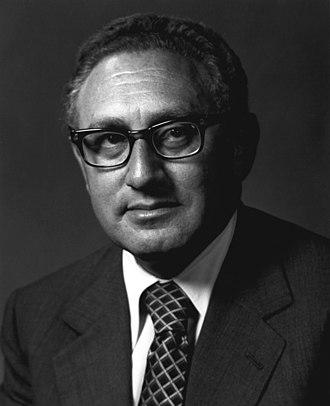
Kissinger, Henry A.
During the Nixon administration, Henry A. Kissinger served as the Assistant to the President for National Security Affairs from January 1969 through the end of Nixon's presidency, acting as the chief architect of U.S. foreign policy. Throughout the White House taping period (February 1971 to July 1973), he was captured extensively on tape advising the president on pivotal events such as the secret opening to China, détente with the Soviet Union, and the negotiation of the Paris Peace Accords. In September 1973, shortly after the taping system was dismantled, Kissinger was additionally appointed as Secretary of State, holding both powerful positions simultaneously until Nixon's resignation in August 1974.
What Kissinger talks about on the tapes
Vietnam War 628Foreign Policy 477Public relations 209People's Republic of China 138Congressional relations 135Diplomacy 122Press relations 92Soviet Union 90Military Strategy 81US-Soviet Relations 75Peace negotiations 74Economic policy 68
Conversations (1,504)
— Page 7 of 16President Nixon met with H.R. Haldeman, Ronald Ziegler, and Henry Kissinger to address administrative personnel matters, media relations, and pressing foreign policy crises. Ziegler and the President discussed managing network media expectations regarding interviews and the promotion of Christmas-themed specials featuring Julie Nixon Eisenhower. Concurrently, Kissinger briefed the President on the escalating India-Pakistan conflict, urging a hard-line stance against Indian aggression and recommending a diplomatic meeting with the Soviet Minister of Agriculture to signal U.S. dissatisfaction with Soviet conduct.
President Nixon met with his senior advisors, including H. R. Haldeman and Henry Kissinger, to address the escalating conflict between India and Pakistan and the internal friction regarding his administration's foreign policy bureaucracy. Concerned that Indian success could destabilize the region and undermine U.S. credibility, Nixon decided to take a firm stance by demanding that the State Department warn the Indian government against attacking West Pakistan. As a show of force, he directed the deployment of a naval task force to the Bay of Bengal under the guise of an evacuation mission. The President expressed deep frustration with the hesitation of his bureaucracy and explicitly ordered his team to carry out these directives with purpose and urgency.
President Nixon and Henry Kissinger met to refine the administration's response to the escalating India-Pakistan conflict, specifically regarding a letter to be sent to Soviet leader Leonid Brezhnev. The discussion focused on discouraging Indian military aggression against West Pakistan and leveraging potential trade consequences to exert pressure. Nixon directed Kissinger to keep the communication firm and direct, explicitly avoiding a prolonged debate over the technical details of ongoing negotiations.
President Nixon met with Soviet officials Vladimir Matskevich and Yuli Vorontsov, alongside Henry Kissinger, to discuss the deteriorating India-Pakistan conflict and its potential to derail broader US-Soviet relations. Nixon emphasized that while the Soviet Union might gain influence through India's military success, such a result risked jeopardizing key diplomatic initiatives, including upcoming summits, trade agreements, and arms control talks. Following the Soviet delegates' departure, Nixon and Kissinger strategized on using a naval task force to signal American resolve while pressuring India for assurances against further territorial expansion in West Pakistan.
President Nixon met with senior administration officials, including Henry Kissinger, Richard Helms, and Admiral Thomas Moorer, to discuss urgent foreign policy concerns regarding the escalating India-Pakistan conflict and the geopolitical maneuvering of the Soviet Union. The participants evaluated the risks posed by Soviet involvement in the region and the potential for broader international instability. The meeting served to align the administration's strategic stance on these pressing global security challenges.
President Nixon and Henry Kissinger met to discuss the escalating India-Pakistan conflict and the potential necessity of U.S. intervention with the Soviet Union. Nixon affirmed his commitment to supporting Pakistan despite contrary diplomatic advice and concerns regarding the upcoming Moscow Summit. The two strategized on how to pressure the USSR to restrain India from invading West Pakistan, establishing a fallback position should their initial efforts fail.
President Nixon and Henry Kissinger discussed strategies to manage the India-Pakistan conflict, focusing on orchestrating a ceasefire and a potential joint U.S.-USSR appeal to preserve West Pakistan. They assessed the geopolitical risks to the upcoming Moscow Summit and agreed to maintain a hardline stance against Indian aggression, including providing financial aid to Indonesia to counterbalance India's regional influence. Additionally, the President issued instructions regarding an upcoming meeting with conservative members of Congress about the defense budget and authorized Kissinger to explore a potential international monetary deal with French President Georges Pompidou.
President Nixon and Henry Kissinger discussed the escalating India-Pakistan conflict, focusing on the need for a cease-fire and the strategic risks of Pakistan suffering a military collapse. Concerned that India's continued military action—supported by the Soviet Union—represented naked aggression, they planned to return to the UN Security Council to challenge the Indian position and pressure the Soviets. The discussion also addressed the need to shape American public opinion and coordinate with the British, as well as the implications of these developments for the administration's upcoming diplomatic overtures to the People’s Republic of China.
President Nixon and Henry Kissinger discussed the ongoing India-Pakistan crisis, focusing on the tactical necessity of maintaining pressure through the United Nations Security Council despite receiving a late-arriving diplomatic message from the Soviet Union. Nixon emphasized his determination to act decisively against bureaucratic resistance, which he contrasted with the indecisiveness he attributed to other potential leaders. Kissinger updated the President on their strategy to leverage communications with both the USSR and the People's Republic of China to secure a ceasefire and protect West Pakistan. Ultimately, they decided to proceed with the planned White House statement and UN actions to ensure their diplomatic objectives remained irreversible.
President Nixon and Henry Kissinger met to discuss urgent diplomatic and military strategies regarding the ongoing Indo-Pakistani War. Fearing the total collapse of West Pakistan, they strategized on forcing a ceasefire by leveraging international pressure through the Soviet Union, the People’s Republic of China, and third-party arms transfers from nations like France. Nixon emphasized the need for a aggressive public relations campaign to blame India for the conflict's atrocities and directed that the U.S. maintain its commitment to West Pakistan's survival despite congressional constraints.
President Nixon and Henry Kissinger met to discuss the escalating India-Pakistan military conflict and formulate a diplomatic response to the Soviet Union. They focused on drafting a high-priority hotline message to Leonid Brezhnev that emphasized the urgent need to prevent the situation from spiraling beyond their control. Kissinger was directed to convey this strategy through established channels, ensuring that U.S. efforts to shape international opinion and manage the crisis remained firm despite bureaucratic resistance.
President Nixon and Henry Kissinger met to coordinate U.S. strategy regarding the ongoing India-Pakistan conflict, focusing on facilitating a ceasefire and managing relations with the Soviet Union and China. Kissinger briefed the President on his back-channel communications with Soviet and Pakistani officials, emphasizing the need to keep Secretary of State William Rogers and the State Department at a distance to maintain tight control over the negotiations. Additionally, the two discussed the defense budget, with Nixon agreeing to raise the expenditure figure to $77.5 billion based on recommendations from David Packard to satisfy domestic political concerns and ensure support from conservatives.
President Nixon and Henry Kissinger discuss the ongoing geopolitical crisis between India and Pakistan, specifically addressing reports of atrocities captured on film. They review the potential impact of televised footage and the role of Indian censorship in shaping the narrative. The two agree to maintain a degree of detachment regarding the reported atrocities to manage the administration's public position on the conflict.
In this meeting, President Nixon and his senior advisors, including H. R. Haldeman and John B. Connally, finalized their strategy regarding the recently negotiated international monetary agreement, often referred to as the "Azores Doctrine." The participants focused on managing public perception of the deal, emphasizing that it represented a successful and fair realignment of currencies rather than a unilateral devaluation of the dollar. Furthermore, they discussed the necessity of coordinating a unified message to the press through the Treasury Department and prepared for a briefing with Congressional leadership to solidify legislative support for their economic initiatives. The conversation also touched upon sensitive foreign policy matters, specifically the India-Pakistan conflict and the need to maintain delicate diplomatic relations with the Soviet Union and France.
President Nixon met with a bipartisan group of Congressional leaders to brief them on his recent diplomatic discussions with French President Georges Pompidou and the status of U.S. international economic policy. The conversation focused on efforts to address the global monetary crisis, the necessity of realigning exchange rates to restore the competitive position of American goods, and the importance of burden-sharing among trade partners. Nixon highlighted the recent breakthrough in negotiations with France as a critical step toward stabilizing the international monetary system and advancing domestic economic goals like job creation and inflation control.
President Nixon met with H.R. Haldeman, Henry Kissinger, George Shultz, and Arthur Burns to coordinate key administrative priorities, including the upcoming presidential trip to the People's Republic of China, ongoing defense budget negotiations, and personnel appointment procedures. A primary focus was establishing stricter internal control over government leaks—specifically regarding Yeoman Charles Radford—and reaffirming the President's authority over Federal Reserve Board appointments. The participants also discussed the President's recent television documentary, strategies for managing the money supply to address economic concerns, and the administration's stance on federal pay raises.
President Nixon met with John Ehrlichman and Henry Kissinger to address the fallout from the 'Radford incident,' which involved unauthorized access to sensitive documents by military liaisons. The group discussed the potential resignation of Admiral Thomas Moorer and the need to manage the professional rivalries and perceived disloyalty within the administration, particularly regarding Secretary of State William Rogers and Secretary of Defense Melvin Laird. The President also reviewed legislative priorities, including environmental water quality bills and real estate taxation, while discussing personnel management strategies to maintain stability among his cabinet and senior staff during ongoing foreign policy crises.
President Nixon and Henry Kissinger discussed the progress of recent U.S. bombing strikes against North Vietnam and the diplomatic strategy for a forthcoming peace plan. They reviewed the military objectives of the aerial campaign, specifically targeting transshipment points to demonstrate U.S. resolve. Additionally, they assessed the geopolitical situation in South Asia, expressing shared cynicism regarding India's occupation of Bangladesh and the perceived hypocrisy of international media coverage concerning the conflict.
President Nixon and Henry Kissinger met to discuss international strategy, shifting from casual holiday pleasantries to substantive foreign policy concerns. They evaluated diplomatic options regarding Vietnam, agreeing to present a firm peace proposal to avoid protracted negotiations. The conversation also touched on the aftermath of the Indo-Pakistani War, specifically criticizing India’s prolonged presence in Bangladesh and its impact on Zulfikar Ali Bhutto.
President Nixon and Henry Kissinger discuss global issues, beginning with a brief status report on the diplomatic crisis in Malta. The conversation shifts to the volatile situation in South Asia, specifically the U.S. stance on recognizing Bangladesh and the geopolitical influence of India, Pakistan, and the Soviet Union. The primary focus of the call is the strategic planning of a major Vietnam policy announcement, intended to mitigate political criticism and neutralize the issue ahead of the State of the Union address and the 1972 election. They agree to coordinate the timing of this announcement between January 11th and 20th, pending feedback from South Vietnamese President Thieu regarding a new peace proposal.
President Nixon and Henry Kissinger met to discuss political strategy regarding the Vietnam War and the upcoming public messaging on troop withdrawals. The conversation centered on the difficulty of framing the conflict's conclusion in a way that minimizes media criticism and distinguishes their approach from previous political maneuvers. They agreed on the necessity of managing the timing of future announcements to prevent the war from dominating the national discourse during the critical period leading up to the election.
President Nixon and Henry Kissinger coordinated a strategic public relations schedule for January 1972 to manage the administration's Vietnam policy and pre-empt political opposition. They agreed to separate the announcement of troop withdrawals and the cessation of draftees from the State of the Union address to ensure a sustained series of favorable news cycles. Kissinger was tasked with consulting Admiral Thomas Moorer to finalize the military feasibility of ending the draft, bypassing potential bureaucratic resistance from Secretary of Defense Melvin Laird.
President Nixon and Henry Kissinger met to coordinate the scheduling of upcoming presidential announcements and public policy initiatives. The discussion focused on strategically timing a trip announcement and addressing Vietnam policy, with both men weighing the optics of television appearances and their impact on the State of the Union. They ultimately sought to manage the public release of these events to maximize policy benefits and buy time for their broader diplomatic objectives.
President Nixon and Henry Kissinger strategized on how to address public and press inquiries regarding American prisoners of war (POWs) ahead of an upcoming televised interview with Dan Rather. They agreed to emphasize the administration's ongoing, confidential efforts to secure releases, while countering the political push for a specific withdrawal deadline by noting that the North Vietnamese had not indicated a willingness to trade prisoners for such a concession. Additionally, Kissinger updated the President on his progress regarding the cessation of the draft, with Nixon explicitly warning against any leaks regarding the initiative.
President Nixon and Henry Kissinger discussed the ongoing strategy for addressing the North Vietnamese treatment of American prisoners of war (POWs) and the potential for linking prisoner releases to troop withdrawals. The President directed Kissinger to formulate a brief, public response to the situation while emphasizing the need to keep these deliberations confidential. They also briefly touched upon the selection of military assets or options to be utilized in upcoming maneuvers.
President Nixon and Henry Kissinger coordinated their upcoming schedules and discussed key diplomatic and policy issues, including strategic arms limitations (SALT) and the handling of Gerald C. Smith. They addressed the complexities of maintaining defense commitments in Laos and Cambodia while navigating the fallout of the recent India-Pakistan conflict. Additionally, Nixon decided to defer any action on amnesty for Vietnam-era deserters until the war is fully concluded and all American prisoners of war are returned.
President Nixon and Henry Kissinger discuss the strategic challenges of formulating a public response regarding U.S. military involvement in Laos and Cambodia. They focus on the difficulty of maintaining a clear policy stance while distinguishing these operations from the broader Vietnamization program. The conversation highlights the administration's concern over how to justify and defend these incursions against anticipated political criticism.
President Nixon and Henry Kissinger discussed strategies for addressing critical media coverage regarding the bombing of North Vietnam, the Laos operation, and the India-Pakistan conflict. They focused on countering public misconceptions—specifically claims that U.S. actions were provocative and the notion that setting a deadline for troop withdrawal would secure the release of POWs. The two concluded that the administration should maintain an aggressive, confident stance in upcoming media interviews, emphasizing the President's overarching grasp of foreign policy strategy rather than getting distracted by the minor criticisms of biased outlets.
President Nixon and Henry Kissinger discuss internal concerns regarding the political optics of John Connally's role within the administration. The conversation touches upon the management of public impressions and the potential influence of press coverage by figures such as Pat Buchanan. Despite the fragmented transcript, the participants deliberate on administrative messaging strategies and the handling of internal staff perceptions.
President Nixon and Henry Kissinger discuss the political fallout from a recent CBS "60 Minutes" broadcast featuring POW wives who expressed skepticism toward the administration's war policies. Nixon expresses concern that anti-war groups and the media are using these families as political pawns to pressure the administration on negotiation deadlines. The two consider moving up the timing of upcoming presidential announcements regarding troop levels and peace efforts to counter this narrative, while also emphasizing that the President intends to raise the POW issue during his upcoming summits in Moscow and Peking.
President Nixon and Henry Kissinger met to review urgent foreign policy strategy in the wake of intensifying geopolitical tensions. The discussion focused on coordinating upcoming diplomatic initiatives and evaluating the administration's stance on current international crises. They concluded the session by aligning their approach for future high-level negotiations and administrative messaging.
President Nixon and Henry Kissinger discussed strategies for managing public and media pressure regarding the administration's Vietnam policy, specifically concerns raised by POW wives. They analyzed potential interview questions from journalists like Dan Rather and Mike Wallace, who were questioning whether recent U.S. bombing campaigns and military actions in Laos were impeding the release of prisoners. Nixon decided to affirmatively state that he would continue to raise the POW issue with international leaders, including those from the USSR and China, to reinforce his commitment to their return.
President Nixon and Henry Kissinger discuss the strategic implications of ongoing bombing campaigns and the potential for leveraging relationships with Soviet and Chinese leadership. The participants evaluate the risk of involving these international powers in sensitive negotiations, ultimately agreeing that it is a safe and effective approach. Kissinger also confirms he has coordinated these points with various diplomatic contacts, including Joe, Lyle, and Tito.
President Nixon and Henry Kissinger debriefed regarding Nixon’s recent television interview with Dan Rather, focusing on the President’s performance and the interviewer's combative style. They agreed that Rather’s confrontational approach inadvertently benefited Nixon, allowing him to frame complex issues like the Vietnam War, POWs, and international relations within a broader, more favorable context. The two concluded that the President effectively navigated sensitive topics, including troop withdrawals and allegations of political maneuvering regarding Moscow and the PRC, while successfully portraying himself as a steady leader under pressure.
President Nixon and Henry Kissinger discussed strategies for the Strategic Arms Limitation Talks (SALT), specifically focusing on necessary legislation and the coordination of upcoming meetings. They reviewed the roles of Secretary of Defense Melvin Laird and Secretary of State William Rogers in these negotiations. The President finalized plans for an imminent phone call with Rogers to align administration policy regarding the arms control process.
President Nixon and Henry Kissinger met to coordinate the National Security Advisor's upcoming professional schedule and logistical planning. The discussion focused on managing Kissinger’s time and prioritizing essential diplomatic commitments. The meeting served to align the administration's strategic agenda with Kissinger's immediate travel and consultation requirements.
President Nixon and Henry Kissinger met to coordinate strategy for the upcoming SALT negotiations and a planned foreign policy speech regarding Vietnam. They discussed maintaining a firm negotiating position on ABM and SLBM weapon systems while managing public perception and potential domestic political criticism during an election year. Additionally, the President issued a directive requiring all U.S. diplomatic contacts with Bangladesh to be cleared through the White House to avoid jeopardizing sensitive relations with China.
President Nixon met with Henry Kissinger, William Rogers, and Gerard C. Smith to coordinate strategy for the upcoming Strategic Arms Limitation Talks (SALT) in Vienna. The discussion focused on balancing domestic political pressures—specifically from conservative groups and Congress—against the objective of securing a verifiable arms control agreement with the Soviet Union. Nixon directed his team to treat the ABM agreement as a formal treaty while handling other components as executive agreements, and emphasized the need to project a position of strength to maintain public and legislative support.
President Nixon and Henry Kissinger discussed plans to involve Secretary of Defense Melvin Laird in the upcoming announcement regarding Vietnam troop withdrawals, with Nixon intending to have Laird lead the press briefing to bolster the administration's Vietnamization policy. They also reviewed the qualifications of David Kenneth Rush for a position within the Department of Defense, noting his suitability despite potential resistance from Laird. Additionally, the pair coordinated diplomatic responses regarding Sheikh Mujibur Rahman's return to Bangladesh, monitored the deteriorating political situation in Malta and Italy, and received an update on Alexander Haig's progress during his trip to China.
President Nixon and Henry Kissinger coordinate the messaging and logistics for an upcoming administrative announcement regarding Vietnam policy. Nixon decides to involve Secretary of Defense Melvin Laird in the announcement to allow him to field press questions and receive credit for Vietnam-related developments. The two also discuss personnel management, specifically vetting a candidate for a role under Laird, and deliberate on the diplomatic protocol of withholding immediate formal recognition of a foreign government.
President Nixon and H.R. Haldeman discussed strategies for managing public perception and internal administration frictions following the India-Pakistan War. The conversation covered the need to defend Henry Kissinger against criticism from the State Department, the potential value of releasing a factual administration white paper, and concerns regarding leaks by columnist Jack Anderson. Additionally, they reviewed positive press coverage of Pat Nixon’s recent travels and touched upon the character and loyalty of staffers like Charles Colson.
President Nixon and Henry Kissinger discuss various foreign policy matters, including the recent conflict in South Asia and the diplomatic implications of the independence of Bangladesh. They also review domestic political strategy, specifically coordinating the rollout of the annual foreign policy report with an upcoming presidential press conference to maximize media coverage. Additionally, they discuss the appointment of Kenneth Rush to a key position, emphasizing his ability to navigate the administration's power dynamics and his role in facilitating communication between the President and the national security apparatus.
President Nixon and Henry Kissinger discussed the progress of the administration's upcoming foreign policy report and strategies regarding the ongoing conflict in Vietnam. They analyzed the potential for a North Vietnamese offensive, agreeing that the timing may be intended by the Soviet Union to overshadow the President's upcoming trip to the People's Republic of China. The two also confirmed scheduling for Kissinger’s upcoming meeting with Soviet Ambassador Anatoliy Dobrynin and dismissed requests for further U.S. intervention in Laos, concluding that the administration should prioritize its domestic agenda during Nixon's upcoming stay at Camp David.
President Nixon and Henry Kissinger discuss scheduling logistics and strategic messaging regarding an upcoming diplomatic or military action. The two emphasize the importance of timing their response to avoid the appearance of reacting to an external message, settling on the 18th as a preferred date. Additionally, they touch upon personnel matters, specifically regarding an individual identified as 'Stan' who is being integrated into their operations.
President Nixon and Henry Kissinger discuss the progress of a draft speech being prepared by William Safire. They evaluate the inclusion of specific diplomatic details, including the August 1971 ceasefire proposal and the two-phase timeline strategy. Kissinger instructs Safire to refine the text's nuances before finalizing the speech's introduction and conclusion.
President Nixon met with H. R. Haldeman and various staff members, including Henry Kissinger and John Connally, to manage media relations, cabinet appointments, and urgent foreign policy challenges. A significant portion of the discussion addressed leaks regarding the Anderson Papers and the unauthorized disclosure of information by Yeoman Charles Radford, with the President expressing frustration over the administration's perceived passivity. Furthermore, Nixon and his aides evaluated the ongoing tensions between Secretary of State William Rogers and National Security Advisor Henry Kissinger, while finalizing the transition of Peter G. Peterson into the Commerce Department to bolster economic policy control. Throughout the meeting, the President emphasized the need to maintain strict operational control over sensitive negotiations and prepare for the upcoming state of the union address.
President Nixon and Henry Kissinger met to coordinate strategy for the President's upcoming peace plan speech, evaluate the North Vietnamese military build-up, and discuss diplomatic relations with the Soviet Union and China. They concluded that while the U.S. would not immediately launch new bombing campaigns to avoid complicating the peace proposal, they would prepare for a firm military response should the North Vietnamese offensive escalate. Additionally, the pair reviewed the success of the recent State of the Union address and finalized preparations for Kissinger’s forthcoming meeting with Soviet Ambassador Anatoliy Dobrynin.
President Nixon and Henry Kissinger discuss the drafting of an upcoming speech regarding Vietnam, focusing on how to explain the history of secret negotiations to the American public. Nixon expresses concern that the draft appears too defensive and emphasizes the need to explicitly link the U.S. peace offers—including prisoner of war releases and ceasefires—with a credible warning of continued military action if negotiations fail. They conclude by coordinating a strategy to rally Congressional supporters and address the broader ideological divide between liberals and conservatives concerning the conflict.
President Nixon, H. R. Haldeman, and various staff members met to coordinate administrative logistics, including the upcoming budget message press strategy and the planning of political events. The discussion touched on the status of the Bicentennial celebration in Philadelphia, the professional transition of Major General James D. Hughes, and the management of White House social functions. The group also finalized communication tactics for the President’s forthcoming Vietnam peace plan speech, emphasizing the need for a unified public relations effort involving key administration officials and congressional allies.
President Nixon, H.R. Haldeman, and Henry Kissinger met to coordinate the media strategy and briefing rollout for the President's upcoming January 25, 1972, Vietnam peace plan speech. The group discussed the timing of notifications for Congressional leaders, Cabinet members, and international allies, while emphasizing the need to maintain operational secrecy regarding the negotiations until the official announcement. Kissinger and the President also addressed potential political fallout and criticisms regarding the administration's use of secret back-channel diplomacy.
President Nixon met with UN Secretary-General Kurt Waldheim, Secretary of State William P. Rogers, and Ambassador George H.W. Bush to discuss the future of the United Nations and U.S.-UN relations. The President emphasized that the U.S. remains committed to the organization but noted that public and congressional support is currently strained due to financial issues and perceived failures. The group discussed administrative reforms, the need for the UN to play a role in global peacekeeping, and strategies for Waldheim to establish strong, fair leadership to restore international and domestic confidence in the UN.
President Nixon and Henry Kissinger met to review and refine the draft of the President's upcoming Vietnam policy speech. The two discussed specific revisions to the text, incorporating suggestions previously deliberated during Nixon's consultations with William L. Safire. This meeting served as a final editorial session to finalize the rhetoric and messaging regarding the administration's stance on the conflict.
President Nixon and Henry Kissinger met to finalize the content and tone of an upcoming speech regarding Vietnam, focusing on the public disclosure of secret negotiations. They also discussed preparations for the President’s historic trip to the People's Republic of China, specifically addressing the need for tailored briefing books and the management of diplomatic note-taking. The President instructed Kissinger to compile essential background materials and intelligence to ensure he was fully prepared for upcoming summits and potential military contingencies.
President Nixon spoke with Adele Rogers to express his personal appreciation for a thoughtful gift presented by Cabinet members for his San Clemente home. The conversation focused on the aesthetic suitability of the sculpture selected by Rogers and Nellie Connally, as well as the positive reception of a recent anniversary dinner the President had hosted for his Cabinet. This interaction served primarily as a social gesture to reinforce interpersonal relationships between the President and his Cabinet wives.
Henry Kissinger contacts the White House operator to facilitate a telephone connection with William Safire. This administrative interaction serves as the precursor for a direct conversation between the National Security Advisor and the presidential speechwriter. No further policy-related substantive content is recorded in this brief exchange.
Henry Kissinger informs speechwriter William Safire of final edits to the President's upcoming Vietnam address, noting that several clever wordings were removed to ensure effective translation. Kissinger conveys that the President considers the draft finalized and decides against further review by Secretary of State William Rogers, despite Rogers's expectations. Rose Mary Woods is tasked with typing the final version for delivery to Safire, signaling the end of the drafting process.
President Nixon and Henry Kissinger coordinate the final revisions for an upcoming televised address regarding Vietnam policy. They agree to adjust the phrasing concerning South Vietnamese President Nguyen Van Thieu's election proposal to ensure it correctly reflects Thieu’s agency rather than appearing as a U.S. mandate. Additionally, they discuss concerns over potential ambiguities regarding Thieu’s possible resignation and decide to clarify the two-stage nature of the U.S. October 11 peace proposal to maintain transparency.
President Nixon met with his senior advisors and staff to finalize the details of his upcoming January 25, 1972, televised address regarding a new Vietnam peace proposal. The discussion focused on coordinating network scheduling, managing media speculation, and refining the tone of the speech to ensure it effectively presented the administration's negotiating efforts. Additionally, the participants reviewed staffing requirements for upcoming presidential trips and strategic political considerations for the 1972 election cycle, including Robert Finch's future political trajectory.
President Nixon met with Rose Mary Woods, Henry Kissinger, and Marjorie Acker to finalize the text and pacing of an upcoming major address on Vietnam. The participants coordinated last-minute revisions to the speech, discussed international diplomatic reactions—specifically regarding the French government—and reviewed feedback from administration officials like Robert Finch. Additionally, Nixon established communication protocols for the evening, directing staff to screen all incoming calls so he could focus exclusively on the speech preparations.
President Nixon and Henry Kissinger met to finalize specific language and strategic messaging for the President’s forthcoming Vietnam speech. The discussion focused on refining the phrasing regarding troop withdrawal timelines, election processes, and a proposed reconstruction program for Indochina to ensure the policy objectives were clearly communicated. They also weighed the potential international reactions to these proposals, specifically considering the involvement of French diplomacy and the reception from foreign officials.
Henry Kissinger contacts the President to facilitate an urgent communication with White House Chief of Staff H. R. Haldeman. Kissinger requests that the White House operator connect him with both Haldeman and an individual identified as Kirchner. This brief exchange serves primarily as an administrative coordination effort to mobilize key staff members for a follow-up discussion.
Henry Kissinger contacted Soviet Ambassador Anatoliy Dobrynin to urge the Soviet government to pressure North Vietnam toward constructive peace negotiations before they launched a potential military offensive. Kissinger emphasized that while the U.S. remained willing to negotiate, including a possible meeting in Moscow, any new North Vietnamese military escalation would trigger a severe American response. The two agreed to meet for lunch on Friday to further discuss these diplomatic efforts and the status of ongoing communication channels.
Henry Kissinger and the White House operator discuss the status of an urgent communication between Kissinger and H.R. Haldeman. After confirming that Haldeman had returned an earlier call, the operator is instructed to immediately facilitate a connection between the two men. This brief exchange serves to coordinate high-level scheduling between senior advisors.
President Nixon, Henry Kissinger, and H.R. Haldeman discuss the overwhelmingly positive initial media and public reception to the President’s recent televised speech regarding Vietnam. Kissinger reports that his pre-speech briefings with major network commentators effectively countered critical perspectives, specifically noting how Marvin Kalb and Eric Sevareid defended the administration's policy against skepticism from Dan Rather. To maintain this momentum, the President instructs Haldeman to have Charles Colson organize a grassroots telegram campaign while Kissinger continues to leverage a potential future interview to keep media coverage favorable.
Henry Kissinger and a White House operator coordinated a phone call from Tricia Nixon Cox to First Lady Pat Nixon. Upon learning that the First Lady was unavailable, the operator attempted to connect the call to the President in the Lincoln Sitting Room. The exchange served primarily as a logistical routing effort for the Nixon family's private communications.
Henry Kissinger coordinated with Alexander Haig to gauge the domestic and international reactions to President Nixon’s recent speech on Vietnam. The pair discussed positive feedback from various officials, including George H.W. Bush, and noted Soviet Ambassador Anatoliy Dobrynin's distress over the administration's actions. Kissinger concluded the call by instructing Haig to have Winston Lord draft two urgent cables regarding the situation.
Henry Kissinger and Charles Colson discussed the positive public and institutional response to President Nixon's recent address regarding the Vietnam War. Kissinger, acting on the President's behalf, encouraged Colson to sustain this momentum among key constituencies, including veterans, business leaders, and organized labor. The two men also coordinated efforts to secure endorsements from left-leaning figures, citing the collaborative work of George Shultz and Robert Finch to bolster the administration's narrative.
Henry Kissinger requested that the White House operator place a telephone call to Press Secretary Ronald L. Ziegler. Following this request, Kissinger instructed the operator to facilitate an additional connection to an individual identified as Mr. Dixit. These administrative efforts indicate ongoing coordination regarding communication strategy or international messaging.
Henry Kissinger and Ronald Ziegler discussed public reaction to President Nixon's recent Vietnam speech, specifically focusing on a favorable account from an Indiana academic. Ziegler shared how the speech successfully shifted the perspective of a former skeptic, while Kissinger questioned the necessity of his upcoming press briefing in light of the positive momentum. Ultimately, Ziegler insisted that the briefing remain on the schedule to maintain the administration's communication strategy.
Henry A. Kissinger directed the White House operator to place an outgoing call to journalist John A. Scali. The brief exchange served as a logistical request to facilitate direct communication between Kissinger and Scali. No substantive policy matters were discussed during this connection attempt.
Henry Kissinger directed the White House operator to facilitate urgent communications regarding ongoing diplomatic efforts. He requested a call to journalist John A. Scali, specifying that Secretary of State William P. Rogers should be contacted instead if Scali proved unavailable. This instruction underscores Kissinger’s intent to manage external messaging or gather information through both media and official State Department channels.
Henry Kissinger contacted John Scali to gauge the public and media reception following President Nixon's speech regarding Vietnam. Scali offered a favorable assessment, predicting a 90% positive response despite potential minor criticism later from the press. Kissinger expressed appreciation for Scali’s assistance, emphasizing the need to maintain the positive momentum generated by the address.
President Nixon, Henry Kissinger, and Secretary of State William Rogers discuss positive domestic and international reactions to the President's recent speech on Vietnam, specifically noting favorable feedback from Mike Mansfield and the Prime Minister of the Netherlands. They shift to contingency planning regarding Vietnam, debating whether to initiate preemptive military strikes against North Vietnamese forces or wait for an attack. The participants agree to convene a high-level meeting involving military and intelligence leaders after Ambassador William Porter presents proposals in Paris to ensure the administration is prepared and protected from potential military blame.
Henry A. Kissinger directed the White House operator to place a call to Secretary of the Treasury John B. Connally. The brief exchange served as an administrative request to facilitate direct communication between the two officials. No substantive policy matters were discussed during this connection attempt.
Henry A. Kissinger contacted the White House operator to facilitate a telephone call with Secretary of the Treasury John B. Connally. The operator reported an inability to reach Connally immediately and indicated that efforts were underway to locate him. Kissinger decided to conclude the exchange, opting to wait for the operator to initiate a callback once Connally was available.
Henry A. Kissinger contacted the White House operator to facilitate an urgent communication with Attorney General John N. Mitchell. The brief exchange served solely as a request to initiate a telephone connection between the two officials. No substantive policy discussions or decisions occurred during this brief request for assistance.
Henry Kissinger coordinated with the White House operator to facilitate communication with key administration officials. Kissinger inquired about the location of Treasury Secretary John B. Connally and requested that the operator connect him with Attorney General John N. Mitchell. The exchange functioned as a logistical bridge to ensure Kissinger could reach these officials once they became available.
Henry Kissinger and John Mitchell discuss the positive public and political reception of President Nixon’s recent speech on Vietnam. Mitchell reports that anti-war critics like J. William Fulbright have failed to offer substantive rebuttals, while internal polling indicates overwhelming public approval. Kissinger credits a recent strategic meeting with White House staff and department heads for successfully aligning the administration’s messaging and suppressing dissent.
Henry A. Kissinger directed the White House operator to route an incoming telephone call from Treasury Secretary John B. Connally to his office. The interaction served as a brief administrative coordination to facilitate direct communication between the two officials. No substantive policy discussions took place during this brief exchange.
President Nixon, H.R. Haldeman, and Henry Kissinger discussed the widespread positive domestic reaction to Nixon’s recent televised speech on the Vietnam War. The participants reviewed feedback from a broad range of stakeholders, including members of Congress, labor leaders, business executives, and the academic community, noting that the speech effectively neutralized domestic opposition and placed North Vietnam on the defensive. Encouraged by this strong initial reception, the President and his advisors considered utilizing a telephone poll to further gauge public sentiment while reinforcing the administration's narrative regarding peace negotiations.
President Nixon met with Vice President Agnew and Republican congressional leaders to discuss strategy regarding his recent speech on Vietnam and the administration's upcoming FY 1973 budget. The President and Henry Kissinger briefed the attendees on the Vietnam peace negotiations, emphasizing that the U.S. had made comprehensive offers while denouncing North Vietnamese intransigence and political maneuvering. Economic advisors, including George Shultz and Herbert Stein, presented the administration's fiscal plans, highlighting the importance of balancing the budget while supporting a transition to a peacetime economy through controlled spending and wage-price stabilization. Participants agreed on the necessity of maintaining a firm stance on defense and economic policy to solidify public support and improve the administration's negotiating leverage.
In this Oval Office meeting, President Nixon, H. R. Haldeman, and Henry Kissinger discussed the political strategy surrounding Nixon’s recent Vietnam peace proposal speech, focusing on managing congressional and media reaction to the offer of unilateral troop withdrawal. The group also coordinated a defense against critics, such as Senator George McGovern, by highlighting evidence of North Vietnamese intransigence. Later, the President met with Dutch Prime Minister Barend W. Biesheuvel to review international relations, the strategic landscape in Asia and Europe, and the geopolitical implications of Nixon's upcoming trips to the People's Republic of China and the Soviet Union.
President Nixon met with Henry Kissinger, Ronald Ziegler, and Rose Mary Woods to assess the domestic and political reception of his January 25 Vietnam peace proposal. Kissinger provided a detailed briefing on his efforts to explain the complexities of the proposal to congressional leaders and the press, specifically focusing on the administration’s strategy to maintain a unified front despite opposition. Nixon emphasized the importance of aggressive communication to counter critics and directed his staff to combat misinformation, reinforcing that the administration's current proposal represented the maximum extent of their concessions.
President Nixon and Henry Kissinger discuss the positive public and political reception to the President’s January 25 Vietnam speech, specifically noting the effectiveness of their late-night preparation sessions. Nixon directs Kissinger to formalize a Q&A document drafted by William Safire and Patrick Buchanan for distribution to the Cabinet and Congressional leaders to clarify administration policy. Additionally, the two analyze North Vietnamese intentions regarding POWs, with both men concluding that Hanoi is unlikely to offer a prisoner release in exchange for a U.S. troop withdrawal.
President Nixon met with Henry Kissinger to discuss the administration's strategic response to North Vietnam's rejection of the latest U.S. peace proposal, agreeing to maintain a tough, offensive public relations stance. Following this, the President held an extensive session with Representative Page Belcher, Secretary of Agriculture Earl Butz, and Clark MacGregor to address agricultural policy, congressional relations, and the political necessity of better maintaining ties with key legislative allies. During the meeting, Nixon authorized a mortgage guarantee for a Tulsa hospital and emphasized his desire for more frequent, direct communication with his congressional supporters to improve morale and political coordination.
President Nixon initiated this brief telephone call to check on Henry Kissinger's current whereabouts and coordinate his return to the White House. Nixon directed Kissinger to prioritize his immediate obligations before reporting back for a debriefing session. The President jokingly remarked that he intended to admonish Kissinger upon his arrival to discuss ongoing matters.
President Nixon met with H.R. Haldeman and Henry Kissinger to discuss the administration’s strategy for managing negative press coverage regarding Vietnam negotiations and the upcoming trip to the People's Republic of China. Nixon emphasized the need to frame his political opponents, particularly Democrats like Edward Kennedy and Clark Clifford, as favoring "surrender" and communism, while rejecting their criticisms of his ceasefire proposals as factually inaccurate. Additionally, Nixon directed staff to exclude The Washington Post from press pool invitations for the China trip and tasked his team with coordinating a more aggressive, unified media counter-attack against Democratic critics.
President Nixon and Henry Kissinger discussed the political fallout from Nixon's recent peace proposal speech regarding Vietnam, emphasizing the need to portray Democratic critics as advocating for surrender. They analyzed the effectiveness of Kissinger's media briefings in countering skepticism and noted that the President's personal involvement in negotiations required a more aggressive, unified public relations strategy. Additionally, the pair reflected on the administration's foreign policy achievements, including upcoming trips to the Soviet Union and the People's Republic of China, while expressing disdain for intellectuals and media figures who they felt consistently maligned the President's leadership.
President Nixon and Henry Kissinger met to discuss managing media optics and political criticism surrounding the administration’s Vietnam policy and upcoming diplomatic activities. Kissinger addressed North Vietnam’s use of selective record excerpts to manipulate the narrative on POW negotiations, and the pair planned a briefing for Ronald Ziegler to clarify the U.S. position on cease-fire terms versus the enemy’s demands. Additionally, they reviewed strategy regarding Rainer Barzel’s opposition to West German treaties, agreeing to maintain a neutral stance to avoid unnecessary involvement in German domestic affairs while leveraging the situation for future diplomatic gains with the Soviet Union.
President Nixon met with Henry Kissinger and West German politician Rainer Barzel to discuss the current state of Vietnam peace negotiations, Soviet foreign policy, and U.S.-European relations. Nixon emphasized a pragmatic, unsentimental approach to diplomacy, warning that the Soviet Union remains focused on fragmenting European unity and neutralizing West Germany despite superficial changes in tone. The discussion also addressed the upcoming presidential trips to China and the Soviet Union, with Nixon reaffirming that the U.S. would not compromise its commitments to NATO or the security of the Federal Republic of Germany.
President Nixon, Henry Kissinger, and Stephen Bull met to coordinate the administration's public relations strategy following Nixon’s January 25 Vietnam peace proposal speech. They discussed favorable French press coverage and planned media engagement, specifically regarding upcoming *Time* and *Life* magazine features and interviews with journalist Jerrold Schecter. Additionally, the group reviewed administrative scheduling, including the signing of executive orders and updates regarding the health of Secretary of the Treasury John Connally.
President Nixon and Henry Kissinger met with photographer Ollie Atkins to pose for promotional images before transitioning to a strategic review of foreign policy and public relations. Kissinger updated the President on recent discussions with Soviet Ambassador Anatoliy Dobrynin regarding the upcoming Moscow summit, arms control, and potential Vietnam peace proposals. The pair also analyzed the domestic political response to Nixon's recent peace plan, expressing frustration with press criticism while noting broad public support despite media preoccupation with Kissinger's role as a secret emissary.
President Nixon held a wide-ranging meeting with H.R. Haldeman and several other key staff members to discuss political strategy, personnel matters, and public relations. Key topics included the appointment of Marina von Neumann Whitman to the Council of Economic Advisors, the political fallout and press handling of a protest at a recent White House dinner, and the administration’s strategy regarding potential 1972 Democratic presidential challengers. Additionally, Nixon and his staff reviewed polling data and preparations for his upcoming trip to the People’s Republic of China, emphasizing the positive reception of his recent Vietnam peace proposals.
President Nixon, H. R. Haldeman, and Henry Kissinger met to discuss domestic political strategy and preparations for the President's upcoming trip to the People's Republic of China. Haldeman advised against holding a press conference, warning that the administration would face aggressive questioning on sensitive issues like the budget deficit, Vietnam, and various controversies involving George Romney and Jack Anderson. The group also addressed recent press criticism, specifically discussing Kissinger's interactions with Washington Post publisher Katharine Graham.
President Nixon and Henry Kissinger met with NATO Secretary General Joseph Luns to discuss alliance strategy, European security, and U.S. outreach to China and the Soviet Union. The President emphasized that his diplomatic engagements with Communist powers were grounded in pragmatic, reality-based security concerns rather than sentimental détente, and he sought to reassure Luns that NATO allies would be consulted. They also addressed specific regional issues, including the British-Malta dispute and the necessity of West German steadfastness within the alliance to avoid 'Finlandization.'
President Nixon met with H.R. Haldeman and Henry Kissinger to discuss environmental planning, upcoming administrative scheduling, and the strategic management of public perception regarding Vietnam peace negotiations. Kissinger updated the President on recent North Vietnamese diplomatic maneuvers and the administration's efforts to rebut critics in the press, specifically focusing on the "nine-point" peace plan. Nixon directed his staff to maintain pressure on State Department officials to produce policy papers for the upcoming China trip while opting to meet with André Malraux to gain insights into Chinese leadership.
President Nixon and Henry Kissinger strategized on countering North Vietnamese propaganda efforts during ongoing Vietnam negotiations. They discussed the necessity of aggressively rebutting inaccuracies in the press to ensure public perception remains favorable to the administration. As part of this effort, they agreed to coordinate outreach to figures such as Max Frankel and Senator Mike Mansfield, while Rose Mary Woods briefly consulted on the President's schedule.
Henry Kissinger briefed President Nixon on a recent private meeting he held at the home of journalist James "Scotty" Reston, which was attended by Senator J. William Fulbright and John W. Gardner. Kissinger described the encounter as a sign of weakness and confusion within the political establishment, noting that the participants expressed a desire to moderate their public criticism of the President in light of the upcoming trip to the People's Republic of China. Nixon encouraged Kissinger to continue keeping these figures "loose" while expressing frustration over the establishment's skepticism regarding his preparations for the China summit. The discussion concluded with administrative updates from Stephen Bull regarding the President's schedule and the delivery of gifts to Apollo XV astronauts.
President Nixon met with H. R. Haldeman, Henry Kissinger, and Ronald Ziegler to manage press relations, personnel issues, and foreign policy strategy. The participants discussed the upcoming China trip, handled internal friction regarding Secretary of State William Rogers’s management style, and addressed potential conflicts between John Connally and David Kennedy over economic policy. Furthermore, they coordinated the administration's position on the India-Pakistan conflict and the sensitive issue of diplomatic recognition for Bangladesh, emphasizing the need for consistency ahead of the President's scheduled travel.
President Nixon convened this meeting of the National Security Council to assess the potential for a major North Vietnamese military offensive and to coordinate U.S. support for South Vietnam. The participants, including Henry Kissinger, Melvin Laird, and Admiral Thomas Moorer, discussed enemy troop movements, the effectiveness of Vietnamization, and the need for enhanced military authorities for field commanders. Nixon directed the council to provide robust support while ensuring that South Vietnamese forces receive the primary public credit, emphasizing that the U.S. must remain committed to a successful outcome despite domestic political pressures.