Ehrlichman, John D.
John D. Ehrlichman initially served as Counsel to the President from January 1969 to November 1969, where his duties quickly expanded from legal issues to broader policy development. This shift led to his transition in November 1969 to Assistant to the President for Domestic Affairs, a role he held until April 1973. Throughout the majority of the White House taping period (February 1971 – July 1973), he acted as Nixon's chief domestic advisor and helped direct the covert "Plumbers" unit before the escalating Watergate scandal forced his resignation in April 1973.
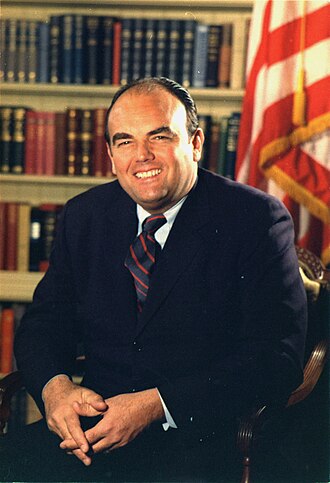
What Ehrlichman talks about on the tapes
Economic policy 119Congressional relations 101Public relations 91Watergate 77Vietnam War 58Political strategy 58Legislative strategy 57Welfare Reform 55Revenue sharing 53Busing 52Foreign Policy 47Executive privilege 47
Conversations (807)
— Page 4 of 9President Nixon met with H. R. Haldeman and John Ehrlichman to discuss strategy for the upcoming White House Conference on Aging, emphasizing the administration's stance on fiscal responsibility and the benefits of H.R. 1 for older citizens. The participants evaluated speech drafts, reviewed potential political opposition from figures like Edmund Muskie regarding property taxes, and planned the President’s upcoming media appearances, including a television special. Additionally, they coordinated the President's interactions with Congressional leadership, ultimately deciding to prioritize smaller, more productive meetings with House leaders over broader, less effective sessions with Senate counterparts.
President Nixon and John Ehrlichman consulted regarding the President's upcoming address to the Second Decennial White House Conference on Aging. Their discussion focused on refining specific policy positions, particularly those involving Medicare, prescription drug provisions, and property tax reforms. The two finalized language for the speech, addressing concerns regarding budget constraints and the role of the Domestic Council in managing conference proposals.
President Nixon consulted with John D. Ehrlichman to prepare for his upcoming address to the Second Decennial White House Conference on Aging. The discussion focused on managing policy expectations regarding Medicare prescription drug coverage and income floor acceleration under H.R. 1, given the significant budget constraints facing the administration. They specifically addressed the role of Arthur S. Flemming and the Domestic Council in navigating these complex fiscal challenges and conference resolutions.
President Nixon, Henry Kissinger, and various senior advisors met to discuss the escalating India-Pakistan conflict, focusing on the potential for a U.N. ceasefire, the status of American civilians, and the management of regional military actions. Concurrently, the President consulted with George H.W. Bush regarding U.N. strategy and coordinated with John Ehrlichman and Vice President Agnew on domestic legislative priorities, specifically tax bills and revenue sharing. The President also spoke with Wilbur Mills to foster a spirit of cooperation between the Administration and Congress regarding economic and tax legislation, emphasizing the need for a unified approach to ensure key bills advance.
President Nixon met with Myles J. Ambrose, John D. Ehrlichman, George P. Shultz, and Egil Krogh, Jr. to discuss the administration's federal narcotics control strategy and the persistent issue of jurisdictional competition between the Justice and Treasury Departments. The group explored a new, aggressive approach that utilizes grand juries and special prosecution teams to target heroin street-level trafficking and reduce drug supply. Nixon emphasized the necessity of recruiting high-quality young lawyers into criminal law to support these efforts, noting that a unified, cross-agency strategy is essential for effective law enforcement.
President Nixon met with Daniel P. Moynihan and John D. Ehrlichman to discuss the ongoing India-Pakistan war and domestic political strategy, specifically regarding school desegregation and busing. The participants evaluated international developments, including the search for a new UN Secretary General, before transitioning to a lengthy discussion on how the administration could frame education reform as a means to move past the divisive issue of busing. Nixon and his advisors explored rebranding these policies as a 'new era' of American education that emphasizes school choice and equality of opportunity while distancing the White House from the volatile desegregation debates of the past.
President Nixon and John Ehrlichman coordinated their upcoming schedules to ensure availability for a meeting with George Shultz. They confirmed a meeting time of 4:30 PM to be held in the Executive Office Building. The brief exchange focused exclusively on logistics and confirming the participants' readiness for this administrative discussion.
President Nixon met with John D. Ehrlichman and George P. Shultz to coordinate administration strategy across a range of domestic and international issues. The discussion covered the upcoming veto of Office of Economic Opportunity legislation, fiscal planning and budgetary maneuvering to manage the national debt, and ongoing international monetary and trade negotiations. Additionally, the participants reviewed the President's upcoming travel schedule, personnel assignments, and positive media outreach, including strategic efforts to frame recent judicial appointments and economic policies in a favorable light.
President Nixon and John Ehrlichman met to finalize the veto message regarding the Economic Opportunity Amendments of 1971. The brief discussion focused on reviewing the contents of the drafted message to ensure it met the President's requirements. Following this review, the participants reached a consensus to proceed with the planned veto.
President Nixon met with John Mitchell, H.R. Haldeman, John Ehrlichman, and David Young to address the unauthorized removal of sensitive documents from National Security Council (NSC) briefcases by Yeoman Charles Radford. The participants discussed the extent of the security breach, its connection to potential intelligence leaks to columnist Jack Anderson, and the need to contain the fallout to protect the integrity of the White House and military services. Nixon ordered a controlled investigation into the breach while emphasizing the need to maintain security over his own briefcases, particularly during travel.
President Nixon met with his senior advisors, including Charles Colson and John Ehrlichman, to discuss a broad range of political, administrative, and strategic matters. The participants reviewed ongoing public relations efforts regarding economic performance and unemployment data, coordinated their stance on potential legislation such as H.R. 1, and touched upon personnel concerns. The conversation also included informal commentary on recent Washington Redskins football games and general holiday planning, highlighting a mix of high-level political maneuvering and casual staff engagement.
President Nixon met with John Mitchell, H.R. Haldeman, and John Ehrlichman to discuss a serious security breach involving a Navy yeoman who was systematically stealing and duplicating classified documents from the National Security Council (NSC) for the Joint Chiefs of Staff. The participants determined that the yeoman had been acting under the instruction of military superiors, specifically Admirals Robinson and Welander, to funnel sensitive foreign policy information to the Pentagon. To address this compromise without triggering a public scandal or a damaging confrontation with the military establishment, they decided to move the military liaison office out of the NSC, replace it with a new security officer, and have the officials involved reassigned.
Following a formal ceremony in the Oval Office to recognize the commissions of new Supreme Court Justices Lewis F. Powell, Jr. and William H. Rehnquist, President Nixon transitioned into a private session with his staff. The discussion focused on national security concerns, specifically the ongoing investigation into intelligence leaks involving Navy Yeoman Charles E. Radford, the Joint Chiefs of Staff, and Henry Kissinger. Nixon and his advisors resolved to neutralize the threat posed by Radford by utilizing the legal pressure of potential criminal prosecution to ensure his silence, while simultaneously using the incident as a pretext to restructure security operations within the Joint Chiefs and the National Security Council.
President Nixon met with H.R. Haldeman and John Ehrlichman to discuss a serious security breach involving a yeoman who leaked classified information to columnist Jack Anderson. The participants addressed the existence of an unauthorized channel between the National Security Council staff and the Joint Chiefs of Staff, which allowed for the improper dissemination of internal decision-making documents. Nixon directed his staff to shut down this channel and strategy was discussed regarding how to handle the leaker and potentially confront Anderson, while carefully avoiding direct involvement from Henry Kissinger in the ongoing investigation.
President Nixon met with John Ehrlichman and Henry Kissinger to address the fallout from the 'Radford incident,' which involved unauthorized access to sensitive documents by military liaisons. The group discussed the potential resignation of Admiral Thomas Moorer and the need to manage the professional rivalries and perceived disloyalty within the administration, particularly regarding Secretary of State William Rogers and Secretary of Defense Melvin Laird. The President also reviewed legislative priorities, including environmental water quality bills and real estate taxation, while discussing personnel management strategies to maintain stability among his cabinet and senior staff during ongoing foreign policy crises.
President Nixon and John Ehrlichman discussed the strategic political utilization of a pending Texas busing case to catalyze national legislative action. The President instructed Ehrlichman to coordinate with John Connally to initiate this effort while also addressing various administrative matters, including upcoming meetings with George Romney and diplomatic preparations for Eisaku Sato. The conversation concluded with personal exchanges regarding the successful reception of Julie Nixon Eisenhower's television special and Nixon's efforts to place holiday calls to cabinet members and constituents.
President Nixon and H. R. Haldeman engaged in an extensive review of the President’s upcoming schedule, focusing on the State of the Union address, pending diplomatic visits, and the handling of school financing policy. Nixon emphasized his need for uninterrupted time to focus on his legislative agenda and Vietnam policy, leading to instructions to minimize public events and consolidate state visits. Later, the President met with Arthur Fletcher and other staff to review the success of the First Lady’s recent trip to Liberia and to participate in a photo opportunity involving a funding check for the Grambling University band.
President Nixon and John Ehrlichman discussed the reaction of Treasury Secretary John Connally to the President's recent policy proposals. Nixon affirmed his decision to move forward with the initiatives, noting that Connally had expressed his approval and agreement to proceed. The discussion centered on securing support for these upcoming executive actions.
President Nixon and John Ehrlichman met to coordinate an upcoming presentation by HUD Secretary George Romney regarding an urban revitalization initiative. They strategized on how to manage Romney's proposal by routing it through a Domestic Council meeting to solicit broader Cabinet feedback, thereby shielding the President from an immediate decision. Additionally, they discussed Romney's resistance to a proposed regionalization plan for Federal Executive Boards and made arrangements to secure publicity for a Soviet cultural group’s visit with First Lady Pat Nixon.
President Nixon met with George Romney, John Ehrlichman, and John Whitaker to discuss the administration's new "Operation TACLE" initiative, a national growth policy designed to address urban and rural decay through decentralized, competitive consortia. The President and Romney also addressed sensitive political matters, including the upcoming departures of cabinet members Maurice Stans and John Mitchell, as well as the need for coordination between Secretary of State William Rogers and National Security Advisor Henry Kissinger. Nixon emphasized his desire for Romney to remain in the cabinet while encouraging him to maintain a low-profile approach to sensitive housing issues during an election year.
President Nixon met with Vice President Agnew and members of the McElroy Commission and the Advisory Commission on Intergovernmental Relations (ACIR) to discuss the pressing issue of school finance reform. The discussion focused on the potential shift toward state-level funding to reduce reliance on regressive local property taxes, as well as the feasibility of implementing a Value Added Tax (VAT) as a federal revenue source to support educational equalization. Nixon directed both the McElroy Commission and the ACIR to prioritize the study of these funding models and their implications for intergovernmental relations and local school control.
President Nixon and John Ehrlichman met to coordinate the drafting of the upcoming State of the Union address and to express frustration regarding a meeting with Vice President Spiro Agnew. Nixon evaluated feedback on drafts written by Raymond Price and Elliot Richardson, emphasizing the need for a narrative focused on restoring public confidence in government amidst political division. The President also decided to incorporate personal reflections on his early congressional career and a reference to Harry S. Truman to frame his vision for the speech.
President Nixon and John D. Ehrlichman discuss the handling of supplementary notes drafted by Raymond K. Price, Jr. for the President's review. Nixon expresses frustration regarding the volume of material and the need to finalize his approach to these documents rather than delaying further. The conversation centers on the administrative burden of processing these drafts and the urgency of moving forward with the project.
President Nixon and John Ehrlichman discussed administrative strategy regarding the West Coast dock strike, emphasizing the need for a firm stance against Harry Bridges to avoid public relations issues. The President also requested an options paper by early the following week concerning federal policy on school busing, specifically seeking legislative or constitutional alternatives to pending court decisions. Nixon underscored his desire to clarify his position on the busing issue for the upcoming State of the Union address, directing Ehrlichman to ensure the message was drafted and ready for review.
President Nixon met with John Ehrlichman and George Shultz to discuss strategies for addressing the persistent West Coast dock strike and the administration's public posture toward labor unions. They evaluated the political necessity of firm rhetoric and potential legislative action, including an arbitration bill, while managing the logistical challenges of upcoming budget messaging and the appointment of Peter Peterson to the Commerce Department. The discussion also addressed the administration's broader concerns regarding the State Department's performance, foreign policy negotiations, and the need to mount a more aggressive political defense against Democratic challengers like Edward Kennedy.
President Nixon met with his Vice President and Cabinet to discuss the state of the U.S. economy, the administration's fiscal policy, and the upcoming 1973 budget. Key areas of focus included interpreting unemployment data—specifically the impact of new entrants to the workforce—and managing inflation through Phase II price and wage controls. Nixon urged his department heads to aggressively implement approved spending programs to stimulate the economy, while simultaneously directing them to more effectively communicate and promote the administration's economic achievements and social policy investments to the public.
President Nixon met with Philadelphia Mayor Frank L. Rizzo and John D. Ehrlichman to discuss urban policy, federal funding, and the political landscape of Philadelphia heading into the 1972 election. Rizzo expressed his personal support for the President and his desire to align with Republican principles, though he and Nixon strategized on how to manage this shift without alienating Rizzo’s Democratic base. They further coordinated on establishing direct lines of communication between the White House and city officials to bypass local political friction and secure federal aid for Philadelphia through programs like revenue sharing and the LEAA.
President Nixon and John D. Ehrlichman coordinate their upcoming schedules to facilitate a follow-up discussion. The exchange focuses on arranging a meeting to address specific administrative or policy issues referred to as 'vitamins' and 'grease oil.' The conversation concludes with the two agreeing to meet the following day to deliberate on these matters.
President Nixon and John Ehrlichman met to coordinate political strategy for the 1972 reelection campaign, with a heavy emphasis on securing Pennsylvania through the support of Philadelphia Mayor Frank Rizzo. The discussion covered the importance of maintaining an ethnic, law-and-order coalition in key urban centers and utilizing damaging information about Democratic opponents to bolster the President's standing. Additionally, they addressed personnel concerns, including the management of Howard Hughes-related loan controversies and the navigation of diplomatic and economic challenges like relations with China and the Soviet Union.
President Nixon met with Vice President Agnew and Republican congressional leaders to discuss strategy regarding his recent speech on Vietnam and the administration's upcoming FY 1973 budget. The President and Henry Kissinger briefed the attendees on the Vietnam peace negotiations, emphasizing that the U.S. had made comprehensive offers while denouncing North Vietnamese intransigence and political maneuvering. Economic advisors, including George Shultz and Herbert Stein, presented the administration's fiscal plans, highlighting the importance of balancing the budget while supporting a transition to a peacetime economy through controlled spending and wage-price stabilization. Participants agreed on the necessity of maintaining a firm stance on defense and economic policy to solidify public support and improve the administration's negotiating leverage.
President Nixon met with administration officials, including Myles J. Ambrose, John N. Mitchell, and Dr. Jerome H. Jaffe, to formalize the launch of a comprehensive federal drug enforcement initiative. The discussion focused on a three-pronged strategy involving international supply control, treatment and prevention programs, and intensified law enforcement efforts against drug traffickers. Nixon formally appointed Ambrose to lead these consolidated enforcement activities, emphasizing the administration's commitment to aggressively pursuing drug pushers as a top priority.
President Nixon met with John Ehrlichman and various guests to preside over the presentation of the Encyclopedia Judaica, which included discussions on U.S.-Israeli relations and the significance of Jewish heritage. Following the ceremony, Nixon and Ehrlichman transitioned into a private strategy session regarding domestic policy, specifically addressing the administration's stance on busing, the potential for a constitutional amendment, and the political implications of housing integration. They also evaluated ongoing projects, including the Bicentennial park proposal and the political viability of implementing a Value Added Tax (VAT) in an election year.
President Nixon met with H.R. Haldeman and John Ehrlichman to coordinate the administration's stance on welfare reform, including strategies to manage Senator Abraham Ribicoff's involvement. The group discussed managing negative media inquiries regarding F. Donald Nixon, specifically focusing on his ties to the Howard Hughes loan scandal and press relations for the upcoming trip to the People's Republic of China. Additionally, Nixon reviewed his personal financial and property arrangements, including the potential sale of his papers to a foundation, and finalized preparations for gift-giving and press coverage for the China summit.
President Nixon, Stewart McKinney, John Ehrlichman, and Ronald Ziegler met to discuss a wide-ranging domestic and political agenda, including welfare reform strategies, a proposed Mall renovation project, and environmental public relations. The President directed his staff to pursue a bipartisan approach to welfare reform through negotiations with Senators Ribicoff, Long, and Bennett, while also tasking them with developing high-profile environmental initiatives for the upcoming legislative session. The group further analyzed the 1972 Democratic presidential primary landscape and reviewed the administration's ongoing efforts to streamline Congressional relations and promote their policy goals through targeted briefings and literature.
President Nixon met with John Ehrlichman and various staff members to address upcoming legislative strategies and high-level diplomatic positioning. The primary focus involved preparing for Congressional testimony regarding U.S. policy toward India and Pakistan, with the President emphasizing the need to project a firm, principled stance on the recent conflict while maintaining an "arms-length" relationship. The President provided guidance on how to counter political criticism from Congressional opponents, asserting that the administration acted in the interest of global peace and U.S. policy requirements.
President Nixon and John Ehrlichman discussed legislative strategies, including the potential veto of a legal services bill and negotiations regarding the Family Assistance Plan (HR 1). They reviewed the success of recent briefings with governors, leading to an action item for Ehrlichman to coordinate with Nelson Rockefeller regarding his upcoming testimony. The conversation also touched on the Justice Department’s suit against milk producers and personnel management within the Office of Economic Opportunity.
President Nixon and John Ehrlichman discuss political strategy, focusing on the need to moderate public rhetoric regarding tax reform to avoid it becoming a political liability. The President instructs Ehrlichman to coordinate with a political associate to ensure alignment on administration objectives and to maintain a strong, proactive stance in upcoming policy deliberations. Additionally, the conversation touches upon the status of legal services reform and internal administration morale regarding regional political outreach.
President Nixon met with various staff members and advisors to manage his schedule and coordinate messaging regarding his upcoming trip to the People's Republic of China. The participants discussed handling press inquiries, the timing of the announcement of the press list, and how to address potential questions about administration policy. Additionally, Nixon held a telephone conversation with Argentine General Alejandro A. Lanusse to discuss bilateral economic cooperation and regional diplomatic relations.
President Nixon and John Ehrlichman met to discuss the administration's political strategy regarding court-ordered busing and to manage the fallout from a potentially damaging news exposé involving the President's brother, Donald Nixon. Ehrlichman advised that the President should meet with key Republican sponsors of anti-busing legislation to signal interest without formally committing to a constitutional amendment before his trip to China. Simultaneously, they addressed the imminent release of a Jack Anderson column detailing Donald Nixon's questionable business dealings and ties to controversial figures, ultimately deciding that the President must distance himself from his brother's activities and work with John Mitchell to secure Donald's exit from his current business commitments.
President Nixon and John Ehrlichman discuss the handling of the President's brother, Donald Nixon, and the potential political liability posed by his ongoing business activities and looming press scrutiny. Nixon directs Ehrlichman to coordinate with Donald to prevent him from exploiting the family name while simultaneously insisting that access to the President must remain restricted. Additionally, the pair briefly touches upon logistics for upcoming travel and strategic consultations regarding John Connally.
President Nixon and H. R. Haldeman discussed strategies for managing the press, specifically focusing on the President's upcoming press conferences and his desire to adopt a 'hard-line' approach to counter media hostility. They analyzed political maneuvers regarding rival Edmund Muskie and evaluated public perceptions of the administration's Vietnam policy. Additionally, in separate discussions involving John Ehrlichman, the President strategized on the Bicentennial celebration, instructing staff to coordinate with Philadelphia Mayor Frank Rizzo to ensure the administration dictates the terms and direction of the event.
President Nixon met with a bipartisan group of legislators and administration officials to discuss a coordinated strategy to address public opposition to forced busing for school desegregation. The participants evaluated various legal and legislative remedies, including executive intervention in pending court cases, the passage of restrictive legislation, and the potential adoption of a constitutional amendment. The meeting concluded without a final decision, as the President tasked his staff and advisors with synthesizing these diverse perspectives into a unified, formal policy proposal for the administration.
President Nixon met with John Ehrlichman and George Shultz to discuss administrative strategy regarding the economy and the unpredictable behavior of Federal Reserve Chairman Arthur Burns. The President expressed frustration with Burns's independent posturing on international monetary convertibility and his management of the money supply, while the group evaluated the political risks of ongoing wage and price controls. Nixon and his advisors decided to push for a stronger, unified economic narrative while avoiding further public controversy, eventually planning a private post-China trip meeting to reassess their strategy for exiting the system of wage and price controls.
President Nixon, John Ehrlichman, and Arthur Burns met to discuss a wide-ranging agenda including the President's upcoming trip to the People's Republic of China, domestic economic management, and the politics of school busing. Nixon emphasized the necessity of tracking federal budget expenditures more strictly to stimulate the economy, demanding weekly status reports from his Cabinet officers. The participants also explored strategies to address tax withholding concerns and discussed potential ambassadorial appointments. Finally, Nixon and Burns aligned their opposition to forced busing, framing it as detrimental to both neighborhood stability and quality education.
President Nixon and John D. Ehrlichman met briefly in the Oval Office to coordinate their schedules. The primary purpose of this encounter was to facilitate a formal meeting between the two men. No substantive policy discussions occurred during this brief exchange.
President Nixon met with John Ehrlichman to coordinate administration messaging on several contentious issues, particularly busing and the economy. They discussed developing a clear, unambiguous policy statement and potential constitutional amendment regarding school busing to gain political advantage ahead of the Florida primary. Additionally, Nixon directed Ehrlichman to manage and align key officials, including John Connally, George Shultz, and Donald Rumsfeld, to ensure consistent economic policy and address personnel concerns within the Department of Justice.
President Nixon and John Ehrlichman met to discuss administrative coordination, specifically reviewing recent interactions between John Connally, Arthur Burns, and George Shultz. The discussion touched on personnel management and the strategic handling of upcoming statements, particularly concerning busing and welfare reform. Nixon emphasized the need for clear accountability within his staff to ensure key policy objectives were effectively communicated.
President Nixon and John Ehrlichman discussed the scheduling of administrative meetings and logistics involving Richard G. Kleindienst. The conversation focused on arranging a specific time for Kleindienst to meet with the President at Camp David and coordinating a separate lunch engagement. No substantive policy matters were addressed, as the dialogue remained restricted to calendar management and internal protocol.
President Nixon met with a bipartisan group of Congressional leaders to discuss his upcoming historic trip to the People's Republic of China. The President sought to build support for the mission, briefing the group on communication protocols with Peking and his strategy for managing the international and domestic implications of the visit. The discussion emphasized the goal of establishing a new dialogue with the PRC to foster long-term global stability and balance regional power dynamics.
President Nixon met with his Cabinet and senior staff to debrief them on the results and implications of his recent diplomatic trip to the People's Republic of China. The President emphasized that the primary success of the visit was the establishment of a new communication channel between the two nations, which he argued was essential for managing long-term stability and reducing the potential for future conflict. Nixon shared his impressions of Chinese leadership, particularly his discussions with Chou En-lai, noting the stark ideological differences while highlighting common strategic interests, such as peace in the Pacific and balancing influence against the Soviet Union. The discussion concluded with a focus on how this opening could be leveraged to reshape international relations and manage regional tensions across Asia.
President Nixon met with the Cabinet Committee on Education to deliberate on federal education policy, with a primary focus on the political and constitutional challenges surrounding school busing and desegregation. The discussion addressed the need for improved quality of education in inner-city and rural schools, the complexities of federal financing, and the potential implementation of tax credits for private education. The participants explored ways to balance integration mandates with community-based solutions, emphasizing the importance of school accountability and the development of a coherent administration strategy to address public concerns.
President Nixon met with H.R. Haldeman, John Ehrlichman, and other staff members to discuss political strategy, staffing concerns, and crisis management related to the ITT anti-trust controversy. The group focused on controlling the public relations fallout from the ITT affair, determining the President's upcoming travel and meeting schedule, and assessing the political impact of the China trip and current primary elections. Nixon expressed a desire to distance the White House from the ITT scandal, emphasizing that any necessary clarifications should come from the Justice Department rather than the President or his staff.
President Nixon met with the Cabinet Committee on Education and the Council of Black Appointees to discuss the final report of the President’s Commission on School Finance. Participants examined the challenges of educational equity, focusing on funding disparities between urban and rural districts, the role of federal and state responsibilities, and the contentious issues of busing and support for non-public schools. The President expressed appreciation for the committee's research, and the discussion concluded with a commitment to further reviewing the commission's recommendations for legislative and policy implementation.
President Nixon met with H.R. Haldeman and John Ehrlichman to discuss political strategy, including his administration's position on a busing moratorium and the status of his forthcoming meeting with the Cabinet Committee on Education. The group addressed internal staff tensions, specifically regarding Pat Buchanan's potential resignation over disagreements with the Shanghai Communiqué and his frustration with the administration's perceived failure to satisfy conservative interests. Additionally, the President and his advisors reviewed the escalating ITT antitrust controversy, evaluating the political risks associated with the Justice Department's settlement and allegations involving Dita Beard and Jack Anderson.
President Nixon summoned John D. Ehrlichman to the Oval Office for a brief, five-minute meeting. While no transcript or detailed record of the dialogue exists, the encounter served as a direct consultation between the President and his chief domestic policy advisor. The meeting highlights the frequent, informal nature of communication between the two men during this period of the Nixon administration.
President Nixon met with his senior advisors and Henry Kissinger to navigate several political and diplomatic challenges, including the ongoing ITT controversy, the management of the 1972 presidential campaign, and the implications of his recent trip to the People's Republic of China. The group discussed strategies to handle public and congressional inquiries regarding potential conflicts of interest, with Nixon emphasizing a policy of non-comment on political issues. Additionally, Kissinger briefed the President on North Vietnamese stalling tactics in peace negotiations, which were potentially influenced by Chinese pressure, and reviewed the administration's delicate balancing act regarding Taiwan and Vietnam in foreign policy communications.
President Nixon and John Ehrlichman met to prepare for an upcoming session with Republican Congressional leadership regarding welfare reform, revenue sharing, and the ongoing ITT controversy. Nixon instructed Ehrlichman to lead the presentation on policy matters while avoiding direct engagement on the ITT scandal. They further discussed political strategy to discredit columnist Jack Anderson and manage the testimony of Dita Beard, focusing on evidence that the Republican Party had previously rejected ITT contributions.
President Nixon met with Vice President Agnew and Republican Congressional leaders to coordinate legislative strategy on key domestic priorities, specifically revenue sharing, welfare reform, and Social Security legislation. The discussion focused on overcoming legislative stalemates in the Ways and Means Committee and the Senate, particularly regarding the influence of Chairman Wilbur Mills and the need for a unified Republican stance. The President urged the leadership to maintain pressure for compromise bills that align with administration goals while avoiding fiscally irresponsible mandates during an election year.
President Nixon met with H. R. Haldeman, John Ehrlichman, Henry Kissinger, and others to manage the fallout and public relations surrounding the recent trip to the People's Republic of China, specifically addressing Secretary of State William P. Rogers' perceived alienation from the process. The participants discussed strategies to neutralize negative press coverage and mitigate perceived leaks from the State Department, while also deliberating on the upcoming US-Soviet summit. Additionally, the conversation touched on various domestic political matters, including the ITT case, busing policy, 1972 campaign financing, and the political maneuvers of Democratic candidates.
President Nixon met with General Motors executives James M. Roche and Richard C. Gerstenberg, alongside John D. Ehrlichman and George P. Shultz, to discuss administration relations and corporate matters. The conversation briefly touched upon Nixon’s recent trip to the People's Republic of China, as well as antitrust concerns regarding GM. The participants also addressed a recent New York Times article comparing the Nixon administration's handling of GM to previous policies under the Johnson administration, while briefly noting production and productivity trends.
President Nixon met with John Connally and John Ehrlichman to discuss high-level domestic and international economic policy, as well as political strategy regarding the ITT antitrust case and upcoming social policy decisions. Connally proposed radical ideas to address international monetary instability and domestic crime, including the possibility of a total currency exchange to catch tax evaders and criminals, and the implementation of strict controls on capital outflows. The participants also coordinated a messaging strategy for the ITT controversy, advocating for a more aggressive public posture, and reviewed pending decisions on Social Security and Medicare to balance budgetary concerns against political implications.
President Nixon met with John B. Connally, Elliot L. Richardson, Arthur S. Flemming, George P. Shultz, and John D. Ehrlichman to strategize on the administration's position regarding pending Social Security and Medicare legislation, specifically House Resolution 1 (HR 1). The group evaluated various fiscal alternatives to manage benefit increases and wage base adjustments without exacerbating inflation or creating an adverse impact on the 1973 federal budget. The discussion centered on balancing the political necessity of supporting the elderly with the economic imperative of maintaining fiscal responsibility, with participants weighing the potential for a presidential veto against the possibility of working with congressional leaders like Wilbur Mills to moderate the bill's provisions.
President Nixon met with his Cabinet Committee on Education and a group of prominent private attorneys to develop a legislative and constitutional strategy for addressing federal court-ordered school busing. The participants debated the merits of proposing a temporary moratorium on new busing orders while Congress pursued longer-term, systemic solutions focused on improving educational quality. The meeting resulted in a consensus to refine these legislative proposals and maintain strict confidentiality regarding the involvement of the private counsel to protect the administration's political and legal standing.
President Nixon met with H.R. Haldeman and John Ehrlichman to strategize on political damage control regarding the ITT anti-trust case and the Dita Beard memorandum. They discussed mobilizing allies in Congress—specifically naming Senators Cook, Gurney, and Goldwater—to counter the investigation and redirect public attention toward the political motivations of Senator Edward Kennedy and columnist Jack Anderson. The President also finalized plans for upcoming briefings and a potential televised press conference, while reviewing legislative tactics related to school busing and Social Security.
John D. Ehrlichman contacted Edward L. Morgan to secure an expedited timeline for a presidential speech draft. Ehrlichman, speaking on behalf of the President, instructed Morgan to prioritize the delivery of Raymond K. Price, Jr.'s second draft over the weekend to allow for early review. The pair agreed that Morgan would either modify the initial draft or finalize the updated version to ensure the President could begin his work immediately.
President Nixon and John Ehrlichman discussed the drafting of an upcoming message to Congress regarding a moratorium on forced school busing. The President emphasized his desire to move away from busing as a remedy, advocating instead for the 'Equal Educational Opportunity Act' and increased funding for schools where minority students actually reside. They agreed to reject 'window dressing' civil rights provisions that could create a 'pandora's box' of new litigation, while Nixon reaffirmed his resolve to prioritize his administration's policy goals over the potential objections or resignations of career civil rights lawyers at HEW.
President Nixon and John Ehrlichman reviewed and edited a draft speech concerning school busing and education policy. The President emphasized shifting the speech's structure to lead with clear objectives, adopting a more aggressive tone regarding judicial confusion, and highlighting the administration's record on racial equality over legalistic rhetoric. The conversation concluded with a decision to finalize the draft by the end of the week, with Nixon insisting on maintaining political control over the policy direction despite input from lawyers and staff.
President Nixon and John Ehrlichman coordinate the drafting of a presidential address on busing, emphasizing the need for a distinct, declaratory tone that appeals to the political center and right. Nixon mandates that the speech be kept under strict control to exclude input from Leonard Garment and Raymond Price until he has finalized his own vision. The President stresses the importance of crafting a message that preempts criticism from political rivals like George Wallace and Henry Jackson, while maintaining a stance on constitutional moratoriums.
President Nixon and John Ehrlichman met to coordinate the administration's response to the politically sensitive issue of school busing. They discussed the reaction of the Black Caucus to current policies and reviewed a draft of the President's upcoming public statement on the matter. The discussion resulted in a specific decision to excise a controversial paragraph from the final version of the announcement to better manage the political fallout.
President Nixon and John Ehrlichman met to discuss the President's upcoming public statement on busing, specifically reviewing a draft prepared by Raymond K. Price, Jr. They also coordinated scheduling for an upcoming meeting with Nassir Assar concerning the Central Treaty Organization (CENTO). The discussion centered on balancing policy substance with the rhetorical tone of the busing announcement.
President Nixon and John Ehrlichman reviewed a draft of an upcoming speech on school busing prepared by Raymond Price. Nixon emphasized the need to modify specific segments, particularly arguing against the characterization of black schools as inherently inferior and questioning the effectiveness of including numerous anecdotal examples. The meeting also included a brief administrative update from Stephen Bull regarding the President's schedule and an upcoming meeting with Henry Kissinger.
President Nixon met with H.R. Haldeman, John Ehrlichman, and others to discuss managing political fallout and public relations strategy, specifically regarding the ITT case and an unflattering Jack Anderson report about Arthur K. Watson. The conversation focused heavily on drafting a television address on school busing, where Nixon emphasized his desire to adopt a firm, hard-line stance against forced busing to appeal to his political base, despite internal opposition from some administration liberals. Nixon also finalized plans for his upcoming diplomatic trips and considered ways to energize his support in key states through targeted domestic appearances.
President Nixon met with key advisors, including H. R. Haldeman, Alexander Haig, and John Ehrlichman, to discuss a range of administrative, political, and public relations concerns. The conversation focused on managing the political implications of foreign trade and business relations, specifically regarding the roles of Peter Flanigan and Henry Kissinger, as well as addressing ongoing press inquiries about campaign financial contributions. Additionally, the President reviewed his upcoming schedule, including planning for staff meetings at Camp David and strategies for the Republican National Convention.
President Nixon and John Ehrlichman coordinate the strategy for a high-stakes televised address regarding federal school busing policies. They discuss the legislative pursuit of a constitutional amendment and a moratorium, while weighing potential constitutional challenges and the anticipated reactions from the press and internal staff. To build political momentum, they finalize plans for a coordinated outreach campaign involving direct mail to Congress and a series of telegrams to be managed by Charles Colson.
President Nixon met with bipartisan Congressional leaders, administration officials, and cabinet members to advocate for a legislative moratorium on court-ordered busing to achieve racial balance in schools. Nixon argued that current judicial mandates were causing societal turmoil and urged Congress to act immediately to stop new busing orders while advancing his broader 'Equal Educational Opportunities Act.' The administration proposed a two-pronged strategy involving an immediate legislative moratorium followed by a long-term commitment to compensatory education funding to improve school quality, specifically for low-income and minority students.
President Nixon met with H. R. Haldeman, Henry Kissinger, and John Ehrlichman to coordinate upcoming foreign and domestic policy strategies. The group discussed Kissinger’s travel plans, the President’s impending trip to the Soviet Union, and ongoing legislative efforts to address school busing. Nixon urged his staff to adopt a more aggressive, authoritative tone when dealing with Congress and the press to ensure his policy positions—particularly on busing—were clearly and effectively communicated.
President Nixon met with H. R. Haldeman, Henry Kissinger, and John Ehrlichman to strategize on managing ongoing political crises, specifically the ITT investigation and the confirmation of Richard G. Kleindienst. They discussed tactics to distance the White House from allegations surrounding the Dita Beard memorandum and explored how to counter press hostility through a comparative historical analysis of congressional investigative tactics. Additionally, the group addressed the political implications of busing, including the potential for a moratorium and its impact on the 1972 campaign, while coordinating upcoming public communications and scheduling.
President Nixon and John Ehrlichman met briefly in the Oval Office to coordinate their respective schedules. The discussion focused on current work priorities and managing the President’s agenda for the day. No substantive policy decisions were reached during this short interaction.
President Nixon met with John Ehrlichman and Henry Kissinger to discuss international strategy and domestic political challenges. The group reviewed the potential for a Secretary of State trip to Europe to bolster ties before the Soviet summit, as well as plans to reorganize the State Department to better align with presidential goals. A significant portion of the discussion focused on managing the political fallout from Nixon's recent speech on busing, with action items assigned to staff to influence Southern conservatives and local press. The participants also explored strategies to handle the ITT controversy and the investigation into Dita Beard's memorandum.
President Nixon met with H.R. Haldeman, John Ehrlichman, and Ronald Ziegler to review recent public relations strategies, including the effectiveness of his recent New York City trip and the upcoming schedule. The group discussed managing the press, navigating the political challenges of the 1972 campaign, and coordinating administrative responses to sensitive topics such as the ITT scandal and international drug trafficking. Nixon emphasized a hardline stance on drug penalties, suggesting that the administration should advocate for the death penalty for major distributors to project strength on law and order.
President Nixon met with the Cabinet Committee on International Narcotics Control to evaluate the administration's progress and strategies in combating the global drug trade. The participants discussed international trafficking routes, the effectiveness of law enforcement efforts in countries like Turkey and Southeast Asia, and the need for improved coordination between federal agencies. The meeting served to reinforce the priority of drug interdiction and treatment programs while addressing inter-agency conflicts that hindered unified action.
President Nixon met with his senior aides, including H.R. Haldeman, Charles Colson, and John Ehrlichman, to discuss a range of domestic political issues and scheduling conflicts. The participants addressed the ongoing ITT antitrust investigation and its potential for negative political fallout, as well as coordinating public relations strategies regarding Nixon’s upcoming press conference and his attendance at the Gridiron dinner. Nixon ultimately decided to prioritize his travel schedule and administration optics, weighing the pros and cons of official representation at the dinner versus managing the fallout from controversies involving campaign financing and the Justice Department.
President Nixon met with Raymond Shafer, John Ehrlichman, and Egil Krogh to discuss the forthcoming release of the President's Commission on Marijuana and Drug Abuse report. The group strategized on how to frame the findings, with the President emphasizing his opposition to marijuana legalization while acknowledging the commission's recommendation to decriminalize private possession. Additionally, they reviewed political campaign dynamics, the President's position on school busing, and a sensitive plan to involve J. Edgar Hoover in authenticating an ITT-related document to neutralize media scrutiny.
President Nixon and John Ehrlichman met to discuss the President's upcoming schedule and priorities. Their conversation focused specifically on the administration's Phase II economic policies. The participants coordinated their agendas to ensure alignment on these critical domestic initiatives.
President Nixon met with his senior advisors and cabinet members to finalize strategy for an upcoming press conference and address recent developments regarding the Pay Board. The discussion focused on responding to the withdrawal of AFL-CIO leadership from the Pay Board, managing public perception of inflation and economic policy, and formulating official stances on contentious social issues including busing, abortion, marijuana legalization, and Social Security increases. The group debated the optimal timing and format for the President to announce the administration's economic adjustments to ensure maximum impact and clarity while minimizing political vulnerability.
President Nixon and his senior advisors, including John Ehrlichman, H.R. Haldeman, and John Connally, met to formulate an aggressive administrative response to the resignation of George Meany and other labor leaders from the Pay Board. The group discussed the timing and format of a public statement intended to demonstrate decisive presidential action and secure political leverage against Democratic opponents. They also debated potential replacements for the labor positions, reviewed strategies for handling the national economy, and coordinated the President's upcoming press conference to ensure it effectively overshadowed current controversies like the IT&T investigation.
President Nixon met with H. R. Haldeman and John Ehrlichman in the Executive Office Building to review the presidential schedule. The discussion focused on coordinating upcoming appointments and logistical planning for the President's administrative agenda. No specific policy decisions were finalized, as the dialogue remained centered on managing the President's time and meeting requests.
President Nixon met with H. R. Haldeman and John Ehrlichman in his Executive Office Building suite to coordinate internal administrative and political priorities. The discussion focused on managing White House operations and assessing pressing strategic developments. Following the meeting, the participants moved to address outstanding executive tasks and maintain oversight of ongoing policy initiatives.
President Nixon met with H.R. Haldeman and John Ehrlichman to coordinate administration strategy on several high-stakes domestic and foreign policy issues. The discussion centered on legislative maneuvering to curb school busing, the management of economic messaging regarding the Pay Board's recent labor disputes, and the handling of the ITT controversy. They also deliberated on potential presidential travel, the projection of moral leadership, and the public relations strategy for the President’s recent trip to China.
President Nixon met with John D. Ehrlichman and an unidentified woman to discuss the administrative preparation of a Pay Board statement. The conversation focused on the drafting and clarification of the document's language. The President also provided instructions regarding the inclusion of specific district information within the text.
President Nixon and John Ehrlichman discuss the administration's struggle with internal discipline and the tendency of staff members to speak publicly without authorization. Frustrated by the lack of message control, Nixon directs Ehrlichman to instruct an unidentified subordinate to remain silent regarding sensitive issues. The pair briefly touch upon concerns regarding personnel resignations and potential inquiries they might face during an upcoming press conference.
President Nixon and H. R. Haldeman meet with John Ehrlichman and others to discuss a broad range of administrative priorities, including the development of a presidential speech on the drug crisis and the use of Myles Ambrose as a public face for the administration's anti-drug efforts. They review political strategies for handling the controversial busing issue, with Ehrlichman highlighting the importance of the administration's stance on local school control, and touch upon various personnel and policy matters, including the declassification of documents and potential leadership changes at the U.S. Postal Service. Additionally, the group addresses public relations challenges involving ITT, the Population Commission, and the administration's ongoing concerns regarding media coverage and leaked government information.
President Nixon, H.R. Haldeman, and John Ehrlichman met to coordinate various administrative and political initiatives, including speech drafting for an education convention and planning for a future 'fireside chat' on drug enforcement. Nixon emphasized the need for a high-profile, proactive strategy on drug control—potentially featuring a hotline and aggressive law enforcement imagery—to capitalize on public concern. The participants also discussed administrative scheduling, including arrangements for a dinner for retiring members of Congress, and addressed ongoing political issues such as the ITT investigation and potential legal actions against media networks.
President Nixon met with Alexander Butterfield and John Ehrlichman to coordinate an upcoming briefing for prominent, hawkish Democrats including John Stennis, George Mahon, and F. Edward Hebert. Nixon emphasized that the session, led by Henry Kissinger, should avoid a strictly partisan tone to ensure effective engagement with these key legislators. The participants also briefly addressed scheduling concerns and administrative memoranda before concluding the meeting.
President Nixon met with a large group of cabinet members and advisors to discuss a wide-ranging agenda of domestic economic policy, including international trade strategies, energy infrastructure, and tax reform. The participants reviewed the implementation of commercial trade policies with the Soviet Union, analyzed the political and budget implications of environmental regulations, and addressed the status of the Productivity Commission. Nixon emphasized the need for his team to act as aggressive advocates for pro-business policies and job creation in the lead-up to the 1972 election. The meeting concluded with a review of potential Federal Reserve appointments and a discussion on managing public perception regarding inflation and food prices.
President Nixon met with Republican congressional leadership to coordinate administration talking points on sensitive domestic and foreign policy issues. The discussion focused primarily on the ongoing military situation in Vietnam, emphasizing the success of Vietnamization, the importance of maintaining public support, and the necessity of keeping political opposition from undermining the war effort. Additionally, the President and his advisors briefed members on key legislative priorities, specifically the administration's stance against forced busing and efforts to address rising food prices and drug-related crime. The participants discussed strategies for distributing these fact sheets and maintaining a unified front to influence public perception and legislative outcomes.
President Nixon met with H.R. Haldeman, John Connally, John Ehrlichman, Henry Kissinger, and other staff to coordinate administration strategy on several fronts. Key discussions included efforts to quash a Department of Justice fishing rights lawsuit against Texas, the management of congressional briefings on Vietnam and domestic issues, and tactical adjustments for the upcoming election campaign. Nixon emphasized the need for more persuasive, memorable speechwriting and directed his team to adopt a more aggressive, "hard-hitting" political posture against Democrats on issues like busing and food prices.
President Nixon and John Ehrlichman met to coordinate political messaging and administration strategies regarding several contentious domestic issues, specifically busing, crime, and the economy. They discussed leveraging public opposition to school busing to challenge congressional inaction, while also planning a public relations campaign to highlight the administration’s successes in crime reduction and drug enforcement. Furthermore, they reviewed political tactics for managing upcoming tax debates, including using Treasury statements to frame the administration as populist against congressional special interest loopholes.
President Nixon, First Lady Pat Nixon, and John Ehrlichman discussed the successful public reception of the giant pandas recently gifted to the United States. Mrs. Nixon provided details regarding the pandas' popular behavior and the extensive media coverage of the event. The conversation also touched upon logistical scheduling for the Nixon family's upcoming visits to Camp David.
President Nixon met with John Ehrlichman to direct a significant reduction in federal spending, specifically targeting grants and contracts for higher education and scientific research. Motivated by a desire to curb support for academic institutions perceived as ideologically unfriendly, Nixon instructed Ehrlichman to work with Caspar Weinberger to systematically eliminate these subsidies, focusing on the non-renewal of grants rather than early cancellation to avoid legal complications. Additionally, the two discussed strategies for controlling media coverage and ensuring consistent, positive administration-friendly reporting on weekend news cycles.