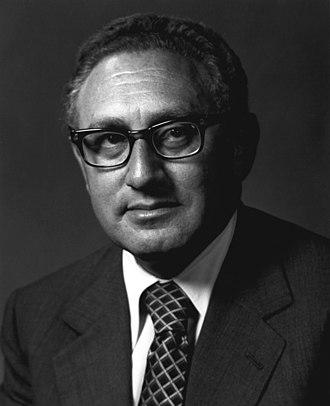
Kissinger, Henry A.
During the Nixon administration, Henry A. Kissinger served as the Assistant to the President for National Security Affairs from January 1969 through the end of Nixon's presidency, acting as the chief architect of U.S. foreign policy. Throughout the White House taping period (February 1971 to July 1973), he was captured extensively on tape advising the president on pivotal events such as the secret opening to China, détente with the Soviet Union, and the negotiation of the Paris Peace Accords. In September 1973, shortly after the taping system was dismantled, Kissinger was additionally appointed as Secretary of State, holding both powerful positions simultaneously until Nixon's resignation in August 1974.
What Kissinger talks about on the tapes
Vietnam War 628Foreign Policy 477Public relations 209People's Republic of China 138Congressional relations 135Diplomacy 122Press relations 92Soviet Union 90Military Strategy 81US-Soviet Relations 75Peace negotiations 74Economic policy 68
Conversations (1,504)
— Page 8 of 16President Nixon and Henry Kissinger met to discuss military contingency plans for Vietnam, specifically addressing a potential North Vietnamese offensive and the timing of increased air strikes. They criticized Democratic presidential candidate Edmund Muskie for his public statements on the war, arguing that his rhetoric undermined ongoing peace negotiations and displayed a lack of responsibility. Additionally, the President directed Kissinger to push for the appointment of Vernon A. Walters as Deputy Director of the CIA, dismissing concerns from Richard Helms and Melvin Laird regarding the nomination.
President Nixon and Henry Kissinger discussed a coordinated public relations strategy to counter recent criticism from Senator Edmund Muskie regarding the administration's Vietnam policy. The two agreed to maintain a firm, unified stance through rebuttals from White House staff and congressional allies while dismissing the civil conflict in Northern Ireland as an internal matter. Furthermore, they reviewed military contingency plans for Vietnam, with Nixon directing the immediate deployment of air and naval assets to South Vietnam to prepare for a potential North Vietnamese offensive.
President Nixon met with Henry Kissinger, H. R. Haldeman, William Rogers, and Kenneth Keating to coordinate Administration responses to political challenges, specifically regarding Senator Edmund Muskie’s recent speeches and media criticism. The group discussed strategies to manage the fallout from the President's upcoming trip to China, focusing on framing the diplomatic effort as a necessary opening rather than a final conclusion. Additionally, they addressed the strained relationship between Treasury Secretary John Connally and David Kennedy, and prepared Ambassador Keating for upcoming Senate Foreign Relations Committee testimony regarding U.S. policy toward India, Pakistan, and Bangladesh.
President Nixon met with Ellsworth Bunker and Henry Kissinger to discuss the deteriorating situation in Vietnam and the upcoming diplomatic visit to the People's Republic of China. The conversation focused on bolstering military strength through increased bombing operations, the necessity of protective reaction strikes against North Vietnamese surface-to-air missile (SAM) sites, and the management of U.S. troop withdrawal announcements. Nixon emphasized the importance of Bunker remaining in his post to provide continuity during the expected communist spring offensive and forthcoming negotiations. Additionally, the group reviewed the status of U.S.-India relations and the potential for a residual military force in South Vietnam.
President Nixon met with H. R. Haldeman and Henry Kissinger to discuss preparations for his upcoming trip to the People's Republic of China, including logistical arrangements and media strategy. The conversation centered on managing the professional friction between Secretary of State William Rogers and Kissinger, with Nixon emphasizing the need for a unified administration front to ensure the success and perception of his China initiative. Additionally, they reviewed domestic issues such as stock market performance, unemployment figures, and the President's upcoming schedule, which included a visit to Florida to provide a quiet environment for policy study.
President Nixon met with H.R. Haldeman, Ronald Ziegler, and Henry Kissinger to strategize the administration's public relations response to Senator Edmund Muskie’s Vietnam speech and to analyze the latest North Vietnamese negotiation proposals. Following these internal policy discussions, the President met with Soviet poet Yevgeny Yevtushenko and interpreter Demitir Zarechnak to discuss U.S.-Soviet cultural relations and the geopolitical significance of Nixon's upcoming diplomatic trips to the People's Republic of China and the USSR. The conversation emphasized the President's goal of leveraging personal diplomacy to improve international stability and establish a framework for long-term peaceful cooperation between world powers.
President Nixon, Admiral Thomas Moorer, and Henry Kissinger met to discuss the necessity of maintaining direct communication channels between the President and the Joint Chiefs of Staff, notwithstanding bureaucratic concerns from the Department of Defense. Nixon emphasized his constitutional duty as Commander-in-Chief and expressed frustration with constraints following the Charles Radford security leak incident involving columnist Jack Anderson. The President instructed Kissinger and General Alexander Haig to manage potential friction with the Secretary of Defense to ensure the military leadership could continue to report directly to him.
President Nixon and General Alejandro A. Lanusse of Argentina held a telephone conversation to discuss international relations and bilateral economic cooperation. The leaders addressed Nixon’s upcoming trip to the People's Republic of China, with Lanusse expressing support for the initiative and confirming Argentina's own move to normalize relations with Beijing. They also reviewed the progress of an Argentine financial mission in Washington, with Nixon pledging U.S. support for Argentina's economic stability and emphasizing the importance of their continued diplomatic and trade partnership.
President Nixon met with various staff members and advisors to manage his schedule and coordinate messaging regarding his upcoming trip to the People's Republic of China. The participants discussed handling press inquiries, the timing of the announcement of the press list, and how to address potential questions about administration policy. Additionally, Nixon held a telephone conversation with Argentine General Alejandro A. Lanusse to discuss bilateral economic cooperation and regional diplomatic relations.
President Nixon met with key advisors and staff, including H. R. Haldeman and Henry Kissinger, to prepare for his upcoming historic trip to the People's Republic of China and discuss the 1972 campaign strategy. The participants reviewed sensitive internal polling data, evaluated the political risks posed by news stories from columnist Jack Anderson involving F. Donald Nixon, and analyzed public reaction to Vietnam policy and recent busing controversies. Additionally, the President provided guidance on managing press relations for the China trip and discussed the importance of maintaining a unified administration stance on foreign and domestic policy matters.
President Nixon, H. R. Haldeman, and various staff members met to discuss administrative scheduling, the quality and strategy of presidential speechwriting, and broader media relations. The conversation focused on the President's upcoming schedule, including interactions with congressional leaders and diplomatic representatives, while expressing significant frustration over the lack of emotional impact in current speech drafts. The participants further analyzed political messaging regarding the Vietnam War, strategizing on how to maintain public support by framing Nixon’s actions as fulfilling his executive responsibilities against political undercutting by critics.
President Nixon met with John Connally, Robert McNamara, and Henry Kissinger to discuss the volatile political and economic situation on the Asian subcontinent, focusing on the aftermath of the India-Pakistan War, the instability in Bangladesh, and the need for a nuanced U.S. aid and diplomatic strategy. The conversation emphasized the importance of quiet diplomacy to stabilize the region and counter Soviet influence, while also touching upon domestic economic concerns, potential trade bill strategies, and upcoming travel itineraries. The participants agreed on the necessity of maintaining a balanced approach toward India and Pakistan as the administration prepares for the President's diplomatic initiatives.
President Nixon met with Henry Kissinger and his staff to express gratitude for their extensive efforts on major foreign policy initiatives, specifically regarding the Soviet Union and China. During the discussion, Nixon reflected on historical figures like Woodrow Wilson to emphasize the necessity of balancing idealism with pragmatic, disciplined diplomacy. He concluded by asserting that the rigorous 'homework' performed by the staff provided the best opportunity for achieving global peace in 1972.
President Nixon, Henry Kissinger, and Ronald Ziegler met to discuss the public and political reception of the President's recent radio address regarding the Vietnam War. Kissinger offered analysis on the motivations of administration critics, focusing on the intersection of patriotism and policy dissent. The participants framed the President’s withdrawal efforts as a significant achievement in reducing casualties and ending the conflict responsibly.
President Nixon and Henry Kissinger discuss the need to clarify the administration's stance on peace negotiations in Vietnam, specifically regarding recent reports of U.S. "flexibility." Kissinger explains that Secretary of State William P. Rogers and press secretary Ronald Ziegler inadvertently sparked controversy by appearing to soften the U.S. position. The two agree to publicly emphasize that South Vietnamese President Nguyen Van Thieu's offer to resign was entirely his own initiative, thereby distancing the White House from the perception of making unauthorized concessions.
President Nixon met with Henry Kissinger, H. R. Haldeman, and other staff members to discuss media strategy, public messaging, and foreign policy, specifically regarding Vietnam and China. The participants deliberated on the effectiveness of Nixon's recent public statements, focusing on how to maintain a strong, authoritative image while navigating complex geopolitical tensions. They also addressed the importance of controlling the narrative through concise, impactful communication and the potential political implications of upcoming scheduled appearances and policy announcements.
Henry Kissinger informs President Nixon that North Vietnamese officials have initiated a meeting with Lt. Gen. Vernon A. Walters, marking a rare shift in diplomatic engagement. The two discuss potential motivations behind this move, including the possibility of a new meeting request or a strategic diplomatic gesture regarding past negotiation proposals. Additionally, Kissinger confirms his plan to brief Secretary of Defense Melvin Laird on the promotion of Alexander M. Haig, Jr. during an upcoming breakfast meeting.
President Nixon and Henry Kissinger discuss strategies for managing public perception and military policy regarding the Vietnam War, particularly concerning the intensity of airstrikes in South Vietnam. Nixon stresses the importance of projecting strength and explicitly warns against government officials signaling "flexibility" in negotiations with the North Vietnamese, arguing that such rhetoric is counterproductive and fails to satisfy critics. The pair also touches upon the upcoming trip to the People's Republic of China, with Nixon emphasizing a firm negotiating stance to avoid appearing weak or apologetic.
President Nixon met with Rose Mary Woods and Stephen B. Bull to coordinate scheduling for upcoming congressional meetings regarding busing, followed by a brief discussion with Henry Kissinger regarding diplomatic strategy. Kissinger and the President analyzed a recent communication from Le Duc Tho concerning potential peace negotiations and the impact of an upcoming trip to the People's Republic of China. The participants deliberated on whether to accept the invitation for further meetings and established the need for a private consultation to finalize their policy approach before traveling.
President Nixon, Henry Kissinger, and Stephen B. Bull met to coordinate the scheduling of upcoming diplomatic engagements. The discussion focused on finalizing the timing for meetings with foreign representatives Jaime Arguelles and Sladeddine El Goulli. These arrangements were intended to manage the President's calendar effectively regarding these specific international visitors.
President Nixon met with departing Spanish diplomat Jaime Arguelles and Henry Kissinger to bid farewell and acknowledge Arguelles’s service. The discussion focused on fond memories of the President’s 1970 visit to Spain and the selection of Angel Sagaz as Arguelles's successor. The participants concluded the meeting by reaffirming the importance of maintaining strong diplomatic ties between the two nations.
President Nixon, H. R. Haldeman, and Henry Kissinger met to discuss strategy for the upcoming trip to the People’s Republic of China, emphasizing the need to manage the press corps' expectations and prepare briefings for First Lady Pat Nixon. The participants also reviewed the sensitive status of Vietnam peace negotiations, noting that recent military actions and the President's diplomatic outreach had pressured Hanoi into requesting a private meeting. Finally, they discussed the upcoming resignation of Attorney General John Mitchell and plans for trade-related announcements regarding Moscow.
President Nixon, Henry Kissinger, and Senator James L. Buckley met to discuss the geopolitical implications of the President's upcoming trip to the People's Republic of China and the broader execution of the Nixon Doctrine in Asia. Senator Buckley provided observations from his recent Far East tour, highlighting the need to reassure U.S. allies—particularly Japan, South Korea, and Taiwan—regarding American security commitments amidst changing strategic balances. The conversation also touched upon military operations in Vietnam, the potential for North Vietnamese offensives, and domestic policy issues, including federal housing and the ongoing conflict in Northern Ireland.
President Nixon, Henry Kissinger, and French author Andre Malraux engaged in a wide-ranging discussion regarding international relations and the geopolitical landscape of the early 1970s. The conversation centered on the internal dynamics of the People's Republic of China, the Sino-Soviet split, and the role of the United States in the Pacific. Malraux shared his insights on Mao Zedong's leadership and the nature of Chinese foreign policy, while the participants explored the potential long-term implications of American engagement with China and Japan.
President Nixon met with Andre Malraux and Henry Kissinger to discuss the geopolitical implications of the upcoming U.S. opening to the People's Republic of China (PRC) and the necessity of maintaining a U.S. global presence. They evaluated the stability of a 'balance of power' framework in light of regional concerns, specifically Japan's future nuclear and military trajectory, the risks of U.S. isolationism, and the containment of Soviet influence in Europe. Kissinger provided strategic updates on secret negotiations with North Vietnam and coordinated the drafting of a joint communiqué to be finalized during the President's visit to Beijing.
President Nixon met with his advisor Henry Kissinger and senior staff members H.R. Haldeman and Stephen Bull to finalize strategy and logistical details for the President's upcoming historic trip to the People's Republic of China. The participants discussed the management of the official communique, the role of translators to ensure accurate records of private meetings, and the President's approach to formal toasts and plenary sessions. Additionally, they reviewed domestic political concerns, including public opinion polls and the potential impact of a North Vietnamese military offensive on the trip's reception.
President Nixon and Henry Kissinger debriefed on a recent meeting with French intellectual André Malraux, focusing on his insights regarding the upcoming presidential trip to the People's Republic of China. They discussed the historical weight of the visit and the significance of Mao Tse-tung’s leadership style, comparing it to other world figures. Nixon emphasized the need to approach the China summit with confidence and dignity while dismissing the necessity of discussing economic aid, a topic he felt was better left to the Chinese to initiate.
President Nixon and H.R. Haldeman discuss logistical arrangements for the upcoming trip to the People's Republic of China, emphasizing the need for strict control over media coverage to prevent unauthorized exclusives. They decide against granting early commitments to networks like ABC, opting instead to utilize a White House-contracted film unit to manage output. Additionally, the President deliberates on his post-trip schedule, specifically debating whether to stop in Anchorage to allow for a prime-time arrival in Washington, D.C., and expresses his personal disdain for hosting social dinners as a political outreach tool.
In this meeting, President Nixon confers with Henry Kissinger regarding the upcoming China trip, focusing on the handling of sensitive issues like Taiwan and the importance of maintaining a firm stance on security commitments. Following this, Nixon meets with Richard Kleindienst and George Shultz to discuss Kleindienst’s transition into the Attorney General role, emphasizing the necessity of political pragmatism, staff discipline, and maintaining a unified front with John Connally on economic matters. The President also directs his team to manage volatile domestic issues—specifically busing and integrated housing—by prioritizing political strategy and controlled communication to avoid alienating key voter bases during the re-election campaign.
President Nixon and Henry Kissinger discussed communication strategies and talking points for the President’s upcoming trip to the People's Republic of China, specifically focusing on the tone for addressing Zhou En-lai and handling press inquiries during a planned stop in Hawaii. The pair also coordinated logistical and thematic plans for an upcoming meeting with Congressional leadership, including the potential role of Secretary of State William P. Rogers. Additionally, they reviewed strategies for managing the PRC's complex concerns regarding the Soviet Union and the Vietnam conflict.
President Nixon met with a bipartisan group of Congressional leaders to discuss his upcoming historic trip to the People's Republic of China. The President sought to build support for the mission, briefing the group on communication protocols with Peking and his strategy for managing the international and domestic implications of the visit. The discussion emphasized the goal of establishing a new dialogue with the PRC to foster long-term global stability and balance regional power dynamics.
President Nixon and Henry Kissinger discuss the political fallout and public reception following Nixon's recent trip to China, specifically focusing on clarifying the U.S. defense commitment to Taiwan. Kissinger provides updates on support from Ronald Reagan and concerns regarding criticism from conservative commentators like William F. Buckley, Jr. They also coordinate plans for upcoming meetings with Congressional leaders and determine that a meeting with Soviet Ambassador Anatoliy Dobrynin should be postponed to avoid potential diplomatic friction with the Chinese.
President Nixon and Henry Kissinger met to discuss the media strategy and public reception surrounding Nixon’s recent trip to the People’s Republic of China. The conversation focused on managing journalistic access and potential news coverage, including specific deliberations over which reporters and networks to include in upcoming briefings. Nixon and Kissinger also evaluated the success of the President's recent televised speech and its positive impact on the American public's perception of his foreign policy efforts.
President Nixon met with a bipartisan group of Congressional leaders to provide a firsthand report on his recent diplomatic mission to the People's Republic of China (PRC). During the briefing, the President discussed his interactions with Chinese leadership, the strategic importance of establishing communication channels, and the complex geopolitical dynamics concerning Taiwan and the broader Pacific region. The meeting emphasized the necessity of maintaining trust and diplomatic dialogue to navigate future international relations and manage long-term foreign policy objectives.
President Nixon and Henry Kissinger discussed Secretary of State William P. Rogers's recent briefings regarding the President's historic trip to the People's Republic of China. Nixon and Kissinger expressed deep frustration with Rogers for his dismissive and derogatory remarks about the Chinese society, fearing that his characterization of China as a "slave society" or "Bronx Zoo" undermined the administration's delicate diplomatic progress. The two agreed that Rogers's commentary was strategically damaging and decided to monitor his future public statements closely, prepared to disavow him if his disparaging rhetoric leaked to the press.
President Nixon, Henry Kissinger, and H.R. Haldeman meet to discuss the fallout from the President’s recent trip to the People's Republic of China, expressing significant frustration with Secretary of State William P. Rogers. The President and Kissinger characterize Rogers's performance at recent Cabinet and Congressional briefings as self-serving, petty, and damaging to the administration’s foreign policy objectives. They decide that Rogers must be prevented from further undermining the trip’s significance, particularly regarding his negative depictions of the Chinese government, and discuss plans to marginalize his influence in future briefings and communications.
President Nixon and Henry Kissinger met briefly to coordinate administrative logistics and scheduling for upcoming White House events. The conversation focused on managing the attendance of key staff members, including H. R. Haldeman, Ronald Ziegler, and Alexander Haig, at a forthcoming dinner. Additionally, the President offered casual remarks regarding Kissinger’s personal grooming and evening plans, underscoring the informal nature of the scheduling coordination.
President Nixon and his advisors met to address the fallout from Secretary of State William P. Rogers's behavior and public statements during the recent presidential trip to the People's Republic of China. The participants expressed frustration with Rogers's perceived hostility toward their Chinese hosts, which they believed undermined delicate diplomatic progress and threatened to damage U.S. foreign policy interests. Consequently, the President instructed H. R. Haldeman and Alexander Haig to convey to Rogers that he must cease making independent remarks on Taiwan and adhere strictly to the established administration position to avoid further diplomatic friction.
President Nixon and Henry Kissinger discuss logistics for upcoming travel to Florida and coordinate the messaging for Kissinger’s interactions with the Nixon family. The conversation addresses reports of skepticism from Secretary of State William P. Rogers regarding the President’s China policy, which Nixon and Kissinger dismiss as a lack of understanding. The two reaffirm their control over foreign policy strategy, specifically regarding China, the Soviet Union, and Vietnam negotiations.
President Nixon and John Connally met to assess the national economic outlook and discuss the 1972 presidential campaign. Connally emphasized that despite some public anxiety regarding inflation and meat prices, the administration should remain steady rather than reactive, noting that key indicators like stock market performance and machine tool orders signaled improvement. They also analyzed the Democratic field, concluding that Edmund Muskie's campaign was effectively over, while anticipating that Edward Kennedy might emerge as the eventual challenger despite the political risks surrounding Chappaquiddick. The conversation underscored a strategic preference for maintaining a calm, confident administrative posture heading into the election year.
President Nixon met with his senior advisors, including George Shultz and Henry Kissinger, to review the domestic and political fallout following his historic trip to China. The conversation focused on managing the narrative surrounding the visit, specifically highlighting the favorable contrast between the President's statesmanlike conduct and the perceived desperation of Democratic presidential candidates. Beyond the China trip, the group discussed legislative priorities such as the foreign aid bill, the status of Radio Free Europe funding, and upcoming labor negotiations. Nixon expressed a desire to maintain stability in the economy and carefully navigate potential confrontations with organized labor leaders like George Meany.
President Nixon and Henry Kissinger met to discuss the positive domestic public reaction to the President's recent trip to the People's Republic of China, which they contrasted with the skepticism and criticism from political opponents and some media figures. They analyzed various media critiques of the Shanghai Communiqué, dismissing claims of secret deals and asserting that the administration achieved its strategic objectives without conceding Taiwan. Additionally, the pair coordinated their response to press inquiries and considered how to manage further reporting on the trip while maintaining momentum for potential diplomatic progress regarding Vietnam.
President Nixon and Henry Kissinger met to coordinate administrative logistics and manage public relations regarding upcoming cabinet appearances and press engagements. The discussion centered on controlling the optics surrounding diplomatic interactions, specifically emphasizing that ambassadors should not be granted high-profile access to the White House. Nixon directed Kissinger to finalize specific memorandums and manage expectations for upcoming meetings with foreign representatives and administration officials.
President Nixon and Henry Kissinger met to review and refine official public messaging following the President’s recent trip to the People’s Republic of China. The discussion focused on coordinating consistent talking points, specifically regarding the President's remarks at Andrews Air Force Base and Kissinger’s previous background briefings in Shanghai. To ensure administrative alignment, Nixon directed the drafting of a formal memorandum to Secretary of State William P. Rogers to dictate how officials should characterize the trip in future public statements.
President Nixon met with his staff to manage the growing political fallout from the ITT antitrust case, specifically focusing on coordinating a formal statement for John N. Mitchell and managing the public narrative surrounding Dita Beard. Following these internal deliberations, the President met with James C. H. Shen, the Republic of China's ambassador, to address concerns regarding the administration's recent diplomatic outreach to the People's Republic of China. Nixon sought to reassure the Taiwanese government of the U.S. commitment to their security while emphasizing the need for patience and peaceful resolution in the region.
President Nixon met with his senior advisors and Henry Kissinger to navigate several political and diplomatic challenges, including the ongoing ITT controversy, the management of the 1972 presidential campaign, and the implications of his recent trip to the People's Republic of China. The group discussed strategies to handle public and congressional inquiries regarding potential conflicts of interest, with Nixon emphasizing a policy of non-comment on political issues. Additionally, Kissinger briefed the President on North Vietnamese stalling tactics in peace negotiations, which were potentially influenced by Chinese pressure, and reviewed the administration's delicate balancing act regarding Taiwan and Vietnam in foreign policy communications.
President Nixon and Henry Kissinger spoke briefly regarding the review of pending documents. The President directed Kissinger to examine specific materials for his subsequent consideration and feedback. This exchange reflects the routine administrative coordination between the two men concerning the President’s workflow and briefing requirements.
President Nixon and Henry Kissinger discussed a report from New York regarding the People’s Republic of China's (PRC) reaction to recent U.S. public statements on Taiwan and Vietnam. While the PRC expressed concern, they maintained a diplomatic tone and approved the visit of a U.S. House delegation via a new, formal public channel. The two leaders decided to brief Secretary of State William P. Rogers on these developments while cautioning him to exercise greater discretion in his rhetoric to avoid jeopardizing future diplomatic progress.
President Nixon, Henry Kissinger, and H.R. Haldeman met to discuss the administration's strategic handling of the People's Republic of China, upcoming foreign policy challenges, and media narratives surrounding Secretary of State William Rogers. A significant portion of the conversation focused on the President’s frustration with negative press regarding the recent China trip and perceptions of the State Department’s morale and loyalty. The participants addressed the need to manage internal bureaucratic friction while maintaining a strong, unified image for upcoming international negotiations and domestic political stability.
President Nixon met with H. R. Haldeman, John Ehrlichman, Henry Kissinger, and others to manage the fallout and public relations surrounding the recent trip to the People's Republic of China, specifically addressing Secretary of State William P. Rogers' perceived alienation from the process. The participants discussed strategies to neutralize negative press coverage and mitigate perceived leaks from the State Department, while also deliberating on the upcoming US-Soviet summit. Additionally, the conversation touched on various domestic political matters, including the ITT case, busing policy, 1972 campaign financing, and the political maneuvers of Democratic candidates.
President Nixon met with Press Secretary Ronald Ziegler to coordinate White House messaging on domestic policy, the upcoming busing decision, and the ITT controversy. Following Ziegler's departure, Henry Kissinger joined the President to discuss foreign policy strategy, specifically addressing ongoing frustrations with Secretary of State William P. Rogers. The two leaders explored the potential for replacing Rogers and debated the political risks of personnel changes within the State Department during delicate international negotiations.
President Nixon and H. R. Haldeman, with Henry Kissinger present, coordinate a return call from John N. Mitchell. The primary purpose of the brief exchange is to facilitate communication with the former Attorney General. The participants prioritize establishing contact with Mitchell to address ongoing political or administrative business.
President Nixon and Henry Kissinger met to coordinate strategy for upcoming foreign policy challenges and domestic political management. They discussed potential questions from White House staffer Pat Buchanan regarding the recent trip to the People's Republic of China, specifically focusing on the Taiwan communiqué and its domestic impact. The pair also reviewed the President's upcoming schedule, including a potential Moscow trip announcement and the logistics of Kissinger’s future travel to Japan, Korea, and Paris.
President Nixon and Henry Kissinger coordinate strategy for an upcoming press conference, focusing specifically on how to address potential questions regarding the Shanghai Communiqué and Taiwan. They agree to emphasize that the phrase regarding the 'prospect of a peaceful settlement' was carefully chosen, while dismissing concerns raised by Pat Buchanan about force withdrawals and their implications for Indochina and POW policies. Additionally, Nixon approves Kissinger’s plan to propose General Alexander Haig for the position of Vice Chief of Staff of the Army during an upcoming meeting with Secretary of Defense Melvin Laird.
President Nixon and Henry Kissinger coordinate their strategy for addressing potential media or diplomatic inquiries regarding the "renunciation of force" concerning Taiwan. They decide to deflect specific questions by framing their stance within the context of a peaceful settlement, intentionally avoiding a definitive commitment. Nixon affirms his full confidence in Kissinger's handling of the negotiations as they prepare for upcoming high-stakes discussions.
President Nixon and H. R. Haldeman met to discuss various political and administrative issues, focusing on the ITT investigation, the status of the 1972 campaign, and news media coverage. They explored strategies to manage the ITT controversy, including the potential to quiet hearings, and analyzed the President's standing following the New Hampshire primary. Later, Henry Kissinger joined the meeting to address the upcoming Moscow summit, foreign policy objectives, and the importance of maintaining White House control over foreign policy communications and negotiations.
President Nixon dictates a memorandum to Henry Kissinger and H. R. Haldeman regarding media strategy and communication management. The discussion focuses on refining the public perception of the U.S. position toward the People's Republic of China, particularly concerning the recently released communiqué. Nixon also draws historical parallels to his 1959 trip to the USSR, reflecting on the effectiveness of radio and television addresses in shaping public opinion to inform his current diplomatic communications.
President Nixon met with H. R. Haldeman and Henry Kissinger to discuss the administration's 1972 re-election strategy, focusing on public approval polling data, media outreach, and scheduling decisions regarding busing and social security. Kissinger provided an update on impending agreements with the Soviet Union, including trade and arms limitations, while advising the President on managing the public relations aspect of his upcoming Moscow trip. The participants also reviewed intelligence regarding Soviet and Chinese geopolitical tensions and addressed ongoing concerns related to the ITT anti-trust case.
President Nixon met with Mark Andrews, Ronald Ziegler, and Henry Kissinger to coordinate the administration's public relations strategy regarding his upcoming trip to the Soviet Union and to manage political fallout from the ITT scandal. The participants discussed ensuring that details of potential bilateral agreements with the Soviets remain confidential to avoid premature disclosure or diplomatic friction involving Secretary of State William P. Rogers. Furthermore, they addressed the need for a unified response to media inquiries, specifically regarding allegations involving John N. Mitchell and the ITT case, emphasizing the importance of maintaining strict control over information leaked to the press.
President Nixon hosted a signing ceremony in the Cabinet Room with key congressional leaders, administration officials, and representatives from international financial institutions to formalize contributions to the Inter-American Development Bank, the Asian Development Bank, and the International Development Association. The brief gathering served as an official expression of gratitude to the legislative and international participants involved in securing these development funds. The session concluded shortly after the signing, affirming the administration’s commitment to multilateral economic assistance.
President Nixon and Henry Kissinger discuss the management of sensitive diplomatic backchannels, specifically regarding the People's Republic of China and upcoming U.S.-Soviet summit negotiations. Nixon expresses deep frustration with State Department leaks and bureaucratic resistance, reaffirming his intent to centralize control over foreign policy and minimize the State Department's role in sensitive communication. They also strategize on managing Secretary of State William P. Rogers by keeping him occupied, while preparing personal outreach to international leaders to maintain foreign support for the President's diplomatic initiatives.
President Nixon, H. R. Haldeman, and Henry Kissinger met to discuss managing the political fallout from Kissinger's secret diplomacy, his potential appearance before congressional committees, and the administration's stance on campaign finance reporting. The group expressed concern over leaks regarding the administration's foreign policy and the ongoing media attention surrounding potential cabinet resignations and the ITT investigation. Nixon and his advisors also strategized on how to frame campaign contribution disclosures to minimize political attacks from Democrats and the press.
President Nixon met with Representative Otto E. Passman, Henry Kissinger, and Richard K. Cook to discuss legislative strategy regarding the 1973 foreign assistance bill and the administration's budget priorities. Passman, a key legislator on foreign aid, affirmed his strong support for the President's military assistance and Vietnam-related policies while expressing deep skepticism toward multilateral aid programs and the Peace Corps. The President and his team secured Passman's commitment to assist with funding for critical national security needs, specifically mentioning potential requirements for operations in Cambodia, while agreeing to keep Passman informed through Kissinger when urgent matters arise.
President Nixon and Henry Kissinger discussed the logistical planning for the upcoming presidential summit in the Soviet Union, specifically focusing on the composition of the official delegation and the inclusion of First Lady Pat Nixon. The pair also evaluated potential ambassadorial candidates for Cambodia, weighing the strategic benefits of a military versus a diplomatic background for the post. Nixon emphasized the importance of military experience in the context of ongoing pacification efforts and U.S. assistance programs in the region.
President Nixon and Henry Kissinger met to discuss the potential appointment or utilization of a specific military official, reflecting on the candidate's professional capabilities and personal reliability. Despite expressing reservations about trusting the individual, Nixon acknowledged the candidate's hard-working nature and expertise. The brief exchange focused on evaluating this figure's suitability for a role requiring military credibility.
President Nixon and Henry Kissinger met to discuss foreign policy strategy, specifically focusing on managing the optics and political fallout of the Vietnam War ahead of the 1972 election and the upcoming Soviet summit. They deliberated on the timing of troop withdrawal announcements to neutralize Democratic criticism, the necessity of maintaining a residual force for POW protection, and the potential for a visit to South Vietnam. Additionally, the pair reviewed the success of the recent China trip and explored potential cabinet realignments, including the possible future roles of Nelson Rockefeller and Spiro Agnew.
President Nixon met with H.R. Haldeman, John Ehrlichman, and others to discuss managing political fallout and public relations strategy, specifically regarding the ITT case and an unflattering Jack Anderson report about Arthur K. Watson. The conversation focused heavily on drafting a television address on school busing, where Nixon emphasized his desire to adopt a firm, hard-line stance against forced busing to appeal to his political base, despite internal opposition from some administration liberals. Nixon also finalized plans for his upcoming diplomatic trips and considered ways to energize his support in key states through targeted domestic appearances.
President Nixon and Henry Kissinger coordinated strategy ahead of a National Security Council meeting involving William Rogers, Melvin Laird, and Gerard Smith. Their discussion focused on navigating complex negotiations regarding anti-ballistic missiles (ABMs) and submarine-launched ballistic missiles (SLBMs) with the Soviet Union. Nixon determined that he would personally interject to override Smith’s position if necessary to ensure administration control over the defense posture.
President Nixon and members of the National Security Council met to evaluate strategic options for the ongoing Strategic Arms Limitation Talks (SALT), focusing on ABM site deployments and the potential inclusion of submarine-launched ballistic missiles (SLBMs). Nixon emphasized the political necessity of securing an agreement that prevents Soviet strategic superiority, while participants debated the relative merits of "hard-site" defense versus current safeguard proposals and the impact of these negotiations on Congressional support. The discussion underscored a shared concern regarding the erosion of U.S. bargaining leverage and established a firm directive to pursue an agreement based on the principle of strategic equivalency.
President Nixon met with H. R. Haldeman, Henry Kissinger, and John Ehrlichman to coordinate upcoming foreign and domestic policy strategies. The group discussed Kissinger’s travel plans, the President’s impending trip to the Soviet Union, and ongoing legislative efforts to address school busing. Nixon urged his staff to adopt a more aggressive, authoritative tone when dealing with Congress and the press to ensure his policy positions—particularly on busing—were clearly and effectively communicated.
President Nixon and Henry Kissinger discuss strategic concerns regarding arms control negotiations, specifically focusing on the dangers of including submarines in potential freeze agreements with the Soviets. They express skepticism about Soviet reliability in maintaining agreement discipline and worry that such a deal could inadvertently permit continued Russian naval modernization. Additionally, the President confers with H. R. Haldeman and Alexander Butterfield regarding personnel management, the need for administrative discipline, and the handling of internal communications and upcoming briefings.
President Nixon met with H. R. Haldeman, Henry Kissinger, and John Ehrlichman to strategize on managing ongoing political crises, specifically the ITT investigation and the confirmation of Richard G. Kleindienst. They discussed tactics to distance the White House from allegations surrounding the Dita Beard memorandum and explored how to counter press hostility through a comparative historical analysis of congressional investigative tactics. Additionally, the group addressed the political implications of busing, including the potential for a moratorium and its impact on the 1972 campaign, while coordinating upcoming public communications and scheduling.
President Nixon and Henry Kissinger discussed sensitive foreign policy and electoral strategy ahead of the upcoming Soviet summit. They deliberated on the complex technical aspects of the Strategic Arms Limitation Talks (SALT), particularly regarding radar and missile site configurations, while seeking to prevent the bureaucracy and negotiator Gerard C. Smith from securing unfavorable terms. The pair also coordinated plans to have Secretary of State William P. Rogers conduct European diplomatic outreach to bolster the administration's position, while simultaneously managing the political risks associated with potential agreements in the Middle East and Vietnam during an election year.
President Nixon met with John Ehrlichman and Henry Kissinger to discuss international strategy and domestic political challenges. The group reviewed the potential for a Secretary of State trip to Europe to bolster ties before the Soviet summit, as well as plans to reorganize the State Department to better align with presidential goals. A significant portion of the discussion focused on managing the political fallout from Nixon's recent speech on busing, with action items assigned to staff to influence Southern conservatives and local press. The participants also explored strategies to handle the ITT controversy and the investigation into Dita Beard's memorandum.
President Nixon and Henry Kissinger spoke briefly to touch base while Kissinger was vacationing in Acapulco, Mexico. The conversation focused on the accommodations, favorable weather, and the hospitality shown by local hosts. Nixon encouraged Kissinger to take advantage of the local tourist attractions, specifically suggesting he watch the cliff divers during his stay.
President Nixon and Henry Kissinger met to finalize administrative or strategic details involving the Sixth Fleet's home port in Greece and diplomatic positioning regarding Israel. The discussion suggests a focus on maintaining geopolitical stability in the Mediterranean while managing interdepartmental relations with the State Department. The participants confirmed their course of action, signaling a decision to move forward with their established diplomatic objectives.
President Nixon and Henry Kissinger discuss a range of foreign policy priorities and domestic political pressures following Kissinger's recent trip to Mexico. They address the timing of a Middle East settlement relative to the 1972 election, the status of negotiations with North Vietnam, and the strategic management of U.S.-Soviet relations. Additionally, they touch upon the political fallout of the ITT case and the administrative challenges of securing diplomatic appointments without inviting scrutiny over campaign contributions.
President Nixon met with Henry Kissinger and senior staff to discuss foreign policy developments, specifically focusing on Vietnam, Middle East peace strategies, and the logistics of upcoming summit travels to Russia, Poland, and Iran. The group deliberated on how to handle the political fallout from the ITT scandal and the associated legislative impacts, emphasizing the need for a more disciplined communication strategy. Nixon and his advisors also reviewed political maneuvering regarding the upcoming election, including the importance of tax rhetoric and the necessity of maintaining control over internal messaging.
President Nixon, Henry Kissinger, and King Hussein of Jordan met to discuss the volatile political and economic situation in the Middle East, specifically focusing on the Palestinian-Israeli conflict and Jordan's need for financial assistance. King Hussein detailed his proposed three-year development plan aimed at achieving economic self-sufficiency and mitigating refugee issues, while Nixon and Kissinger emphasized the importance of maintaining Jordan as a stable, independent ally. Nixon advised that any U.S. efforts to broker peace should be conducted through quiet, private diplomacy to avoid negative political blowback and obstructionism from hardline elements.
In this extensive Oval Office meeting, President Nixon and his close advisors, including H.R. Haldeman and Henry Kissinger, managed a dense agenda ranging from current legislative crises to upcoming high-stakes international diplomacy. The participants coordinated their strategy regarding the ongoing ITT hearings and confirmation battles, while simultaneously planning the logistics and public relations for the President's scheduled trips to the Soviet Union, Poland, and Canada. A significant portion of the discussion focused on managing the President's public image, refining his travel itinerary to maximize political impact, and carefully controlling the messaging surrounding his foreign policy initiatives, particularly regarding Vietnam and China.
President Nixon utilized this time to dictate several letters and a memorandum, assisted by Manolo Sanchez. He drafted correspondence expressing gratitude to Mexican President Luis Echeverria Alvarez for his hospitality, acknowledging the Army chorus's performance for Gen. William Westmoreland, and reflecting on a conversation with Norman Vincent Peale regarding the character of King Hussein of Jordan. Additionally, Nixon dictated a memorandum to Henry Kissinger concerning potential board appointments for Robert Amory, Jr. while recounting historical political anecdotes involving the Eisenhower administration.
President Nixon directed the White House operator to connect him with Senator John C. Stennis. Henry Kissinger was present during this request, which was facilitated to initiate communication with the influential legislator. The call serves as a logistical precursor to further discussions regarding legislative or foreign policy matters involving the Senator.
President Nixon met with H.R. Haldeman to coordinate strategy regarding the International Telephone and Telegraph (ITT) antitrust case and the contentious Senate confirmation of Richard Kleindienst as Attorney General. Nixon emphasized the need for a unified effort involving multiple political operatives, including Clark MacGregor and Charles Colson, while expressing frustration over the Justice Department's perceived lack of political acumen. The President instructed Haldeman to manage staff tensions, ensure a firm legislative strategy to end Senate hearings, and encourage key aides to take necessary breaks to maintain their effectiveness.
President Nixon and Henry Kissinger discuss the North Vietnamese offensive into South Vietnam, which Nixon characterizes as a violation of prior understandings. Expressing grave concern that this aggression threatens diplomatic progress, the President demands a swift and forceful American response rather than a measured retaliation. Kissinger acknowledges the directive, agreeing to convey the President's firm stance regarding these breached expectations.
President Nixon and Henry Kissinger met briefly to coordinate administrative logistics regarding a scheduled call with an individual referred to as Mark. The discussion primarily focused on finalizing communications strategy and confirming that necessary preparations had been effectively managed. The exchange served as a quick status check to ensure both parties were aligned before proceeding with the planned engagement.
President Nixon met with his staff and Teamsters President Frank E. Fitzsimmons to discuss labor policy, the status of the Pay Board following George Meany's resignation, and negotiations regarding the West Coast dock strike. Nixon emphasized his desire to maintain open communication with labor leaders to avoid being perceived as anti-labor and sought Fitzsimmons's advice on navigating these disputes. Additionally, the President received an update from Henry Kissinger regarding delicate Vietnam peace negotiations and upcoming Soviet summit preparations, while later discussing internal Teamsters matters, including the status of Jimmy Hoffa.
President Nixon and Henry Kissinger met briefly in the Oval Office to coordinate logistics regarding Kissinger's travel and official calendar. The discussion focused primarily on the alignment of upcoming administrative schedules and professional commitments. No major policy shifts were recorded, as the brief exchange was restricted to administrative planning.
President Nixon and Henry Kissinger met to discuss diplomatic leverage regarding the Soviet Union, specifically weighing how ongoing conflicts in Vietnam and economic incentives influence Soviet cooperation. Kissinger reported progress in Middle East negotiations, noting a rare departure from the Soviets' previous blanket support for Egypt, while Nixon emphasized the need for a cautious and controlled approach to these engagements. The President also confirmed his strategic decision to signal disengagement to the Israelis to maintain his negotiating position and gain greater clarity on current developments.
President Nixon and Henry Kissinger met to discuss logistics and strategic communications for upcoming foreign diplomatic missions, including a stopover in Warsaw during an upcoming Soviet trip and potential visits to Iran. The conversation centered on managing public expectations for the Moscow summit and the importance of securing prime-time television coverage for Kissinger’s media appearances. Additionally, the President reviewed the political optics of the Vietnam War, emphasizing a desire to adopt a firmer stance on the conflict as part of his broader foreign policy and 1972 campaign strategy.
President Nixon and Henry Kissinger discussed the military response to a recent North Vietnamese attack on a U.S. gunship over Laos. The two evaluated whether to justify a retaliatory strike against enemy surface-to-air missile sites under the doctrine of protective reaction. Nixon directed Kissinger to maintain pressure on Admiral Thomas Moorer to prepare for a potential strike once weather conditions improved and the nature of the North Vietnamese offensive became clearer.
President Nixon met with Henry Kissinger to discuss critical foreign policy and domestic political strategies, including the ongoing North Vietnamese offensive and potential U.S. military responses. The two reviewed preparations for the upcoming U.S.-Soviet summit, the status of diplomatic relations with various heads of state, and Nixon’s desire to delay military actions until after the Wisconsin primary to avoid negative press. Additionally, they critiqued the intellectual community's hostility toward the administration and discussed strategies for managing the 1972 campaign against Democratic opponents.
President Nixon and Henry Kissinger met to discuss the massive North Vietnamese spring offensive and their deep dissatisfaction with Secretary of Defense Melvin Laird's management of military reporting and operations. Nixon expressed frustration over delays in information flow and suspected Laird was obstructing aggressive military responses for political reasons. The two decided to exert direct pressure on the Pentagon to ensure a robust military counter-offensive, while simultaneously coordinating a public relations strategy to frame the North Vietnamese actions as a clear violation of international accords.
President Nixon met with H.R. Haldeman and Henry Kissinger to discuss the deteriorating military situation in Vietnam, specifically the North Vietnamese offensive and the poor performance of the Army of the Republic of Vietnam (ARVN). Expressing intense frustration with the lack of aggression from military leadership and the poor quality of information reaching the White House, Nixon ordered an immediate surge in air support and demanded more proactive reporting. He and Kissinger agreed on a new public relations strategy to preemptively manage expectations by acknowledging that the loss of certain cities was expected, thereby neutralizing potential media criticism regarding ARVN failures.
President Nixon met with Admiral Thomas H. Moorer, Kenneth Rush, and Henry Kissinger to express severe frustration regarding the U.S. military's handling of the North Vietnamese offensive and the poor flow of information from the Department of Defense. Nixon criticized General Creighton W. Abrams for a lack of imagination and aggressive leadership, demanding immediate, intensified use of air power and B-52s regardless of weather conditions. The President asserted his authority as Commander-in-Chief, ordering that all future military reports be provided to him directly and in an unsanitized format to bypass administrative delays.
President Nixon and Henry Kissinger discussed the implementation of air strikes in Vietnam, specifically addressing a request made by General Creighton W. Abrams. The President instructed Kissinger to investigate the specific details of the military's requests and the status of ongoing operations. The conversation emphasized the need for a clear assessment and tracking of these military actions following recent logistical concerns.
President Nixon, Henry Kissinger, and Alexander Haig met to discuss the worsening military situation in South Vietnam following a major North Vietnamese offensive across the Demilitarized Zone. The participants evaluated the effectiveness of South Vietnamese forces, criticized the lack of aggressive air support usage, and coordinated a public relations strategy to frame the conflict as an illegal North Vietnamese invasion. Nixon emphasized the necessity of using U.S. air power to inflict heavy casualties on the enemy, while the group considered the geopolitical risks of the offensive regarding upcoming diplomatic engagements with the Soviet Union and China.
President Nixon and Henry Kissinger met to evaluate the ongoing North Vietnamese offensive and the United States' strategic options, including the necessity of retaliatory air strikes. They discussed the implications of the invasion for the survival of South Vietnam and the importance of maintaining a calm, calculated response to avoid jeopardizing recent diplomatic progress with China and the Soviet Union. The conversation emphasized the political necessity of ensuring the public perceives the North as the aggressor, as well as addressing ongoing challenges with military coordination and weather conditions impacting air operations.
President Nixon and Henry Kissinger debated the geopolitical implications of the ongoing North Vietnamese offensive and the potential necessity of canceling the upcoming Moscow summit. Kissinger argued against drawing parallels between the United States and France’s withdrawal from Algeria, asserting that the U.S. status as a global superpower necessitates a more resolute response to maintain international credibility. The discussion underscored the administration's concern that any perceived retreat would fundamentally undermine American influence on the world stage.
President Nixon and Henry Kissinger discussed the military situation in Vietnam, specifically the ongoing North Vietnamese offensive and the impact of improving weather conditions on U.S. air operations. Nixon directed the immediate expansion of naval gunfire support against enemy targets along Route One in North Vietnam, expressing his willingness to escalate strikes, including potential operations near Haiphong. They also reviewed diplomatic relations with the Soviet Union, agreeing to set a 24-hour deadline for a response regarding the President’s visit to Poland to preempt further media leaks.
President Nixon and Henry Kissinger discuss intensifying U.S. naval involvement in the Vietnam War to counter North Vietnamese military advances. Nixon authorizes an immediate increase in naval bombardment, ordering Kissinger to coordinate with Admiral Thomas H. Moorer to deploy all available cruisers, destroyers, and additional aircraft carriers to the region. The primary objective is to maximize firepower, including the precise shelling of coastal areas, to effectively disrupt enemy operations and signal American resolve.