Kissinger, Henry A.
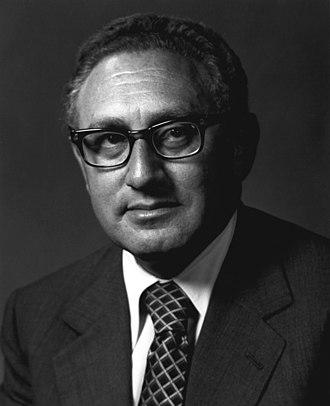
During the Nixon administration, Henry A. Kissinger served as the Assistant to the President for National Security Affairs from January 1969 through the end of Nixon's presidency, acting as the chief architect of U.S. foreign policy. Throughout the White House taping period (February 1971 to July 1973), he was captured extensively on tape advising the president on pivotal events such as the secret opening to China, détente with the Soviet Union, and the negotiation of the Paris Peace Accords. In September 1973, shortly after the taping system was dismantled, Kissinger was additionally appointed as Secretary of State, holding both powerful positions simultaneously until Nixon's resignation in August 1974.
What Kissinger talks about on the tapes
Vietnam War 628Foreign Policy 477Public relations 209People's Republic of China 138Congressional relations 135Diplomacy 122Press relations 92Soviet Union 90Military Strategy 81US-Soviet Relations 75Peace negotiations 74Economic policy 68
Conversations (1,504)
— Page 9 of 16President Nixon met with H. R. Haldeman, Henry Kissinger, and Admiral Thomas Moorer to coordinate the U.S. military and public relations response to the massive North Vietnamese invasion. Nixon expressed intense frustration with military reporting and the lack of aggressive action, ordering naval forces to prepare for a selective blockade and authorizing expanded air strikes and naval gunfire against the invasion force. The participants discussed strategies for managing the optics of the conflict, the potential for an orderly South Vietnamese retreat to better defensive positions, and the necessity of winning the engagement to maintain U.S. global credibility.
President Nixon met with H. R. Haldeman and Henry Kissinger to discuss the administration's public relations strategy regarding the North Vietnamese offensive and the management of domestic political issues. The group addressed the need to counter defeatist rhetoric concerning the war and evaluated the effectiveness of recent bombing campaigns and news coverage. Additionally, they reviewed strategies for handling upcoming campaign contribution disclosure requirements and debated the drafting of a speech concerning aid to parochial schools.
President Nixon met with Robert S. Ingersoll to provide final instructions and strategic guidance prior to Ingersoll's departure for his new post as Ambassador to Japan. The conversation emphasized the vital importance of the U.S.-Japan alliance, the necessity of maintaining personal channels of communication to bypass potential bureaucratic leaks, and the delicate management of economic competition between the two nations. Nixon also underscored the context of his recent opening to the People's Republic of China, assuring that this shift was not intended to undermine U.S.-Japanese relations but rather to secure regional stability.
President Nixon met with Henry Kissinger, Melvin Laird, and John Chafee to discuss the worsening North Vietnamese offensive and the military response required to protect South Vietnamese positions. Nixon emphasized the necessity of using intensified air and naval power to grind down invading forces, comparing the tactical retreat to historical battles like Ypres and Verdun to underscore his strategy of consolidation and counter-offensive. The President also discussed upcoming U.S.-Soviet relations and political messaging for his administration, while offering personal counsel to Chafee regarding his campaign for the U.S. Senate.
President Nixon and Henry Kissinger met briefly to address a scheduling conflict involving an unidentified individual's appointment with the President. The exchange served as a quick logistical coordination to manage the President's immediate agenda. No substantive policy matters were recorded, as the discussion focused primarily on the status of the upcoming meeting.
President Nixon and Henry Kissinger met to discuss the intensifying North Vietnamese offensive and strategies to counter it, including the use of B-52 strikes and naval gunfire. Nixon expressed frustration with Secretary of Defense Melvin Laird’s pessimism and perceived lack of enthusiasm, contrasting him unfavorably with the supportive Kenneth Rush. The two leaders emphasized that the United States must project an image of unpredictable resolve to pressure the Soviet Union and China while maintaining that national security decisions remain independent of the upcoming 1972 election. Consequently, they directed preparations for expanded air operations and potential mining contingencies to signal American strength.
President Nixon met with his inner circle and advisors, including Henry Kissinger, John Mitchell, and H.R. Haldeman, to discuss the intensifying North Vietnamese offensive and the resulting requirements for U.S. military response, specifically air strikes. The conversation covered the necessity of maintaining national resolve and foreign policy credibility amidst political pressure and the upcoming 1972 election. They also addressed the ITT political controversy, with Mitchell advising the President to handle it with caution, and briefly touched upon diplomatic staffing changes and the upcoming Soviet summit.
President Nixon and Henry Kissinger discuss the stalled military progress in Vietnam caused by poor weather, which has hindered effective air strikes. The two explore options for increasing pressure, including a planned strike on Haiphong and more intensive use of B-52s in the B-3 area and above the DMZ. Nixon emphasizes the necessity of a broad diplomatic offensive by U.S. ambassadors to highlight the North Vietnamese aggression across the DMZ and reaffirms his desire to maintain aggressive military momentum.
President Nixon and Henry Kissinger met to discuss military operations in Vietnam, specifically focusing on the deployment of B-52 bombers. Nixon expressed frustration regarding delays caused by weather conditions and sought confirmation that military commanders had the necessary authority to launch strikes. The President directed Kissinger to ensure that massive air strikes were carried out over the next 24 hours to maintain momentum in the conflict.
President Nixon and Henry Kissinger discussed the ongoing North Vietnamese offensive and their frustration with the lack of aggressive military responses from U.S. air commanders. The participants evaluated the effectiveness of current air strikes and naval gunfire while debating the potential need for a leadership shake-up, including the possible replacement of commanding officers to ensure more imaginative and vigorous tactics. Additionally, Nixon emphasized the psychological importance of massive B-52 strikes and analyzed the geopolitical risks for the Soviet Union regarding the conflict ahead of their upcoming summit.
President Nixon, Henry Kissinger, and Admiral Thomas Moorer discussed the urgent need to increase the intensity of U.S. air operations in Vietnam, specifically focusing on expanding B-52 sorties to achieve psychological impact. Nixon expressed dissatisfaction with current leadership and mandated the immediate appointment of an experienced, aggressive air commander to oversee the campaign. Moorer committed to providing a recommendation for this new commander by noon and working with the Air Force Chief of Staff to expedite the deployment of additional aircraft.
President Nixon met with Henry Kissinger, William Rogers, and several staff members to discuss the ongoing North Vietnamese offensive and the resulting military and diplomatic response. The participants reviewed the status of air strikes, the performance of the South Vietnamese military, and the necessity of maintaining a low-profile press strategy until military actions are clearly justified by enemy provocation. Additionally, the group coordinated logistics for upcoming presidential foreign travel, specifically focusing on the USSR trip and potential stopovers in Poland and Iran, while also briefly assessing the 1972 Democratic presidential primary landscape.
President Nixon and Henry Kissinger discuss the need for more aggressive military action in Vietnam to counter enemy supply movements and boost morale. Nixon expresses frustration with the current lack of concentrated force and instructs Kissinger to arrange a meeting with General John W. Vogt Jr. to deliver a stern directive regarding his new command. Additionally, Nixon orders an immediate escalation in naval engagement, directing the military to bypass restrictive operational boundaries and conduct heavy shelling and air strikes on supply depots like Dong Hoi to provide a necessary psychological shift in the conflict.
President Nixon met with H.R. Haldeman, Henry Kissinger, and John Vogt to discuss the critical need for more aggressive and imaginative aerial military operations in Vietnam. Nixon emphasized the necessity of concentrating forces for maximum impact rather than routine bombing, explicitly charging Vogt with revitalizing the 7th Air Force's performance. Additionally, the President and Haldeman addressed public relations strategies, deciding to exert tighter control over the visual framing and media headlines of all presidential appearances.
President Nixon, Henry Kissinger, and Alexander Haig met to analyze the North Vietnamese offensive and coordinate U.S. military and diplomatic responses. Nixon emphasized the necessity of using concentrated air and naval power to counter the invasion, explicitly rejecting a televised address to avoid signaling weakness or inviting domestic criticism. The participants discussed the progress of South Vietnamese forces, the effectiveness of B-52 strikes against North Vietnamese logistics, and the strategic importance of signaling resolve to the Soviet Union prior to the upcoming summit.
President Nixon met with H. R. Haldeman, Henry Kissinger, and Alexander Butterfield to manage the administration's public relations, messaging, and political strategy. Key discussions included the ITT case and the selection of the Republican National Convention site, criticism of speechwriting staff, and the administration's aggressive approach to domestic issues such as busing, crime, and morality. Nixon emphasized the need to prioritize major issues and ordered a shake-up of his speechwriting team to ensure messaging aligned with his conservative agenda.
President Nixon met with William J. Porter and Henry Kissinger to discuss the administration's strategy regarding the ongoing Vietnam War and the Paris peace negotiations. The President emphasized the need for a tough, firm public stance following the North Vietnamese offensive, specifically instructing Porter to expose the enemy's cynicism in breaking off talks while escalating military aggression. The group also reviewed current military intelligence, noting the poor performance of North Vietnamese forces and the significant increase in U.S. air and naval strikes intended to force a settlement. Additionally, the President expressed frustration with diplomatic formalities, reflecting on his recent signing of the Biological Warfare Treaty while criticizing Soviet support for North Vietnamese aggression.
President Nixon and Henry Kissinger discussed the logistical arrangements for upcoming U.S.-USSR relations, including a meeting between First Lady Pat Nixon and Mrs. Anatoliy Dobrynin, and the coordination of the President's planned Moscow summit. A significant portion of the conversation focused on the North Vietnamese offensive and the administration's strategic response, which included aggressive surveillance of Soviet ships and the potential use of naval mines. Kissinger and Nixon evaluated the geopolitical stakes of the Vietnam conflict, framing it as a critical test of U.S. credibility that could influence future Soviet actions in the Middle East and the viability of the Berlin treaties.
Henry Kissinger consulted with a White House operator to facilitate a telephone call to Soviet Ambassador Anatoliy F. Dobrynin. President Nixon was present in the background during the request, signaling his direct involvement in managing diplomatic communication. The primary objective of the call was to establish a channel for high-level engagement with the Soviet representative.
Henry A. Kissinger and Soviet Ambassador Anatoliy F. Dobrynin coordinated logistics for a tea meeting between First Lady Pat Nixon and Irini Dobrynin. The two confirmed the scheduled time for 4:30 p.m. the following day at the White House. Kissinger provided instructions for Mrs. Dobrynin to enter through the diplomatic entrance, noting that the gesture was highly appreciated by the President and the First Lady.
President Nixon and Henry Kissinger met in the Old Executive Office Building to coordinate administrative scheduling and address high-level policy priorities. The brief discussion served to synchronize the President's calendar with Kissinger's ongoing foreign affairs initiatives. No specific policy breakthroughs were recorded during this abbreviated session.
President Nixon and Henry Kissinger met to discuss the escalating military situation in Vietnam, specifically evaluating the impact of recent B-52 strikes and the performance of South Vietnamese forces against the North Vietnamese offensive. They strategized on managing domestic political fallout and media messaging, agreeing that Nixon should delay a formal speech to avoid appearing overly defensive or anxious. Additionally, they reviewed diplomatic maneuvers regarding the Soviet Union and China, emphasizing the need for firm resolve in maintaining foreign policy objectives despite potential criticism.
President Nixon hosted Henry Kissinger’s father, Louis, and his wife, Paula, for a brief social visit to the Oval Office. The meeting served as a gesture of appreciation for Henry Kissinger’s service, during which the President formally commended the parents for their son’s achievements. Nixon presented the couple with commemorative presidential gifts, including a money clip and a compact, before concluding the session with a photo opportunity.
President Nixon and Henry Kissinger met to coordinate their strategy regarding the North Vietnamese offensive and the management of domestic and international public opinion. They discussed the effectiveness of recent B-52 air strikes and the potential for expanded military pressure on North Vietnam, while simultaneously analyzing the muted reaction from the Soviet Union and China. The President decided to delay a formal public address on the conflict to avoid creating an artificial crisis that could hinder broader foreign policy objectives, emphasizing that military progress on the ground must remain their primary focus.
President Nixon and H. R. Haldeman met to coordinate the President's upcoming schedule, focusing on administrative changes, travel plans, and the finalization of a speech for his trip to Canada. The discussion moved to managing press relations for the upcoming Soviet summit, with Nixon expressing frustration over the administration's perceived tendency to court hostile media figures rather than supporting loyalist journalists. They also evaluated domestic policy messaging, particularly concerning food prices and the administration's response to the North Vietnamese offensive, while deciding to maintain a firm, proactive stance in their public communications.
President Nixon, H. R. Haldeman, and Henry Kissinger consulted on selecting an appropriate neutral location for a two-night stopover prior to the President's upcoming trip to the Soviet Union. Nixon expressed a strong preference for Austria over Switzerland or Spanish military bases, citing personal rapport with Austrian officials and the country's welcoming atmosphere. The group decided that Kissinger would discreetly contact Ambassador Karl Gruber to assess the feasibility of a visit to Salzburg, ensuring the stop remained a low-key rest period rather than a formal diplomatic summit.
President Nixon and Henry Kissinger met to discuss intensifying military operations in Vietnam, specifically focusing on increasing the aggressiveness of U.S. naval gunfire and air attacks near the DMZ. Nixon directed Kissinger to order the Navy to advance its positioning to strike further inland, while also deciding to dispatch Alexander Haig to Vietnam for a firsthand situational report. Additionally, the pair coordinated a strategy for briefing Congressional leaders Mike Mansfield and Hugh Scott and reviewed logistical plans for the upcoming Soviet summit.
President Nixon and Henry Kissinger discuss military strategy regarding the North Vietnamese offensive, focusing on the need for decisive, aggressive action while public and Congressional support for the administration remains high. Nixon emphasizes his intent to move naval ships closer to Hanoi and insists that military leaders utilize tactical air strikes to punish North Vietnamese forces regardless of political polls. To ensure a focused message, Nixon instructs Kissinger to handle an upcoming congressional briefing alone, specifically excluding Secretary of State William P. Rogers to avoid potential interference regarding peace negotiations.
President Nixon met with Republican congressional leadership to coordinate administration talking points on sensitive domestic and foreign policy issues. The discussion focused primarily on the ongoing military situation in Vietnam, emphasizing the success of Vietnamization, the importance of maintaining public support, and the necessity of keeping political opposition from undermining the war effort. Additionally, the President and his advisors briefed members on key legislative priorities, specifically the administration's stance against forced busing and efforts to address rising food prices and drug-related crime. The participants discussed strategies for distributing these fact sheets and maintaining a unified front to influence public perception and legislative outcomes.
President Nixon met with H.R. Haldeman, John Connally, John Ehrlichman, Henry Kissinger, and other staff to coordinate administration strategy on several fronts. Key discussions included efforts to quash a Department of Justice fishing rights lawsuit against Texas, the management of congressional briefings on Vietnam and domestic issues, and tactical adjustments for the upcoming election campaign. Nixon emphasized the need for more persuasive, memorable speechwriting and directed his team to adopt a more aggressive, "hard-hitting" political posture against Democrats on issues like busing and food prices.
President Nixon and Henry Kissinger met to coordinate logistics and preparations for an upcoming trip to New York. The discussion focused on departure arrangements and planning for scheduled meetings during the visit. This administrative briefing ensured that the President’s travel itinerary and associated engagements were properly aligned.
President Nixon and Henry Kissinger discussed the potential for a secret trip to the Soviet Union to negotiate an end to the Vietnam War, weighing the implications of such a visit on U.S. relations with Hanoi and the People's Republic of China. Kissinger emphasized his belief that Soviet leadership was feeling increased pressure and might be willing to act as a intermediary. Following the strategic discussion, Alexander Butterfield and Lee Huebner joined the meeting to finalize and refine the tone of an upcoming presidential speech intended for delivery in Canada.
President Nixon and Henry Kissinger met to finalize the phrasing of a sensitive message intended for Chinese Premier Chou En-lai, specifically regarding the diplomatic rhetoric following recent visits by Senators Mansfield and Scott. The discussion centered on ensuring technical accuracy and carefully balancing U.S.-PRC relations while managing potential complications with the Soviet Union. Nixon directed Kissinger to have the document retyped with specific amendments to ensure the language remained consistent with previous administration statements.
President Nixon met with Stephen B. Bull to facilitate a telephone discussion regarding administrative matters, including the status of H.R. Haldeman and arrangements involving Alexander P. Butterfield at Camp David. Following Bull's departure, Nixon engaged in a brief follow-up call with Henry A. Kissinger. This interaction highlights the internal coordination of staff logistics and communications between the President and his key foreign policy and operational advisors.
President Nixon and Henry Kissinger discuss diplomatic maneuvering regarding the Vietnam War, focusing on communication with Soviet Ambassador Anatoliy Dobrynin to influence Moscow ahead of the upcoming U.S.-Soviet summit. Kissinger reports on the Soviets' lackluster public support for Hanoi and the administration's strategic efforts to maintain leverage in diplomatic messaging. Additionally, the President finalizes logistics for an evening meeting with General Alexander Haig at Camp David to coordinate current policy objectives.
President Nixon and Henry Kissinger coordinated a schedule to convene a meeting with H.R. Haldeman and other staff members in the Executive Office Building. The conversation served primarily as an administrative bridge to facilitate the assembly of key advisors for a briefing or policy discussion. Nixon directed Kissinger to join him shortly, confirming the logistics for the group session.
President Nixon met with H. R. Haldeman and Henry Kissinger to coordinate the administration's response to the intensifying Vietnam War, focusing on military strategy and domestic political management. The President directed that military operations be intensified, specifically tasking naval and air commanders to take greater risks to break the stalemate, while simultaneously managing congressional and public opinion regarding the conflict. Kissinger briefed the President on secret diplomatic communications with Moscow aimed at securing a settlement, with Nixon emphasizing that the upcoming trip to the Soviet Union remained contingent upon meaningful progress regarding the war.
President Nixon, Rose Mary Woods, and Henry Kissinger met to finalize the President's upcoming speech for his trip to Canada and coordinate congressional relations. Following Woods's departure, Kissinger briefed the President on securing public and congressional support for the war in Vietnam, specifically regarding the efforts of Representatives F. Edward Hebert, George H. Mahon, and John C. Stennis. The discussion focused heavily on the strategic necessity of upcoming air strikes against petroleum, oil, and lubricant (POL) dumps in Haiphong, with Kissinger detailing operational plans and the perceived effectiveness of previous military actions in Laos and Cambodia.
Henry Kissinger contacted the White House operator to facilitate an urgent telephone connection with Secretary of State William P. Rogers. This brief administrative interaction served as the necessary step to bridge communication between the National Security Advisor and the State Department. The conversation was limited to initiating this official contact for subsequent high-level discussion.
Henry Kissinger consulted with the White House operator to coordinate communication with Secretary of State William P. Rogers regarding his travel schedule. The brief exchange focused on confirming Rogers’s transit status and arrival at the airport to ensure Kissinger could reach him via telephone while he was aboard the aircraft. Kissinger concluded the call by deciding to initiate direct contact once Rogers was positioned on his flight.
President Nixon and Henry Kissinger met to discuss the military situation in Vietnam and the strategic necessity of upcoming air strikes despite potential opposition from Defense Secretary Melvin Laird and Admiral Thomas Moorer. Nixon expressed resolve to proceed with the strikes, dismissing concerns about field commander reactions and skepticism regarding Laird's intentions. Kissinger agreed to receive a military briefing first to better inform the President's final decision on whether to attend the briefing himself.
President Nixon and Henry Kissinger met to coordinate strategy regarding the Vietnam War, specifically addressing the North Vietnamese proposal for a public plenary session on April 27. They determined that the U.S. should condition its attendance at the public meeting on the North Vietnamese agreeing to a prior private meeting on April 24, aimed at breaking the diplomatic deadlock. Furthermore, they discussed the possibility of a naval blockade of Haiphong and emphasized that Nixon’s upcoming trip to Moscow must be contingent upon substantive progress regarding Vietnam, with the President prepared to cancel the summit if necessary to protect his administration's political standing.
President Nixon and Henry Kissinger discuss the tactical delay of a meeting or communication involving Soviet Ambassador Anatoliy Dobrynin. Expressing concern over potential manipulation by the Soviets, the President emphasizes the need for an FBI background check to ensure security. The two agree to postpone their next move until they have verified the reliability of the situation.
President Nixon and Henry Kissinger discussed intensified military operations in North Vietnam, specifically focusing on naval bombardment and air strikes against Haiphong's shore batteries and oil storage facilities. The conversation centered on the potential cancellation of Kissinger’s upcoming Moscow trip and the subsequent implementation of a blockade as a retaliatory measure. Additionally, they reviewed diplomatic strategy regarding future peace negotiations, with Nixon instructing Kissinger to ensure the administration takes a firm public stance against repeating the failed 1968 bombing halt.
President Nixon and Henry Kissinger discussed the ongoing Vietnam War and the administration's strategic response to North Vietnamese aggression. They reviewed recent intelligence regarding a North Vietnamese message relayed through Soviet intermediary Anatoliy Dobrynin, concluding that the North's recent overtures for peace talks resulted from the pressure of intensified U.S. air strikes. Nixon reaffirmed his commitment to maintaining a hard-line military strategy, including targeted bombing in the North, while Kissinger prepared for his upcoming diplomatic trip to Moscow to discuss a potential summit and the Vietnam settlement.
President Nixon and Henry Kissinger discuss the successful outcome of recent U.S. air strikes against North Vietnamese targets, specifically noting the extensive damage inflicted on petroleum, oil, and lubricant (POL) storage areas near Hanoi and Haiphong. They assess the status of the North Vietnamese offensive at An Loc, emphasizing the importance of continued military pressure to erode the enemy's fighting capability while maintaining strategic flexibility. Kissinger provides updates on his preparations for a high-stakes trip to Moscow, where he intends to leverage the administration's firm military stance to manage relations with the Soviet Union and pressure North Vietnam toward negotiations.
President Nixon and Henry Kissinger spoke briefly to coordinate a follow-up briefing regarding recent reports from Alexander Haig. Kissinger, who was attending a personal engagement, provided a preliminary update on the situation in Vietnam. The President deferred a detailed discussion until Kissinger returned home, prioritizing a formal report over an immediate phone conversation.
President Nixon and Henry Kissinger discuss the tactical situation in Vietnam, specifically the successful use of B-52 strikes and air power to stabilize the defense around Route 13 and An Loc. The two review reports from General Alexander Haig and General James Hollingsworth, expressing confidence that South Vietnamese forces can withstand current enemy pressure. Additionally, the pair coordinates arrangements for Kissinger's upcoming trip to Moscow, including a strategy to manage Secretary of State William P. Rogers's involvement and the planning of a private, secure meeting at Camp David to finalize preparations.
President Nixon and Henry Kissinger discussed the ongoing North Vietnamese offensive and the necessity of maintaining a firm, composed posture to ensure U.S. foreign policy credibility. They reviewed plans for a potential troop withdrawal, the administration's strategic response to Soviet and Chinese protests, and the military effectiveness of intensified bombing campaigns in North Vietnam. Nixon emphasized that he must act decisively regardless of domestic political consequences, viewing his leadership as essential to preventing future administrative weakness in foreign affairs.
President Nixon met with Witold Trampczynski to discuss the logistics and diplomatic significance of his forthcoming visit to Poland, emphasizing the importance of strong US-Poland relations due to the large Polish-American population. Prior to the meeting, Nixon and Henry Kissinger coordinated on sensitive Cold War geopolitical strategy, specifically regarding the precarious nature of the upcoming Soviet summit and the need to maintain a firm stance against the USSR. Following Trampczynski's departure, Nixon directed Kissinger to adopt a combative public messaging strategy, instructing his team to attack Democrats for their perceived lack of support for the South Vietnamese effort against the recent Northern invasion.
President Nixon and Henry Kissinger met to strategize on the Vietnam War, focusing on managing domestic political fallout from North Vietnam's offensive and the potential for a negotiated settlement involving the Soviet Union. Nixon emphasized the need for a firm public stance against Democratic critics and discussed the potential for linking the upcoming Moscow summit to progress in Paris peace negotiations. Following Kissinger's departure, Ronald Ziegler joined the President to discuss press reporting on the Moscow trip itinerary and to coordinate scheduling adjustments for First Lady Pat Nixon's upcoming events, including a table tennis exhibition.
President Nixon and Henry Kissinger met to discuss strategy regarding the ongoing North Vietnamese offensive and the potential for a diplomatic interim agreement. Kissinger argued that while a blockade could be effective, an interim solution—bolstered by Soviet guarantees and a cessation of enemy offensives—could protect Nixon's political standing and ensure the success of the upcoming Moscow summit. Nixon emphasized his commitment to military toughness, including the possibility of a blockade, and expressed strong approval of recent South Vietnamese military performance as reported by General Alexander Haig. They concluded that maintaining a firm posture while keeping the Moscow summit intact remained their primary objective.
President Nixon met with Ronald Ziegler and Henry Kissinger to coordinate the administration's public posture regarding military actions in Indochina, specifically the recent bombing of Haiphong and the presence of Soviet ships. Kissinger briefed the President on his communications with Soviet Ambassador Anatoliy Dobrynin and journalist Stewart Alsop, emphasizing the administration's determination to maintain a firm stance despite concerns over the upcoming Moscow summit. The group finalized plans for the President to meet with Secretary of Defense Melvin Laird and Admiral Thomas Moorer to ensure consistent testimony before the Senate Foreign Relations Committee.
President Nixon met with Henry Kissinger, H. R. Haldeman, Melvin Laird, and Admiral Thomas Moorer to coordinate the administration's public and military response to the North Vietnamese Easter Offensive. The group discussed the importance of maintaining a firm stance to protect U.S. credibility and ensure the success of the President's upcoming Moscow trip, while emphasizing that the ongoing conflict was a Soviet-backed "massive communist invasion." Significant decisions included Laird’s plan to publicly highlight the effectiveness of South Vietnamese forces and U.S. air support, while maintaining strategic ambiguity regarding potential naval blockades or mining operations.
President Nixon, Henry Kissinger, and Secretary of Defense Melvin Laird met to evaluate the ongoing military situation in Vietnam and coordinate strategy ahead of Kissinger's upcoming summit preparations in Moscow. The participants expressed frustration over unauthorized press reports suggesting internal administration discord regarding air strikes, emphasizing the need for a unified front to project strength and pressure North Vietnam. Nixon sought to maintain leverage for his potential Moscow visit, specifically discussing the tactical efficacy of air campaigns, the strategic value of a potential naval blockade, and the importance of maintaining a firm stance against North Vietnamese aggression to ensure favorable negotiation outcomes.
President Nixon directs the White House operator to place a call to Secretary of Defense Melvin R. Laird. This request follows a private consultation between the President and National Security Advisor Henry A. Kissinger regarding national security or defense-related matters. The conversation functions primarily as an administrative step to facilitate immediate communication between the President and the Secretary of Defense.
President Nixon met with H.R. Haldeman and Henry Kissinger to review administration messaging, political strategy, and foreign policy developments. Key discussions included orchestrating a media push against Prime Minister Pierre Trudeau following anti-U.S. demonstrations in Canada, managing the ITT controversy, and framing the administration's hardline stance on the Vietnam War. Nixon also prioritized controlling the narrative regarding D.C. crime statistics and discussed future protocols for staff reporting on international travel.
President Nixon and Henry Kissinger met to evaluate the status of the Vietnam War and the strategic implications of increased U.S. bombing operations ahead of Kissinger’s upcoming trip to Moscow. They discussed the effectiveness of recent air and naval strikes, specifically noting the pressure being placed on North Vietnam and the diplomatic necessity of demonstrating strength to the Soviets. Nixon emphasized the importance of maintaining military momentum to ensure a strong bargaining position, while both men weighed the risks and potential fallout of a naval blockade on the upcoming Moscow summit.
President Nixon, H. R. Haldeman, Henry Kissinger, and Charles Colson met to discuss domestic and foreign policy strategies amidst escalating public protests over the Vietnam War. They focused on leveraging public support for the administration's aggressive stance against the North Vietnamese offensive, while coordinating counterattacks against Democratic critics and media outlets perceived as hostile. A key decision was to maintain a firm, hawkish rhetoric regarding the war and to pressure congressional allies, such as Barry Goldwater, to introduce resolutions condemning North Vietnam to force Democrats into an indefensible political position. Additionally, the group analyzed the shifting Democratic primary landscape, concluding that the party's internal divisions and the rise of George McGovern's campaign played to the President's electoral advantage.
President Nixon, Henry Kissinger, and Secretary of Agriculture Earl Butz met to debrief on Butz's recent trip to the Soviet Union and coordinate messaging ahead of the President's upcoming Moscow summit. The discussion focused on the potential for U.S.-Soviet agricultural trade and grain deals, which Nixon insisted must be linked to broader geopolitical progress, specifically regarding the conflict in Vietnam. They agreed that while Butz should highlight positive, preliminary discussions, he must publicly emphasize that significant hurdles regarding credit terms and international political tensions remained unresolved to avoid appearing desperate for an agreement.
Henry Kissinger updates President Nixon on a highly successful and warm meeting with Chinese officials, confirming Beijing's strategic interest in maintaining a U.S. presence in Asia as a counterweight to the Soviet Union. The discussion then shifts to the vulnerability of U.S. officials during diplomatic visits to Moscow, with both men expressing frustration over the perceived weakness of Ambassador Jacob Beam and other Cabinet members in rebutting Soviet propaganda. Nixon concludes by emphasizing the need for stricter oversight of U.S. personnel traveling to the Soviet Union to prevent them from being manipulated or misled.
President Nixon and Henry Kissinger met to coordinate strategy following the President's recent discussions regarding sensitive foreign policy matters. The brief consultation served as a follow-up to earlier deliberations, likely centering on ongoing diplomatic efforts in Vietnam or preparations for international summits. No formal transcript is available to detail specific directives, but the meeting functioned as a high-level synchronization of executive decision-making.
President Nixon and Henry Kissinger met briefly in the Old Executive Office Building to discuss ongoing foreign policy matters. The exchange lacks a substantive transcript, suggesting it served as a short procedural check-in or a lead-in to further deliberations. No specific policy decisions or action items are documented in this brief recorded segment.
President Nixon and Henry Kissinger met to discuss the escalating military situation in Vietnam, specifically the progress of air strikes and the status of North Vietnamese ground attacks at locations such as An Loc and Long Tieng. They analyzed the domestic political climate, expressing frustration with hostile media coverage and campus anti-war protests, while noting support for the President from figures like George Wallace. Furthermore, they coordinated strategy for Kissinger’s upcoming trip to Moscow and the potential public announcement of a presidential summit with Soviet leadership to maximize political impact.
President Nixon met with H. R. Haldeman to discuss the impending resignation of Treasury Secretary John Connally, focusing on the political timing and the need to frame his departure as a supportive transition rather than a sign of administration instability. They strategized on potential replacements, specifically identifying George Shultz as the ideal successor due to his expertise and free-market philosophy. Additionally, the President and his staff coordinated a cover story for Henry Kissinger’s secret diplomatic mission to Moscow, deciding to utilize a fake 'periodic staff planning session' at Camp David to distract the press.
President Nixon, Henry Kissinger, and Patrick Buchanan coordinated on the development of a speech for Vice President Spiro Agnew regarding the Vietnam War. The discussion focused on drafting rhetoric to sharply criticize Ivy League university presidents who opposed the administration's bombing campaigns against North Vietnamese military targets. Nixon directed his staff to emphasize themes of North Vietnamese aggression and to explicitly attack the perceived lack of patriotism and moral courage among academic leaders.
President Nixon and Henry Kissinger met in the Oval Office to coordinate strategy ahead of Kissinger's secret mission to Moscow to negotiate with Soviet leaders regarding the Vietnam War and a potential summit. They discussed maintaining a tough military posture, including continued bombing of North Vietnamese targets to leverage negotiations, while framing the Moscow trip as a broader diplomatic effort. The participants also finalized plans to conceal Kissinger’s location by claiming he was attending staff meetings at Camp David, effectively keeping the press and public in the dark until a planned announcement following the talks.
President Nixon and Henry Kissinger discussed the diplomatic risks and strategic conditions surrounding Kissinger’s upcoming trip to Moscow ahead of the Soviet summit. They reached a consensus that any public announcement regarding a return to plenary peace talks on Vietnam must be backed by ironclad Soviet guarantees to prevent the U.S. from being forced to halt bombing and blockade operations prematurely. Following this, Nixon consulted with Charles Colson regarding political pushback from university administrators over the administration’s Vietnam policies, emphasizing a need for a firm, adversarial response to critics.
President Nixon and Henry Kissinger coordinated on an urgent communication strategy, focusing on the need to relay specific arguments to Charles W. Colson. The President directed the White House operator to connect him with Colson to discuss these points immediately. This exchange underscores the high level of coordination between Nixon and his top advisor regarding the handling of sensitive political tasks.
President Nixon met with Henry Kissinger, Alexander Haig, and other staff members to finalize the strategy for an upcoming televised address regarding the worsening military situation in Vietnam. The President emphasized his desire for a simple, direct speech that would frame the North Vietnamese invasion as a clear act of aggression while preparing the public for potential military losses. A significant portion of the conversation focused on the necessity of matching tough rhetoric with decisive air and naval strikes, as well as the importance of maintaining diplomatic credibility ahead of the upcoming Soviet summit. Nixon also instructed his team to improve their public relations efforts, expressing deep frustration with the lack of aggressive messaging from the State Department and the Pentagon regarding the conflict.
President Nixon met with H.R. Haldeman, Ronald Ziegler, and Henry Kissinger to strategize for an upcoming televised address regarding the Vietnam War and secret diplomatic breakthroughs. They discussed the administration's plan to maintain a hard-line stance on the continued bombing of North Vietnam while emphasizing a commitment to peace through secret channels with the Soviet Union. A primary goal of the meeting was to coordinate the messaging to keep administration supporters mobilized, confuse political opponents, and discredit media critics who were skeptical of the administration's foreign policy maneuvers.
President Nixon and Henry Kissinger met to coordinate the final drafting and scheduling of an upcoming presidential speech concerning the ongoing conflict in Vietnam. They discussed the tactical nuances of troop withdrawals and the necessity of establishing a firm negotiating position regarding territorial occupation. The primary focus centered on refining the administration's public message while ensuring that military considerations remained central to their diplomatic strategy.
President Nixon met with aides Winston Lord and John K. Andrews, Jr. to rehearse and refine a forthcoming speech regarding the Vietnam War. During the session, the President read a draft that emphasized his refusal to compromise U.S. national interests for election-year political gains, while framing the conflict as a test of American resolve against communist aggression. The discussion focused on adjusting the speech’s length and wording to underscore the necessity of achieving "peace with honor" and maintaining the integrity of the presidency.
President Nixon met with Charles Colson and other staff members to strategize regarding the public perception of his Vietnam policy and the administration's upcoming diplomatic efforts. They discussed the positive impact of increased bombing in North Vietnam, the success of recent press backgrounders in shaping the President's image as a courageous leader, and the importance of using supportive polling data to counter political opposition. Nixon emphasized his determination to maintain military pressure regardless of political risks to his reelection or the upcoming Soviet summit, while also coordinating the public handling of Henry Kissinger's secret trip to Moscow.
President Nixon and Henry Kissinger discussed upcoming public relations strategy regarding the Vietnam War, specifically noting Governor Ronald Reagan's strong support for the administration's bombing campaign. Kissinger reported that he shared speech materials with Soviet diplomat Yuli Vorontsov to clarify the U.S. position amidst intense press speculation. The two agreed to maintain a unified message and avoid further media contact ahead of a scheduled afternoon meeting to finalize the President's speech.
President Nixon met with Henry Kissinger, Ronald Ziegler, and other staff to finalize a major televised speech regarding troop levels and the ongoing conflict in Vietnam. The discussion focused on refining the speech's tone to appeal to hawkish supporters while managing political fallout from critics and maintaining strict secrecy surrounding Kissinger’s recent diplomatic mission to Moscow. Nixon also provided instructions on how to handle Secretary of State William Rogers and SALT negotiations, emphasizing the need to consolidate executive control over diplomatic messaging and strategy.
President Nixon and Henry Kissinger met briefly in the Old Executive Office Building to coordinate their daily agendas. The discussion focused on synchronizing their respective schedules to ensure sufficient time for high-level consultations. No major policy decisions were reached during this administrative exchange.
President Nixon and Henry Kissinger met to refine the President’s upcoming Vietnam speech and discuss the ongoing military and diplomatic situation. Nixon expressed frustration over bureaucratic delays in executing his military orders and emphasized his determination to bypass Secretary of Defense Melvin Laird. The two also analyzed the political impact of the North Vietnamese offensive, the potential effects of Nixon's upcoming summit in Moscow, and the administration's need to maintain a projection of strength against domestic critics.
President Nixon met with Alexander Butterfield and Henry Kissinger to manage his immediate schedule and finalize administrative tasks, including the signing of official documents. The participants coordinated logistics for upcoming appointments, such as a meeting with George Shultz and Herbert Stein, and discussed preparations for a congratulatory call to the Apollo XVI astronauts. This brief session served to organize the President’s agenda and facilitate communication with key staff and external officials.
President Nixon, Henry Kissinger, and H.R. Haldeman met to coordinate the media strategy and final preparations for the President’s upcoming speech on the Vietnam War. They discussed the administration's decision to withhold advance copies of the speech from the press, opting instead to have Kissinger personally brief television networks to ensure control over the narrative regarding North Vietnamese aggression and South Vietnamese resilience. Additionally, the participants reviewed the status of Soviet diplomatic relations, including the status of strategic arms limitation talks and the logistics for the President's upcoming Moscow summit.
President Nixon and Henry Kissinger discuss the endgame for U.S. military involvement in Vietnam, debating whether to fully withdraw all personnel or maintain a presence of advisors and civilians. Nixon expresses concern over domestic political pressures and the perception of American weakness, framing the conflict's mounting casualties in the context of historical wars. The discussion centers on maintaining resolve against political critics and the potential impact of the ongoing battle at Kontum on U.S. policy decisions.
President Nixon and Henry Kissinger met to review and finalize the text of a forthcoming nationally televised address regarding the Vietnam War. They discussed strategic revisions to the speech, emphasizing the prevention of a potential communist bloodbath and the necessity of maintaining U.S. credibility. Kissinger also coordinated with Senator Robert C. Byrd to delay a scheduled Democratic caucus vote on Vietnam policy, aiming to avoid public dissent that could undermine sensitive, ongoing diplomatic efforts in Paris and Moscow.
Henry Kissinger contacts the White House operator to request a telephone connection with Senator Robert C. Byrd of West Virginia. This brief exchange serves as the administrative initiation for a follow-up discussion between the National Security Advisor and the Senator. No substantive policy matters are addressed in this logistics-focused conversation.
Henry Kissinger contacted Senator Robert C. Byrd to request a delay of an upcoming Democratic caucus regarding Vietnam, citing the extreme sensitivity of ongoing diplomatic negotiations with Le Duc Tho. Byrd explained that while he had already postponed the meeting at the request of J. William Fulbright, he was constrained by Senate leadership obligations and required a public justification to delay it further. Kissinger agreed to consult with President Nixon to determine if sufficient information could be shared with Byrd to provide that justification, while both men emphasized the need for strict confidentiality regarding their communication.
H. R. Haldeman, Henry Kissinger, and President Nixon coordinated regarding the scheduling of a Senate Democratic caucus, which had been a point of concern for the administration's Vietnam policy strategy. Kissinger reported that Senator Robert C. Byrd successfully delayed the caucus from the following day until the next Wednesday by requiring a formal written request. The group expressed satisfaction with this development, concluding that the delay had been effectively secured through Byrd's intervention.
President Nixon and Henry Kissinger met to coordinate the handling of Secretary of State William P. Rogers regarding sensitive Vietnam policy and Strategic Arms Limitation Talks (SALT). The two men expressed frustration with Rogers's attempts to claim credit for diplomatic breakthroughs and his potential to leak or interfere with upcoming presidential announcements. To mitigate these concerns, they decided to withhold full drafts of the President’s speech and technical SALT proposals from Rogers until the last possible moment to prevent unwanted revisions or unauthorized disclosure.
President Nixon and Henry Kissinger discuss internal administrative friction regarding ongoing arms control negotiations with the Soviet Union, specifically targeting the obstructionist behavior of Gerard C. Smith. Kissinger reports that Smith is attempting to undermine the inclusion of submarine provisions in the potential treaty, a move the Joint Chiefs of Staff strongly oppose. Nixon and Kissinger affirm their decision to proceed with a public statement on the progress of these negotiations to ensure they receive credit and to prevent the Soviets from controlling the narrative via leaks.
President Nixon and Henry Kissinger discuss tactical concerns regarding a forthcoming meeting with an individual identified as Jerry and the navigation of diplomatic or military agreements. The conversation focuses on potential friction points with the Joint Chiefs of Staff and the strategic distribution of credit for ongoing negotiations. They ultimately weigh the risks of withholding information or specific elements of an agreement to maintain control over the policy process.
President Nixon and Henry Kissinger spoke briefly to coordinate upcoming travel plans and discuss diplomatic strategy regarding Gerard C. Smith and ongoing US-Soviet relations. Kissinger updated the President on his staff interactions and upcoming media responsibilities. The President encouraged Kissinger to remain firm in his upcoming public appearances while deferring further tactical discussions until their next meeting.
President Nixon and Henry Kissinger held a brief, informal check-in regarding upcoming travel arrangements and the management of staff operations. Kissinger touched upon an idea concerning an individual named Smith, while the President encouraged Kissinger to prioritize his current workload and documentation. The exchange served primarily as a logistical synchronization before the two departed for separate engagements.
President Nixon and Henry Kissinger met to discuss managing public and media perceptions regarding ongoing Vietnam peace negotiations and the progress of the Strategic Arms Limitation Talks (SALT). Nixon expressed frustration with leaks originating from the State Department, which he believed were inaccurately portraying the administration's stance on cease-fire offers. Kissinger briefed the President on the necessity of controlling the narrative surrounding SALT negotiations to avoid appearing to accept strategic inferiority, specifically regarding submarine limitations. The two agreed on a strategy to maintain a unified public position while downplaying recent press speculation about breakthrough agreements.
President Nixon met with his national security team, including Henry Kissinger, Admiral Thomas Moorer, and Secretary of Defense Melvin Laird, to receive a comprehensive military briefing on the ongoing North Vietnamese Easter Offensive. Admiral Moorer provided a detailed regional analysis of the conflict, noting that while South Vietnamese forces were facing intense pressure and heavy casualties, they were holding key positions with the crucial assistance of U.S. air power and naval support. The President emphasized that the conflict would remain difficult but reaffirmed his commitment to maintaining air support and striking military targets in North Vietnam until the offensive subsided.
President Nixon met with Henry Kissinger, William Rogers, and several senior staff members to coordinate U.S. strategy regarding the upcoming Soviet Summit, the Strategic Arms Limitation Talks (SALT), and the ongoing North Vietnamese offensive. The discussions focused on ensuring a firm stance against Soviet-backed North Vietnamese aggression while maintaining diplomatic progress toward a SALT agreement. Nixon directed staff to prepare specific messaging for Ambassador Gerard Smith to ensure that U.S. negotiating positions were clearly defined as presidential directives, and he emphasized the need for a decisive military response—including a significant B-52 strike—should the North Vietnamese fail to halt their offensive operations.
President Nixon and Henry Kissinger met to discuss strategy for the upcoming negotiations with North Vietnamese representative Le Duc Tho, emphasizing a firm stance against the ongoing North Vietnamese offensive. They analyzed the effectiveness of the South Vietnamese military, noting significant tank losses attributed to heavy Soviet-supplied artillery, and debated the risks and potential PR fallout of intensified U.S. bombing campaigns. The President directed Kissinger to convey a clear, unwavering resolve to the North Vietnamese, asserting that the U.S. would not accept defeat or reward aggression.
President Nixon, H. R. Haldeman, and Henry Kissinger met to discuss critical updates regarding the North Vietnamese offensive and upcoming diplomatic negotiations, including the status of the Soviet summit. They analyzed recent military reports from General Creighton Abrams regarding the Army of the Republic of Vietnam's (ARVN) wavering performance and morale, while debating the necessity of intensified U.S. bombing in North Vietnam. The participants also reviewed strategic disagreements within the administration—specifically regarding Secretary of State William P. Rogers—concerning the Strategic Arms Limitation Talks (SALT) and the handling of Soviet submarine limits.
President Nixon and Henry Kissinger discuss high-stakes negotiations regarding the Vietnam War, focusing on the potential for renewed bombing of Hanoi and Haiphong to strengthen the U.S. bargaining position. They assess military leadership under General Creighton Abrams and evaluate strategies for communicating resolve to both the North Vietnamese and the Soviet Union. Nixon emphasizes his preference for a firm, disciplined negotiating approach, comparing his method to a poker player who refuses to bluff, while also touching on the importance of maintaining public and political support for these hard-line policies.
President Nixon directs Henry Kissinger to adopt a specific strategic posture during ongoing Vietnam negotiations by projecting an image of the President as being unpredictable and beyond control. By conveying a sense of despair regarding his own lack of influence over Nixon's future actions, Kissinger is instructed to pressure the North Vietnamese negotiators into offering substantive concessions. This tactical maneuver aims to leverage the threat of unspecified presidential retaliation to force a breakthrough in the diplomatic deadlock.
President Nixon and Henry Kissinger discuss the logistics and urgency of a pending trip, contingent upon progress in secret negotiations. They confirm the necessity of utilizing secure channels to send communications immediately to meet a specific deadline. The conversation serves to ensure that the necessary arrangements are underway to facilitate a potential departure on Friday.
President Nixon and Henry Kissinger discuss the tactical status of the ongoing North Vietnamese offensive and the resulting strategic necessity of authorizing air strikes. They deliberate on the timing of potential bombing campaigns, ultimately deciding against immediate action for the upcoming weekend. The conversation confirms that the administration maintains responsibility for these critical military decisions, notwithstanding ongoing negotiations involving Leonid Brezhnev.
President Nixon met with H. R. Haldeman and Henry Kissinger to coordinate the administration's messaging and response to the ongoing North Vietnamese offensive. The discussion centered on managing the press, specifically regarding public statements by Secretary of Defense Melvin Laird, and reviewing the viability of South Vietnamese military defenses. Kissinger briefed the President on his diplomatic communications with Soviet official Anatoliy Dobrynin and upcoming military planning sessions, leading to a decision to finalize bombing strategy for Haiphong in a subsequent private meeting.