Ziegler, Ronald L.
Ronald L. Ziegler served as White House Press Secretary from January 1969 to August 1974, acting as President Nixon's primary spokesperson throughout the taping period of February 1971 to July 1973. As the Watergate scandal escalated, Ziegler famously managed the administration's shifting public narratives and faced intense scrutiny from the press corps. In June 1973, his duties expanded when he was additionally named Assistant to the President following the resignation of Herbert Klein, holding both titles concurrently until the end of the administration in August 1974.
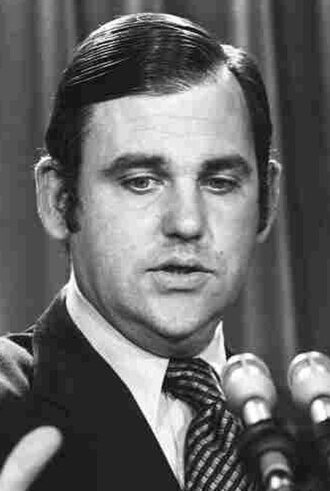
What Ziegler talks about on the tapes
Public relations 321Press relations 256Vietnam War 203Watergate 202Foreign Policy 129Congressional relations 105Media relations 97Henry Kissinger 95Economic policy 94Watergate scandal 80Media strategy 71Executive privilege 70
Conversations (1,199)
— Page 11 of 12President Nixon and Press Secretary Ronald Ziegler discuss the political fallout of the Watergate scandal and the emerging legislative reaction on Capitol Hill. Ziegler reports on positive outreach efforts with Senator James O. Eastland and confirms there have been no new developments regarding John W. Dean III, whom the President dismissively labels as a concern only until his future intentions are clear. The exchange concludes with Nixon requesting verification of the date of his most recent press conference.
President Nixon and Press Secretary Ronald L. Ziegler held a brief telephone conversation to verify the specific date of the President’s previous press conference. Ziegler confirmed for the President that the event took place on March 15th. This exchange appears to be a routine administrative check to ensure the accuracy of the administration's public records.
Tricia Nixon Cox initiated a telephone call to Press Secretary Ronald Ziegler to gauge the media's reception following a nationally televised address by President Nixon regarding the Watergate scandal. Ziegler reported that the press responded favorably, particularly noting that the President’s decision to visit the press room personally bolstered his standing. He expressed optimism that the administration could now move past the errors of subordinates and focus on the President’s future leadership objectives.
President Nixon and Press Secretary Ronald Ziegler discussed public and media reactions to the Watergate scandal following the President's recent address. Nixon expressed confidence in his core base of support, citing positive wire service reports and favorable sentiment among middle-class voters. The two emphasized the need to maintain a composed, forward-looking strategy rather than fixating on the ongoing political crisis.
President Nixon met with Press Secretary Ronald Ziegler to coordinate the White House's public communications strategy following the President's April 30 speech addressing the Watergate scandal. The discussion focused on maintaining a firm, confident public stance while directing Ziegler to avoid substantive commentary on the ongoing investigation, as advised by Elliot Richardson and Leonard Garment. Nixon emphasized the need to project presidential strength and instructed Ziegler to highlight that the administration is continuing its regular business, including an upcoming Cabinet meeting.
President Nixon and Press Secretary Ronald Ziegler discuss the fallout from recent press briefings regarding the Watergate scandal, specifically focusing on the handling of FBI file processing and the resignations of H. R. Haldeman and John Ehrlichman. Nixon expresses intense frustration toward Leonard Garment, threatening to fire him for a memorandum that allegedly cast his former aides in a criminal light. Ziegler reports on the press's current disposition and the established communication boundaries regarding the authority of Elliot Richardson. The call concludes with Nixon instructing Ziegler to keep an upcoming Cabinet meeting brief and to frame the proceedings as a standard administrative transition.
President Nixon and Press Secretary Ronald Ziegler discussed the intense scrutiny from the press and ongoing Watergate-related investigations. Ziegler expressed his intention to terminate a subordinate for unauthorized comments that portrayed certain individuals as criminals. Nixon directed Ziegler to brief the Cabinet briefly and strictly, emphasizing that the focus should remain solely on the departure of the two previously implicated men and the administration's established procedural response.
In this meeting, President Nixon addressed his Cabinet and senior staff regarding the recent departures of top aides H.R. Haldeman and John Ehrlichman, framing the transition as a necessary move to restore stability amidst the escalating Watergate investigation. Nixon emphasized the importance of maintaining public trust, directed the staff to cooperate fully with investigators, and insisted that the White House avoid any appearance of a cover-up. Cabinet members and staff discussed the administration’s focus on governance, foreign policy, and economic management, reaffirming their collective commitment to the President's agenda despite the political crisis.
President Nixon met with Vice President Spiro Agnew to discuss insulating the Vice President from the growing Watergate scandal and to strategically realign his role within the administration. Nixon explicitly instructed Agnew to remain silent regarding the investigation to avoid being ensnared by the press or the special prosecutor. To enhance Agnew's standing and involvement, Nixon decided to appoint him as Vice Chairman of the Domestic Council and include him in 'Quadriad' economic meetings, while tasking Kenneth Cole with facilitating these new intergovernmental responsibilities.
President Nixon and Press Secretary Ronald Ziegler met to coordinate messaging ahead of Ziegler’s upcoming press briefing and an American Society of Newspaper Editors event. They discussed the status of various White House staff roles, including the permanent and interim appointments of Leonard Garment and Kenneth Cole, as well as the potential replacement for H.R. Haldeman. Additionally, they addressed a sensitive leak involving FBI agents being stationed outside White House offices, reflecting the President's heightened suspicion regarding internal security.
President Nixon and Press Secretary Ronald Ziegler discussed the administration's strategy for addressing mounting pressure regarding a potential Watergate special prosecutor. Nixon emphasized that the President should not appoint the prosecutor directly, insisting that the authority rests solely with the Attorney General to ensure the ongoing investigation is not disrupted. Ziegler provided feedback on the positive public and select press reactions to the President's recent televised address, and Nixon instructed him to maintain a firm, confident posture during future press briefings.
President Nixon directed Press Secretary Ronald Ziegler to coordinate with William Timmons on an aggressive lobbying strategy targeting members of the House and Senate Judiciary Committees. The primary objective was to secure bipartisan congressional support for Elliot Richardson’s nomination and to push back against legislative scrutiny regarding the special prosecutor’s authority. Nixon emphasized the immediate need for Timmons to move past defensive posturing and proactively cultivate key Democrats, such as James O. Eastland, to stabilize the administration's position amidst the Watergate fallout.
President Nixon and Press Secretary Ronald Ziegler met to discuss the administration's ongoing public relations and legal strategy regarding the Watergate scandal, specifically focusing on the Ellsberg break-in and subsequent press scrutiny. Nixon emphasized that he maintained the same official position—declining to comment on the break-in to avoid prejudicing ongoing court cases—while Ziegler strategized on how to manage media inquiries and leaks. The pair also discussed the need for Nixon to take a trip to Florida to rest due to the extreme workload and strain caused by the scandal, and explored how future structural changes to the White House staff could help regain control of the narrative.
President Nixon met with Ronald Ziegler and H.R. Haldeman to address the public relations fallout and procedural concerns regarding FBI guards placed in the offices of Haldeman and John Ehrlichman. Ziegler briefed the President on his consultations with Leonard Garment, Elliot Richardson, and William Ruckelshaus, asserting that these actions would bolster the President's image by projecting strength and a commitment to a transparent investigation. The participants also touched upon press arrangements for an upcoming foreign policy briefing and discussed the political courage required for John B. Connally’s impending announcement regarding his party affiliation.
President Nixon and Press Secretary Ronald Ziegler discuss strategies to manage the Watergate narrative, specifically by denying any presidential involvement in or discussions regarding clemency for involved parties. They also address the Daniel Ellsberg psychiatrist break-in, with Nixon asserting he was unaware of the operation until March 1973 and defending his administration's surveillance activities as necessary for national security. Additionally, Nixon instructs Ziegler on how to frame his public interactions to emphasize that the President was focused on governing rather than political maneuvering.
President Nixon and Press Secretary Ronald Ziegler coordinate the logistical details for an upcoming meeting with West German officials, including Chancellor Willy Brandt and Foreign Minister Walter Scheel. The discussion focuses on scheduling a photo opportunity to occur at the end of the session to avoid any appearance of conflict. Additionally, the pair briefly touches upon administrative concerns, including the roles of Vice President Spiro Agnew and John Connally, alongside ongoing developments regarding the Watergate scandal and Cabinet-level appointments.
President Nixon and Press Secretary Ronald Ziegler reviewed the outcome of Ziegler's recent press briefing, which focused heavily on the Watergate scandal and ongoing legal proceedings. They specifically discussed media inquiries regarding potential White House involvement in the break-in and whether the President withheld information during recent public addresses. Additionally, Nixon directed Ziegler to arrange a photo opportunity during a scheduled meeting with the Labor-Management Advisory Board to highlight the administration's focus on economic policy.
President Nixon and Press Secretary Ronald Ziegler met briefly to coordinate their response to intensifying scrutiny regarding the Watergate break-in. They discussed allegations that Nixon withheld information during a recent speech, with the President explicitly denying prior knowledge of the criminal activity. The pair prepared for upcoming inquiries and set a schedule for further discussion later that afternoon.
President Nixon and Press Secretary Ronald Ziegler briefly discussed the status of a scheduled meeting between Ziegler and journalist Stewart Alsop. Ziegler informed the President that he had not yet met with Alsop due to his prior obligations conducting press briefings. The two agreed to postpone their discussion regarding the meeting until a later time.
President Nixon and Press Secretary Ronald L. Ziegler engaged in an extremely brief, informal exchange following a meeting regarding the Stuart Hall matter. The discussion centered on confirming Ziegler's ability to handle the specific task or public statement related to Hall. No formal policy decisions or substantive strategic actions were recorded during this one-minute interaction.
President Nixon calls Press Secretary Ronald Ziegler to offer encouragement and provide strategic guidance regarding the ongoing Watergate investigation. They discuss maintaining a "national security" defense in response to inquiries about Egil Krogh and the Daniel Ellsberg trial, while reaffirming that the White House only recently learned of these matters from John Dean. Additionally, the pair reviews the positive press coverage surrounding John Connally’s party switch and coordinates the President’s upcoming vacation plans.
President Nixon and Ronald Ziegler met to discuss public relations strategies regarding the ongoing Watergate scandal, focusing on how to transition the administration to an offensive posture. They addressed personnel issues, including potential new roles for Alexander Haig and the recent departures of H.R. Haldeman and John Ehrlichman, while reaffirming the President's commitment to protecting executive privilege and presidential papers. Additionally, they reviewed the investigation into the Daniel Ellsberg break-in and agreed on the importance of maintaining a firm stance on national security investigations.
President Nixon and Ronald Ziegler met to strategize on public relations and legal defenses regarding the ongoing Watergate investigation. The discussion focused on managing the narrative surrounding the President's knowledge of the break-in and subsequent cover-up, specifically preparing for potential testimony from John Dean and handling allegations from the press. They evaluated the potential impact of various staffing changes within the White House and considered how to utilize positive Harris poll data to project strength and stability despite the crisis.
President Nixon and Press Secretary Ronald Ziegler met to coordinate the administration's public messaging strategy regarding the Watergate scandal and upcoming staff transitions. Nixon instructed Ziegler to adopt a firm, non-elaborative stance when answering press inquiries about allegations made by John Dean, characterizing Dean as a "mad dog" whose claims should be downplayed to maintain focus on governance. The two also discussed the confirmation of Elliot Richardson and the appointment of new leadership within the CIA and the Department of Defense.
President Nixon and Press Secretary Ronald Ziegler met to review the messaging surrounding the administration's stance on the Watergate scandal, specifically regarding the wording of press briefings and the parameters of executive privilege. The discussion focused on managing media inquiries concerning potential testimony from H.R. Haldeman and John Ehrlichman, the status of John Dean, and the appointment of a special prosecutor. Nixon emphasized the importance of maintaining that his staff should testify about their own activities while consistently affirming the President's lack of prior knowledge regarding criminal involvement.
President Nixon and Press Secretary Ronald Ziegler met to devise a strategy to counter potential testimony from John W. Dean III before the Ervin Committee. The pair discussed discrediting Dean by emphasizing his role in the original Watergate investigation and framing his upcoming testimony as self-serving and unreliable. They also addressed legal concerns regarding executive privilege and the protection of presidential papers, while coordinating efforts to handle inquiries about White House involvement in payments to defendants and the manipulation of intelligence documents.
President Nixon and Press Secretary Ronald Ziegler discuss the political fallout of the Watergate scandal and coordinate a strategy to distance the White House from John Dean. Ziegler recounts a meeting with Senate investigators Sam Dash and Fred Thompson, during which he emphasized that the administration placed misplaced trust in Dean’s false assurances regarding his internal investigations. The pair strategizes on potential media leaks to discredit Dean and considers how to counter his potential public testimony before the Ervin Committee to protect the President's reputation.
President Nixon and Ronald L. Ziegler discuss a strategic counterattack against the mounting political damage caused by the Watergate scandal. They agree on the necessity of waiting for the right moment to shift the public narrative, concluding that the administration should allow critics to overplay their hand before launching a coordinated defense. The discussion identifies key figures to manage the response, emphasizes the importance of confirming Elliot Richardson, and explores potential ways to leak information to regain control of the political momentum.
President Nixon and Press Secretary Ronald Ziegler met to coordinate public messaging and defense strategies amidst the intensifying Watergate scandal. The discussion focused on addressing allegations involving John Dean, managing potential leaks of presidential papers, and clarifying Nixon's involvement in the handling of the Daniel Ellsberg break-in investigation. The President emphasized a firm stance on protecting executive privilege while instructing Ziegler to coordinate with Assistant Attorney General Henry Petersen to ensure the public record accurately reflected Nixon's cooperation with the Justice Department.
President Nixon met with Ronald Ziegler and Alexander Haig to coordinate a strategy for responding to the unfolding Watergate crisis, specifically focusing on managing John Dean’s potential revelations and impending Senate committee hearings. The group discussed utilizing executive privilege to protect presidential papers and staff notes while simultaneously orchestrating a public relations counterattack to challenge the media narrative. They also explored legal tactics to delay Senate proceedings by highlighting potential jeopardy to the rights of defendants like H.R. Haldeman and John Mitchell.
President Nixon met with Press Secretary Ronald Ziegler to coordinate the White House's public relations strategy regarding the escalating Watergate scandal. The discussion focused on managing the fallout from the resignations of H.R. Haldeman and John Ehrlichman, as well as formulating a response to allegations made by John Dean. Nixon and Ziegler also strategized on how to discuss the integrity of the justice system during upcoming public appearances without appearing defensive or allowing the scandal to paralyze the government.
President Nixon and Press Secretary Ronald Ziegler reviewed Ziegler's recent press briefing regarding the Watergate scandal, specifically focusing on the administration's legal claim to White House documents held by John Dean, H.R. Haldeman, and John Ehrlichman. Ziegler briefed the President on his defense of Nixon's role in the Daniel Ellsberg case and his efforts to publicly highlight pro-administration support via telegram counts and recent polling data. The two concluded that the briefing was successful in maintaining a firm stance and effectively demonstrating public support for the President's continuation in office.
President Nixon and Press Secretary Ronald L. Ziegler held a brief, cryptically recorded meeting concerning the handling of sensitive documents. The conversation focuses on ensuring that certain papers are organized and verified as unrelated to the President's personal involvement. The interaction concludes with instructions to deactivate the recording equipment, highlighting the administration's cautious approach to document management during the height of the Watergate investigations.
President Nixon consulted with Press Secretary Ronald L. Ziegler to verify the status of current news developments and confirm an upcoming meeting. Ziegler indicated that there were no major breaking stories, effectively coordinating the transition for an afternoon briefing with Alexander M. Haig, Jr. The brief exchange served primarily to synchronize the President's schedule and ensure communication readiness with his senior staff.
President Nixon and Press Secretary Ronald L. Ziegler held a brief, procedural exchange to verify the status of specific notes or briefing materials. The conversation focused on coordination regarding time-sensitive information, with Ziegler confirming his availability. No significant policy decisions were reached during this short interaction.
President Nixon met with Alexander Haig and Ronald Ziegler to develop a strategic response to the Watergate scandal, specifically focusing on the selection of a special prosecutor and the management of executive privilege. The participants discussed concerns regarding the Ervin Committee hearings, the potential release of sensitive White House documents and presidential papers, and the need to coordinate a unified legal defense. They ultimately emphasized a strategy of limiting cooperation with congressional investigations while prioritizing the judicial process to manage public perception and defend the administration.
President Nixon and Press Secretary Ronald Ziegler discuss the legal status of documents seized from John Dean and the administration's strategy for addressing the Watergate scandal. Ziegler reports on a conversation with Newsweek's Henry Truitt, noting that the press is beginning to view Dean's actions as self-serving and that the administration should avoid an abrupt counterattack. Additionally, the two touch upon the progress of the special prosecutor search and Nixon’s desire to reassure Henry Kissinger regarding political pressures from his Harvard colleagues.
President Nixon and Press Secretary Ronald Ziegler discuss strategic responses to ongoing political investigations and the media's manipulation of leaked materials. Nixon expresses frustration over the tactics used by political adversaries to build narratives through the selective release of information, while emphasizing the need for patience before attempting to discredit them. The two also touch upon the necessity of reassuring Henry Kissinger, who is expected to return from travel the following day, amidst the prevailing atmosphere of political instability.
President Nixon met with Vice President Agnew and his Cabinet to discuss the ongoing impact of the Watergate scandal on the administration, personnel changes, and the need to maintain governmental stability. Key topics included the appointment of a special prosecutor, the selection of Elliot Richardson, and the importance of professional coordination between the White House and Cabinet departments to ensure the administration's 1972 election mandate remained the primary focus. Nixon emphasized the necessity of improving Congressional relations and maintaining morale within the bureaucracy despite the political distractions caused by the Ervin Committee hearings.
President Nixon met with Alexander Haig and Ronald Ziegler to coordinate White House messaging regarding administrative reorganization and the ongoing fallout from the Watergate scandal. The participants discussed strategies to project a positive image, including how to brief the press on the advisory roles of presidential counselors and the formation of cabinet committees. They also addressed the legal implications of the John Dean situation, specifically aiming to emphasize reports that lacked evidence linking the President to the scandal while preparing for upcoming Congressional hearings.
President Nixon and Press Secretary Ronald Ziegler discuss media strategy in the wake of the indictments of John Mitchell and Maurice Stans in the Robert Vesco case. They review the positive press reception of Nixon’s recent New Majority Dinner speech and assess the ongoing political fallout surrounding John W. Dean III. The President directs Ziegler to continue a messaging campaign highlighting administration stability and instructs him to leak a narrative suggesting potential trouble with the upcoming summit to enhance the impact of its eventual announcement.
President Nixon and Press Secretary Ronald Ziegler discussed public perception of the administration during the ongoing Watergate fallout, specifically regarding the recent appearances of John Mitchell and Maurice Stans. Nixon expressed a desire to frame these events as evidence of proactive accountability while cautioning against being swayed by negative media narratives. The two also touched upon diplomatic strategy, specifically determining how to handle public messaging regarding upcoming summit announcements.
President Nixon and Press Secretary Ronald Ziegler discuss the political fallout and public relations strategy following the federal indictments of John N. Mitchell, Maurice H. Stans, and Robert L. Vesco on perjury charges. They coordinate a "no comment" strategy regarding the indictments to emphasize the integrity of the judicial process while aiming to shift media attention toward positive administration announcements, including Cabinet appointments and the upcoming U.S.-Soviet summit. The conversation also touches on the President's desire to counterattack through the formation of a "Blue Ribbon Committee" and his perception that figures like John W. Dean III are overextending their political positions.
President Nixon met with Ronald Ziegler to strategize the White House response to the escalating Watergate scandal, specifically addressing negative press coverage and the potential for a formal election reform initiative. The discussion focused on shifting public attention away from the scandal by emphasizing the administration's foreign policy achievements and the need to professionalize government communications through the Republican National Committee. Nixon directed Ziegler to pursue a strategy of full disclosure regarding the administration’s actions while framing Watergate within the context of previous political wiretapping practices and media manipulation.
President Nixon and Press Secretary Ronald Ziegler consulted on managing public relations regarding the Watergate investigation and upcoming foreign policy developments. The discussion focused on drafting a press statement or orchestrating a strategic leak to clarify Nixon’s limited interactions with L. Patrick Gray and to refute allegations of presidential involvement in a cover-up. Additionally, they coordinated efforts to bolster support for a proposed commission on election reform by involving Republican leadership, while noting that Henry Kissinger’s recent briefings on the Soviet summit were successfully overshadowing Watergate concerns in the news cycle.
President Nixon and Press Secretary Ronald Ziegler discuss the administration's public relations strategy regarding Watergate-related media reports and allegations involving L. Patrick Gray III. Ziegler confirms he has briefed major news outlets to emphasize the President's commitment to a thorough investigation and to deny any White House participation in a cover-up. The two prioritize contacting Gray to coordinate testimony and prevent inconsistent statements, while also noting potential vulnerabilities regarding John W. Dean III.
President Nixon consulted with Alexander Haig and Ronald Ziegler to strategize on managing the political fallout from the ongoing Watergate investigation. The discussion focused on characterizing Nixon's past communications with L. Patrick Gray and his inquiries into potential CIA involvement as legitimate efforts to uncover the facts rather than as attempts to obstruct justice. They emphasized the need to frame these interactions through the lens of national security and asserted that the President had consistently ordered a thorough, high-level investigation. The group also discussed managing potential evidence, such as memoranda of conversation (memcons), and reinforcing the narrative that John Dean was the primary source of the administration's legal difficulties.
President Nixon and Press Secretary Ronald Ziegler consulted at Camp David to coordinate the administration's public relations strategy regarding ongoing press coverage of the Soviet summit and the Watergate scandal. They discussed promoting positive bipartisan cooperation on a new election commission while maintaining a firm, defensive narrative against damaging leaks, specifically regarding FBI wiretap files and allegations of CIA involvement. Nixon emphasized the need to frame his inquiries into intelligence activities as logical and routine, while Ziegler confirmed that the White House had successfully countered misleading reports concerning the President's past communications with L. Patrick Gray.
President Nixon and Press Secretary Ronald Ziegler discussed upcoming public appearances and the administration's strategic response to the ongoing Watergate scandal. The conversation focused on preparations for H. R. Haldeman’s grand jury testimony, the status of John Dean’s potential immunity, and the timeline for William Ruckelshaus's public statement regarding White House documents. Nixon emphasized the importance of maintaining a normal presidential schedule to project stability while coordinating a bipartisan effort for a new Commission on Federal Election Reform.
President Nixon met with Ronald Ziegler, Alexander Haig, and Lawrence Higby to discuss the ongoing fallout from the Watergate scandal and manage the White House's public relations strategy. They addressed the intensifying pressure surrounding John Dean’s allegations, the potential for impeachment, and the legal implications of White House files and intelligence activities. Nixon emphasized a strategy of holding the line, challenging Dean’s credibility, and maintaining administrative operations despite the investigation's encroachment on his staff and records.
President Nixon and Press Secretary Ronald Ziegler met to coordinate the White House response to upcoming media reports concerning the Pentagon Papers investigation and wiretapping activities. Nixon instructed Ziegler to frame the administration's involvement in the Egil Krogh-led investigation as a routine, legitimate national security measure. The two also discussed the status of presidential files and sought to downplay the administration's prior knowledge of sensitive intelligence activities by emphasizing the President's lack of personal recollection of specific documents.
President Nixon met with Ronald Ziegler and Alexander Haig to formulate a public relations strategy to counter the ongoing Watergate scandal. The discussion focused on shifting public attention toward the previous Democratic administrations by highlighting missing FBI wiretap records from the Kennedy and Johnson eras. Nixon emphasized the importance of aggressive tactics, including the declassification of sensitive documents and the promotion of a narrative that the White House had fully cooperated with investigations into national security leaks.
President Nixon met with Ronald Ziegler and Alexander Haig to strategize on press relations and the escalating Watergate crisis. The discussion focused on managing media inquiries, the potential use of executive privilege regarding sensitive documents, and assessing the implications of ongoing investigations involving former aides like John Dean, H.R. Haldeman, and John Ehrlichman. Key deliberations included the administration's cooperation with the FBI and CIA, the potential for a presidential statement, and addressing public perceptions concerning the involvement of high-ranking officials.
President Nixon and Press Secretary Ronald Ziegler discuss the public reception of William D. Ruckelshaus's statement regarding FBI files recovered from John Ehrlichman's safe. They aim to frame the narrative to demonstrate that the White House was transparent rather than obstructive in handling these documents. Additionally, they monitor developments regarding John Dean's files currently under judicial review and prepare for upcoming testimony from General Vernon A. Walters.
President Nixon and Press Secretary Ronald Ziegler briefly discussed the progress of a court proceeding involving a judge reviewing documentation. The conversation reflects the administration's defensive posture regarding legal challenges and the need to maintain a composed public stance. No specific directives were issued, but the exchange underscores the mounting pressure from ongoing investigations during this period.
President Nixon and Press Secretary Ronald L. Ziegler held a brief meeting to address immediate administrative or public relations concerns following the mounting pressures of the Watergate scandal. The discussion served as a logistical coordination point between the President and his primary spokesperson. No definitive policy shifts were established during this one-minute exchange, which functioned primarily as a status update.
Press Secretary Ronald Ziegler met with President Nixon to discuss administrative or political strategy, utilizing metaphorical language regarding the challenges of initiating a new project or initiative. The conversation focused on the difficulties of early implementation, specifically characterizing the task as comparable to starting with a single horse. No specific policy decisions were finalized during this brief exchange.
President Nixon and Press Secretary Ronald Ziegler met to strategize a response to a damaging news report from the Santa Ana Register, which falsely alleged that Nixon used campaign funds to purchase his San Clemente estate. Nixon vehemently denied the claims, explaining that the property was held in a trust involving associates Robert Abplanalp and Bebe Rebozo for the Nixon Foundation. The two men coordinated an immediate public rebuttal to discredit the report and discussed concerns regarding potentially leaked documents related to E. Howard Hunt.
President Nixon met with Ronald Ziegler, Alexander Haig, and Leonard Garment to manage the administration's defensive response to ongoing Watergate investigations and emerging media scrutiny regarding the President's personal finances. The group discussed the legal and political implications of recent testimony from Lt. Gen. Vernon Walters, concerns regarding potential indictments of senior staff, and the management of sensitive documents related to the Huston Plan. Nixon emphasized maintaining a strategy of resilience, rejecting the idea of constant public rebuttals, while coordinating efforts to handle inquiries from the Ervin Committee and prosecutors without further damaging the presidency.
President Nixon and Leonard Garment, coordinated by Ronald Ziegler, discuss the administration's frustration with the Senate Watergate Committee's delay in addressing false allegations that the President stole $1 million in campaign funds. Garment reports on his unsuccessful efforts to reach Senators Sam Ervin and Howard Baker, while Nixon aggressively instructs him to pressure Fred Thompson for swifter action. They conclude that the committee's inability to promptly deny these claims provides the White House with a strategic political advantage.
Ronald L. Ziegler and Leonard Garment coordinate a strategy to manage negative press coverage concerning the Watergate investigation. They discuss an individual's attempt to contact Senator Sam Ervin and contemplate demanding a public apology if the critical reports persist. The participants establish a secure communication channel via a specific White House telephone line to finalize their response after further information is gathered.
Leonard Garment and Ronald Ziegler discuss coordinating a response to an unfounded news story circulating via United Press International regarding the Ervin Committee. Garment reports that Senator Howard Baker denied the story's validity and clarifies that investigator Carmine Bellino is in Washington rather than California. The two agree that the committee must expedite their public rebuttal of the claims to align with the White House briefing schedule, with Ziegler emphasizing the need for a more urgent administrative response.
Press Secretary Ronald Ziegler contacts the White House operator to request an urgent telephone connection with Lawrence M. Higby, a key aide to H.R. Haldeman. The call serves as a brief administrative bridge to facilitate direct communication between Ziegler and Higby. No substantive policy discussions or major decisions occur during this short exchange, as it is strictly logistical in nature.
Ronald Ziegler and Lawrence Higby discuss H. R. Haldeman’s recent grand jury testimony regarding the Watergate scandal, specifically his interactions with the CIA and General Vernon Walters. Higby conveys Haldeman’s account of the testimony and his current mood, while noting that Alexander Haig and J. Fred Buzhardt are coordinating efforts to verify Walters’s statements. The two also agree to shield the President from involvement in issues surrounding the Nixon Foundation and Robert Finch.
President Nixon, Ron Ziegler, and Leonard Garment coordinate a confrontational strategy to force the Ervin Committee to issue a public retraction regarding unsubstantiated allegations against the President. Nixon expresses significant frustration with the perceived lack of aggression from his legal team, specifically criticizing Howard Baker's response to the committee's reporting. The President directs Garment to demand an immediate apology and threaten the committee's overall credibility to ensure they do not successfully propagate false charges.
President Nixon met with Ronald Ziegler, Leonard Garment, and Lawrence Higby to strategize the White House response to recent press allegations regarding the funding of the President's San Clemente property. The group discussed mounting a public counter-offensive, including demanding a retraction and formal apology from the Ervin Committee and considering a libel lawsuit against the Associated Press. Nixon emphasized the necessity of fighting these charges vigorously to protect his credibility and shift the focus away from the ongoing Watergate scandal.
President Nixon met with Alexander Haig and later Ronald Ziegler to coordinate the administration’s defensive strategy regarding the Watergate scandal, specifically targeting allegations concerning his San Clemente property and the conduct of John Dean. Nixon emphasized the need for a combative public response, directing Ziegler to demand a formal apology and retraction from the Ervin Committee for the circulation of libelous claims. Throughout the discussion, Nixon underscored his desire to maintain executive privilege for his aides while expressing distrust of various administration officials and confirming his use of a White House taping system.
President Nixon directs Press Secretary Ronald Ziegler to launch a public offensive against the Senate Watergate Committee, specifically targeting Senators Sam Ervin and Howard Baker. Nixon instructs Ziegler to denounce the committee for its failure to formally repudiate a recent Santa Ana Register story, arguing that the committee has essentially 'indicted itself' through its inaction. He mandates that Ziegler use his upcoming press briefing to demand a formal retraction, an apology, and the firing of the responsible committee staffer.
President Nixon and Press Secretary Ronald Ziegler discussed the White House's strategy to discredit the Ervin Committee regarding recent leaked reports about presidential finances. Nixon instructed Ziegler to adopt an aggressive, televised stance during his upcoming press briefing, demanding that the committee retract their statements, apologize, and initiate an internal investigation leading to the firing of the responsible staff members. By painting the committee as irresponsible and biased, the President aimed to force the Senate investigators into a defensive position before their scheduled hearings began.
President Nixon and Ronald Ziegler met to strategize on managing the public perception of the ongoing Watergate scandal, emphasizing the need to focus on substantive executive actions rather than reacting to individual news leaks. The discussion covered the upcoming release of documentation regarding the President's San Clemente property, potential responses to the Ervin Committee, and the need to streamline White House staff and communications. Nixon also expressed a desire to maintain a rigorous daily schedule of formal meetings to project strength and stability amidst political pressure.
President Nixon and Ronald Ziegler held a brief morning briefing to coordinate the logistics and public relations strategy for an upcoming meeting with bipartisan Congressional leadership. The discussion touched upon the presence of Elliot L. Richardson and the handling of press relations regarding the event. They also addressed tactical concerns regarding building access and potential restrictions for attendees gathering for the session.
President Nixon met with a broad group of Republican Congressional leaders to propose the creation of a bipartisan, independent commission on federal election reform. The President outlined the commission's broad mandate to study and recommend improvements to campaign financing, ethics, disclosure rules, and potentially the length of election campaigns. Nixon emphasized that the commission, which would include both public members and Congressional representatives, should serve as a catalyst for practical reform and generate public support for legislative action without preempting the authority of existing Congressional committees. The meeting focused on establishing a non-partisan framework to address the inefficiencies and technical challenges identified in previous election laws.
President Nixon and Press Secretary Ronald Ziegler discuss the status of materials related to John W. Dean III held in a secure container. The President expresses impatience regarding the delayed inspection of these documents and instructs Ziegler to verify their current accessibility. Ziegler commits to immediately checking the progress of the review and reporting back to the President.
President Nixon and Press Secretary Ronald Ziegler discussed White House media strategy and the ongoing developments regarding Watergate and John W. Dean, III. Ziegler reported that the press was becoming increasingly skeptical of Dean's credibility, and the pair agreed on the need for daily, coordinated briefings among senior staff to present a more proactive, less defensive public posture. They also reviewed the status of sealed documents held by Judge John J. Sirica, with Nixon instructing Ziegler to have J. Fred Buzhardt, Jr. meet with him to further coordinate their response.
President Nixon and Press Secretary Ronald Ziegler met to strategize the White House response to intensifying Watergate-related scrutiny, specifically regarding the role and credibility of former counsel John Dean. They focused on clarifying the internal investigation process and justifying previous press statements by emphasizing that Ziegler’s assurances of no White House staff involvement were based on Dean's repeated, deceptive briefings. The pair decided to shift toward an offensive communications strategy, framing the investigation as a standard administrative function performed by the counsel's office rather than a specific, top-down directive from the President.
President Nixon and Ronald Ziegler discuss the political fallout of the Watergate scandal, specifically focusing on John Dean’s documents regarding 1970 domestic intelligence coordination and their classification status. They also address John B. Connally’s advocacy for a broad staff "housecleaning" that would remove figures like H.R. Haldeman and John Ehrlichman. Nixon rejects the necessity of such drastic personnel changes, particularly regarding the State Department, citing the complexity of upcoming Soviet summit negotiations.
President Nixon and Press Secretary Ronald Ziegler met to coordinate public relations strategy regarding the evolving Watergate scandal and the implications of John Dean’s testimony. They discussed managing press inquiries, particularly regarding allegations of a CIA cover-up and the administration's internal investigations. Nixon emphasized maintaining a narrative that the White House sought the truth while facing external obstacles, and he directed Ziegler to remain firm in briefings while avoiding direct meetings with specific journalists.
President Nixon and Press Secretary Ronald Ziegler discuss a strategy to address potential inquiries regarding the administration's involvement in the Watergate break-in investigation. Nixon instructs Ziegler to maintain that he directed a comprehensive inquiry into the involvement of various agencies, specifically to determine if the CIA played a role. Additionally, Nixon directs Ziegler to gather data on John W. Dean III's past access to FBI reports and staff briefings to serve as a defensive counter-narrative.
President Nixon and Ronald Ziegler discussed internal investigations into agency involvement, specifically focusing on the CIA's potential role and the necessity for a thorough, broad-based inquiry. Nixon directed Ziegler to gather specific data regarding FBI reports and the timeline of staff involvement in Los Angeles to clarify administrative oversight. This exchange reflects the White House's attempt to manage and compartmentalize information surrounding ongoing investigations.
President Nixon and Press Secretary Ronald Ziegler met to discuss the potential political damage associated with the disclosure of documents related to the 1970 "Huston Plan" for internal security. Nixon emphasized that the Huston Plan was a distinct interagency effort regarding riot control and should be separated from unrelated controversies like the Watergate break-in, the Plumbers' activities, and FBI wiretapping. They examined the necessity of keeping these operations legally and publically compartmentalized to mitigate potential criticism from civil libertarians and Senator Sam Ervin.
President Nixon and Press Secretary Ronald Ziegler discuss the strategy for countering potential congressional revelations regarding the Huston Plan during the Watergate investigation. Nixon emphasizes the narrative that while he initially approved the plan as a contingency measure, he quickly revoked it at the urging of J. Edgar Hoover and the Attorney General, ensuring no illegal actions were actually implemented. They conclude that if John Dean attempts to use the plan to implicate the White House, they will counter by highlighting its non-implementation and framing the initiative as a brief, discontinued attempt to address civil unrest.
President Nixon met with Ronald Ziegler, Alexander Haig, and J. Fred Buzhardt to strategize the administration's response to escalating Watergate-related inquiries, specifically regarding CIA involvement, the 'Huston Plan,' and leaked documents. A central focus was managing the upcoming press briefings and public narrative to distance the President from illicit activities by framing actions as legitimate national security initiatives. They also addressed personnel moves, deciding to remove H.R. Haldeman and John Ehrlichman from the White House payroll to mitigate political optics while ensuring they remained restricted from sensitive files.
President Nixon met with Alexander M. Haig, Jr. and Ronald L. Ziegler to coordinate the White House's defense and messaging strategy regarding the escalating Watergate scandal. The discussion focused on discrediting the 'hoax' nature of allegations against the President, preparing affidavits to clarify national security activities, and countering potential testimony from John W. Dean III. Nixon emphasized the need to stand by staff members caught in the investigation while maintaining a firm, unified front against the press and the Ervin Committee.
President Nixon and Press Secretary Ronald L. Ziegler coordinated an upcoming telephone conversation with journalist Howard K. Smith to express appreciation for Smith's recent editorial coverage. Nixon specifically sought to thank Smith for his balanced commentary regarding the history of national security wiretapping, which drew comparisons to the Roosevelt administration. They agreed that while the President remains open to speaking with Smith, such contact should be deferred until the active grand jury processes have concluded.
President Nixon and Press Secretary Ronald Ziegler discuss the necessity of contacting Howard Smith to convey the President's personal gratitude. The brief exchange focuses on coordinating this outreach, with Nixon emphasizing his appreciation for Smith's past actions. Ziegler is tasked with facilitating this communication to ensure the sentiment is properly relayed.
President Nixon directed Press Secretary Ronald Ziegler to expedite research into the medical history of Senator Thomas F. Eagleton, specifically regarding potential psychiatric treatment in New York. Expressing frustration with the pace of the investigation, Nixon questioned the staffing of the research operation and insisted on immediate verification of the facts. Ziegler confirmed that the Allin group was currently handling the assignment.
President Nixon and Press Secretary Ronald Ziegler discuss the urgent need to verify if specific past news reports were covered by New York media outlets. Expressing frustration over the current pace of research, Nixon mandates an immediate staff check to confirm these details. The brief exchange highlights the administration's defensive efforts to manage historical records and media narratives amid mounting political pressure.
President Nixon and Ronald Ziegler discussed efforts to verify the medical history of Thomas F. Eagleton, specifically investigating potential records at Barnes Hospital and the Mayo Clinic. Ziegler confirmed that the administration had no involvement in the medical record searches, aiming to reassure J. Fred Buzhardt, Jr., who was concerned about possible leaks or exposure. Nixon instructed Ziegler to immediately relay these findings to Buzhardt to resolve his concerns.
President Nixon and Press Secretary Ronald Ziegler briefly discussed the status of ongoing investigative inquiries regarding specific individuals, including someone referred to as Frank. Nixon emphasized the importance of maintaining discretion and instructed Ziegler to ensure that these individuals remain detached from further communication. The exchange highlights the administration's heightened sensitivity to leaks and unauthorized contacts during the escalating Watergate crisis.
President Nixon consulted with J. Fred Buzhardt regarding the collection of affidavits from various officials to document that the Huston Plan was never fully implemented. Nixon emphasized the urgency of gathering these testimonies to prepare a defense strategy, while also discussing media efforts to highlight how upcoming Ervin Committee hearings might jeopardize ongoing legal trials. Finally, the President and Ronald Ziegler discussed countering allegations regarding a past political opponent's medical history, with Nixon demanding that negative information about the source of these rumors be leaked to the press to discredit the accuser.
President Nixon met with J. Fred Buzhardt, Jr. and Ronald L. Ziegler to develop a public relations strategy for countering the mounting pressure of the Watergate investigation. The President focused on shifting the narrative by emphasizing past threats against his family and administration, drawing parallels between current political opposition and historical radical movements. Nixon instructed his aides to compile data on violent demonstrations and security leaks to build a 'White Paper' or potential speech that would frame his actions as necessary for national security and the protection of society.
President Nixon and Ronald Ziegler discussed strategies for managing the fallout of the Watergate scandal and the Ervin Committee hearings. They emphasized the importance of maintaining a cold, objective assessment of the political landscape and public perception to preserve the administration's base of support. Nixon directed Ziegler to ensure staff changes were finalized immediately and stressed the need for a calculated, unified response to the ongoing pressures from key figures like John Dean.
President Nixon and Ronald Ziegler discussed the White House's strategy for navigating the ongoing Watergate scandal, emphasizing the need for a cold, calculated approach to defend the institution of the presidency rather than reacting to daily media developments. They reviewed a briefing held earlier that evening with Alexander Haig and J. Fred Buzhardt, Jr., affirming that staff should focus on their core responsibilities rather than self-interest or minor distractions like John Dean's media appearances. The President reiterated his commitment to standing his ground, noting that they must continue to mobilize political support while effectively managing the aftermath of removing H.R. Haldeman and John Ehrlichman from the payroll.
President Nixon met with Alexander Haig and Ronald Ziegler to develop a rigorous "battle plan" for addressing the expanding Watergate scandal and ongoing investigations. The participants strategized on how to manage the release of sensitive White House records, including memoranda of conversation and materials related to the Huston Plan and CIA involvement. A primary focus was establishing a unified defense against accusations involving John Dean, H.R. Haldeman, and John Ehrlichman, while firmly asserting executive privilege over presidential papers.
President Nixon, Alexander Haig, and Ronald Ziegler met to strategize a public "full disclosure" initiative aimed at managing the fallout from the Watergate scandal and countering potential impeachment efforts. The participants discussed the timing and content of a proposed televised speech and a accompanying "White Paper," focusing on explaining the Huston Plan, national security wiretaps, and the rationale for previous efforts to limit FBI investigations. Nixon emphasized the necessity of framing these actions within a national security context while asserting his ownership over presidential memoranda and internal records to prevent them from becoming ammunition for political adversaries.
President Nixon met with Ronald Ziegler and Alexander Haig to strategize the White House response to the Watergate scandal, specifically focusing on the preparation of a forthcoming White Paper and the management of sensitive documents. The participants discussed the potential impact of Lieutenant General Vernon Walters’s testimony, the handling of executive privilege regarding presidential conversations, and the necessity of preventing staff members from surrendering their notes to congressional investigators. Nixon emphasized the importance of maintaining presidential authority and public morale, ultimately deciding that the White House must remain unified and proactive while avoiding premature television speeches or concessions.
President Nixon and Ronald Ziegler discussed the progress of a White House strategy team, led by Alexander Haig and others, which was drafting a comprehensive White Paper to counter Watergate-related allegations. Nixon emphasized the necessity of preparing damaging counter-information regarding John Dean, specifically citing Dean's alleged subornation of perjury and his potential involvement with John Mitchell in the Robert Vesco case. The participants affirmed that they have sufficient information to discredit Dean if he continues to implicate the President or his top staff.
President Nixon and Press Secretary Ronald Ziegler consulted at Camp David to coordinate the administration's public relations strategy regarding the Watergate scandal and upcoming press engagements. They discussed the timing for releasing a White House 'White Paper' and potential meetings with congressional leaders, specifically noting the need to reassure members of the Armed Services Committee. Nixon emphasized his desire to travel more frequently to shift public perception away from the 'embattled' narrative of the White House, while the two agreed that despite the unprecedented, sustained media attacks, the administration remained resilient.
President Nixon and Press Secretary Ronald Ziegler discuss the development of a formal White House statement intended to provide a defense against ongoing Watergate allegations. The President emphasizes a strategy of aggressive public response, including challenging the credibility of committee witnesses and declassifying sensitive information from prior administrations to pressure political opponents. Throughout the call, Nixon reaffirms his commitment to fight the scandal rather than resign, citing national security concerns and the need to maintain public confidence in his leadership.
President Nixon met with Ronald Ziegler and Alexander Haig to strategize the White House response to the escalating Watergate scandal and manage public perception of his embattled administration. They discussed the tactical release of a forthcoming White Paper, the management of congressional and press relations, and the necessity of distancing the President from staff members implicated in the investigation, such as H. R. Haldeman and John Ehrlichman. Nixon and his advisors resolved to maintain a posture of command by focusing on national policy, specifically upcoming economic initiatives and the summit with Leonid Brezhnev, to project stability while weathering the ongoing controversy.