Ziegler, Ronald L.
Ronald L. Ziegler served as White House Press Secretary from January 1969 to August 1974, acting as President Nixon's primary spokesperson throughout the taping period of February 1971 to July 1973. As the Watergate scandal escalated, Ziegler famously managed the administration's shifting public narratives and faced intense scrutiny from the press corps. In June 1973, his duties expanded when he was additionally named Assistant to the President following the resignation of Herbert Klein, holding both titles concurrently until the end of the administration in August 1974.
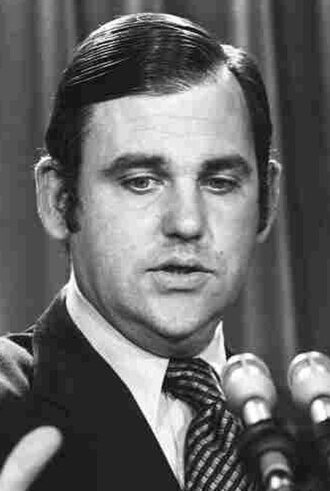
What Ziegler talks about on the tapes
Public relations 321Press relations 256Vietnam War 203Watergate 202Foreign Policy 129Congressional relations 105Media relations 97Henry Kissinger 95Economic policy 94Watergate scandal 80Media strategy 71Executive privilege 70
Conversations (1,199)
— Page 12 of 12President Nixon met with Alexander Haig and Ronald Ziegler to coordinate the White House's public relations and legal strategy regarding the upcoming release of a Watergate "White Paper." The participants discussed the drafting of the document, the importance of controlling the narrative, and how to brief Congressional leaders on its contents to clear the air. A significant portion of the conversation focused on crafting the President’s official account of his knowledge—specifically regarding the Daniel Ellsberg break-in and the roles of H.R. Haldeman, John Ehrlichman, and John Dean—to ensure the documentation presented him in a favorable light.
President Nixon, Ronald Ziegler, and Alexander Haig met to refine the language of a forthcoming White House "White Paper" intended to address the ongoing Watergate investigation. The President focused on carefully phrasing his lack of prior knowledge regarding illegal activities or hush-money payments, while simultaneously attempting to frame his actions within the context of protecting national security operations. They discussed the necessity of maintaining a firm public stance against the congressional inquiries, with Nixon emphasizing the importance of "fighting" back to avoid the political and international consequences of appearing weak.
President Nixon and Press Secretary Ronald Ziegler coordinate the precise wording of an upcoming White House statement regarding the Watergate scandal. Nixon emphasizes the need to avoid phrasing that could be exploited by the press, specifically instructing Ziegler and Patrick Buchanan to ensure the language does not imply that Watergate is damaging his foreign policy initiatives. This directive follows concerns over recent negative media coverage sparked by remarks made by Henry Kissinger.
President Nixon and Press Secretary Ronald Ziegler discuss the management of public perceptions and media narratives regarding ongoing investigations. The President emphasizes the importance of controlling the framing of allegations to avoid political vulnerability. This brief exchange reflects the administration's strategic focus on shaping the press response to minimize further scrutiny.
President Nixon and Ronald Ziegler met to strategize the White House's public relations response to the escalating Watergate scandal and the formation of the Ervin Committee. They discussed the necessity of releasing a substantive 'White Paper' to challenge negative press narratives and counter ongoing allegations against the administration. The President emphasized a need to pivot from a defensive stance toward an aggressive, unified platform to maintain public support and protect the integrity of the presidency.
President Nixon and Press Secretary Ronald L. Ziegler discuss the broad dissemination of a forthcoming White House statement regarding the Watergate scandal. Nixon emphasizes the need to distribute the document not only to the press but also to an extensive list of 10,000 Republican leaders and chairmen. The two agree that the statement serves as an effective platform to counter negative media narratives, specifically those involving the Cuban fund.
President Nixon and Press Secretary Ronald L. Ziegler held a brief, one-minute meeting in the Old Executive Office Building to coordinate administrative or press-related matters. While no transcript exists for this interaction, the meeting serves as an internal check-in between the President and his primary spokesperson during the height of the Watergate scandal. The session represents a routine point of contact for managing the administration's public narrative and scheduling priorities.
President Nixon and Press Secretary Ronald Ziegler coordinate the rollout of an upcoming White House statement regarding the Watergate scandal. The discussion focuses on the strategy for a press briefing, which will include Leonard Garment and J. Fred Buzhardt, Jr., intended to project a relaxed and positive image. Nixon emphasizes that the staff must maintain a firm conviction in the truthfulness of the forthcoming statement before scheduling a follow-up meeting to finalize implementation details.
President Nixon and Press Secretary Ronald L. Ziegler held a brief, informal discussion regarding the nature and extent of Ziegler's professional autonomy. The conversation centers on the President clarifying the degree of freedom granted to his press secretary in his official duties. No specific policy decisions were recorded during this brief exchange.
President Nixon met with key Republican congressional leaders and White House staff to discuss strategies for containing the political fallout from the Watergate scandal. The participants debated the timing and content of a forthcoming White House "White Paper" and discussed the potential benefits of a presidential press conference to restore public confidence. They also reviewed legislative management, specifically the importance of maintaining congressional support for administration initiatives amidst ongoing committee investigations and allegations of intelligence-gathering activities.
President Nixon directed Press Secretary Ronald Ziegler to leak information regarding the administration's surveillance of journalists to the press. Nixon emphasized that the leak should frame the disclosure as a response to mounting pressure from senators demanding the release of wiretap records. Ziegler was instructed to disseminate this information immediately to control the narrative surrounding the ongoing Watergate investigations.
President Nixon directs Press Secretary Ronald Ziegler to strategically leak information regarding the Daniel Ellsberg break-in to allies such as Hugh Scott and Strom Thurmond. The President emphasizes the necessity of releasing this information to shift the political narrative and intimidate his critics. He instructs Ziegler to characterize the forthcoming disclosure as part of a planned presidential action to ensure the material receives public and congressional attention.
President Nixon directs Ronald Ziegler to coordinate a strategy involving Senate Minority Leader Hugh Scott to demand the release of Kennedy and Johnson-era wiretap records. Nixon orders the immediate public disclosure of information regarding the Daniel Ellsberg break-in, insisting it be handled decisively despite potential political fallout. Additionally, Nixon instructs Ziegler to signal to Richard Helms that he intends to declassify sensitive materials related to the Bay of Pigs and the assassination of Ngo Dinh Diem, pressuring Helms to prepare for the imminent release of these records.
President Nixon met with Ronald Ziegler to strategize the White House's public response to the escalating Watergate investigation and the recent release of a "White Paper." The discussion focused heavily on refining the narrative regarding the President's awareness of "hush money" payments and the timing of his knowledge of the cover-up, specifically pinning the start of his personal investigation to his March 21 conversation with John Dean. Nixon also emphasized distancing the administration from illegal activities by characterizing his own previous actions—such as discussions regarding the CIA—as efforts to protect national security rather than to facilitate a cover-up.
President Nixon met with Republican congressional leadership to discuss administration strategy regarding pending agricultural legislation and the proposed Alaska pipeline. The President and his team emphasized the shift toward an export-driven agricultural policy and sought consensus on managing the Senate's version of the farm bill, noting the political risks of introducing a standalone administration proposal. Regarding the Alaska pipeline, the President and Secretary Morton argued for immediate legislative approval to address urgent domestic energy shortages, asserting that current supply crises were exacerbated by previous delays and that alternative Canadian routes were not currently viable. Finally, the President urged the leaders to maintain support for his foreign policy initiatives, highlighting recent successes in Vietnam, China, and the USSR while stressing the need for continued operational security to protect sensitive ongoing negotiations.
President Nixon and Press Secretary Ronald Ziegler met to strategize on managing the ongoing Watergate scandal and the increasingly hostile press corps. They discussed refining the administration's public messaging regarding national security, the CIA's potential involvement in the Watergate break-in, and the President's awareness of these events. The conversation focused on preparing for upcoming press briefings and potential presidential appearances to shift the narrative and defend the administration against mounting political pressure.
President Nixon and Ronald Ziegler discussed upcoming public relations strategies, including managing the press during the President's scheduled meeting with Congressional leaders at Blair House. They reviewed recent political successes, specifically the sustainment of a presidential veto and the confirmation progress of Elliot Richardson. Additionally, Ziegler briefed the President on Gerald Alch’s testimony before the Ervin Committee, which challenged the credibility of James McCord’s Watergate-related accounts. Nixon concluded the call by announcing his intention to travel to Camp David with Brent Scowcroft to prepare for a press briefing and secure some rest.
President Nixon and Press Secretary Ronald Ziegler briefly coordinate on an upcoming meeting with Congress regarding a veto and the involvement of Elliot Richardson. They discuss the strategic necessity of managing ongoing political developments amid significant confusion within the administration. The conversation concludes with administrative arrangements regarding Ziegler’s schedule and future marketing work.
President Nixon and Ronald Ziegler discussed strategies for managing the White House's public image and morale amidst the intensifying Watergate scandal. Nixon expressed concern over potential accusations of perjury and emphasized the need to shift focus toward broader national security issues and a more active, outward-facing engagement with Congress and the press. The conversation also touched upon the necessity of internal staff restructuring, including the potential return of Bryce Harlow, to navigate the political fallout and maintain the administration's stability.
Julie Nixon Eisenhower contacted Press Secretary Ronald L. Ziegler to gauge media sentiment following a dinner honoring former prisoners of war, with President Nixon and Tricia Nixon Cox present for the discussion. They reviewed the positive press coverage surrounding the President’s speech, specifically focusing on the favorable reaction to his remarks on December 1972 bombing operations and national security. Ziegler confirmed that the event received strong television coverage and effectively portrayed the President’s interactions with the attendees.
President Nixon and Vice President Agnew met with the Cabinet and senior staff to discuss major foreign and domestic policy priorities and internal administration management. The discussion centered on upcoming diplomatic summits with Leonid Brezhnev and Georges Pompidou, negotiations with North Vietnam regarding the ceasefire, and economic challenges including inflation and energy policy. Additionally, General Alexander Haig briefed the Cabinet on the administration's efforts to stabilize internal governance, improve relations with Congress, and manage the ongoing political fallout from the Watergate scandal.
President Nixon and Press Secretary Ronald Ziegler met to discuss the administration's public relations strategy, focusing on countering unfavorable media coverage regarding the Watergate scandal and upcoming appearances by administration officials before the Ervin Committee. Nixon expressed frustration with the committee's procedural lack of due process, comparing its hearings to an "inquisition" and "assassination of character," while Ziegler provided updates on press reaction to the President's recent statements. They agreed to maintain a low-key, routine response to current press inquiries while preparing for a more aggressive, public pushback after the President's return from an upcoming trip to Iceland.
President Nixon and Press Secretary Ronald Ziegler met to coordinate White House strategy regarding ongoing press relations and the escalating Watergate investigation. Nixon instructed Ziegler to maintain a firm, confident, and non-belligerent stance against press scrutiny while dismissing leaks regarding a potential presidential grand jury appearance as partisan political maneuvering. The two also discussed delegating administrative assistance to Alexander Haig and managing upcoming high-level briefings, including those led by Henry Kissinger.
President Nixon and Press Secretary Ronald Ziegler met to strategize the administration's public relations response to the growing Watergate scandal, specifically addressing a report regarding a potential grand jury appearance by the President. They discussed coordinating with key figures like William Timmons and William Baroody Jr. to manage congressional relations and ensure the White House maintains an aggressive yet calculated defensive posture. Nixon also shared insights from a conversation with Secretary of State William P. Rogers, emphasizing the importance of projecting a steady focus on government business to counter negative media narratives.
President Nixon, H.R. Haldeman, and Ronald Ziegler met to coordinate their strategy regarding ongoing investigations into the Watergate scandal and press relations. The participants discussed the potential risks of grand jury appearances, the challenges posed by the Special Prosecutor, and the necessity of maintaining a firm, combative stance against public accusations. Additionally, they reviewed concerns regarding the security and eventual disposition of the White House taping system and legal defense strategies for key staff members.
President Nixon met with Ronald Ziegler and Henry Kissinger to discuss press strategy, ongoing Watergate inquiries, and the management of presidential papers, before transitioning to a formal meeting with Huang Chen and Chi Ch’ao Chu of the People's Republic of China. During the session with the Chinese representatives, the President reaffirmed his commitment to strengthening US-PRC relations, emphasizing mutual sovereignty and strategic cooperation. Nixon also sought to assure the Chinese leadership that his upcoming summit with Leonid Brezhnev would not be detrimental to PRC interests, and he solicited their assistance in facilitating a peace agreement in Cambodia.
President Nixon and Press Secretary Ronald Ziegler discussed the positive media reception of Nixon’s recent trip to France and the administration's strategy regarding ongoing Watergate coverage. The conversation focused on a plan to counter political pressure by releasing data on FBI wiretaps authorized during the Kennedy and Johnson administrations to create a defensive narrative. Nixon emphasized the importance of aggressive tactics, instructing Ziegler to coordinate with Alexander Haig to formalize the release of this information and identify the names of any targeted newsmen.
President Nixon and Ronald Ziegler discuss a communications strategy to counter negative press coverage and leaks regarding the Watergate scandal. They evaluate the timing for releasing information about past wiretap records, hoping to identify potentially damaging precedents involving Robert F. Kennedy to deflect from current criticisms. The President affirms a 'moderate profile' strategy, agreeing with Ziegler that they should stop responding to individual leaks and instead rely on previous official denials, while also coordinating with congressional allies like Edward Gurney to challenge the Ervin Committee's proceedings.
President Nixon and Ronald Ziegler discussed the White House response to recent press leaks, likely emanating from prosecutors and the Ervin Committee, which alleged that John W. Dean had numerous meetings with the President regarding the Watergate cover-up. Nixon firmly denied the timeline of these allegations, asserting that his meetings with Dean regarding the cover-up did not begin until March 21, 1973. To address the situation, the participants planned to coordinate a strategy with White House staff, including Leonard Garment and J. Fred Buzhardt, and considered having Haldeman, Ehrlichman, and Colson issue public statements to defend the President's record.
President Nixon and Ronald Ziegler discussed strategies for managing public and legal fallout following allegations from John W. Dean regarding the President's prior knowledge of the Watergate cover-up. They reviewed the timeline of Nixon's meetings with Dean to verify facts and establish a consistent defense, while weighing whether to utilize third-party surrogates to challenge Dean's credibility. The conversation concluded that the administration should avoid immediate direct confrontation with the press or Dean until they were fully prepared to neutralize his testimony or potential immunity bid.
President Nixon and Press Secretary Ronald Ziegler discuss the White House's public relations strategy regarding the escalating Watergate scandal and the ongoing efforts of John W. Dean III to leverage information for immunity. The President instructs his staff to avoid getting bogged down in daily rebuttals of Dean’s allegations, preferring to focus on substantive administration business and scheduled public appearances to project stability. Nixon directs H. R. Haldeman to compile a comprehensive chronology of events to clarify the President's lack of involvement in questionable activities, while Ziegler confirms the administration’s plan to delay public responses to avoid providing Dean with information that he could use in his testimony.
President Nixon and Ronald Ziegler discussed strategies to counter allegations made by former White House counsel John W. Dean regarding the Watergate cover-up. They focused on discrediting Dean's credibility through planted media columns, preparing a speech for Vice President Agnew, and providing information to Congressional allies like Hugh Scott. Nixon adamantly refuted specific claims about the number of meetings and alleged orders, while they planned to have Alexander Haig secure and review Dean's files to assess his activities. Additionally, the pair coordinated a shift in Ziegler’s public role and communications responsibilities to mitigate the political impact of the ongoing scandal.
President Nixon directs Press Secretary Ronald Ziegler to coordinate with Richard Moore regarding the details of past meetings involving John Dean. Nixon emphasizes that Moore’s participation in these discussions will serve to refute allegations that Dean was ordered to execute a cover-up. Ziegler confirms that he and J. Fred Buzhardt will meet with Moore to thoroughly review the record and establish a consistent narrative.
President Nixon and Ronald Ziegler discussed concerns regarding John W. Dean’s unauthorized access to and potential copying of sensitive presidential files. Nixon directed Ziegler to secure copies of all of Dean’s files and notes pertaining to their meetings from February 27, 1973, onward. Emphasizing his ownership of the documents, the President insisted that these materials be provided directly to him to prevent them from reaching other staffers like J. Fred Buzhardt or Leonard Garment.
President Nixon and Press Secretary Ronald Ziegler discuss strategies to counter John W. Dean III’s allegations regarding a Watergate cover-up and his efforts to seek immunity. The President expresses skepticism about Dean’s work habits and record-keeping, while emphasizing that past discussions regarding executive privilege were matters of constitutional principle rather than criminal activity. To prepare a defense, Nixon directs Ziegler and Alexander Haig to examine Dean’s files to better understand the nature of the materials he may have removed or copied.
President Nixon and Ronald Ziegler discussed the motivations behind John W. Dean III's recent actions regarding the Watergate investigation. Ziegler posited that Dean’s behavior was less about personal animosity toward the President and more a product of strategic pressure applied by his legal counsel for defense purposes. Nixon remained skeptical of this assessment, questioning whether Dean’s actions were inherently malicious.
President Nixon, Alexander Haig, and Ronald Ziegler met to discuss the mounting political pressure surrounding the Watergate scandal, specifically focusing on the allegations made by John Dean. They reviewed the status of evidence, including Dean’s personal records and meeting logs, and discussed the necessity of obtaining the original documents to challenge the veracity of Dean's claims. The President emphasized his desire to clarify the timeline of his interactions with Dean and directed staff to secure relevant files immediately to prepare a coherent White House response.
President Nixon and Press Secretary Ronald Ziegler discussed the administration's strategy for managing the ongoing Watergate investigation and related press inquiries. The pair reviewed the status of documents detailing Nixon's past meetings with John W. Dean III, with Nixon emphasizing that these discussions did not involve a cover-up until March 21, 1973. Additionally, they coordinated the public messaging regarding Henry Kissinger's upcoming trip to Paris and the administration’s efforts to counter negative media narratives and political attacks.
President Nixon and Press Secretary Ronald Ziegler met to discuss the preparation of a timeline concerning past meetings and activities, specifically focusing on potential interactions involving L. Patrick Gray. They reviewed internal records to determine the validity of claims regarding sensitive issues, including FBI leaks and presidential conversations. The primary objective was to establish a defensive narrative by narrowing the scope of relevant events to the month of March, effectively dismissing potential concerns from preceding months.
President Nixon met with his staff, including Ronald Ziegler and Stephen Bull, to conduct an intensive review of White House tape recordings and documentation related to the Watergate scandal. The discussion focused on evaluating their legal and political exposure, specifically regarding conversations with John Dean, the management of the Ervin Committee hearings, and the potential for public embarrassment. The participants debated strategies for responding to investigations and managing the testimony of key figures like Archibald Cox, ultimately emphasizing the necessity of maintaining their narrative and preparing for further legal scrutiny.
President Nixon, Stephen Bull, and Ronald Ziegler met to organize and clarify recollections of specific meetings and reports dating back to March 1973. The discussion centered on identifying the contents and accuracy of records regarding White House meetings, particularly concerning a rejected report and potential leaks. Nixon instructed his staff to verify these accounts and finalize their recollections to ensure a consistent administrative record.
President Nixon and Ronald Ziegler meet to discuss the narrative regarding the Watergate scandal, specifically aiming to debunk allegations of a White House cover-up. The President asserts that past meetings concerning Watergate were focused on legal strategies, such as separation of powers, rather than illicit activities. Nixon expresses frustration with John Dean’s perceived incompetence and seeks to establish a timeline of events to counter accusations of wrongdoing.
President Nixon and Press Secretary Ronald Ziegler discuss strategy regarding the handling of presidential papers and the ongoing Watergate investigations. Nixon instructs Ziegler to coordinate with J. Fred Buzhardt and Leonard Garment to frame the refusal of document access in a more positive light, while maintaining an uncompromising stance against subpoenas. The two also agree to wait for internal conflicts within the Senate committee and the office of Special Prosecutor Archibald Cox to unfold before deciding on further public relations tactics.
President Nixon met with Vice President Agnew and Republican congressional leadership to solidify legislative strategy and enhance communication between the White House and Capitol Hill. Key discussions included Henry Kissinger’s briefing on recent negotiations in Iceland regarding the 'Year of Europe' and the progress of the Vietnam Peace Accord. The group also addressed the need for improved coordination on pending legislation, political appointments, and the management of vetoes to maintain party unity in the face of domestic challenges.
President Nixon, Ronald Ziegler, and Alexander Haig met to discuss communication strategies for managing the fallout from the Watergate scandal and countering negative press narratives. They analyzed recent media commentary, specifically columns by Joseph Alsop and Patrick Buchanan, to reinforce their resolve against John Dean and the Ervin Committee hearings. Nixon and his advisors decided to shift the White House's public focus toward positive domestic issues, such as the national economy and the forthcoming visit of Leonid Brezhnev, while adopting a more aggressive, "slam-bang" stance toward political opponents.
President Nixon and Press Secretary Ronald Ziegler met to discuss the administration's public relations strategy amidst intensifying Watergate scrutiny, particularly regarding allegations involving John Dean, H.R. Haldeman, and claims of hush money. The two analyzed shifts in press coverage and evaluated how to manage media inquiries regarding upcoming Ervin Committee testimony and potential grand jury indictments. Nixon instructed Ziegler to avoid commenting on legal matters and emphasized that the administration should remain focused on its schedule rather than reacting to aggressive media antagonism.
President Nixon and Ronald Ziegler discussed media strategy and public relations, focusing on methods to counter unfavorable Watergate coverage, specifically regarding John Dean's upcoming testimony and immunity. They reviewed the importance of cultivating support among key congressional allies and influential columnists to defend the administration's record. Furthermore, the two explored ways to highlight the President's foreign policy achievements, particularly regarding Vietnam, to shift public focus away from the ongoing domestic scandals.
President Nixon and Ronald Ziegler reviewed media strategies and potential responses to the ongoing Ervin Committee hearings regarding the Watergate scandal. The discussion focused on managing public perception through favorable opinion columns and editorials, while also coordinating the timing of an upcoming presidential address on economic policy and an energy-related press briefing by Henry Kissinger. The participants concluded that while the White House could facilitate public support, it was more effective to rely on spontaneous public resentment toward the committee's proceedings.
President Nixon and Ronald Ziegler discussed media treatment of the Nixon family, specifically criticizing a radio correspondents' dinner and a television appearance by Julie Nixon Eisenhower on the Phil Donahue show. Nixon expressed deep frustration with the press, mandating that Ziegler confront the responsible parties and effectively ending the President’s future attendance at social functions with the media corps. Additionally, they reviewed the Watergate investigation, focusing on John W. Dean’s recent invocation of the Fifth Amendment and developing a strategy to publicly discredit Dean’s anticipated testimony by highlighting his inconsistent accounts and potential legal liability.
President Nixon met with Ronald Ziegler, Alexander Haig, and William Timmons to coordinate White House strategy regarding the impending Ervin Committee testimony of John Dean and the administration’s broader press relations. The participants discussed the necessity of discrediting Dean and managing public perception amid the Watergate scandal, while balancing these concerns with the President's upcoming economic address and the diplomatic significance of the forthcoming Leonid Brezhnev summit. Nixon emphasized the importance of maintaining a unified front with congressional allies and directed his staff to ensure that supporters, including members of the Chowder and Marching Society, publicly prioritize national policy over the ongoing hearings.
President Nixon and Press Secretary Ronald L. Ziegler coordinate the dissemination strategy for an upcoming policy text to ensure legislative leaders and their staff receive it simultaneously at 7:00 p.m. Nixon explicitly instructs Ziegler to withhold the document from congressional leaders and staff beforehand to prevent unauthorized revisions or delays. This measure aims to maintain executive control over the messaging and prevent legislative interference with the final text.
President Nixon and Press Secretary Ronald Ziegler coordinated the messaging strategy for an upcoming televised speech on the economy. The discussion focused on maintaining public momentum following recent diplomatic successes while carefully managing media expectations. Nixon explicitly instructed Ziegler to withhold the full text of the speech from Cabinet members and Congressional leaders prior to the 7:00 pm briefing to avoid last-minute critiques and prevent market volatility.
President Nixon and Press Secretary Ronald Ziegler discussed the positive media reception of Henry Kissinger’s recent Paris briefing and logistics regarding the President’s upcoming economic address. Nixon emphasized the importance of securing favorable press coverage and instructed Ziegler to coordinate photo opportunities with the Cabinet and Congressional leaders. To prevent premature media leaks, Nixon strictly ordered that the text of his economic speech be withheld from Cabinet members and legislators until 7:00 p.m., shortly before the address.
President Nixon and Press Secretary Ronald L. Ziegler coordinate the restricted release of sensitive documents to specific leaders. They decide that the text of the materials should not be provided early to these individuals, scheduling a formal delivery to their offices for 7:00 pm. This instruction serves to maintain strict control over the distribution of information during a politically sensitive period.
President Nixon and Ronald Ziegler met to coordinate administration strategy regarding ongoing Watergate investigations, public relations for upcoming economic policy speeches, and Vietnam-related diplomacy. Nixon directed Ziegler to encourage allies on the Ervin Committee, such as Edward Gurney and Howard Baker, to increase their pushback against Democratic-led inquiries. Additionally, they discussed methods for managing press narratives through third-party contacts and ensuring that recent successes in Vietnam negotiations, driven by Henry Kissinger, were presented in a positive light.
President Nixon met with his Vice President, Cabinet members, and senior staff to announce the implementation of a 60-day price freeze as part of a strategy to combat inflation. He explained that this measure, aimed at stabilizing food and gasoline prices, was a necessary pragmatic step to preempt more extreme, mandatory controls favored by Congress. Nixon emphasized his commitment to maintaining a free-market economy and tasked his Cabinet with actively promoting this policy to the public and opinion makers. He also highlighted the administration's broader accomplishments in foreign policy, including the end of the draft and the upcoming U.S.-Soviet summit.
President Nixon, accompanied by Ronald Ziegler and members of the press, prepared for a televised address from the Oval Office to outline his new economic strategy. During the session, technicians coordinated technical arrangements for the broadcast while the President reviewed his speech, which centered on implementing a price freeze and establishing "Phase 4" economic controls to combat inflation. Following the address, the President participated in a photo session with the press and discussed the logistics of the production.
President Nixon met with Vice President Agnew, cabinet members, and a bipartisan group of Congressional leaders to announce an upcoming economic policy address and discuss the administration's new strategy to combat inflation. The President detailed a 60-day price freeze—excluding wages and raw agricultural products—and sought legislative assistance regarding export controls on food and gasoline supply allocations. Additionally, the President arranged for key Congressional leaders to receive ongoing briefings from administration officials during the upcoming summit with Soviet leader Leonid Brezhnev to ensure better oversight of the resulting agreements.
President Nixon and Press Secretary Ronald Ziegler discussed the press reaction to the President’s recent economic speech and its potential to shift media focus away from the Watergate scandal. While Nixon expressed concern that journalists remained obsessed with Watergate, Ziegler noted that the press was generally impressed by the President's display of leadership and control. The two concluded that the positive reception of the address had successfully mitigated negative media scrutiny.
President Nixon met with his senior advisors and Vice President Spiro Agnew to discuss foreign policy, the recent national price control address, and the growing political fallout from the Watergate and Baltimore County investigations. Nixon and his team strategized on how to manage the public perception of the Watergate hearings while considering ways to pivot toward an aggressive political defense. Additionally, they reviewed Vice President Agnew's role in the administration, including future travel and the need for him to maintain a visible and high-profile presence to support the President's agenda.
President Richard M. Nixon and Press Secretary Ronald L. Ziegler coordinated the logistics for upcoming executive appointments and media opportunities. The discussion focused on managing the public announcement of William W. Scranton’s potential energy role, including the staging of a photograph at the President's desk. The pair also reviewed the President's broader schedule, specifically regarding meetings with George Putnam and other visitors.
President Nixon met with broadcaster George Putnam and Press Secretary Ronald L. Ziegler to coordinate a brief photo session in the Oval Office. The discussion touched upon the logistics of upcoming diplomatic events, including the presentation of credentials for ambassadors from Malawi, Oman, and the Khmer Republic. The participants also engaged in casual conversation regarding the President's schedule, personal hobbies such as horseback riding, and the history of the White House Rose Garden.
President Nixon met with broadcaster George Putnam, Press Secretary Ronald Ziegler, and the Simmonds family to discuss the administration's ongoing challenges. The conversation focused on the President's workload, the impact of the Watergate scandal, and the recent economic address regarding price controls and gasoline supply. The participants also touched upon public relations, the upcoming visit of Leonid Brezhnev, and various social greetings.
President Nixon met with Alexander Haig, Anne Armstrong, Bryce Harlow, and others to discuss public relations strategies following his June 13, 1973, address on economic price controls. The conversation focused heavily on managing the political influence and public roles of John Connally and George H. W. Bush within the administration and the Republican Party. Additionally, the group reviewed potential candidates for leadership roles, including positions within the Bicentennial Commission, while touching upon concerns regarding Watergate, upcoming elections, and personnel management.
President Nixon met with J. Fred Buzhardt, Jr., Ronald L. Ziegler, and Henry A. Kissinger to manage the intensifying political fallout from the Watergate scandal. The discussion focused on countering the testimony of key figures like John Dean and Jeb Magruder, specifically addressing their allegations regarding the White House's involvement in a cover-up and potential efforts to influence civil litigation. Nixon expressed frustration over the perceived lack of support from Republican legislators and strategized with his team on how to discredit Dean's testimony while maintaining the President's public narrative of non-involvement.
Ronald L. Ziegler and President Nixon coordinate a meeting regarding the timing and location of a scheduled press briefing. The President directs Ziegler to meet him at the Executive Office Building to discuss the matter further. This brief exchange serves to finalize the logistics for the upcoming press engagement.
President Nixon and Ronald Ziegler met to coordinate the administration's public relations strategy, focusing on shifting media attention away from the Watergate scandal toward upcoming economic initiatives and the impending Soviet summit. They analyzed the political damage caused by John Dean’s testimony and debated the merits of countering negative press coverage versus ignoring the ongoing Ervin Committee hearings. Ultimately, Nixon emphasized the necessity of projecting a poised, confident posture and maintaining a busy public schedule to steer the national narrative toward presidential business.
President Nixon met with Alexander Haig, Henry Kissinger, and other staff members to review preparations for his upcoming speech in Pekin, Illinois, and the anticipated visit of Soviet leader Leonid Brezhnev. The participants discussed strategies for managing foreign relations, specifically addressing requests regarding potential diplomatic travel for Vice President Spiro Agnew and navigating the delicate balance of U.S. relations with China and the Soviet Union. Additionally, the President and his team assessed the administration's political standing amid Watergate-related pressures, the national economy, and media coverage, emphasizing the need to project presidential strength and focus on the administration's policy achievements.
President Nixon met with Alexander Haig, Henry Kissinger, and Ronald Ziegler to finalize the logistics for Soviet General Secretary Leonid Brezhnev’s visit and to coordinate the administration’s strategy regarding the unfolding Watergate scandal. The participants discussed the summit schedule—including private sessions, signing ceremonies, and travel arrangements—and expressed frustration over negative media coverage, specifically regarding the potential impact of John Dean’s testimony. Nixon and his advisors resolved to maintain a tough, authoritative public image during the summit to ensure the success of the negotiations and to prevent domestic political turbulence from undermining the administration's foreign policy goals.
President Nixon, Ronald Ziegler, and Henry Kissinger met to strategize on managing the public relations fallout regarding John Dean's upcoming Ervin Committee testimony and recent damaging press reports. The group discussed methods to refute specific allegations—such as claims that the President authorized $1 million in hush money—while debating whether to address charges directly or maintain a strategy of calculated silence to avoid elevating Dean's profile. Additionally, Kissinger briefly consulted the President on messaging for the upcoming visit by Leonid Brezhnev to ensure the public perceived their diplomatic efforts as balanced rather than an attempt at global domination.
President Nixon met with Soviet General Secretary Leonid Brezhnev in the Oval Office to discuss the strengthening of U.S.-Soviet relations following their historic 1972 Moscow summit. The conversation centered on the necessity of building personal trust and confidence between the two leaders to facilitate long-term peace and cooperation, moving beyond historical Cold War tensions. Both leaders committed to a regular schedule of future summits and discussed the importance of expanding economic and cultural ties to solidify a new, stable era of superpower diplomacy.
President Nixon and General Secretary Leonid Brezhnev met in the Oval Office to conduct high-level diplomatic discussions during Brezhnev's state visit to the United States. The participants focused on strengthening bilateral relations, with extensive dialogue regarding the expansion of economic and trade ties, including potential large-scale energy cooperation and agricultural trade. They also addressed pressing international issues, such as the situation in the Middle East, the implementation of the Paris Accords regarding Vietnam, and preparations for a forthcoming nuclear agreement.
President Nixon met with Henry Kissinger, Alexander Haig, and Ronald Ziegler to coordinate the public messaging strategy regarding ongoing Soviet-American relations and bilateral summit agreements. Following the foreign policy segment, the group transitioned to a discussion of domestic political pressures, specifically focusing on the administration’s response to John Dean’s anticipated testimony before the Ervin Committee. Nixon emphasized the necessity of a disciplined, unified defense strategy to counter potential allegations of misconduct and manage the intense media scrutiny surrounding the Watergate investigation.
President Nixon, Alexander Haig, and Ronald Ziegler met to discuss the White House's strategic response to the impending Ervin Committee testimony of John W. Dean III. The President and his aides analyzed how to manage the political fallout of the testimony during the upcoming summit with Leonid Brezhnev, weighing the pros and cons of potential delays. A significant focus of the discussion was the ongoing effort to discredit Dean by publicizing his alleged mishandling of campaign funds and payments to defendants.
Press Secretary Ronald L. Ziegler met with an unidentified individual in the Oval Office to discuss matters regarding the President’s official schedule. The brief interaction focused on logistical planning and administrative coordination for upcoming activities. No substantive policy decisions were documented during this short exchange.
President Nixon met with Alexander Haig, Ronald Ziegler, and J. Fred Buzhardt to discuss ongoing Watergate fallout and strategy, specifically focusing on the upcoming testimony of former White House counsel John Dean before the Ervin Committee. The participants expressed frustration with the lack of aggressive public defense by Republican allies and the perceived bias of special prosecutor Archibald Cox, prompting discussions on how to better leverage allies to challenge Dean's credibility and the scope of Cox's investigation. Additionally, the President reviewed his economic recovery program and the status of Leonid Brezhnev's state visit, stressing the importance of controlling the media narrative during these high-stakes events.
President Nixon met with Ronald Ziegler, Alexander Haig, and Henry Kissinger to coordinate the upcoming state visit of Soviet leader Leonid Brezhnev and manage the ongoing Watergate crisis. The group planned the logistical details of the summit, including travel to Camp David, photograph opportunities, and public relations strategies for the Brezhnev visit. Simultaneously, they discussed political damage control, specifically preparing for John Dean's upcoming testimony before the Ervin Committee and determining the White House's public stance regarding the Watergate investigation and the role of special prosecutor Archibald Cox.
President Nixon and Press Secretary Ronald Ziegler discussed concerns regarding J. Fred Buzhardt's investigation into Watergate-related activities, specifically focusing on a tape Charles Colson provided to John Dean and allegations surrounding the improper handling of campaign funds. They expressed frustration with Dean's conduct and discussed the potential for holding him in contempt for his refusal to testify in executive sessions before the Ervin Committee. To counter the negative narrative, the administration planned to have the Committee for the Re-Election of the President issue a letter demanding the return of the funds, while also coordinating media logistics for the upcoming visit of Leonid Brezhnev.
President Nixon and Press Secretary Ronald Ziegler discuss the media strategy surrounding Leonid Brezhnev's ongoing visit to the United States. They focus on managing press expectations and coverage for the President’s upcoming toast, ensuring it remains substantively light to avoid overshadowing the official agreements. Furthermore, they note with satisfaction that Henry Kissinger successfully avoided Watergate-related questions during his recent media briefing.
President Nixon and Press Secretary Ronald Ziegler coordinate logistics for a signing ceremony scheduled for the following day. They discuss the potential need for official remarks, ultimately deciding against them to maintain control over the event's messaging. Nixon also outlines plans to organize a seating line for participants while minimizing press interaction.
President Nixon, Alexander Haig, Ronald Ziegler, and Henry Kissinger met to coordinate the administration's defensive strategy regarding the unfolding Watergate scandal and the Ervin Committee's upcoming hearings. The participants discussed strategies for discrediting John Dean and mitigating damaging press coverage by leaking information regarding historical FBI surveillance abuses conducted under the Kennedy administration. Furthermore, the President emphasized the necessity of a firm legislative stance against Congress, specifically regarding spending vetoes and the handling of foreign policy agreements like the nuclear war prevention pact with the Soviet Union.
President Nixon and Press Secretary Ronald Ziegler discuss the positive media coverage surrounding the summit with Soviet leader Leonid Brezhnev and the recent Agreement on the Prevention of Nuclear War. Nixon emphasizes that the success of these diplomatic efforts rests on the personal commitment and political will of both leaders to maintain the agreement. He instructs Ziegler to ensure Henry Kissinger conveys this narrative of mutual resolve to the press, highlighting the significance of the shift in US-Soviet relations.
President Richard Nixon and Press Secretary Ronald Ziegler engage in a brief, abstract exchange regarding the nature of secrecy, political commitments, and the historical motivations behind treaties and conflict. The conversation centers on philosophical reflections about the necessity of maintaining shared visions and promises amidst political instability. No specific policy actions or administrative decisions result from this dialogue.
President Nixon and Press Secretary Ronald Ziegler met to review the current state of media coverage regarding the Watergate scandal and the President's recent trip to Kansas City. They discussed the favorable impact of recent statements from John Mitchell and John Ehrlichman, which they believed countered damaging testimony from John Dean. The discussion also addressed the handling of internal memorandums and strategies to emphasize the President's actions during the April 15, 1973, meeting with Justice Department officials as evidence of his proper conduct.
President Nixon met with his economic advisors and Cabinet members to debate the design of 'Phase IV' of his economic program, focusing on the appropriate speed for removing wage and price controls. The discussion centered on balancing the political need to curb inflation with the economic necessity of incentivizing production, particularly in the agricultural sector, where export controls and price ceilings had created supply shortages. The President and his team also addressed the critical need for a balanced federal budget to bolster business confidence, ultimately agreeing on the necessity of a tough, credible policy to stabilize the economy.
President Nixon met with his economic advisors and congressional leadership to strategize on Phase IV of the Economic Stabilization Program and urgent federal budget concerns. The discussion focused on balancing the fiscal year 1974 budget through potential spending cuts, vetoes of excessive appropriations, and the possibility of a tax increase. Additionally, the President and George Shultz evaluated the necessity of intervening in exchange markets to stabilize the U.S. dollar, ultimately deciding to proceed with modest market intervention.
President Nixon and Press Secretary Ronald Ziegler met to discuss press strategy and the administration's ongoing response to the Watergate scandal, specifically focusing on the Ervin Committee hearings and testimony from figures like John Mitchell and Jeb Stuart Magruder. They addressed media concerns regarding government expenditures at San Clemente and Key Biscayne, strategizing how to justify these costs through General Services Administration (GSA) statements. The conversation also touched upon the administration's efforts to manage congressional relations and national economic messaging amidst the surrounding political turmoil.
President Nixon met with Ronald Ziegler, William P. Rogers, and others to strategize regarding the ongoing Ervin Committee hearings and the credibility of witnesses like John N. Mitchell and John W. Dean III. The discussion focused on Mitchell's testimony, which presented a narrative favorable to the President by claiming Nixon lacked prior knowledge of the Watergate cover-up or the break-in. The participants analyzed the effectiveness of the White House's decision to remain publicly silent rather than launching an aggressive counter-campaign against Dean, concluding that this restrained approach enhanced Mitchell's credibility. The group also touched upon upcoming testimonies from other key figures and potential legislative or legal implications concerning Presidential authority and the Ellsberg break-in.
Press Secretary Ronald L. Ziegler briefs President Nixon on television news coverage regarding John N. Mitchell's testimony before the Ervin Committee. Ziegler reports that network coverage focused on Mitchell's claims that he withheld information from the President to protect his reelection efforts and his denials of prior knowledge regarding the Watergate break-in. Both participants conclude that the reporting of the testimony was favorable to the administration and highlighted the perceived credibility of Mitchell's defense of the President.
President Nixon met with Stephen B. Bull and Ronald L. Ziegler to coordinate control and access regarding White House tape recordings, particularly addressing requests from H.R. Haldeman to listen to specific conversations from March and April 1973. The President emphasized strict oversight of the recordings and authorized access only under controlled circumstances while reviewing the logistical concerns regarding the quality and content of those tapes. Additionally, the group discussed scheduling details for a forthcoming reception for Senators, with Nixon insisting on a rotation and reduction of White House staff attendees to improve the event's atmosphere.
President Nixon and Press Secretary Ronald Ziegler discuss media coverage of the Watergate Ervin Committee hearings, specifically focusing on John N. Mitchell's testimony and the framing of his loyalty to the President. They evaluate the effectiveness of the White House’s response strategy and assess the positive reception of a recent BBC interview featuring Julie Nixon Eisenhower and David Eisenhower. The conversation also briefly touches upon current news leads regarding Soviet relations and Federal Reserve credit policy.
President Nixon met with Vice President Agnew and his Cabinet to discuss the transition from the current wage and price freeze to a "Phase IV" economic policy. The President emphasized the need to balance controlling inflation with maintaining domestic production, while acknowledging the political difficulty of removing controls due to congressional and public pressure. Key developments included the administration's resolve to move toward a free-market economy as quickly as possible, coupled with a renewed commitment to fiscal austerity and a balanced federal budget to bolster economic confidence.
President Nixon and Press Secretary Ronald Ziegler met to discuss the administration's public relations strategy regarding the ongoing Watergate investigation, specifically focusing on the Senate Ervin Committee hearings and the testimony of John Mitchell and John Dean. They analyzed recent press coverage and commentary, particularly media skepticism toward Dean's credibility and the negative impact of his immunity deal. The President determined that he should address the public on Watergate in August to move past the scandal, intending to shift focus toward the fall legislative agenda and economic policy once the committee hearings concluded.
President Nixon and Press Secretary Ronald Ziegler discuss media coverage of the Watergate hearings, specifically expressing frustration that the television networks provided John Dean five days of coverage while limiting John Mitchell to one. They strategize on ways to pressure the media by highlighting perceived biases and reporting false constituent outrage to network executives. Additionally, they review the status of upcoming testimonies, including those of Richard A. Moore and Herbert Kalmbach, while denigrating the conduct of Senator Howard Baker.
President Nixon and Press Secretary Ronald Ziegler discuss media management and the administration's public messaging strategy. The President emphasizes the importance of credibility and selectively managing public statements, specifically referencing his direct intervention to suppress certain information. They briefly touch upon the current media climate and speculate on the motives behind the exclusion of figures like John Mitchell from press coverage.
President Nixon and Ronald Ziegler met to discuss public relations strategies regarding the ongoing Watergate investigation and the Ervin Committee hearings. They evaluated the performance of witnesses like John Mitchell and considered ways to shift the national narrative toward the President's economic initiatives and foreign policy successes. Ultimately, they decided that a more calculated, proactive public relations campaign—centered on a clear philosophical framework rather than just policy technicalities—was necessary to counter media hostility and move past the Watergate crisis by the fall.
President Nixon met with Alexander Haig, Ronald Ziegler, and Dr. Walter Tkach to discuss a two-fold crisis involving his deteriorating health and the escalating pressures from the Ervin Committee regarding Watergate. Nixon, suffering from a fever and fearing he may have viral pneumonia, debated the public relations implications of seeking hospital care, specifically how to avoid public perception of weakness while maintaining credibility. Simultaneously, the group strategized on resisting the Ervin Committee's demands for White House files, reaffirming their decision to reject any compromise and maintaining a hardline stance to avoid the appearance of a cover-up.
President Nixon met with Henry Kissinger, Alexander Haig, and Ronald Ziegler to coordinate the public response to his health issues and the subsequent adjustments to his official schedule, including the potential cancellation of Zulfikar Ali Bhutto’s state visit. The participants discussed how to manage the optics of these changes to avoid political embarrassment while navigating the ongoing pressures of the Watergate investigation. Nixon and his advisors also weighed the implications of the Ervin Committee's proceedings and potential witness testimony on the administration's stability.
President Nixon and Press Secretary Ronald Ziegler met to discuss the management of public communications regarding the President's recent health issues. They coordinated the logistics for an official announcement to be handled by Deputy Press Secretary Gerald L. Warren and Dr. Walter R. Tkach, with input from Alexander Haig. The discussion focused on controlling the narrative and anticipating the press corps' reaction to the medical news.